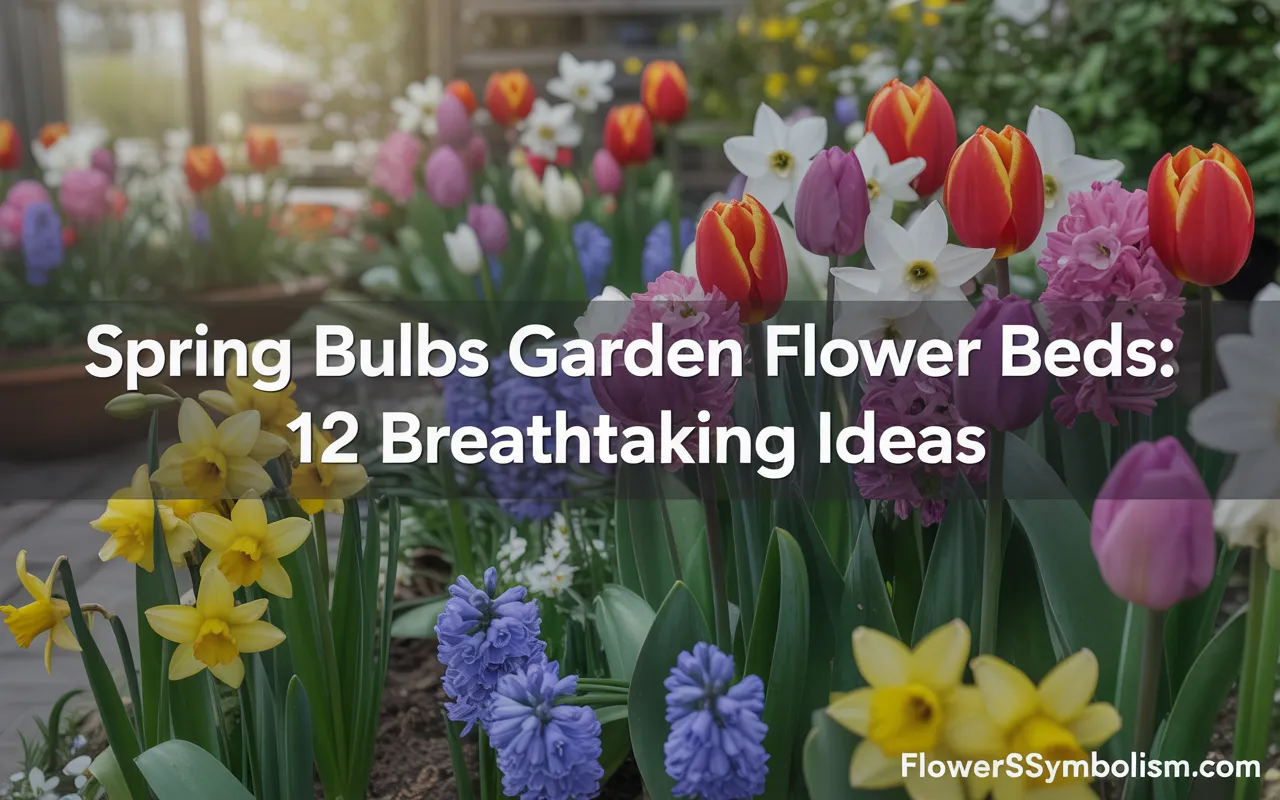
Is there anything more hopeful than seeing green shoots push through the cold soil after a long winter? For gardeners, spring bulbs garden flower beds are the ultimate reward for patience. They are the fireworks of the floral world, bursting onto the scene with vibrant colors and sweet fragrances just when we need them most.
Designing these beds is an art form, but you don’t need a landscape architecture degree to create something spectacular. Whether you have a sprawling backyard or a tiny front walk, there is a design here for you. From classic tulip rivers to modern minimalist drifts, these 12 breathtaking ideas will inspire you to grab your trowel and start planting for a spring showstopper.
1. The Classic Ribbon Planting
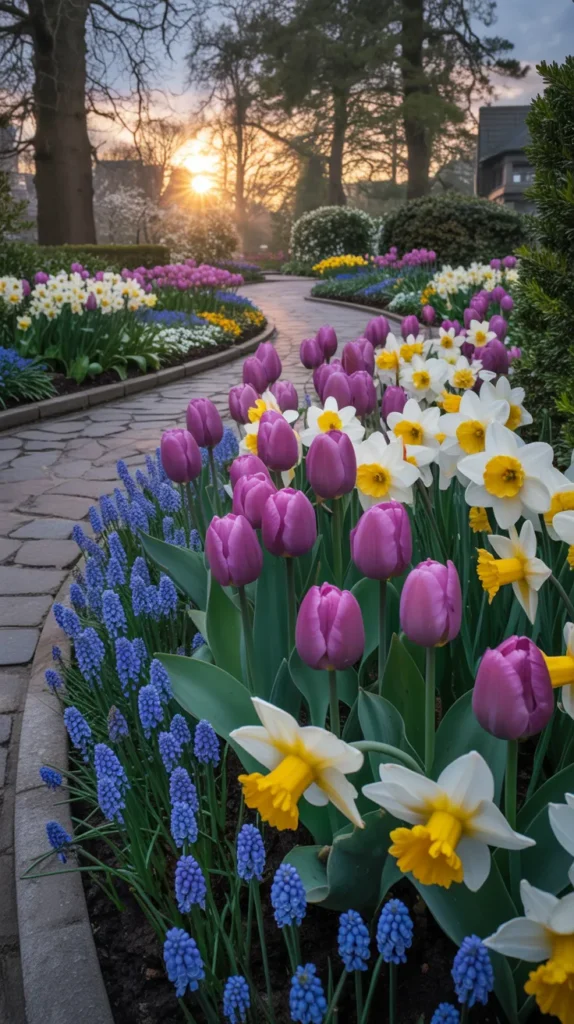
One of the most effective ways to create impact in spring bulbs garden flower beds is to use the “ribbon” technique. Instead of scattering bulbs randomly, plant them in long, winding streams of a single color.
Imagine a river of deep purple tulips winding its way through a sea of yellow daffodils. This technique guides the eye through the garden and creates a cohesive, professional look. To keep your lines flowing naturally, use a garden hose to lay out the shape before you start digging.
2. The “Lasagna” Layering Method
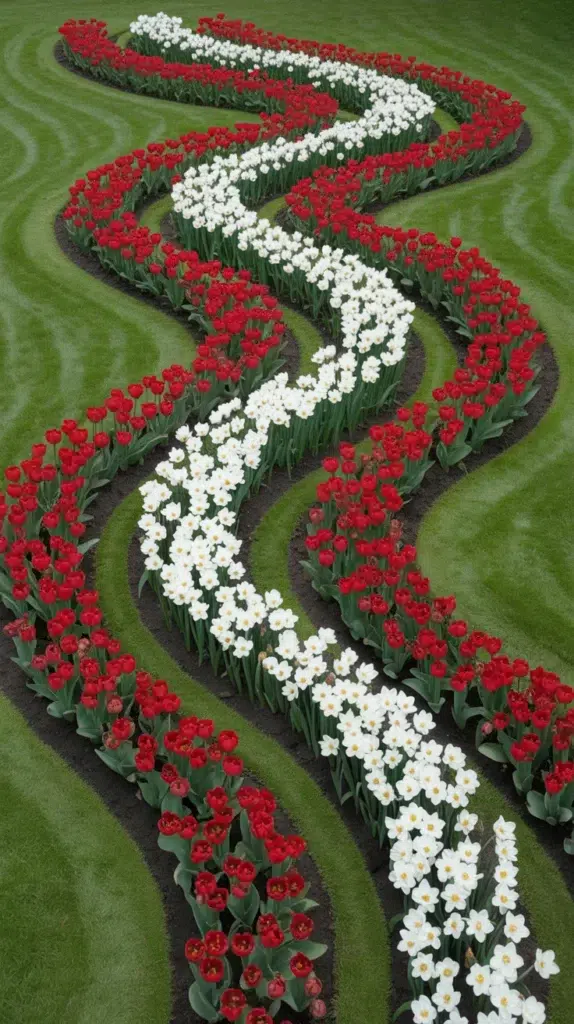
Why settle for one bloom time when you can have three? The lasagna method is perfect for small beds or containers where space is at a premium. The idea is to layer bulbs based on their blooming time and planting depth.
Plant late-blooming, large bulbs like tulips at the bottom (about 8 inches deep). Add a layer of soil, then plant mid-season daffodils. Add more soil, and finish with early bloomers like crocus on top. It’s a triple-decker sandwich of color! Using a quality soil mix like {Miracle-Gro Potting Mix} ensures all layers get the drainage they need to thrive without rotting.
3. The Woodland Wildflower Drift
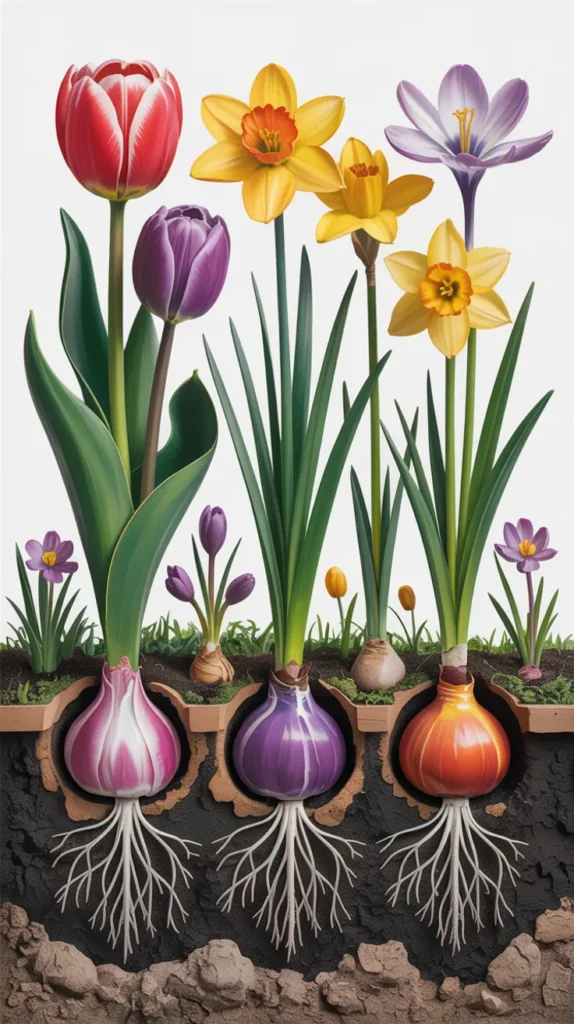
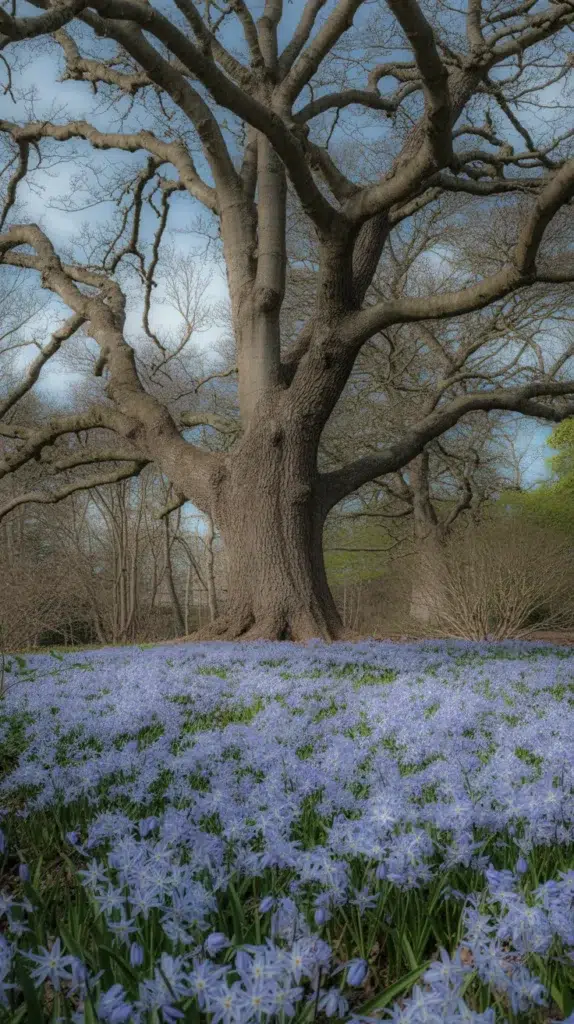
For a softer, more natural look, embrace the “drift” style. This design mimics how flowers grow in the wild. It works beautifully with smaller bulbs like snowdrops, Siberian squill, and glory-of-the-snow.
Toss handfuls of bulbs gently onto the soil and plant them exactly where they land. This avoids rigid lines and creates organic, cloud-like patches of color under trees or shrubs. It’s low maintenance and high impact.
4. High-Contrast Color Blocking
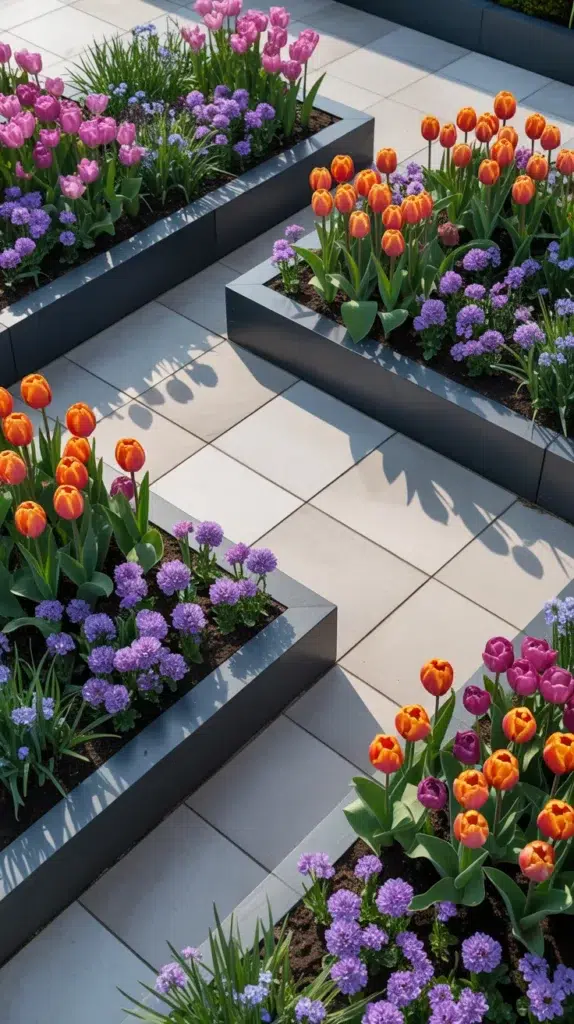
If you love bold drama, color blocking is for you. This technique involves planting large, distinct rectangular or square blocks of contrasting colors side-by-side.
Think of a block of hot pink tulips right next to a block of vibrant orange ones, or deep purple hyacinths against bright yellow daffodils. The sharp contrast makes the colors pop intensely. To get the spacing perfect for these dense blocks, an {Edward Tools Bulb Planter} is a lifesaver, helping you dig uniform holes quickly without tiring your hand.
5. The Monochrome Moon Garden
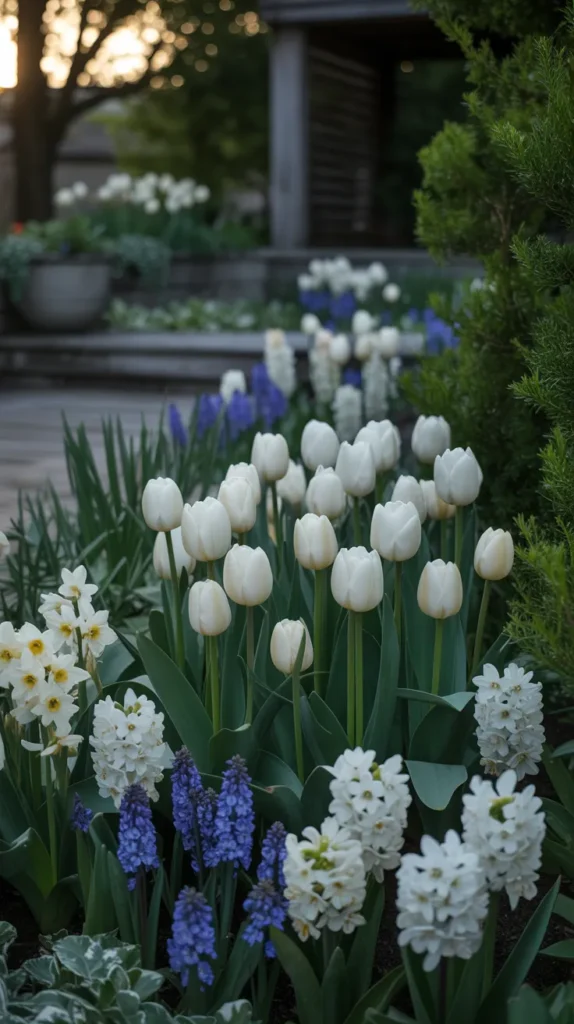
There is something undeniably elegant about an all-white garden. A “moon garden” is designed to glow in the twilight and looks sophisticated during the day.
Combine white tulips, white daffodils, white hyacinths, and snowdrops. The varying textures and heights keep it interesting, while the single color unifies the space. This is a perfect theme for spring bulbs garden flower beds near a patio where you spend your evenings.
6. The Carpet and Spire Combo
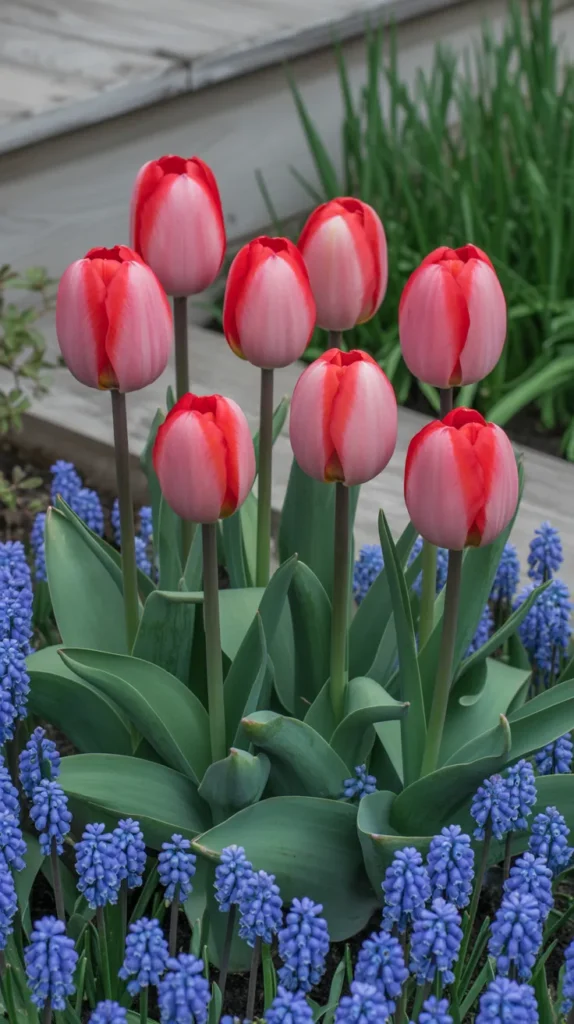
Create vertical interest by pairing low-growing “carpet” bulbs with tall, majestic “spires.” This adds depth and dimension to your flower bed.
Plant a ground cover of blue grape hyacinths (Muscari) or Anemone blanda. Then, intersperse tall, stately tulips or crown imperials (Fritillaria) throughout the bed. The low blue carpet makes the tall flowers look like they are floating above a lake.
7. Naturalizing in the Lawn
Who says flower beds have to be separate from the lawn? Naturalizing bulbs directly into your grass is a charming way to welcome spring. Crocus and snowdrops are perfect for this as they bloom and fade before the grass needs its first mow.
To do this, simply slice a flap in the sod with a sharp tool like a {Hori Hori Garden Knife}, tuck the bulbs underneath, and press the sod back down. It creates a magical, meadow-like effect right in your front yard.
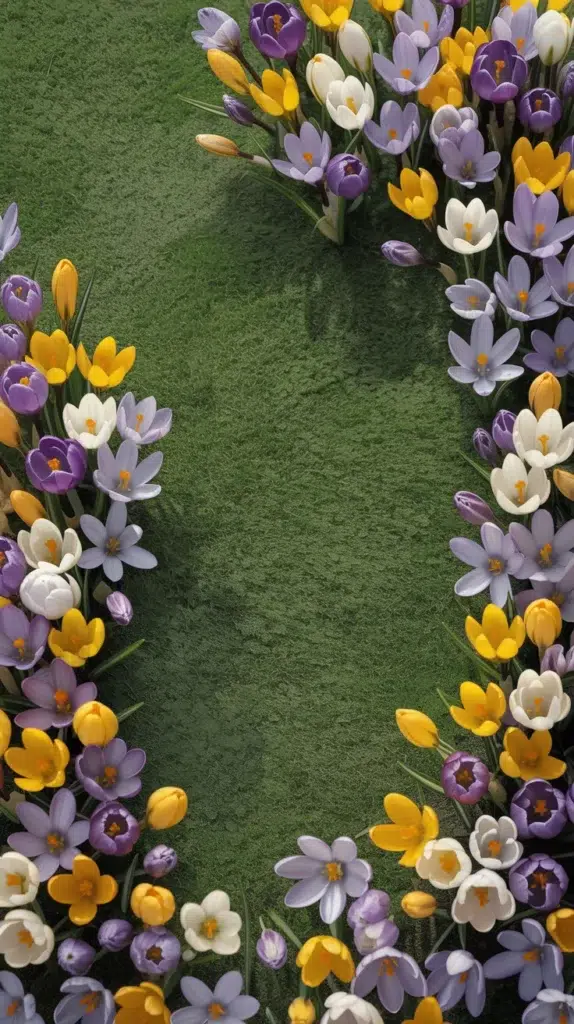
8. The Ever-Changing Border
Design your border so that the show changes every few weeks. This requires careful planning of bloom times. Start with snowdrops and winter aconite in the front.
Behind them, plant early daffodils, followed by mid-season hyacinths, and finally late-blooming tulips and alliums in the back. As the front flowers fade, the plants behind them grow up to hide the dying foliage, keeping your spring bulbs garden flower beds looking fresh. Keep track of what you planted where with durable {WHATOOK Plant Labels}.
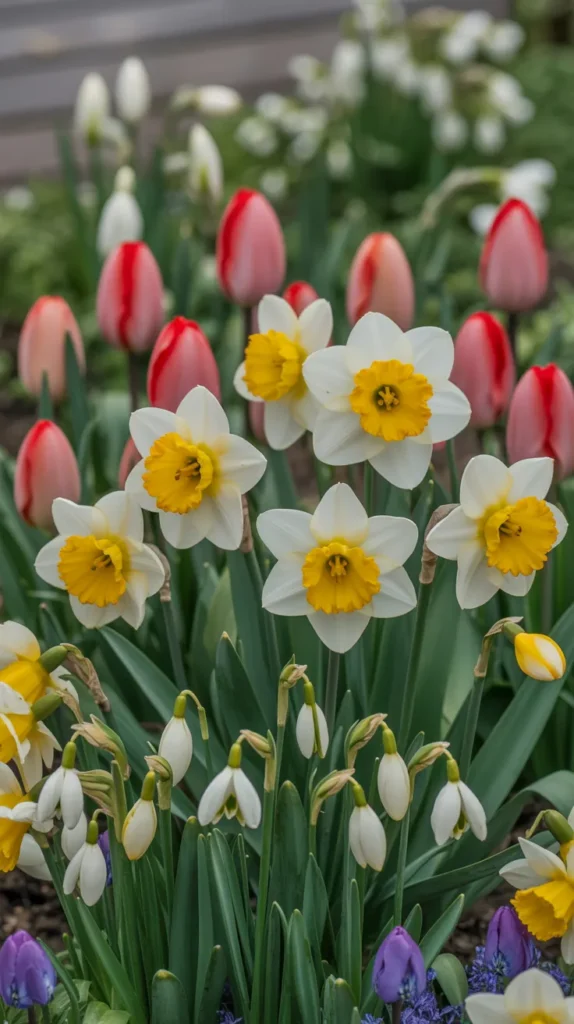
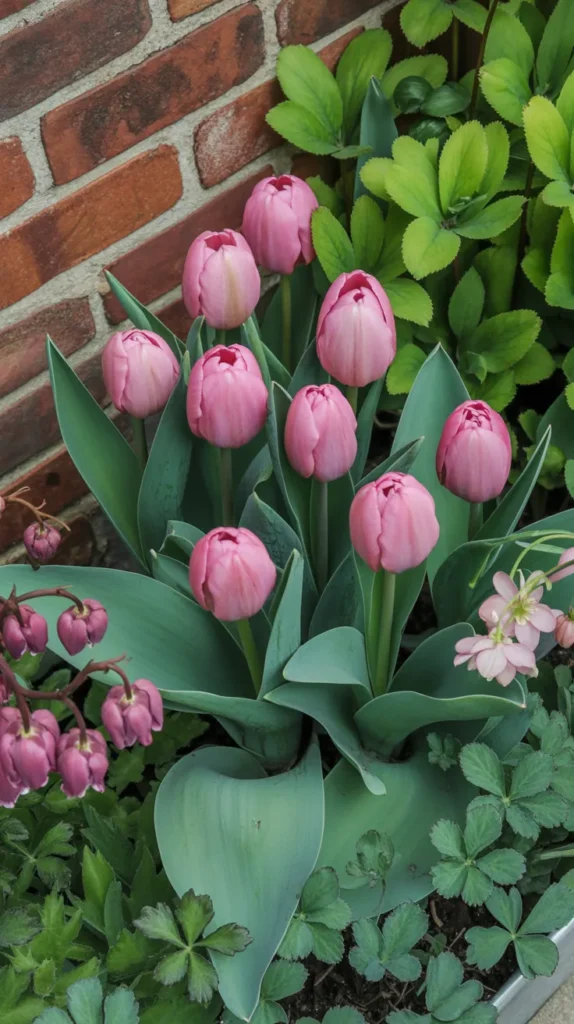
9. Companion Planting with Perennials
Bulbs look beautiful on their own, but they really shine when paired with early spring perennials. Plants like Hellebores, Bleeding Hearts, and Lungwort (Pulmonaria) offer contrasting foliage and fill in the gaps.
The perennials also serve a functional purpose: their expanding leaves help cover the messy, dying bulb foliage in late spring. It’s a symbiotic relationship that makes for a tidy and full garden bed.
10. The Container Garden Cluster
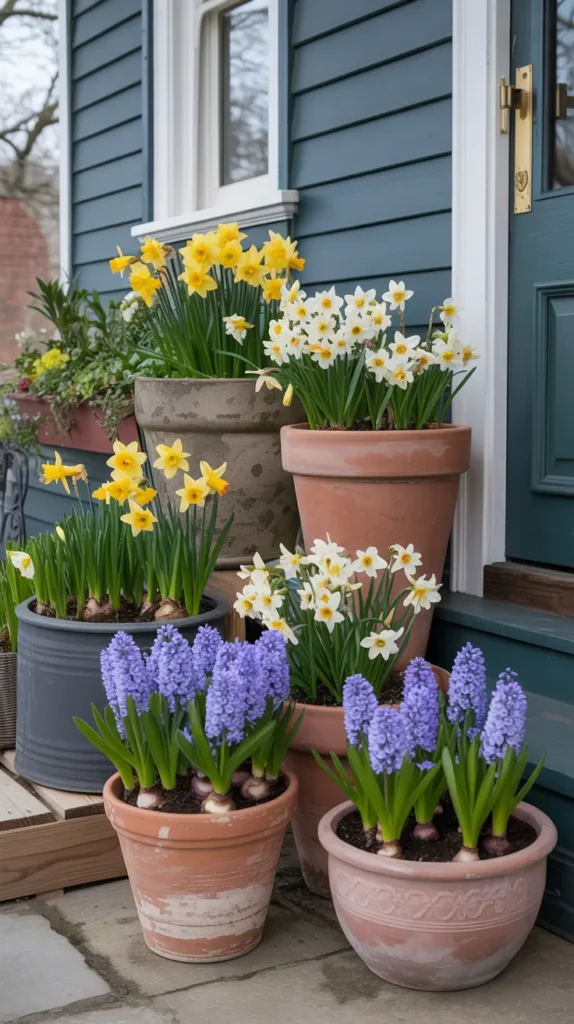
If you don’t have inground beds, you can still create a stunning bulb display using clustered pots. Use varying sizes and heights of terracotta or ceramic pots.
Plant each pot with a different type of bulb, or mix them up. Group the pots together on steps, a porch, or a patio corner. This allows you to move the pots into the spotlight when they are at their peak and tuck them away when they fade. To save your back while potting up dozens of bulbs, a {Garden Kneeler and Seat} is an essential comfort tool.
11. The Fragrant Walkway
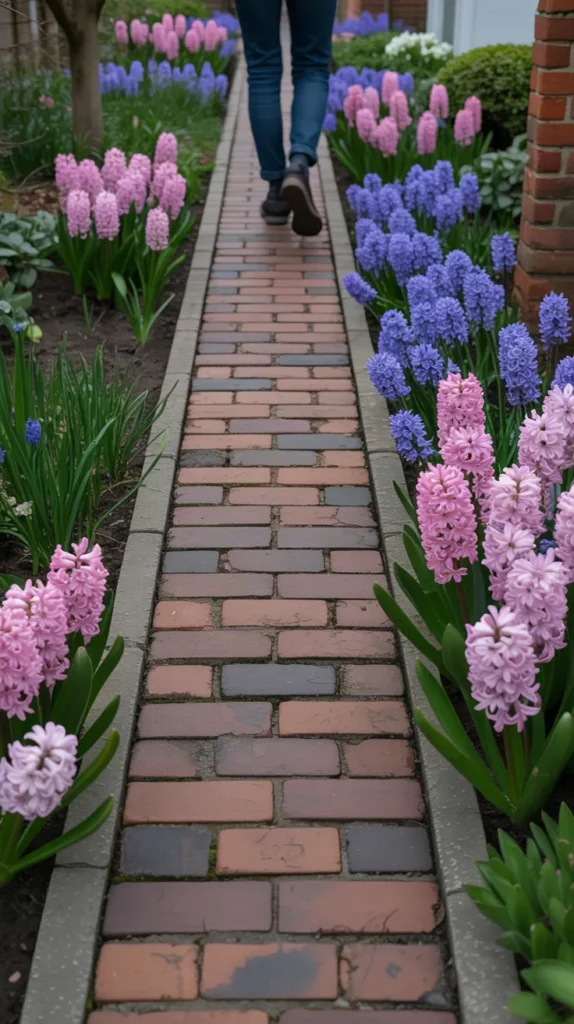
Engage your sense of smell by lining a walkway or entrance path with highly fragrant bulbs. Hyacinths and certain varieties of narcissus (like ‘Cheerfulness’) are famous for their sweet perfume.
Plant them close to the edge of the path so that every time you walk by, you get a waft of spring scent. It turns a simple walk to the mailbox into a sensory experience.
12. The Protected fortress
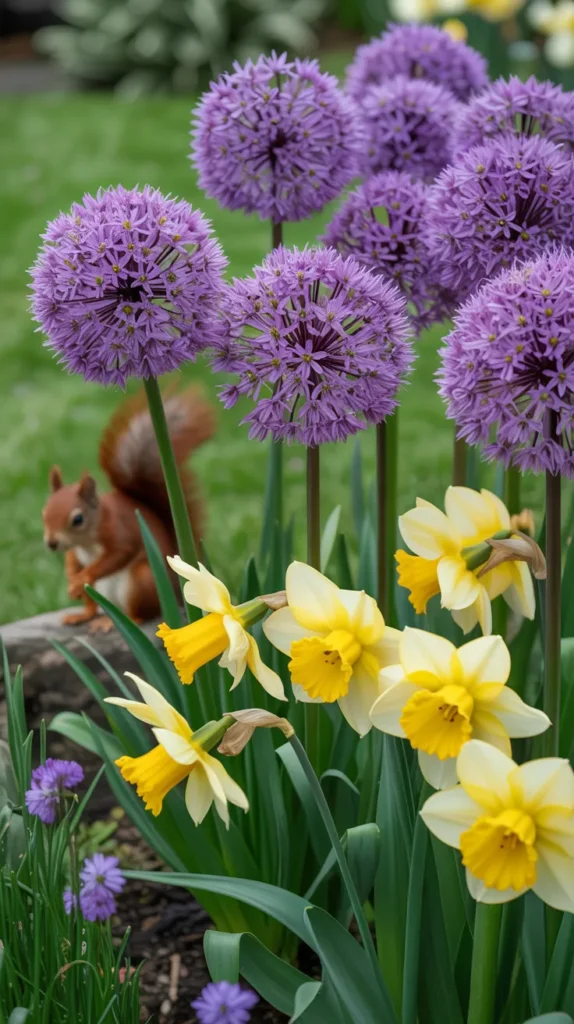
Let’s be honest: deer and squirrels love bulbs as much as we do (just for a different reason—lunch!). If you battle wildlife, design a “fortress” bed using pest-resistant bulbs.
Daffodils, alliums, and snowflakes (Leucojum) are generally avoided by critters. Plant these in a dense perimeter around tastier treats like tulips. For extra protection during the planting phase, laying down {Chicken Wire Mesh} under the mulch is a foolproof way to stop squirrels from digging up your hard work.
Recommended Products for Your Bulb Garden
| Product | Use Case |
|---|---|
| {Miracle-Gro Potting Mix} | Ensures proper drainage and nutrition for lasagna-style planting in pots. |
| {Edward Tools Bulb Planter} | Removes soil cores easily for quick, uniform planting depth. |
| {Hori Hori Garden Knife} | Perfect for slicing sod to naturalize bulbs in the lawn. |
| {WHATOOK Plant Labels} | Helps you track varieties and planting dates for succession planning. |
| {Garden Kneeler and Seat} | Saves your knees and back during long planting sessions. |
| {Chicken Wire Mesh} | Protects freshly planted bulbs from digging pests like squirrels. |
Plant Today for a Beautiful Tomorrow
Creating stunning spring bulbs garden flower beds is an investment in the future. It requires a little vision and some effort in the fall, but the payoff is incomparable.
When those first shoots break through the soil, bringing color to a grey world, you’ll know every minute of digging was worth it. So choose your favorite design, pick out your bulbs, and get ready to paint your garden with the colors of spring.
