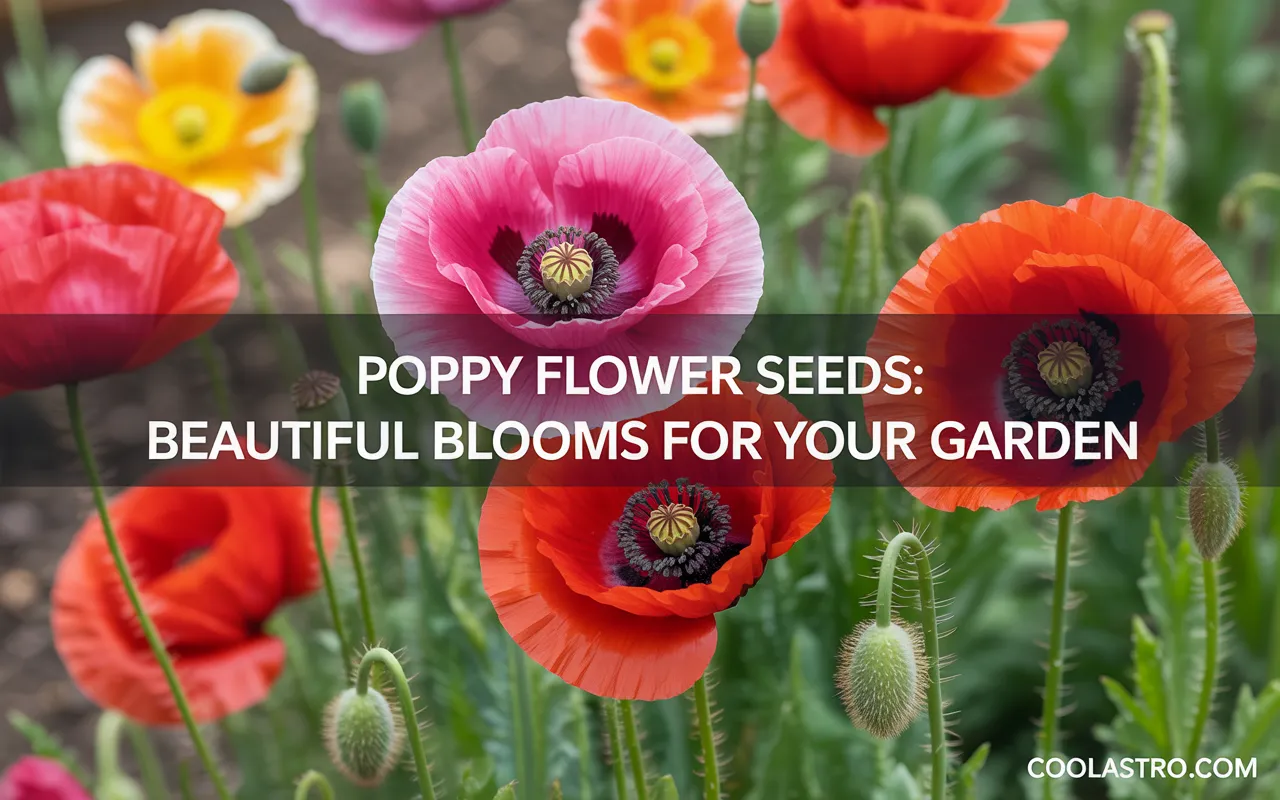
There’s a certain kind of magic in watching a garden come to life. You start with nothing but a patch of earth and a handful of tiny seeds. With a little care and patience, those seeds transform, unfurling into a riot of color and life. Among the most enchanting flowers you can grow are poppies.
Their delicate, paper-thin petals and vibrant colors, from fiery red to soft pastels, can turn any garden into a storybook scene.
If you’ve ever admired a field of poppies and dreamed of recreating that wild, beautiful look in your own backyard, this guide is for you.
The idea of growing flowers from seed can seem intimidating, but poppies are surprisingly easy and incredibly rewarding for beginners.
We’re going to walk you through everything you need to know, from choosing the right poppy flower seeds to planting them for a spectacular spring and summer display.
Get ready to get your hands a little dirty and discover the simple joy of growing your own beautiful blooms.
Your Essential Poppy Planting Toolkit
Starting your garden from seed is so much more enjoyable when you have a few key tools to help you along the way.
You don’t need a lot of fancy equipment, just some reliable basics that make the process easier and more successful. Here are some highly-rated essentials from Amazon that are perfect for planting and nurturing your poppy flower seeds.
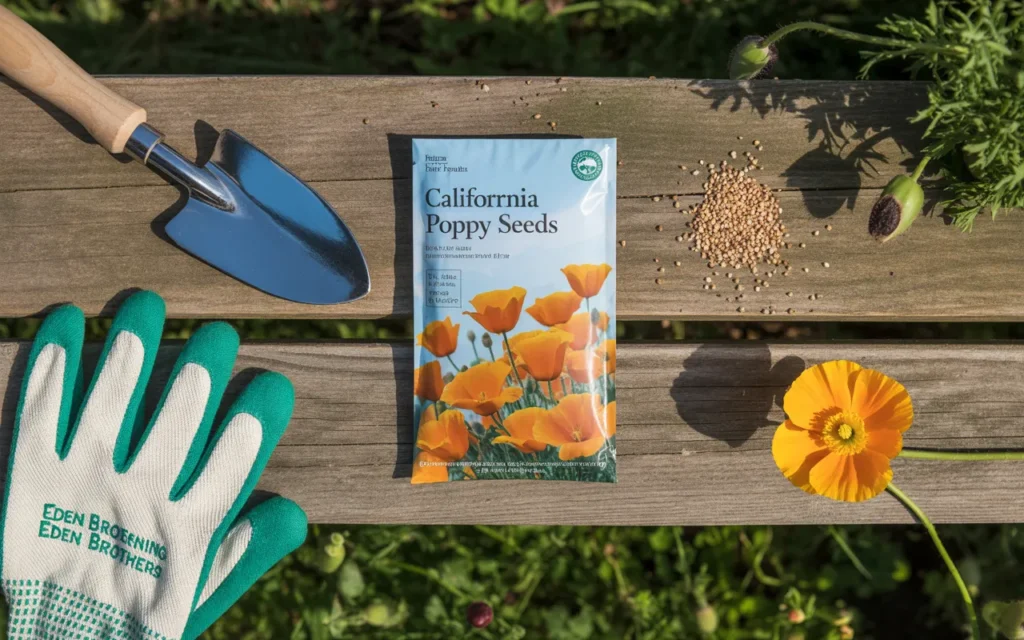
- {California Poppy Seeds Wildflower Mixture}
- Brand: Eden Brothers
- Benefit/Context: Why stick to one color when you can have a whole sunset? This mix of California poppy seeds comes in a beautiful range of reds, oranges, yellows, and creams. California poppies are incredibly easy to grow and are perfect for creating a natural, wildflower meadow look.
- {Red Flanders Poppy Seeds for Planting}
- Brand: Seed Needs
- Benefit/Context: If you’re dreaming of that classic, iconic red poppy, this is the packet for you. These are the famous Flanders poppies, known for their vibrant red petals and deep symbolism. Sowing these seeds is a beautiful way to create a striking sea of red in your garden.
- {Jiffy Professional Greenhouse Starter Kit}
- Brand: Jiffy
- Benefit/Context: While poppies do best when sown directly, some gardeners in colder climates like to get a head start indoors. This kit, with its peat pellets and humidity dome, provides the perfect controlled environment for seed germination, giving your seedlings a strong, healthy start.
- {Fiskars Ergo Garden Tool Set}
- Brand: Fiskars
- Benefit/Context: Good hand tools are a gardener’s best friend. This set includes a trowel for digging and a cultivator for loosening and aerating the soil. The ergonomic handles make them comfortable to use as you prepare your garden bed for its new poppy seeds.
- {Gardener’s Supply Company Galvanized Steel Watering Can}
- Brand: Gardener’s Supply Company
- Benefit/Context: When you first plant your seeds, you need to water them very gently to avoid washing them away. A watering can with a “rose” (the sprinkler head) provides a soft, rain-like shower that is perfect for newly sown seeds and delicate seedlings.
- {Miracle-Gro All Purpose Garden Soil}
- Brand: Miracle-Gro
- Benefit/Context: Poppies aren’t fussy, but they do appreciate well-draining soil. If your garden has heavy clay soil, amending it with a quality all-purpose garden soil like this one can greatly improve drainage and give your poppies the ideal conditions to thrive.
- {Garden Tutor Seed Dispenser}
- Brand: Garden Tutor
- Benefit/Context: Poppy seeds are incredibly tiny, which can make it difficult to sow them evenly. A seed dispenser like this one allows you to control the flow of seeds, helping you to space them out properly and avoid having them all clump together in one spot.
Getting to Know Your Poppies: Choosing the Right Variety
The word “poppy” covers a wide range of beautiful flowers, and while their basic needs are similar, their appearances can be quite different.
Choosing the right poppy flower seeds depends on the look you want to achieve in your garden. Here are some of the most popular and easy-to-grow varieties for beginners.
1. California Poppy (Eschscholzia californica)
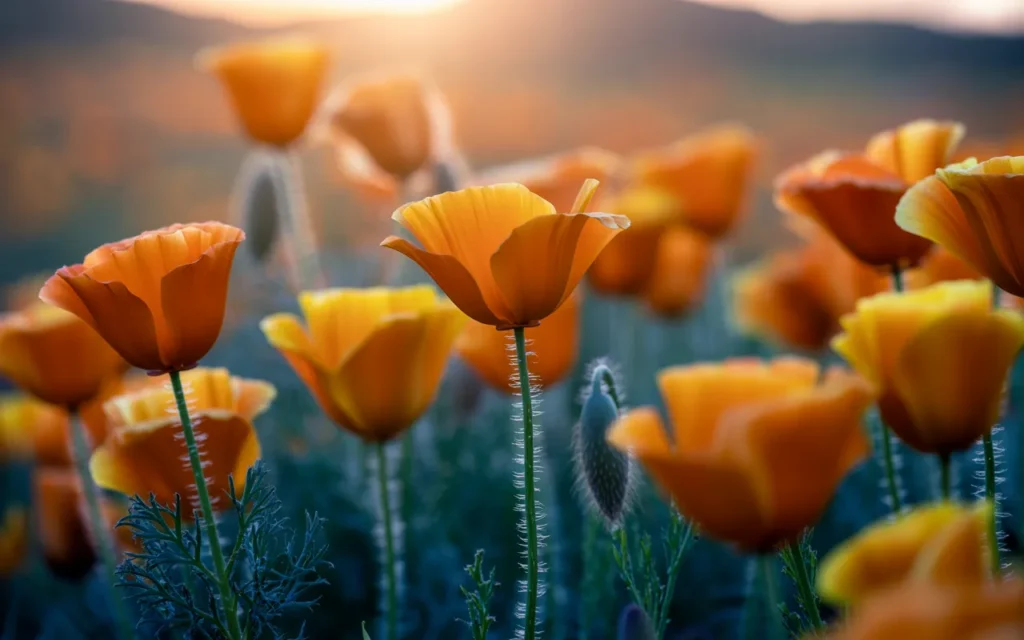
If you’re a new gardener looking for a surefire success, the California Poppy is your best friend. It’s not a “true” poppy from the Papaver genus, but it’s the beloved state flower of California for a reason.
- Appearance: Silky, cup-shaped flowers in vibrant shades of orange, yellow, red, pink, and cream. Their foliage is feathery and blue-green, which is beautiful even when the flowers aren’t in bloom.
- Why You’ll Love It: They are incredibly low-maintenance, drought-tolerant, and thrive in full sun and even poor soil. They are prolific self-seeders, meaning if you plant them once, you’ll likely have them popping up for years to come.
- Perfect For: Creating a colorful, informal, wildflower meadow look. They are excellent for sunny borders, rock gardens, and areas where you want beautiful color without a lot of fuss.
2. Flanders or Common Poppy (Papaver rhoeas)
This is the iconic red poppy of “In Flanders Fields” fame. It’s a classic, beautiful flower steeped in history and symbolism.
- Appearance: Delicate, paper-thin petals in a brilliant, true red, often with a dark black spot at the base. They stand on long, slender, fuzzy stems.
- Why You’ll Love It: They bring a powerful and striking splash of color to the garden. They are easy to grow and look absolutely breathtaking when planted in a large drift.
- Perfect For: Cottage gardens, memorial gardens, or for anyone wanting to create a bold, classic statement. They mix beautifully with other wildflowers like cornflowers and daisies.
3. Icelandic Poppy (Papaver nudicaule)
For those who love pastels, the Icelandic Poppy is a dream come true. These poppies offer a softer, more romantic color palette.
- Appearance: Large, crinkled, crepe-paper-like petals in beautiful shades of white, yellow, salmon, pink, and orange. They have a light, sweet fragrance and make excellent cut flowers.
- Why You’ll Love It: They have a longer blooming period than many other poppies, especially in cooler climates. Their sweet scent and beautiful colors make them a favorite for bouquets.
- Perfect For: Cottage gardens, cut flower gardens, and pairing with other cool-toned flowers like lupines and delphiniums.

4. Breadseed or Opium Poppy (Papaver somniferum)
Don’t let the name intimidate you. These are perfectly legal and beautiful ornamental flowers to grow. The “breadseed” name comes from the fact that their dried seed pods produce the edible poppy seeds used in baking.
- Appearance: This variety offers incredible diversity. Flowers can be single-petaled or have huge, fluffy, peony-like double blooms. Colors range from deep purples and reds to soft lavenders and pinks. Their seed pods are also highly ornamental.
- Why You’ll Love It: The sheer variety and drama of these flowers are unmatched. The large, decorative seed pods that are left after the petals fall are beautiful in their own right and are prized for dried arrangements.
- Perfect For: Creating a dramatic focal point in the garden. They add height, texture, and a touch of the exotic to mixed borders.
How to Plant Poppy Flower Seeds: A Step-by-Step Guide
The most important thing to know about poppies is that they do not like to be transplanted. Their root systems are very sensitive.
For this reason, the best and easiest way to grow them is to sow the seeds directly into the garden where you want them to bloom.
When to Plant
The timing depends on your climate. Poppies need a period of cold to help trigger their germination.
- For Cold Climates (with freezing winters): The best time to sow your poppy flower seeds is in late fall or very early spring. Sowing in the fall allows the seeds to lie dormant over the winter and sprout as soon as the conditions are right in spring. You can even sow them on top of the snow!
- For Mild Climates (with no hard freeze): The ideal time is in late fall or early winter. This gives them the cool, moist conditions they need to germinate and establish their roots before the weather warms up.
Step 1: Prepare the Perfect Spot
- Choose a Sunny Location: Poppies are sun lovers. Pick a spot in your garden that gets at least 6 hours of direct sunlight each day.
- Ensure Good Drainage: Poppies hate “wet feet.” They need soil that drains well. If you have heavy clay soil, work in some compost or all-purpose garden soil to improve its texture and drainage.
- Clear the Area: Remove all weeds, grass, and rocks from the planting area. Use a cultivator or a rake to loosen the top few inches of soil, creating a fine, crumbly surface.

Step 2: Sow the Seeds
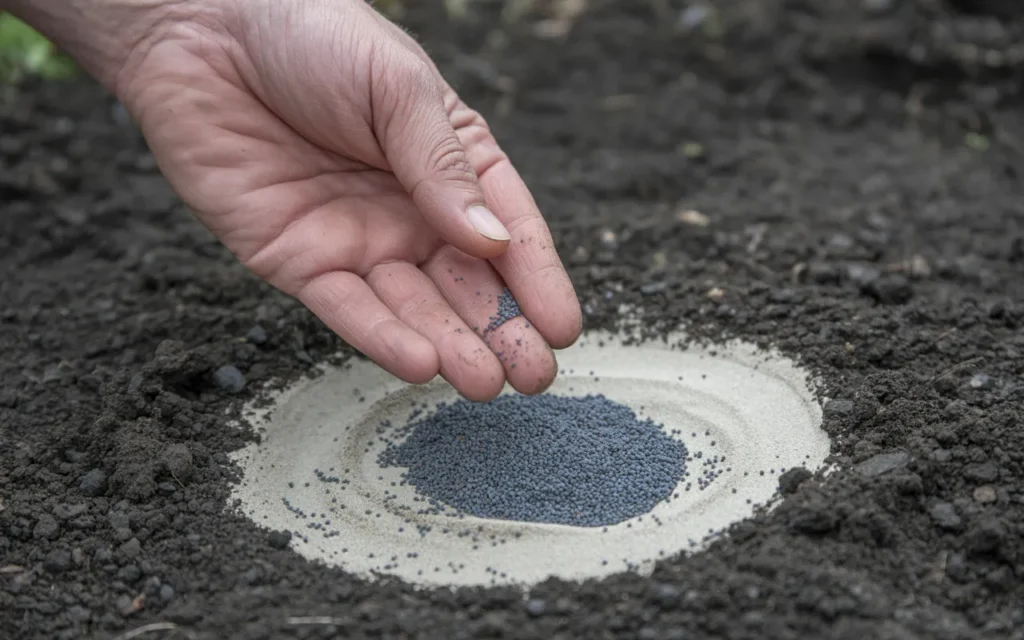
- Mix with Sand: Poppy seeds are as fine as dust, which makes them tricky to spread evenly. A great pro tip is to mix your tiny seeds with a cup of sand in a bowl. This bulks up the volume, making it much easier to see where you are scattering them and helping you get a more even distribution.
- Scatter, Don’t Bury: Take your sand-and-seed mixture and scatter it lightly over your prepared soil, just like you’re seasoning a dish.
- Do Not Cover! This is a critical step that beginners often get wrong. Most poppy seeds need light to germinate. Do not bury them with soil.
- Press Them In: Gently walk over the area or use your hands to press the soil down firmly. This ensures the seeds make good contact with the soil, but are still exposed to light.
Step 3: Water Gently
- Use a watering can with a rose attachment or a hose with a gentle mist setting to water the area. You want to moisten the soil without creating a flood that washes all your tiny seeds away. Keep the soil consistently moist (but not soggy) until the seeds germinate.
Step 4: Thin the Seedlings
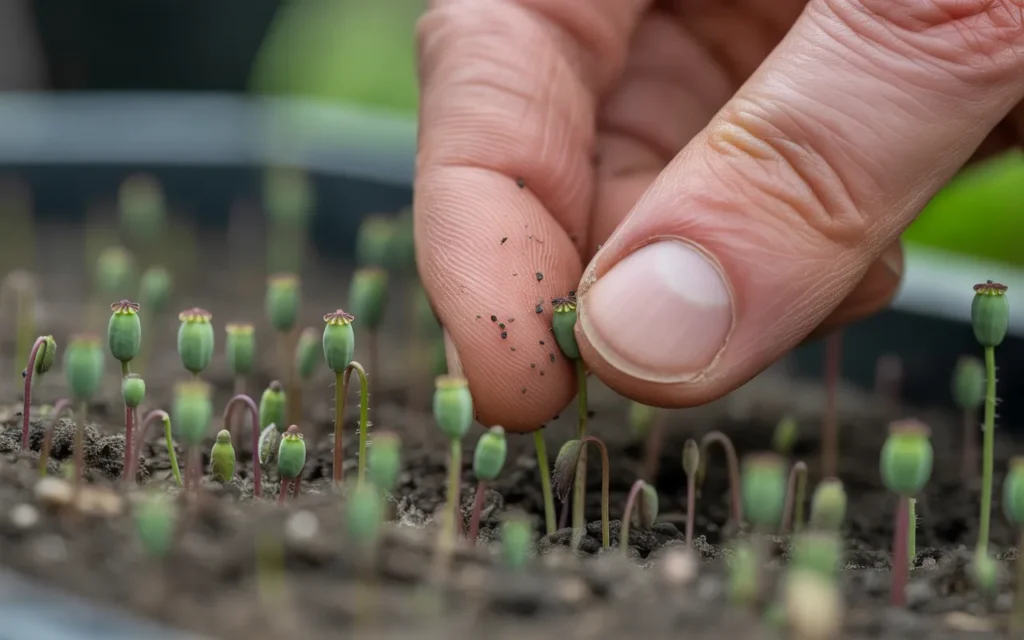
- In a few weeks, you’ll see a carpet of tiny green seedlings. This is an exciting moment! However, if they are too crowded, they will compete with each other and won’t grow well.
- Once the seedlings are a couple of inches tall, you need to “thin” them. This is the hardest part for many gardeners because it feels wasteful, but it’s essential for healthy plants. Carefully pull out the weaker seedlings, leaving the strongest ones spaced about 6-10 inches apart.
Caring for Your Poppies
The wonderful thing about poppies is that once they are established, they are incredibly low-maintenance.
- Watering: Water them regularly while they are young. Once they are mature, many varieties (especially California poppies) are quite drought-tolerant and will only need watering during long dry spells.
- Fertilizing: Poppies generally do not need fertilizer. In fact, overly rich soil can lead to more leaves and fewer flowers. They thrive in average to poor soil.
- Deadheading (Optional): “Deadheading” is the process of removing spent flowers. For some poppies, like Icelandic poppies, this can encourage the plant to produce more blooms. For others, like Breadseed poppies, you may want to leave the flowers to develop their beautiful seed pods.
A Garden Full of Life Awaits
Growing flowers from seed is one of the most hopeful and rewarding things a person can do. It connects you to the rhythm of the seasons and rewards your patience with breathtaking beauty. Poppies, with their simple needs and stunning blooms, are the perfect flower to start with on this journey.
Your next step is simple: choose the poppy that speaks to you. Do you want a classic sea of red, a dreamy field of pastels, or a fiery sunset of oranges and yellows? Order your poppy flower seeds in the fall or winter, and when the time is right, take that little packet of potential and scatter it in your garden. Come spring, you’ll be greeted by a spectacular display that you created from nothing but a handful of seeds.
Recommended Poppy Planting Supplies
Here is a quick summary of the essential products to help you successfully grow beautiful poppies from seed.
| Product Name | Brand | Great For… |
|---|---|---|
| {California Poppy Seeds Mixture} | Eden Brothers | An easy, low-maintenance, multi-colored wildflower look. |
| {Red Flanders Poppy Seeds} | Seed Needs | Creating a classic, striking field of vibrant red poppies. |
| {Jiffy Greenhouse Starter Kit} | Jiffy | Getting a head start on germination in colder climates. |
| {Fiskars Ergo Garden Tool Set} | Fiskars | Comfortably preparing your garden beds for planting. |
| {Galvanized Steel Watering Can} | Gardener’s Supply Co. | Gently watering seeds and delicate new seedlings. |
| {Miracle-Gro All Purpose Garden Soil} | Miracle-Gro | Improving drainage in heavy clay soil for happy poppies. |
| {Garden Tutor Seed Dispenser} | Garden Tutor | Achieving even distribution of tiny poppy seeds. |
