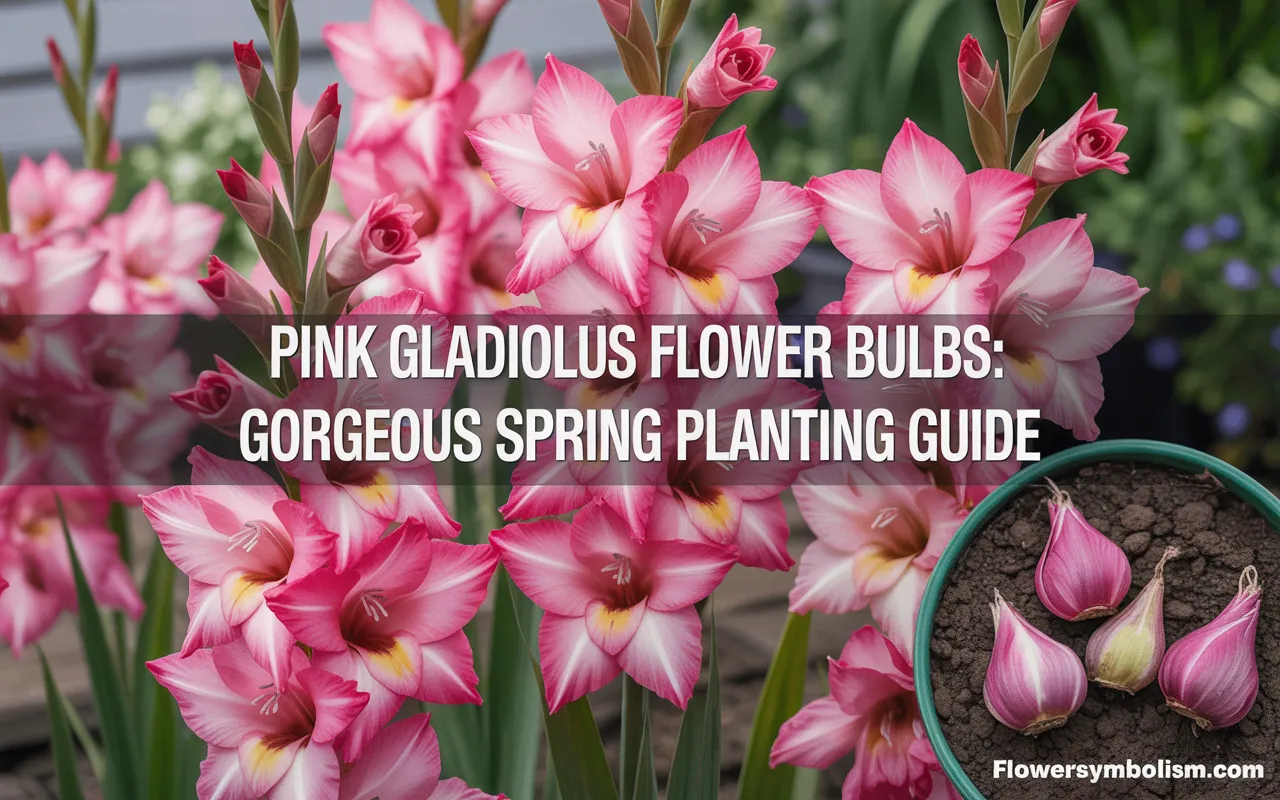
There is nothing quite like the drama and elegance of a gladiolus spike in full bloom. These towering beauties, often called “sword lilies,” bring a striking vertical element to the garden that is hard to match. When you choose a soft, romantic shade of pink, the effect is simply breathtaking.
Planting pink gladiolus flower bulbs (technically corms) is an easy way to add a touch of grace and a whole lot of “wow” to your summer garden and flower arrangements.
Gladiolus are beloved for their tall stalks packed with funnel-shaped flowers that open from the bottom up, creating a long-lasting display of color.
Despite their sophisticated appearance, they are surprisingly easy to grow. If you’re looking for a flower that provides incredible bouquets and garden height with minimal fuss, you’ve found your match. Here is everything you need to know to grow gorgeous pink gladiolus.
1. Plant in Spring for Summer Blooms
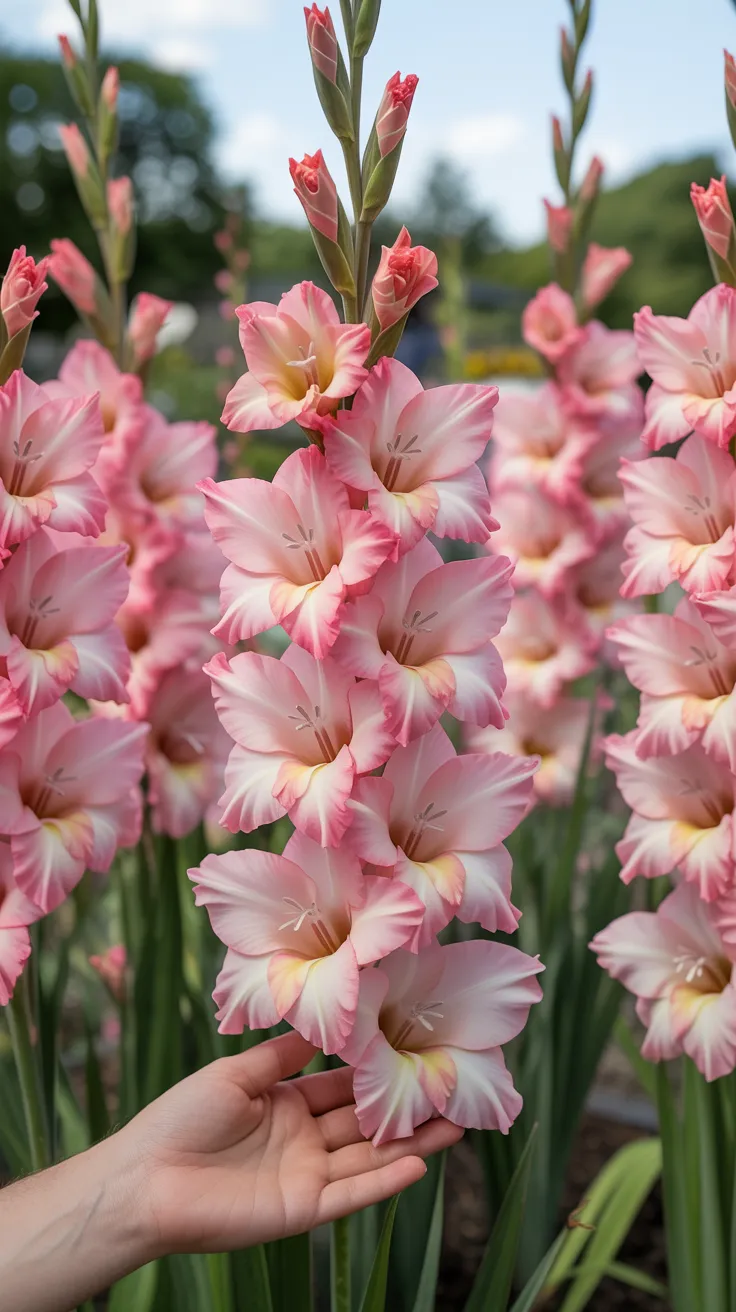
Unlike tulips or daffodils that need to be planted in the fall, gladiolus are tender corms that you plant in the spring. They cannot survive freezing winter soil in most parts of the country.
The perfect time to plant is after your last frost date has passed and the soil has warmed up to at least 55°F. Planting too early in cold, wet soil can cause the corms to rot.
2. Choose Healthy, Plump Corms
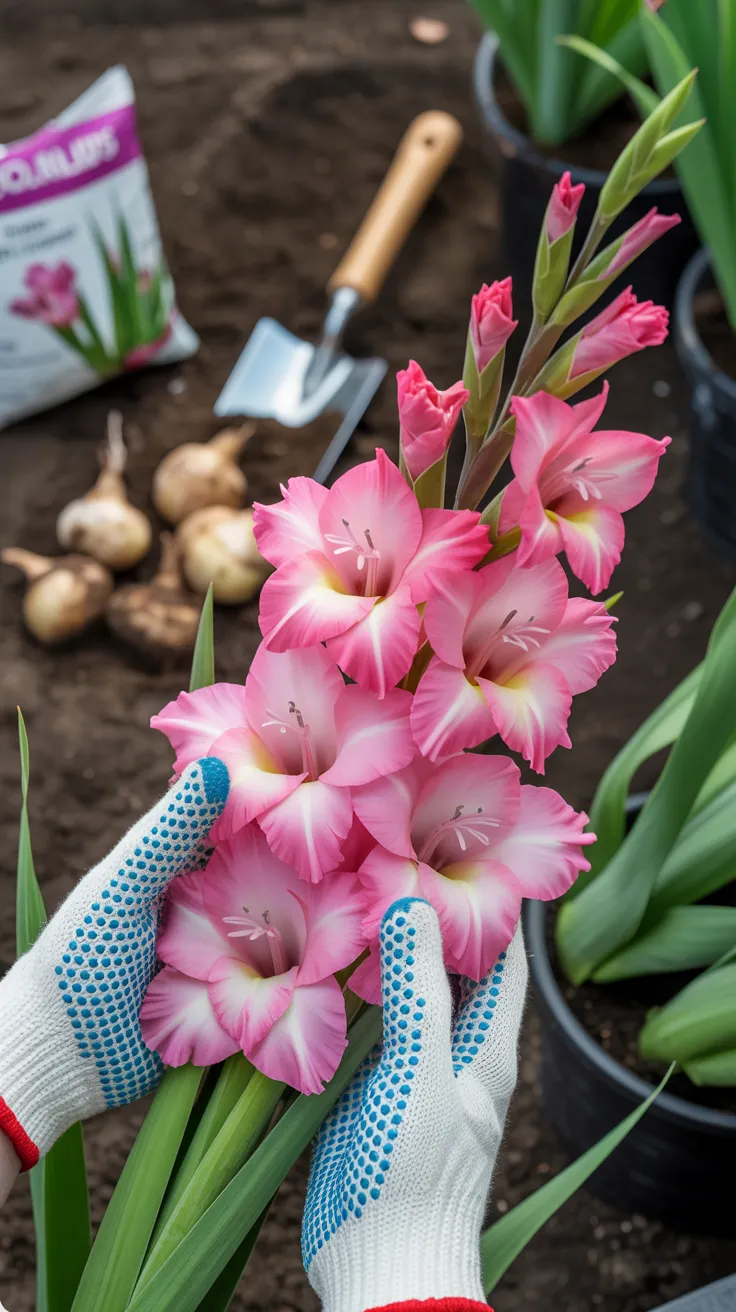
Your success starts with selecting good-quality corms. When you buy your pink gladiolus flower bulbs, look for corms that are plump, firm, and free of any soft spots, mold, or significant blemishes.
Size matters with gladiolus. A larger corm (often called “jumbo”) has more stored energy and will produce a taller, more robust flower stalk than a smaller one. Think of it as the fuel tank for your flower.
3. Full Sun is Non-Negotiable
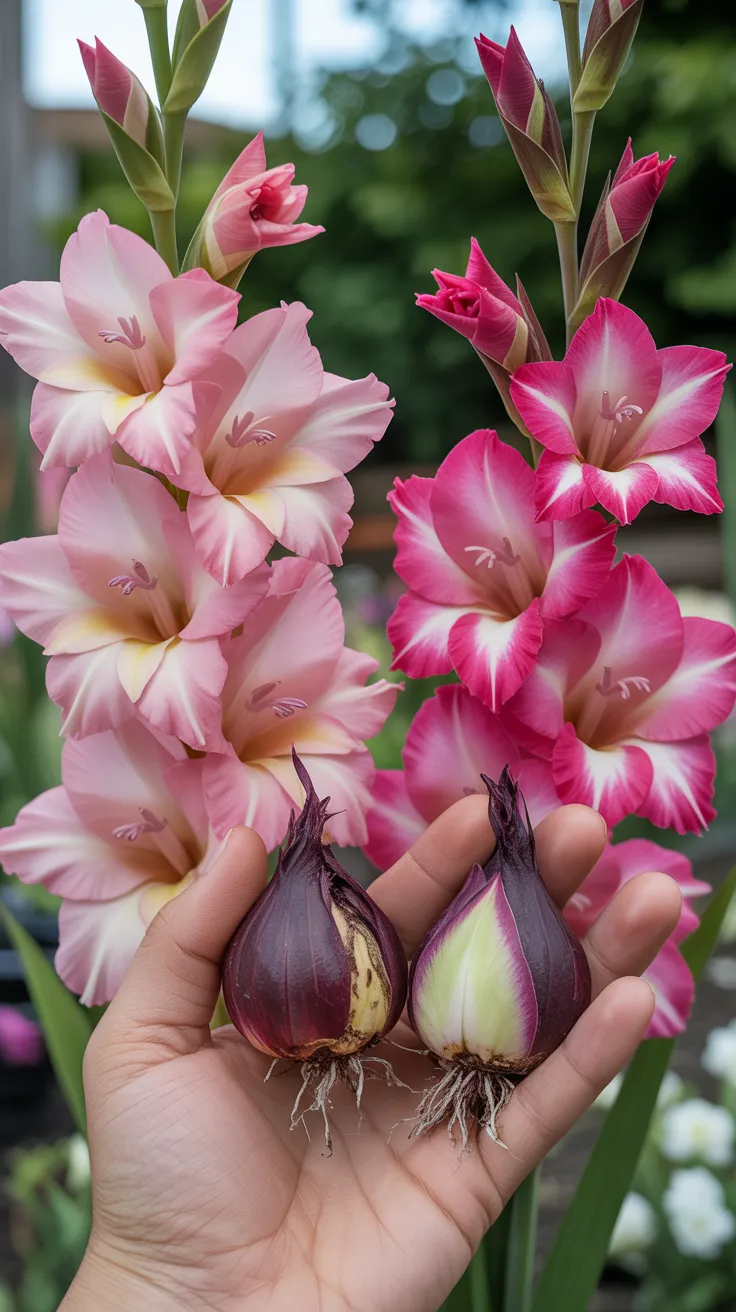
Gladiolus are sun-lovers, through and through. To grow those tall, straight, flower-packed stems, you need to plant them in a location that receives a minimum of six to eight hours of direct sunlight each day.
They also require well-draining soil. If your garden has heavy clay or soil that stays soggy after rain, it’s best to plant your gladiolus in raised beds or large containers to prevent the corms from rotting.
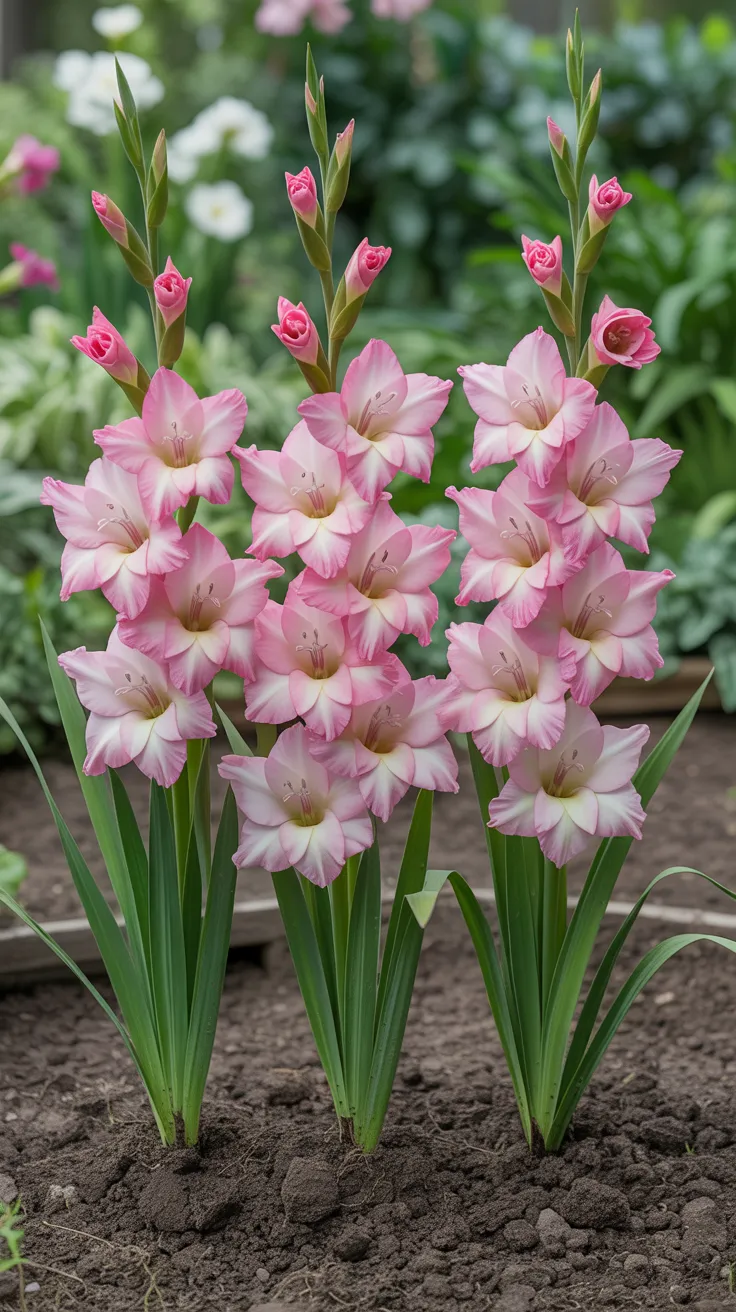
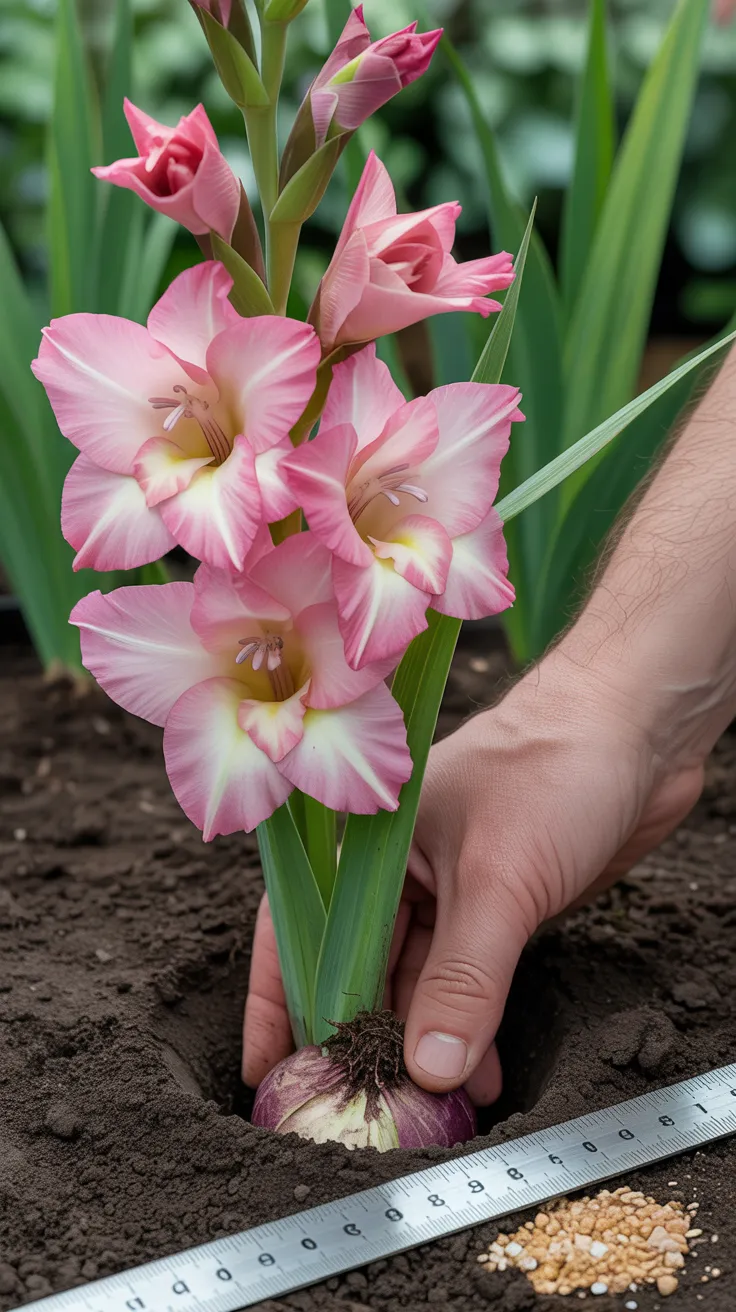
4. Plant Them Deep and Give Them Food
Gladiolus corms should be planted about 4 to 6 inches deep, with the small, pointed side facing up. This depth helps anchor the tall stalks and prevents them from toppling over in the wind.
To give them a boost, mix a balanced, slow-release fertilizer into the bottom of the planting hole. A fertilizer formulated for blooms, like {Jobe’s Organics Bone Meal}, is excellent because it’s high in phosphorus, which encourages strong root development and vibrant flowers.
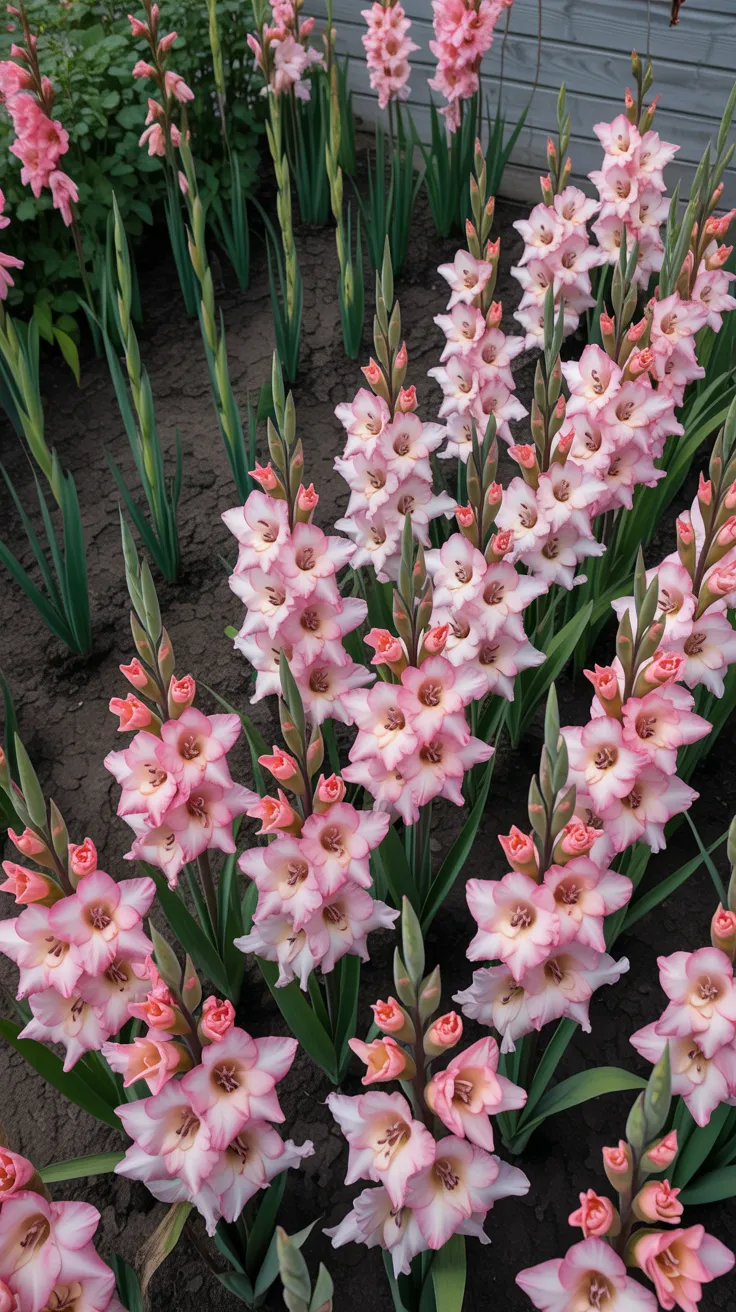
5. Stagger Your Plantings for Continuous Blooms
A single gladiolus stalk blooms for about a week or two. To enjoy a continuous supply of beautiful pink flowers all summer long, don’t plant all your corms at once.
Start planting your first batch after the last frost, and then plant a new batch every two weeks until early summer. This “succession planting” ensures that as one set of flowers begins to fade, a new set is just starting to open. Keeping track of your planting dates is easy with a set of durable {WHATOOK Plant Labels}.
6. The Importance of Staking
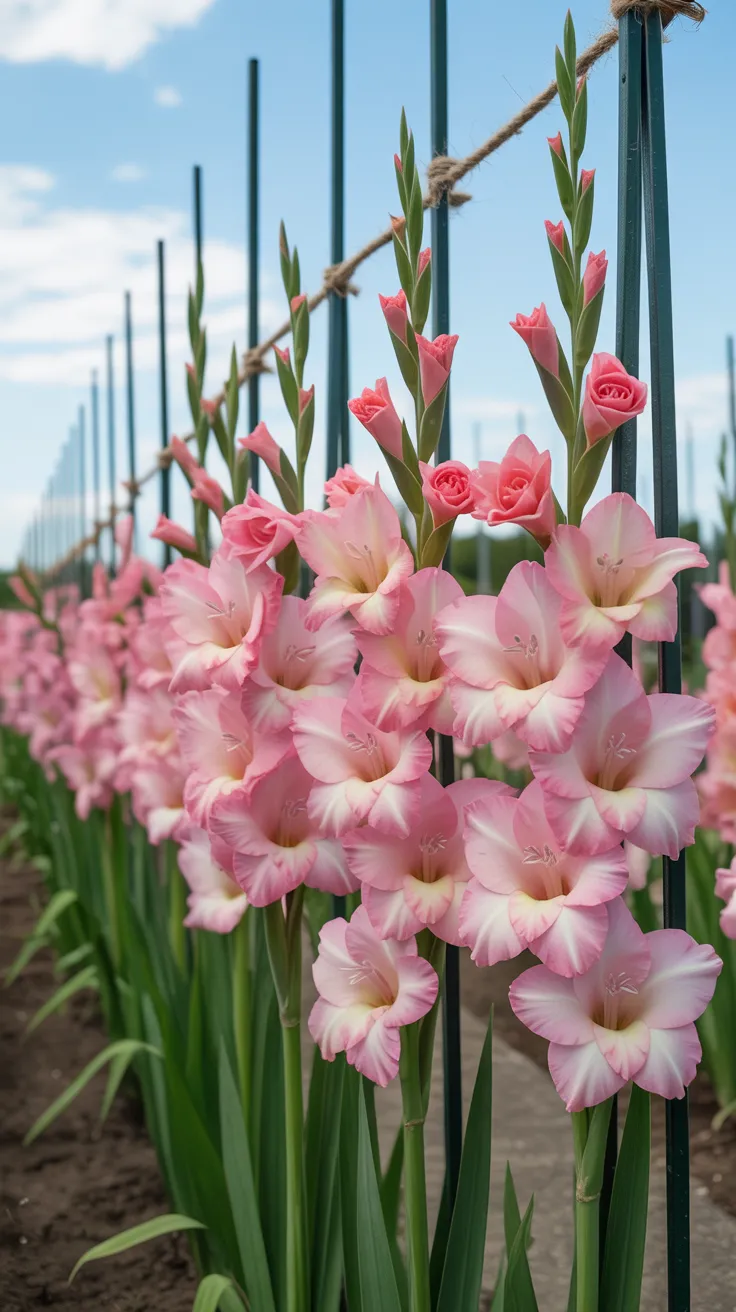
Because gladiolus grow so tall, they are prone to bending or breaking in strong winds or heavy rain. Providing support is crucial. It’s much easier to put stakes in place at planting time than to try and wrangle them around a mature plant.
You can use individual bamboo stakes for each plant or create a grid of stakes and twine for a larger bed. A simple and attractive option is to use a product like the {Gardener’s Blue Ribbon Sturdy Plant Stakes}, which can be easily placed next to the plant as it grows.
7. Water Consistently, Especially During Growth
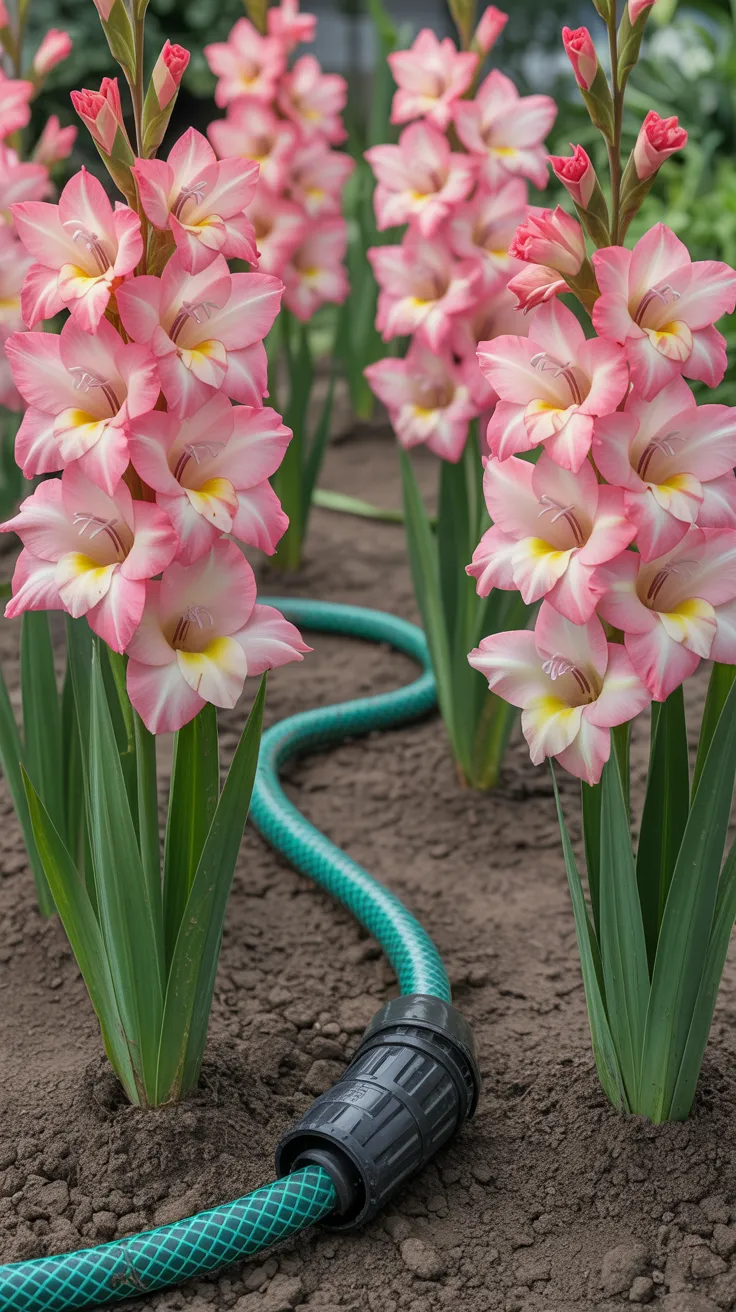
Gladiolus need consistent moisture to fuel their rapid growth. Aim to give them about an inch of water per week, either from rainfall or irrigation.
Water deeply at the base of the plant to encourage deep root growth. Avoid overhead watering, which can weigh down the flowers and promote fungal diseases on the leaves. Wearing a good pair of {COOLJOB Gardening Gloves} can keep your hands clean and dry while you manage your watering and garden chores.
8. Cutting Flowers for Bouquets
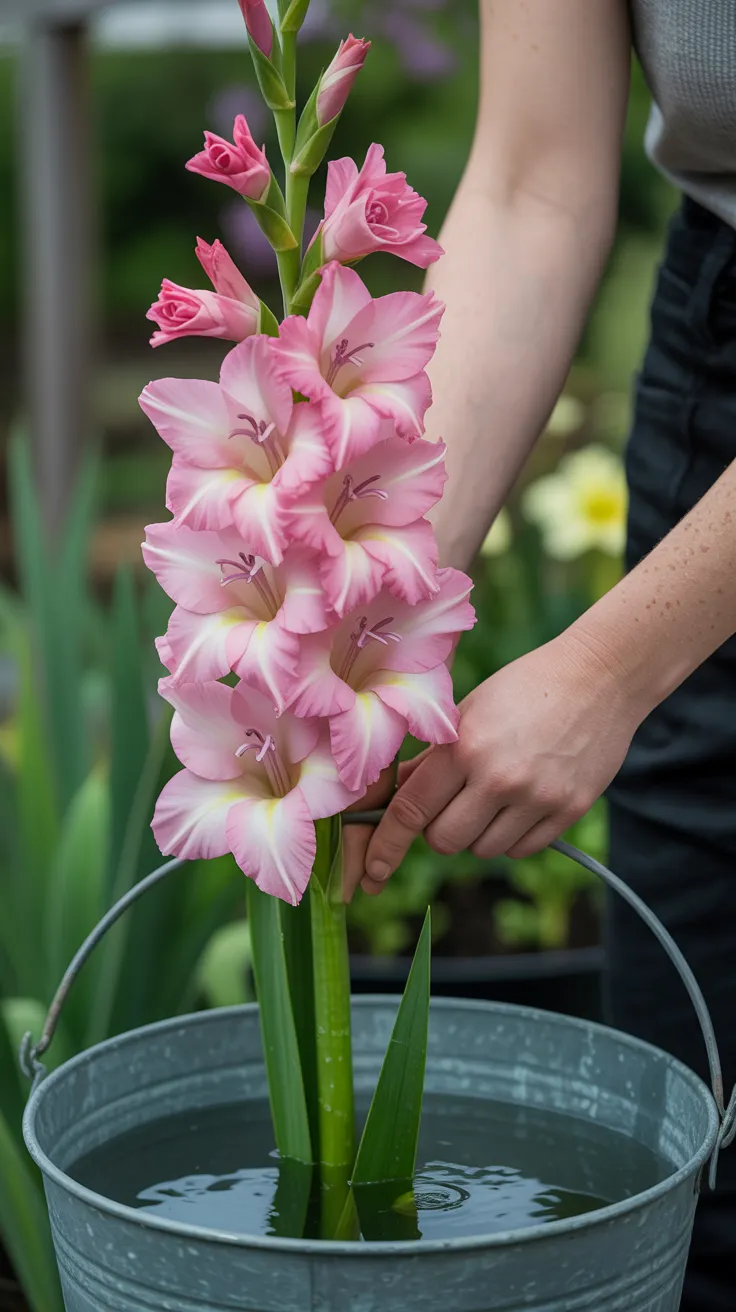
One of the greatest joys of growing pink gladiolus flower bulbs is having an endless supply for indoor arrangements. The best time to cut the stalks is in the cool of the morning when the first one or two flowers at the bottom of the spike have opened.
Use a sharp, clean knife or a pair of {Gonicc Professional Pruning Shears} to make a diagonal cut. Immediately place the stem in a bucket of cool water. Before arranging, re-cut the stem underwater to prevent air bubbles from blocking water uptake. They will last over a week in a vase, with the buds continuing to open up the stalk.
9. Saving Your Corms for Next Year
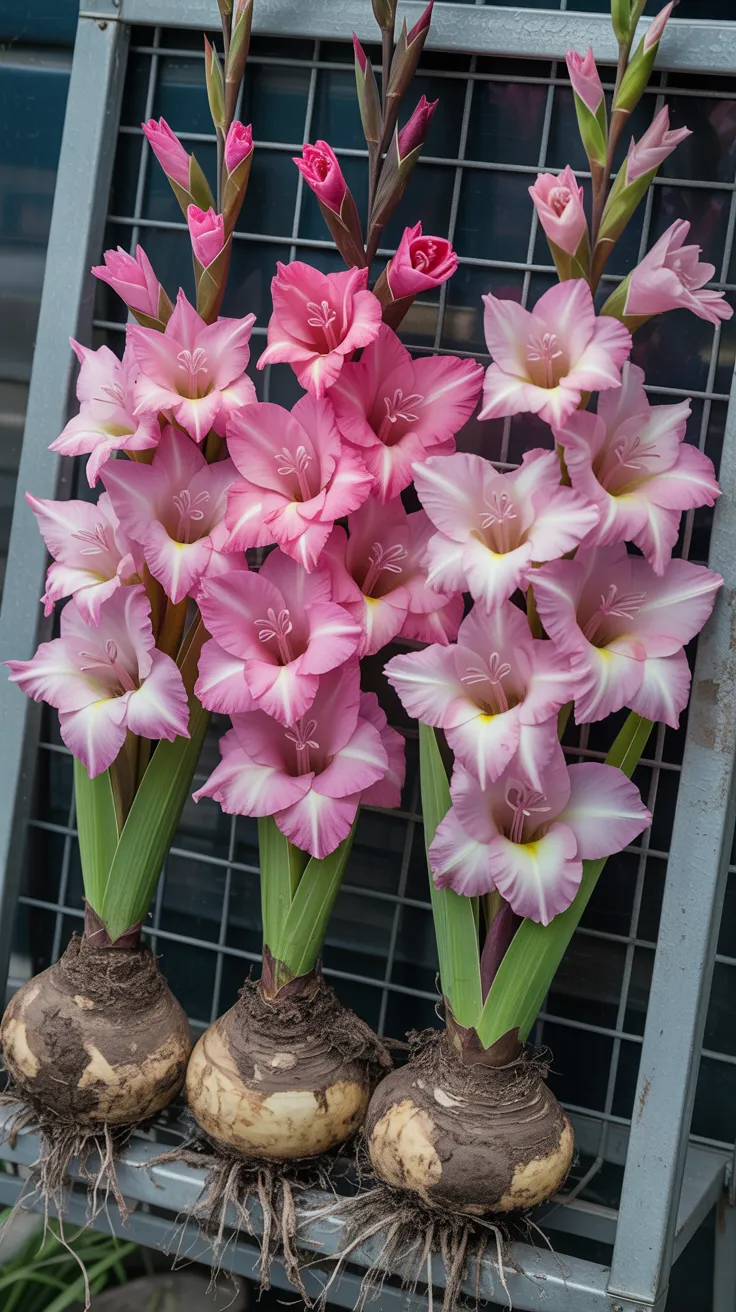
In USDA zones 7 and colder, gladiolus corms will not survive the winter in the ground. You need to “lift” them in the fall if you want to save them for next year.
After the first light frost has killed the foliage, carefully dig up the corms. Cut the stalk off about an inch from the corm, brush off the excess soil, and let them cure in a warm, airy spot for a couple of weeks. This is a messy job, and a sturdy {Garden Kneeler and Seat} makes it much more comfortable to work at ground level.
10. Storing Corms Through Winter
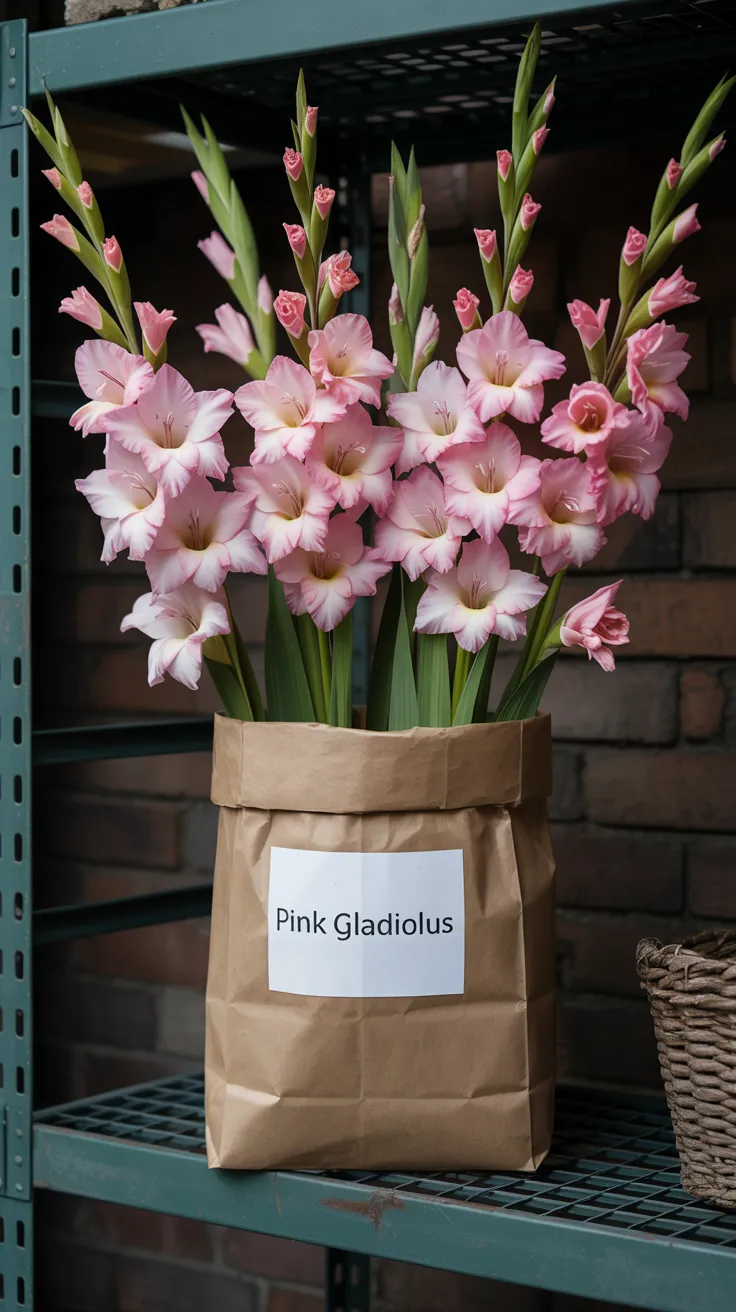
Once your corms are dry and cured, they need to be stored in a cool, dark, and dry place where temperatures stay between 35-45°F. An unheated basement or garage is often perfect.
Place them in a breathable container like a mesh bag, a paper bag with holes punched in it, or a cardboard box. Do not store them in plastic, as this will trap moisture and cause them to rot. Check on them periodically through the winter and discard any that show signs of decay.
Recommended Products for Your Gladiolus Garden
| Product | Use Case |
|---|---|
| {Jobe’s Organics Bone Meal} | High in phosphorus to promote strong roots and vibrant blooms. |
| {WHATOOK Plant Labels} | Helps you keep track of your succession planting schedule. |
| {Gardener’s Blue Ribbon Sturdy Plant Stakes} | Provides essential support to keep tall flower stalks from falling over. |
| {COOLJOB Gardening Gloves} | Protects hands during planting, watering, and fall cleanup. |
| {Gonicc Professional Pruning Shears} | Makes a clean cut for harvesting flowers for stunning bouquets. |
| {Garden Kneeler and Seat} | Offers comfort while planting and digging up corms in the fall. |
Add a Touch of Pink Elegance
Growing pink gladiolus flower bulbs is a simple project that rewards you with some of the most dramatic and beautiful flowers of summer. Their towering presence adds height and structure to garden beds, and their long life in a vase makes them a cut flower superstar.
With a little planning in the spring, you can enjoy these graceful blooms all summer long. So pick out some plump corms, find a sunny spot, and get ready to add a vertical splash of pink elegance to your garden.
