There’s a special kind of magic in being able to capture a piece of nature’s beauty and make it last forever.
We’ve all received a stunning bouquet or admired a perfect garden bloom and wished we could preserve that fleeting moment.
The wonderful news is that you can. Learning how to dry and press flowers is a delightful and rewarding skill that allows you to transform fresh botanicals into everlasting treasures.
This isn’t just about saving sentimental flowers from a wedding or special occasion; it’s about opening a door to endless creativity.
Dried and pressed flowers can be used to make stunning home decor, unique handmade gifts, beautiful jewelry, and so much more.
It’s a craft that encourages you to slow down, notice the intricate details of nature, and create something beautiful with your own two hands.
In this ultimate guide, we will explore 12 enchanting methods for learning how to dry and press flowers.
We’ll cover everything from the timeless, traditional techniques to modern, high-speed hacks that deliver incredible results in minutes.
We’ll discuss which flowers work best for each method and provide clear, step-by-step instructions to ensure your success. Get ready to start your preservation journey and fill your life with a garden that never fades.
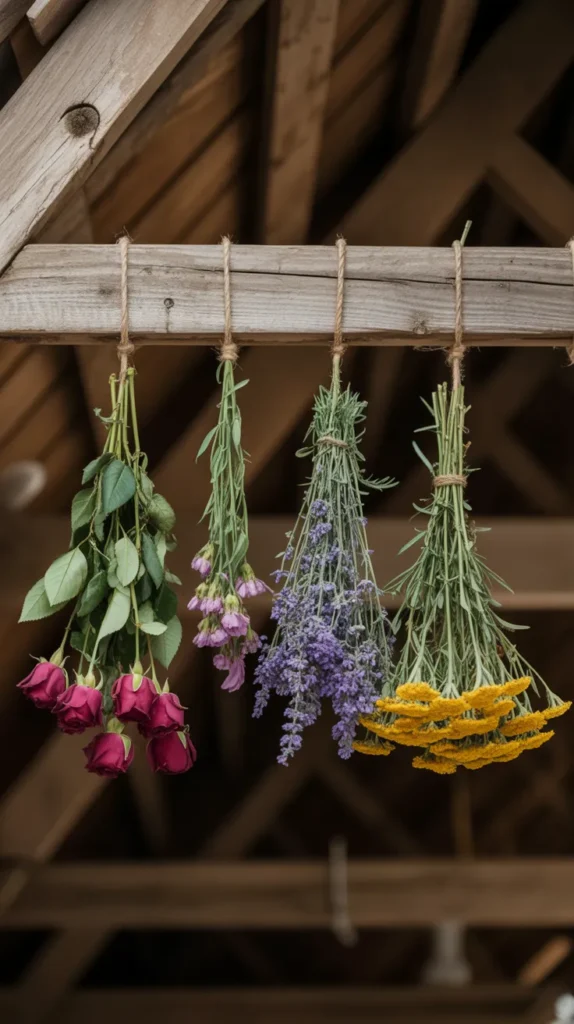
1. The Classic Air-Drying Method
This is perhaps the most iconic image when one thinks of how to dry and press flowers. It’s the simple, romantic process of hanging bunches of flowers upside down.
This method is completely free, incredibly easy, and results in that beautiful, rustic look with muted, vintage colors and sculptural forms.
Best for: Flowers with sturdy stems and low moisture content, like roses, lavender, statice, yarrow, globe thistle, and ornamental grasses.
Step-by-Step Instructions:
- Harvest Your Flowers: For the best results, pick your flowers in the morning after the dew has dried but before the heat of the day has set in. Choose blooms that are just beginning to fully open.
- Strip the Foliage: Remove all the leaves from the lower two-thirds of the stems. Leaves hold a lot of moisture and can slow the drying process or lead to mold.
- Create Small Bundles: Group 3 to 6 stems together. Avoid making large, dense bunches, as the flowers in the center will not get enough air circulation to dry properly.
- Secure with a Rubber Band: Tightly wrap a rubber band around the ends of the stems. A rubber band is often better than string because it will shrink along with the stems as they dry, ensuring the bundle stays secure.
- Hang in a Dark, Dry Place: This is the most critical step for color retention. Sunlight will bleach the colors out of your flowers. Find a location that is dark, dry, and has good air circulation, such as a closet, an attic, or a spare room with the curtains drawn.
- Be Patient: Hang your bunches upside down from a hook, rod, or clothes hanger. This ensures the stems dry straight. Let them hang for 2 to 4 weeks, or until the petals feel completely crisp and papery to the touch.
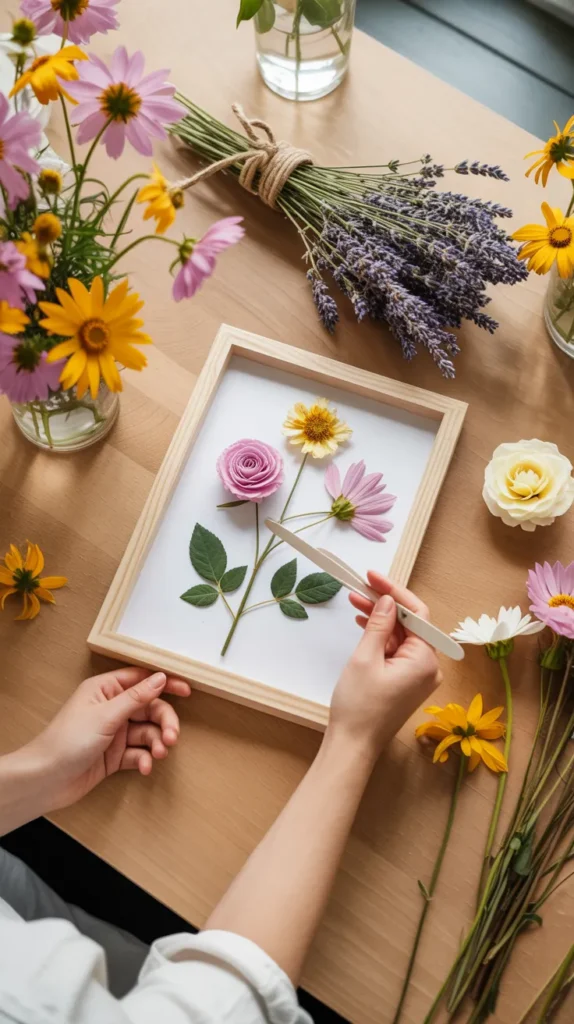
2. The Traditional Book Pressing Technique
If you’ve ever saved a four-leaf clover, you’re already familiar with this nostalgic technique. Book pressing is the quintessential method for anyone wanting to learn how to dry and press flowers for 2D art projects.
It flattens the blooms completely, creating delicate, paper-thin specimens perfect for framing, card making, or scrapbooking.
Best for: Flowers with naturally flat faces or single layers of petals. Pansies, violas, cosmos, daisies, bougainvillea, individual rose petals, and ferns are all excellent choices.
Step-by-Step Instructions:
- Choose a Heavy Book: Select a large, heavy book that you don’t mind getting slightly warped. An old phone book, a dictionary, or a large textbook works perfectly.
- Create an Absorbent Sandwich: You need to place your flower between sheets of absorbent paper to wick away moisture and protect the book’s pages. Parchment paper, coffee filters, or plain, un-textured paper towels are great options.
- Arrange Your Blooms: Open your book and place a sheet of absorbent paper on one page. Carefully arrange your flowers face-down on the paper, making sure none of them overlap. Overlapping flowers will stick together.
- Complete the Layers: Place another sheet of absorbent paper over the top of the flowers.
- Apply Pressure and Wait: Carefully close the book. To ensure even pressure, place several more heavy books or a brick on top. Store it in a dry, low-traffic area and resist the urge to peek for at least 2 to 4 weeks.

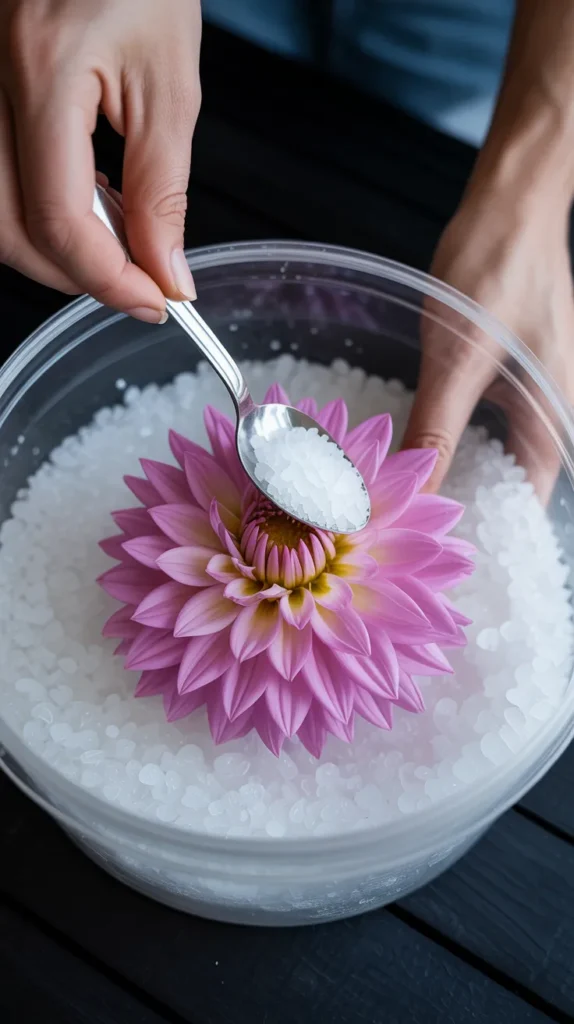
3. The Superior Silica Gel Method for 3D Flowers
If your goal is to preserve a flower’s lifelike 3D shape and vibrant color, silica gel is the undisputed champion.
It’s not a wet gel, but a granular desiccant that looks like sand and works by rapidly absorbing moisture from every part of the flower.
This quick dehydration process is the secret to locking in the flower’s natural form and color with stunningly realistic results.
Best for: Delicate, multi-petaled flowers with complex shapes, such as roses, dahlias, peonies, zinnias, ranunculus, and carnations. This is the professional’s choice for preserving wedding bouquets.
Step-by-Step Instructions:
- Gather Your Supplies: You will need an airtight plastic container that is deep enough to cover your flowers and a good quality silica gel. For the best results, use {Activa Flower Drying Art Silica Gel}. Its fine, sand-like texture is designed specifically for flowers, ensuring it gets between delicate petals without crushing them, and it features blue color-indicating crystals that turn pink when the gel needs to be reactivated in the oven.
- Create a Base Layer: Pour a layer of silica gel about 1 to 2 inches deep into the bottom of the container.
- Prepare and Place the Flower: Snip the flower head from the stem, leaving about an inch attached. Place the flower face-up on the bed of silica gel.
- Gently Bury the Flower: Using a small spoon or your hands, gently pour more silica gel around and over the flower. It’s crucial to get the crystals in between all the petals. Continue until the flower is completely submerged.
- Seal and Wait: Seal the container tightly and place it in a cool, dark, dry place. A rose might take 5-7 days, while a smaller flower might only take 2-3 days.
- The Reveal: Gently pour off the silica gel to reveal your vibrant, perfectly preserved bloom. Use a soft, fine-bristled paintbrush to dust off any remaining crystals.
4. The High-Speed Microwave Pressing Method
For the impatient crafter who wants the beauty of pressed flowers without the weeks-long wait, the microwave is a revolutionary tool. This is a game-changing way to learn how to dry and press flowers, producing perfectly flat and brilliantly colored blooms in a matter of minutes.
Best for: The same flowers as traditional pressing (pansies, cosmos, ferns), but this method excels at preserving vibrant colors like bright pinks, deep purples, and sunny yellows.
Step-by-Step Instructions:
- Invest in a Microwave Press: While DIY options exist, a dedicated press yields superior results. A product like the {Microfleur Max Microwave Flower Press} is designed with vented ceramic plates, absorbent wool pads, and cotton liners that work together to press the flower evenly while allowing moisture to escape efficiently.
- Assemble the Layers: Place one plate down, followed by a wool pad and a cotton liner.
- Arrange Your Flowers: Carefully arrange your fresh flowers on the cotton sheet, ensuring they do not overlap.
- Create the Top Layer: Place the second cotton sheet, the second wool pad, and the top ceramic plate over the flowers and latch the press closed.
- Microwave in Short Bursts: Place the press in your microwave. Heat it on a medium-low setting for short intervals of 20-30 seconds. After each burst, let the press cool for a minute and open it to let steam escape.
- Check and Repeat: The flowers will still be moist after the first burst. Repeat the heating and cooling cycles until the flowers feel completely dry and papery.

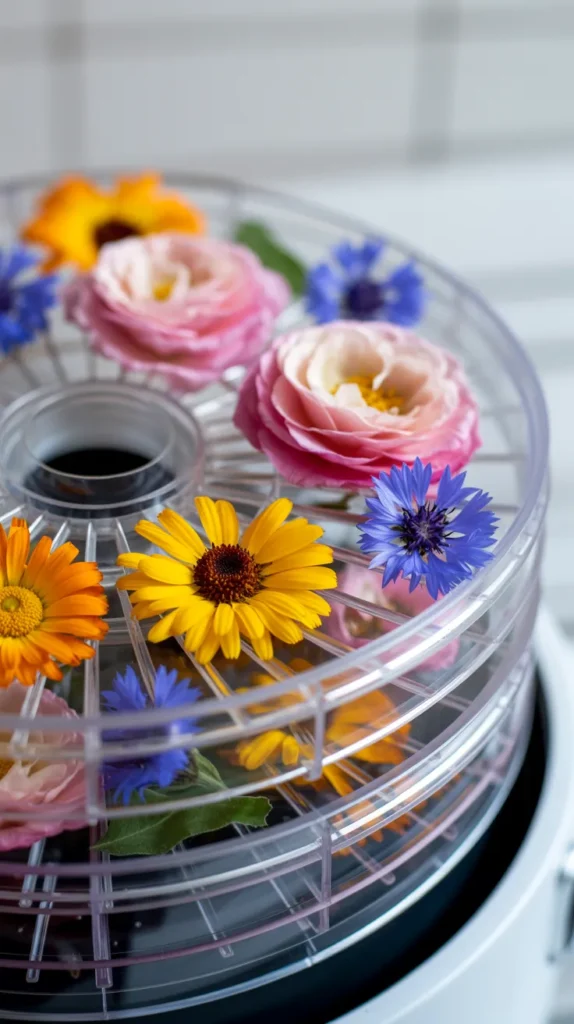
5. The Food Dehydrator Technique
If you already own a food dehydrator, it can pull double duty as a fantastic tool for preserving your garden’s bounty.
The dehydrator provides a controlled environment with consistent airflow and low heat, which helps dry flowers relatively quickly while maintaining their shape and a good amount of their color.
Best for: Flower heads like marigolds, roses, calendula, cornflowers, and even sliced citrus. It’s excellent for making potpourri or dried flower confetti.
Step-by-Step Instructions:
- Prepare the Flowers: Remove the flower heads from their stems.
- Arrange on Trays: Place the flowers in a single layer on the dehydrator trays. Ensure they are not touching to allow for proper airflow around each bloom. A multi-tray dehydrator with precise temperature control, like the {COSORI Food Dehydrator}, is a great asset for this craft, as it allows you to set the heat very low.
- Set the Temperature: This is key. Set your dehydrator to its lowest possible temperature, ideally around 95-115°F (35-46°C). High heat will bake the flowers and turn them brown.
- Dry and Check: Let them run for 4 to 12 hours, checking every couple of hours. The time will vary greatly depending on the flower’s size and moisture content. They are done when the petals are crisp and completely dry.
- Store Properly: Once cool, store your dried blooms in an airtight container to protect them from humidity. Tossing in a {Wisedry Silica Gel Packet} can help absorb any ambient moisture and keep your flowers vibrant for longer.
6. The Glycerin Preservation Method for Foliage
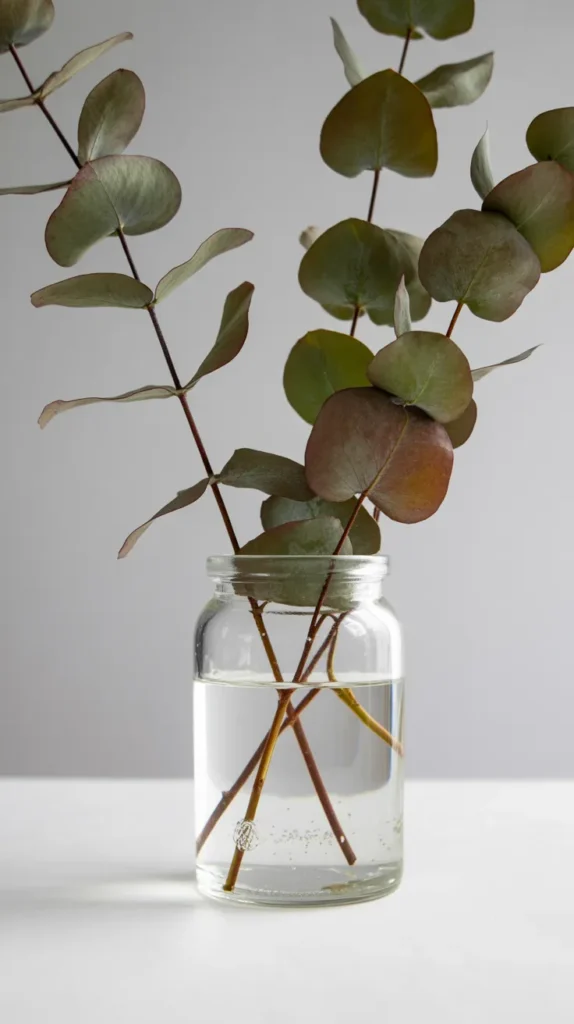
When learning how to dry and press flowers, don’t forget the greenery! Glycerin preservation is a unique technique that doesn’t “dry” the plant in the traditional sense.
Instead, the plant’s vascular system draws up a glycerin solution, replacing the water in its cells. This results in soft, supple, and pliable leaves and stems that won’t crumble.
Best for: Woody-stemmed foliage like eucalyptus, magnolia leaves, olive branches, and boxwood. It also works beautifully for some filler flowers like baby’s breath.
Step-by-Step Instructions:
- Prepare the Stems: Use fresh, healthy branches. Re-cut the stems at an angle and gently smash the bottom inch with a hammer. This damages the cells and helps them absorb the solution more effectively.
- Create the Solution: In a jar or vase, mix one part vegetable glycerin with two parts very hot water and stir until fully combined. A pure product like {NOW Solutions Vegetable Glycerine} is readily available and works perfectly for this process.
- Place and Wait: Place your prepared branches in the solution, ensuring the bottom 2-3 inches of the stems are fully submerged.
- Observe the Transformation: Let the branches sit in a cool, dark place for 2 to 6 weeks, topping up the solution as needed. You’ll know the process is complete when the leaves have changed color (often to a deep, rich brown or bronze) and feel soft and slightly oily to the touch.
7. The “Vase Drying” Method for Sturdy Blooms
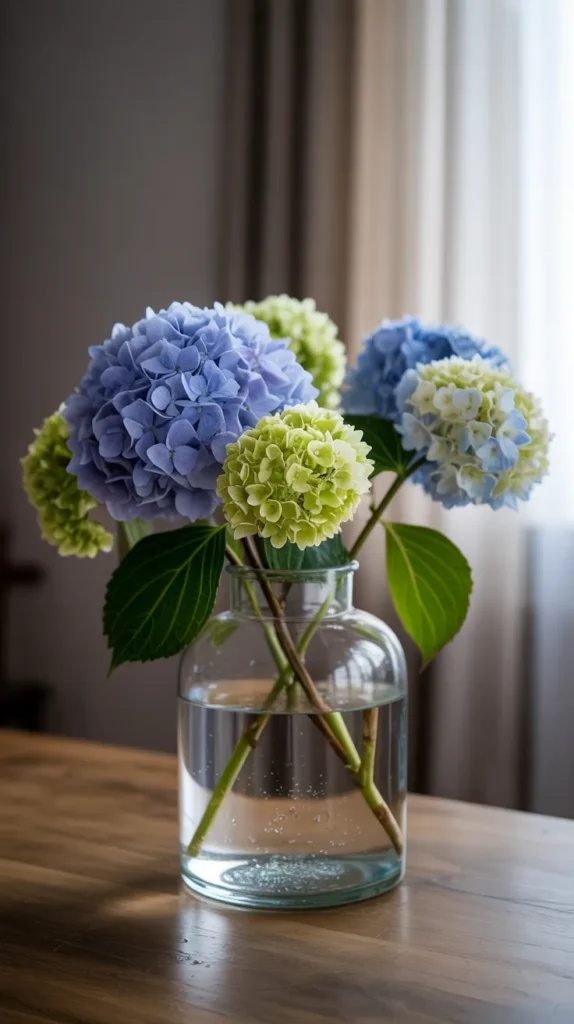
This is the ultimate low-effort technique for drying certain types of flowers. It sounds counterintuitive, but you simply arrange your flowers in a vase with a small amount of water and then forget about them.
As the water slowly evaporates, the flowers will dry in a natural, upright position.
Best for: Flowers with very stiff, woody stems and large, structural heads that can support their own weight as they dry. Hydrangeas are the absolute best flower for this method. Baby’s breath, celosia, statice, and allium also work well.
Step-by-Step Instructions:
- Arrange Your Flowers: Place your fresh hydrangeas (or other suitable flowers) in a vase with just an inch or two of water.
- Find a Spot and Forget: Place the vase in a cool spot away from direct sunlight and high foot traffic.
- Let Nature Work: Do not refill the water. As the flowers drink the initial water and it slowly evaporates, they will transition from fresh to dry. The process is complete when the petals feel papery to the touch, which can take 1-3 weeks.
8. The Sand Drying Method (An Old-School Technique)
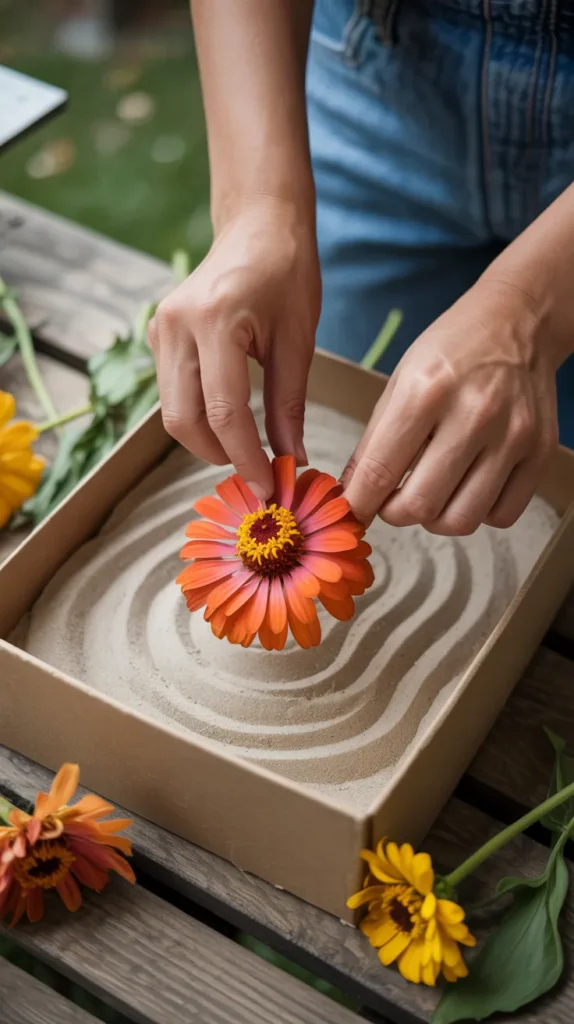
Long before silica gel became a common craft supply, people used fine, dry sand to preserve flowers. The sand works similarly, wicking moisture away while providing physical support to the flower’s structure, making it a very affordable alternative.
Best for: Sturdy, robust flowers like zinnias, marigolds, and daisies.
Step-by-Step Instructions:
- Ensure Your Sand is Bone-Dry: Your sand must be completely dry to work. If it feels at all damp, spread it on a baking sheet and bake it in a low oven for an hour, then let it cool completely.
- Follow the Burying Technique: Use the exact same process as silica gel drying. Pour a base layer of sand into an open container (like a cardboard box), place your flower, and gently bury it completely in sand.
- Wait Patiently: Store the box in a warm, dry place for 2 to 3 weeks. When the flowers are dry, carefully pour out the sand and gently brush them clean with a soft artist’s brush.
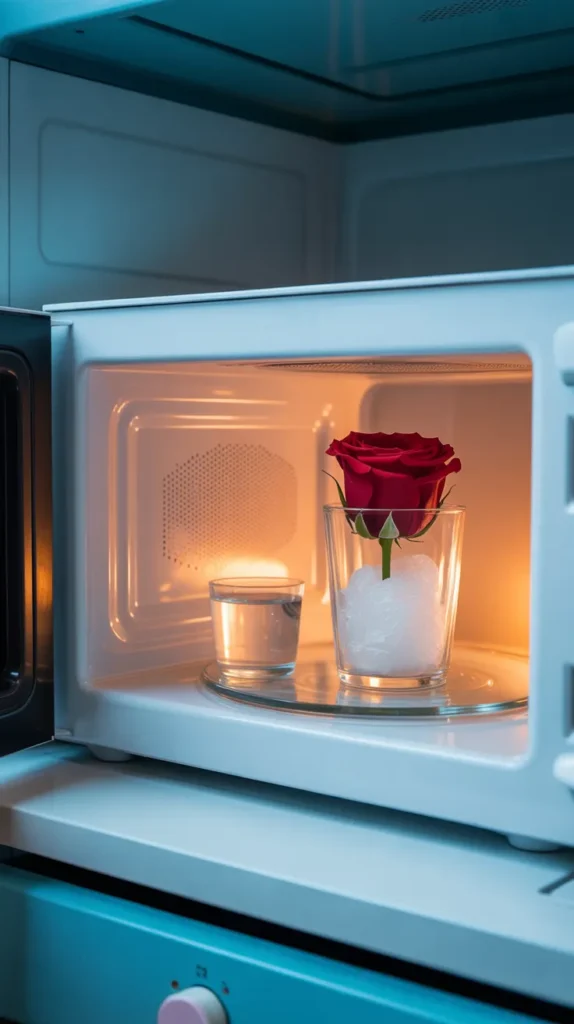
9. The Microwave and Silica Gel Combination
This is an advanced but incredibly fast way to learn how to dry and press flowers, specifically for preserving 3D shapes. It combines the rapid drying power of the microwave with the superior shaping and color retention of silica gel.
Best for: Roses, carnations, and other 3D flowers when you are in a hurry.
Step-by-Step Instructions:
- Prepare the Container: Fill a microwave-safe, non-metal container with about an inch of silica gel. Place your flower in the gel and gently bury it.
- Add a Cup of Water: Place a small cup of water in the microwave next to your container of silica. This is a critical safety step! The water absorbs some of the microwave energy, preventing the flower from cooking and burning.
- Microwave in Bursts: Microwave on a medium-low setting for 1-2 minutes. The exact time will depend on the flower’s size and density.
- Cool Completely: Remove the container from the microwave. It will be extremely hot! Let it cool to room temperature (this could take at least 30-60 minutes) before attempting to uncover the flower.
- Reveal Your Flower: Once completely cool, gently pour out the silica gel.
10. The Clothes Iron Pressing Method
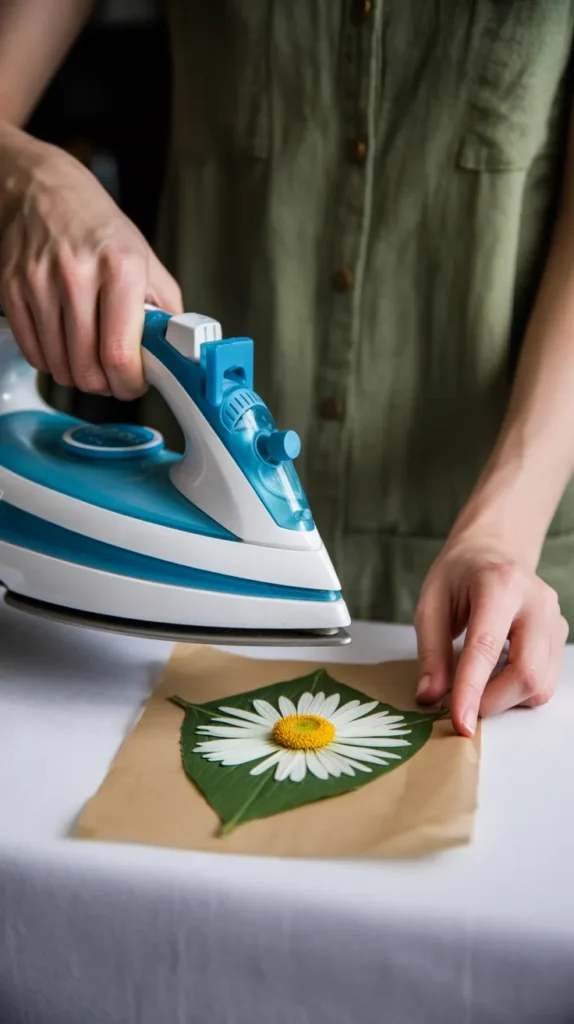
If you need a pressed flower right now for a craft project and don’t have a microwave press, a clothes iron can do the trick. This is a fast method, but it requires a delicate touch to avoid scorching the petals.
Best for: Single-petal flowers and leaves, similar to traditional book-pressing.
Step-by-Step Instructions:
- Create the Flower Sandwich: Place your fresh flower between two sheets of absorbent paper (parchment paper is best).
- Prepare the Iron: Empty all water from your iron and set it to its lowest, dry heat setting. Do not use steam.
- Press, Don’t Glide: Place the paper sandwich on your ironing board. Press the warm iron down onto the paper for 10-15 seconds. Lift the iron, let the paper cool for a moment, and then press again.
- Check and Repeat: Repeat this process until the flower is stiff and completely dry.
11. The Borax and Cornmeal Mixture
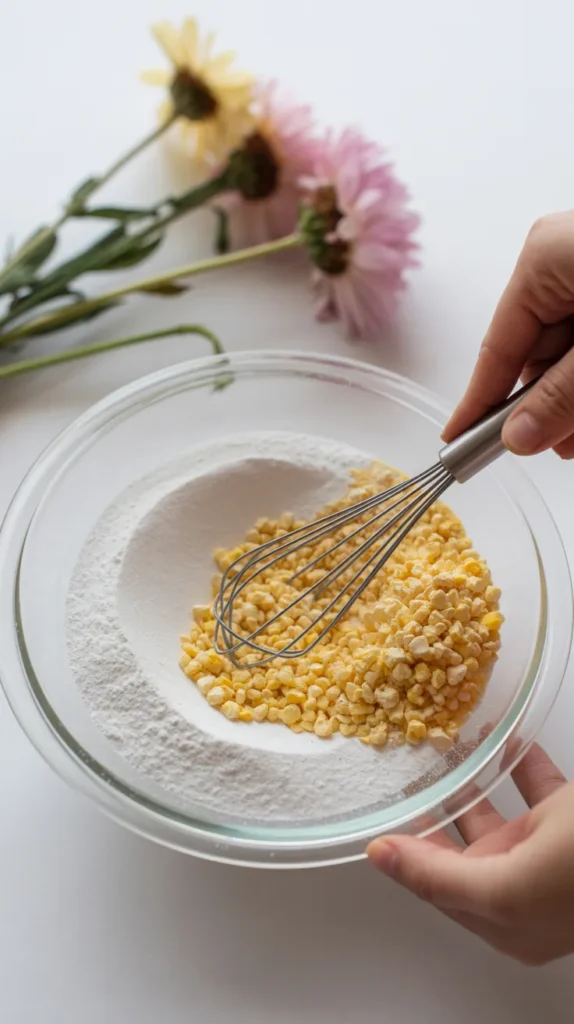
This is a traditional recipe that has been used for decades to preserve flowers. The borax acts as the drying agent (desiccant), while the cornmeal provides support and helps to distribute the borax evenly.
Best for: Drying sturdy flowers on a budget when you don’t have access to silica gel.
Step-by-Step Instructions:
- Create the Mixture: Combine one part borax with two parts white or yellow cornmeal in a bowl and mix well. A household staple like {20 Mule Team Borax} works perfectly for this purpose.
- Use the Burying Technique: Follow the same burying technique as with silica gel and sand. Use an open box, pour a base layer, place your flowers, and gently cover them completely with the mixture.
- Wait and See: Store the box in a warm, dry, and undisturbed place for about two weeks. The flowers are ready when they feel papery and dry. Gently brush off the excess powder with a soft brush.
12. The Oven Drying Method
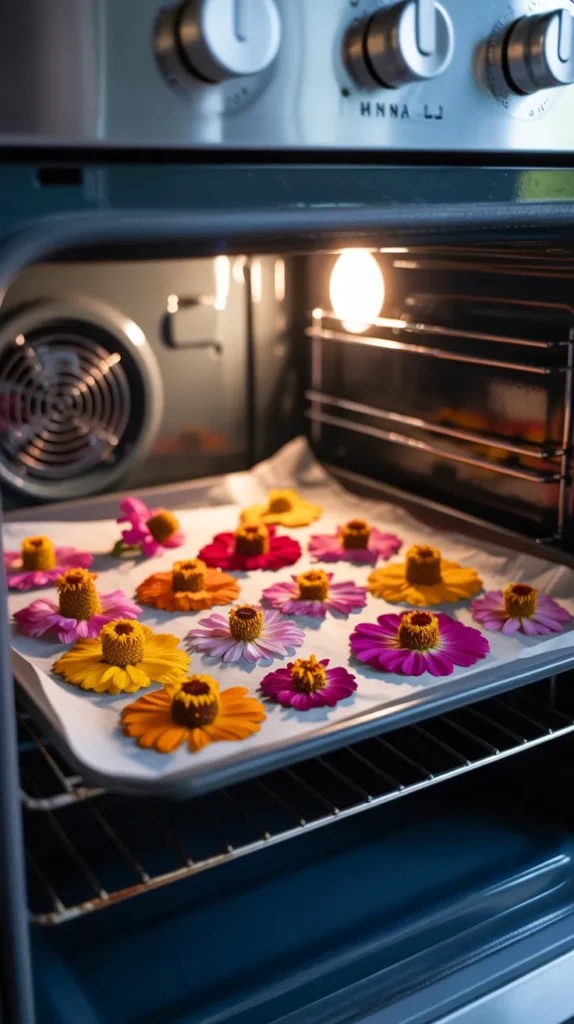
Your home oven can be used as a last resort for drying flowers, but it requires very careful monitoring to ensure you don’t accidentally bake them. This method works best for sturdy botanicals.
Best for: Robust flowers, seed pods, pinecones, and citrus slices for wreaths and potpourri.
Step-by-Step Instructions:
- Preheat Your Oven: Set your oven to its absolute lowest temperature, ideally between 150-180°F (65-82°C). Propping the door open slightly with a wooden spoon can help maintain a low, stable temperature.
- Prepare a Baking Sheet: Line a baking sheet with parchment paper.
- Arrange the Flowers: Place your flower heads on the parchment paper in a single layer.
- Bake and Watch Closely: Place the baking sheet in the oven. The drying time can range from 30 minutes to a few hours. Check on them every 15-20 minutes. They are done when they feel crisp and completely dry.
Your Flower Preservation Toolkit
While many methods are free, investing in a few key supplies can dramatically improve your results and open up new creative avenues. Here is a summary of the helpful products mentioned in this guide.
| Product Name | Brand | Best Use |
|---|---|---|
| Flower Drying Art Silica Gel | Activa | The gold standard for preserving the 3D shape and vibrant color of delicate flowers like roses. |
| Max Microwave Flower Press | Microfleur | The best tool for creating perfectly flat, colorful pressed flowers in just minutes. |
| Food Dehydrator | COSORI | Quickly and efficiently dries large batches of flower heads and petals with precise temperature control. |
| Silica Gel Packets | Wisedry | Essential for keeping dried flowers moisture-free during storage to prevent browning. |
| Vegetable Glycerine | NOW Solutions | Used to preserve foliage like eucalyptus, keeping it soft and supple instead of dry and brittle. |
| 20 Mule Team Borax | 20 Mule Team | An inexpensive household product for creating a traditional 3D flower drying mixture. |
Conclusion: Start Your Preservation Adventure
Learning how to dry and press flowers is like unlocking a secret level of creativity. It gives you the power to capture fleeting moments of natural beauty and transform them into lasting art.
Each of the methods we’ve explored offers a different result, from the flat, delicate charm of a pressed pansy to the vibrant, lifelike form of a silica-dried rose.
Don’t be afraid to experiment! Start with the simple air-drying or book-pressing methods and see how you enjoy the process.
As you gain confidence, you can try silica gel or a microwave press to take your craft to the next level. The most important thing is to have fun and enjoy creating beauty that endures.
So, the next time you admire a flower, remember that its beauty doesn’t have to be fleeting. Which of these enchanting methods will you try first?
