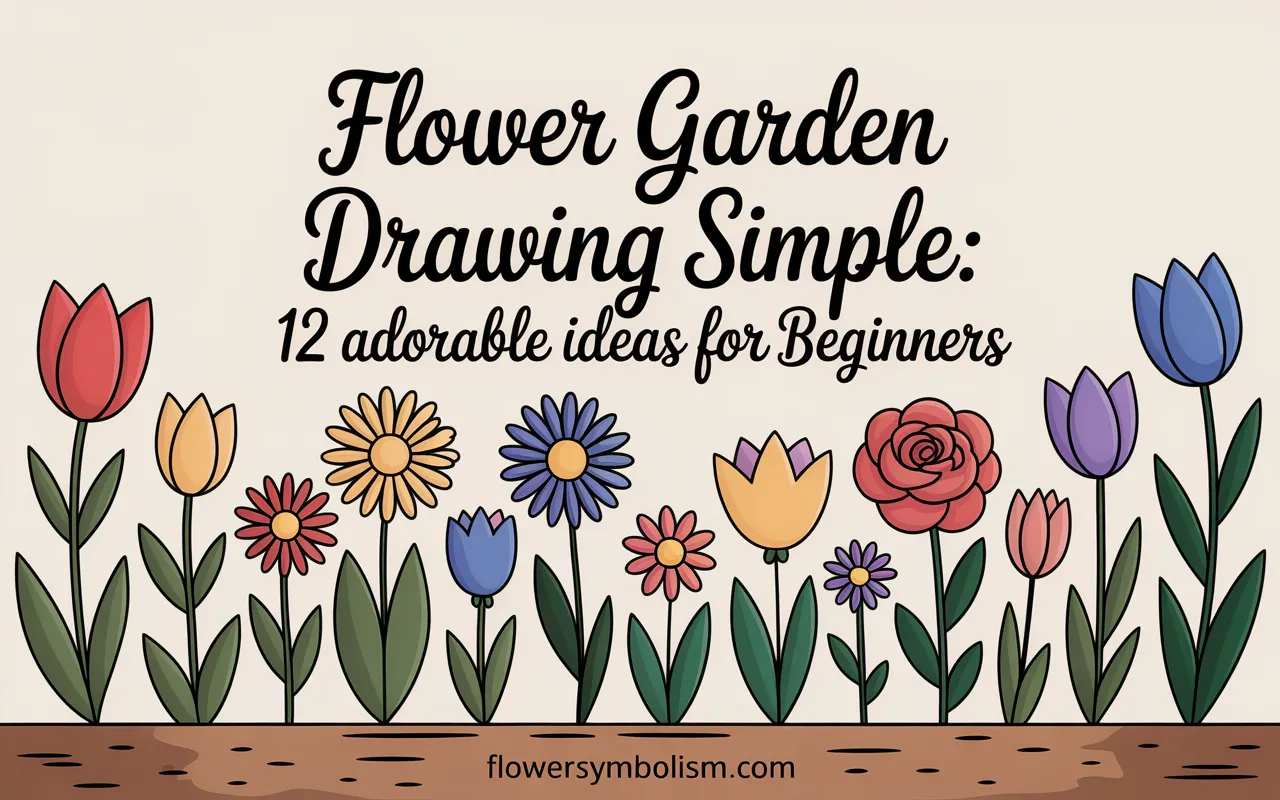
Have you ever looked at a beautiful garden and wished you could capture its magic on paper? The good news is, you don’t need to be a professional artist to do it. Creating a flower garden drawing simple enough for anyone to try is a wonderful way to relax, connect with nature, and unleash your creative side.
This guide is filled with adorable and easy ideas designed specifically for beginners. We’ll break down the process into simple steps, from gathering basic supplies to drawing your first bloom. Forget about perfection and get ready to have fun turning a blank page into your very own botanical wonderland.
Getting Started: Simple Tools for Your First Sketch
Before you can start drawing, you’ll need a few basic supplies. The beauty of sketching is that you don’t need much to begin. Keeping it simple allows you to focus on the joy of creating.
Your Basic Toolkit
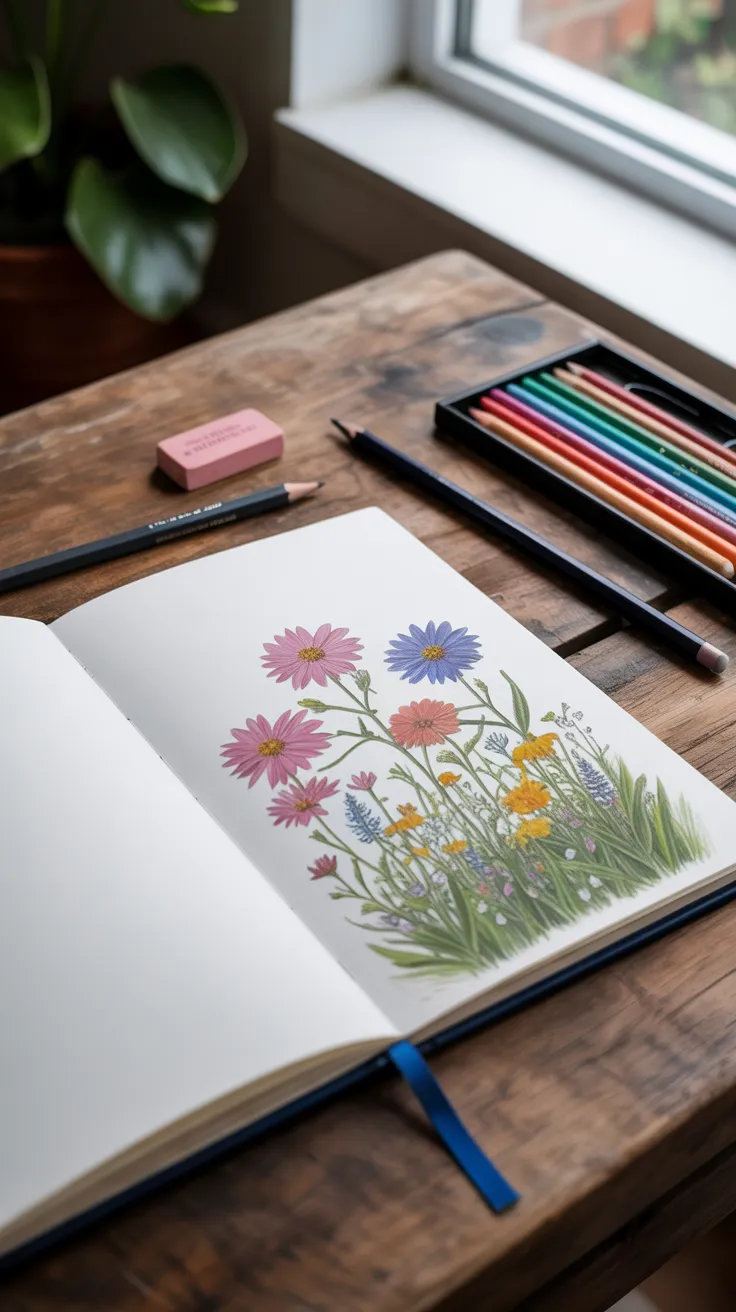
For a flower garden drawing simple enough to tackle today, all you really need is a pencil and paper. However, a few extra items can make the experience even better.
- Pencils: A standard HB pencil is perfect for starting out. It’s not too hard or too soft, making it great for initial outlines.
- A Sketchbook: Choose a sketchbook with paper that feels good to you. A spiral-bound book is great because it lies flat.
- An Eraser: A good eraser is a beginner’s best friend! It gives you the freedom to experiment without fear of making mistakes.
If you want to add a pop of color, consider a basic set of colored pencils. The {Prismacolor Premier Colored Pencils, 24-Pack} is a fantastic starter set because the pigments are soft and easy to blend, allowing you to create beautiful, soft floral shades.
Breaking Down a Flower Garden Drawing Simple Shapes
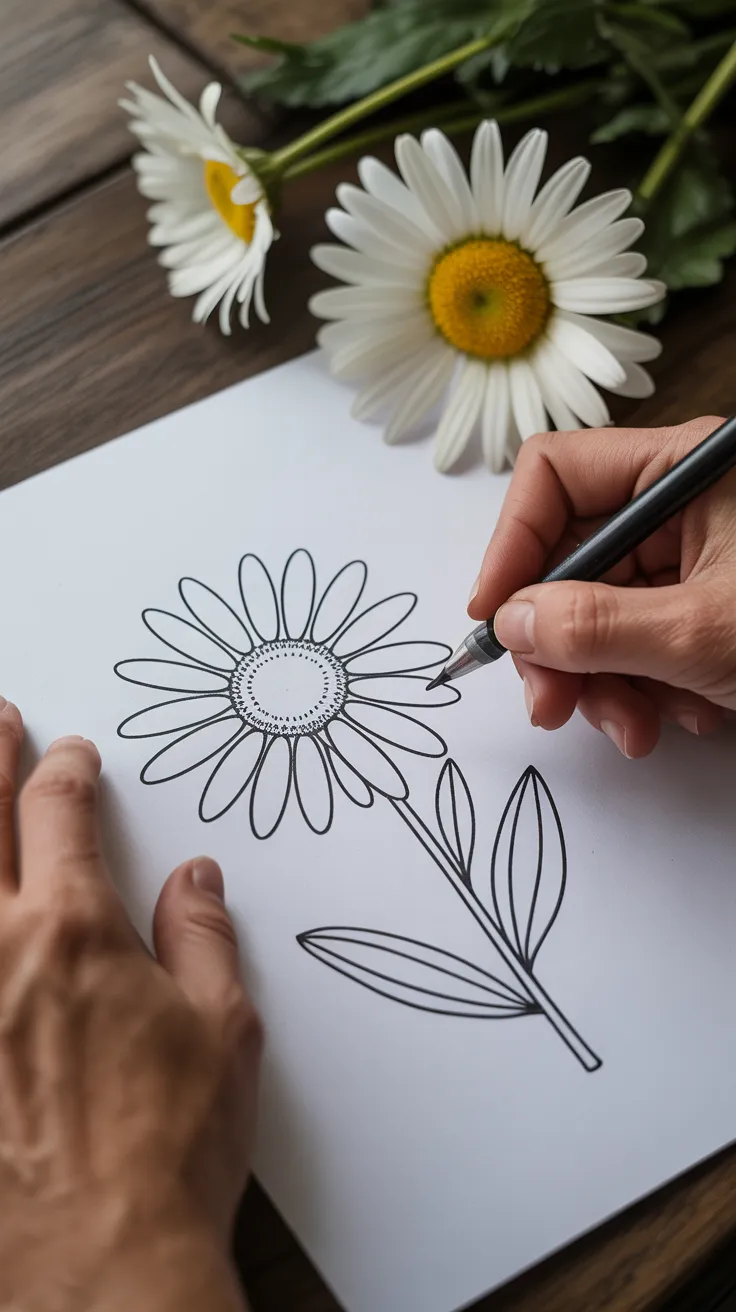
The secret to drawing anything, including a garden, is to see the simple shapes that make up a complex object. A tall sunflower is just a big circle on a long rectangle. A fluffy hydrangea is a collection of smaller circles.
Start with Simple Blooms
Don’t try to draw the most intricate rose on your first attempt. Start with flowers that are easy to simplify.
- Daisies and Sunflowers: Draw a central circle for the middle, then add simple petal shapes (ovals or teardrops) all around it.
- Tulips: A tulip is essentially a “U” shape with a wavy top line. Draw two or three overlapping U-shapes to create a beautiful bloom.
- Lavender: This is one of the easiest! Just draw a slightly curved stem and add tiny dots or ovals clustered along the top third of it.
For a great step-by-step guide on breaking down flower shapes, the book {Botanical Line Drawing by Peggy Dean} is an incredible resource for beginners. It teaches you to see the simple lines in every flower.
Building Your Garden Scene: Step-by-Step
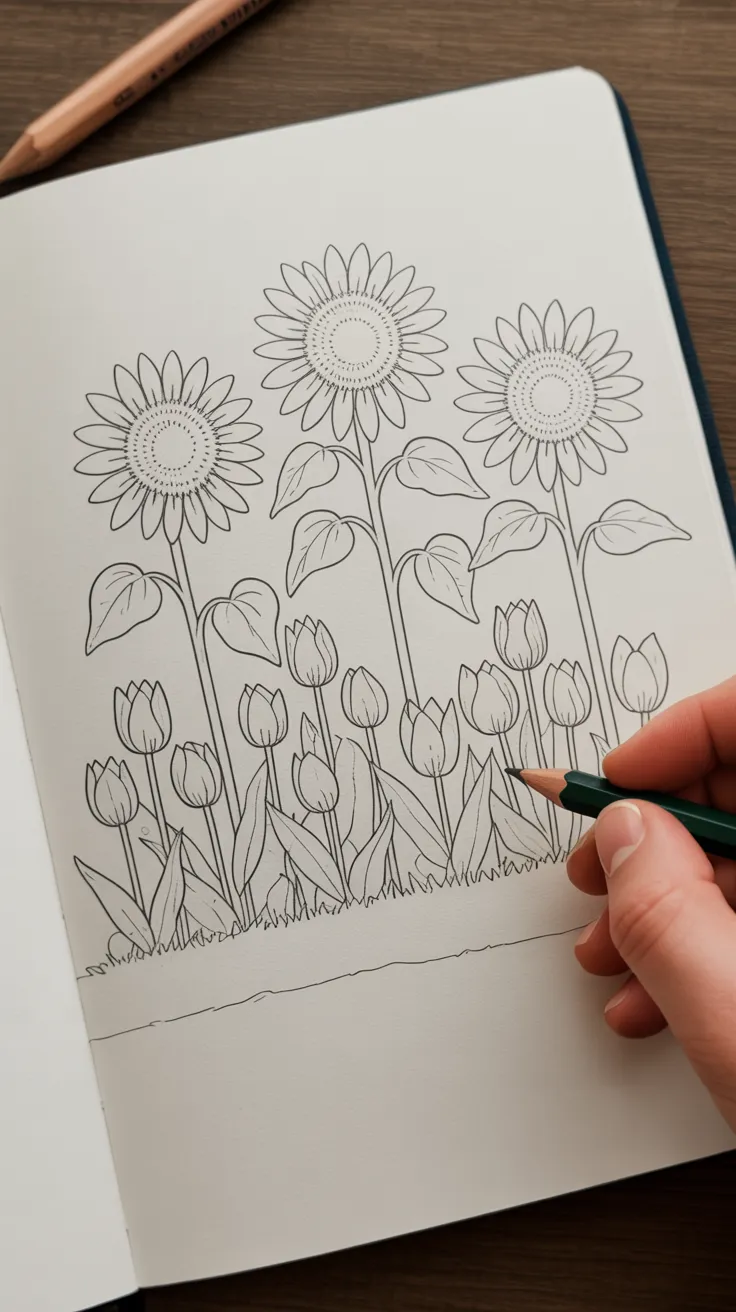
Once you’re comfortable drawing a few individual flowers, it’s time to combine them into a simple garden scene. The key here is layering.
1. Create a Ground Line
Start by drawing a wavy, horizontal line across the bottom third of your page. This will be the ground where your flowers grow. It doesn’t need to be perfectly straight; a little bumpiness makes it look more natural.
2. Add the Tallest Flowers First
Decide where your tallest flowers will go and sketch them in first. This helps establish the overall height of your garden. Draw two or three tall stems with simple sunflower or delphinium shapes at the top.
3. Fill in the Middle Ground
Next, add some medium-height flowers in front of and between the tall ones. This is a great place for your tulips or some simple rose shapes. Don’t be afraid to let them overlap! This overlapping is what creates a sense of depth in your flower garden drawing simple scene.
A good set of fine-liner pens can help you add crisp details once your pencil sketch is complete. The {Sakura Pigma Micron Pen Set} comes in various sizes, perfect for outlining petals after you’ve erased your initial pencil marks.
Adding Adorable Details and Whimsy
Now for the fun part! Adding small, cute details is what will give your garden drawing personality and charm.
Cute Garden Critters
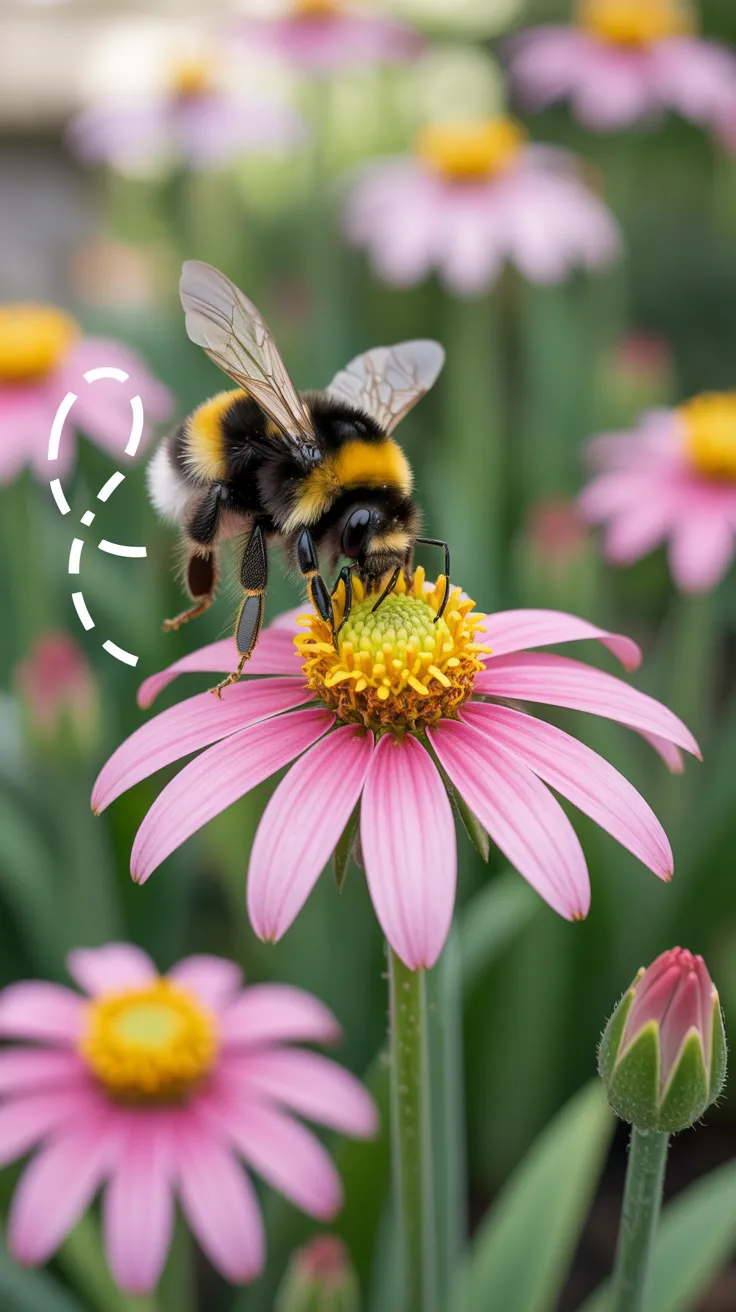
A little bumblebee buzzing around a flower or a ladybug crawling up a stem can bring your drawing to life. These can be drawn with very simple shapes: an oval for the body, a circle for the head, and tiny wings.
Simple Greenery
Your garden needs leaves and grass. Use simple curved lines for stems and basic leaf shapes. For grass, just draw short, upward strokes along your ground line. Varying the height and direction of these strokes will make it look more natural.
Using a white gel pen is a fantastic trick for adding highlights and sparkle. The {Sakura Gelly Roll White Gel Pen} is perfect for adding a dewdrop on a petal or a little glint in a bumblebee’s eye after you’ve added color.
Easy Coloring Techniques for Beginners
Adding color can feel intimidating, but it doesn’t have to be. Simple coloring techniques can make your flower garden drawing simple and vibrant.
Layering Your Colors
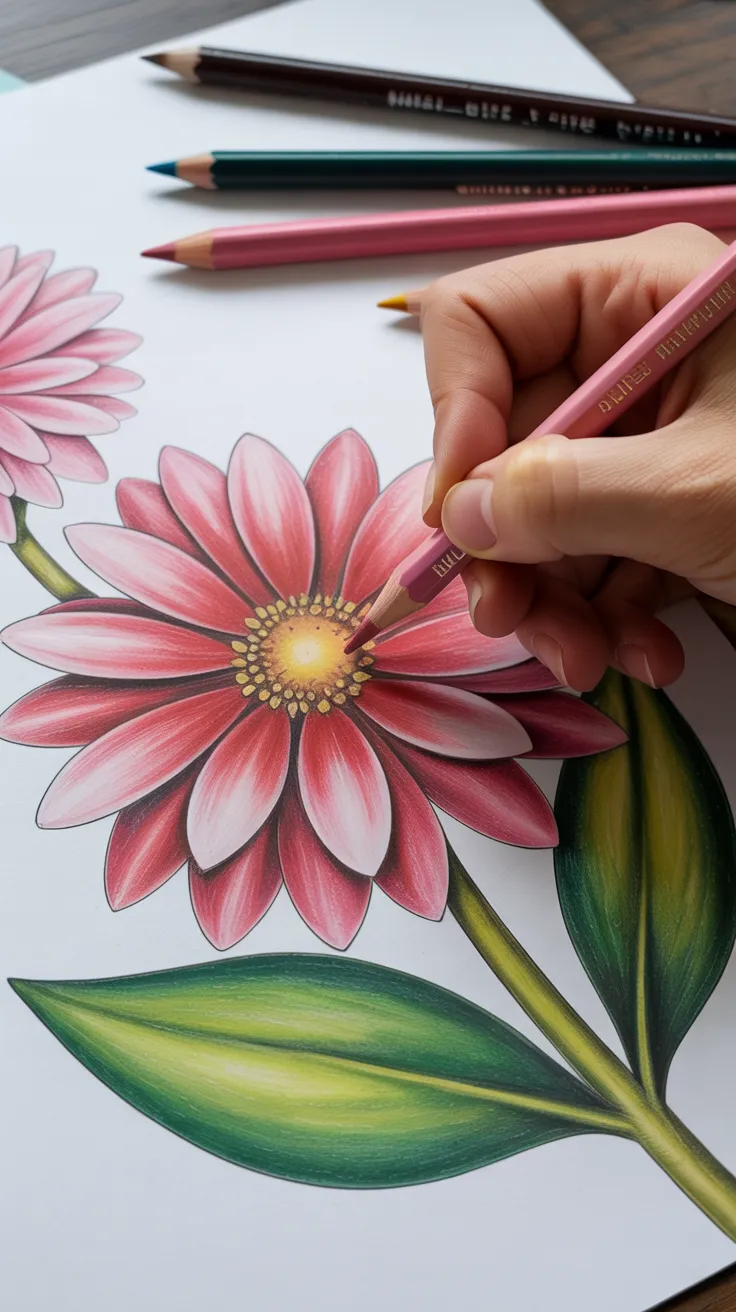
Instead of pressing hard with one color, build it up in light layers. Start with a light shade all over the petal, then add a slightly darker shade near the center or base of the petal to create depth. This is much more forgiving than trying to get it perfect with one stroke.
Don’t Be Afraid to Mix
Flowers in nature are rarely just one solid color. Feel free to layer a little bit of yellow over your pink, or add a touch of blue to your purple. A portable watercolor set like the {KOI Water Colors Pocket Field Sketch Kit} is great for adding soft, transparent washes of color over your pencil drawings. Just be sure your sketchbook has mixed-media paper.
Ideas for Your Simple Flower Garden Drawings
Need some inspiration? Here are a few adorable scenes you can try.
- A Garden in a Teacup: Draw a cute teacup and have a tiny, magical garden growing out of it.
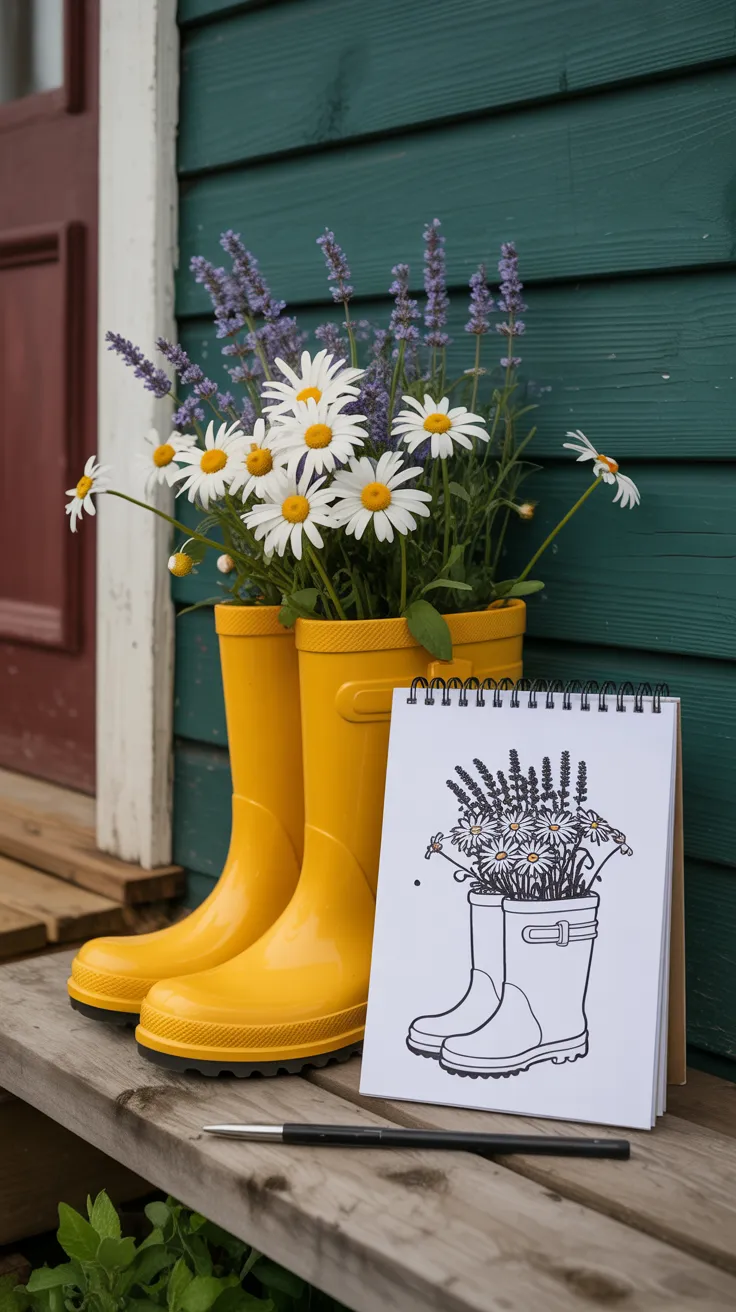
- Flowers in Rain Boots: Sketch a pair of colorful rain boots with a bouquet of wildflowers spilling out of the top.
- A Window Box Garden: Draw a simple window frame with a window box overflowing with cheerful pansies and trailing vines.
Keeping your pencils sharp is essential for details. The {STAEDTLER Manual Pencil Sharpener} is a high-quality, durable sharpener that will keep your pencils ready for any drawing adventure.
Summary of Recommended Art Supplies
Here is a quick reference guide to the creative tools that are perfect for starting your drawing journey.
| Product Name | Best Used For |
|---|---|
| {Prismacolor Premier Colored Pencils, 24-Pack} | Soft, blendable pencils for vibrant coloring |
| {Botanical Line Drawing by Peggy Dean} | Learning to draw flowers with simple steps |
| {Sakura Pigma Micron Pen Set} | Creating crisp, permanent outlines over pencil |
| {Sakura Gelly Roll White Gel Pen} | Adding bright highlights and magical details |
| {KOI Water Colors Pocket Field Sketch Kit} | Adding soft, transparent color washes |
| {STAEDTLER Manual Pencil Sharpener} | Keeping pencils sharp for fine, detailed lines |
Final Thoughts on Your Drawing Journey
The most important part of creating a flower garden drawing simple enough for a beginner is to have fun. Let go of the need for it to be perfect and embrace the process of creating something with your own two hands. Every squiggle and doodle is a step forward in your artistic journey.
Grab a pencil, find a comfy spot, and start sketching the garden of your dreams. You might just be surprised by the beautiful worlds you can create on a simple piece of paper. Happy drawing!
