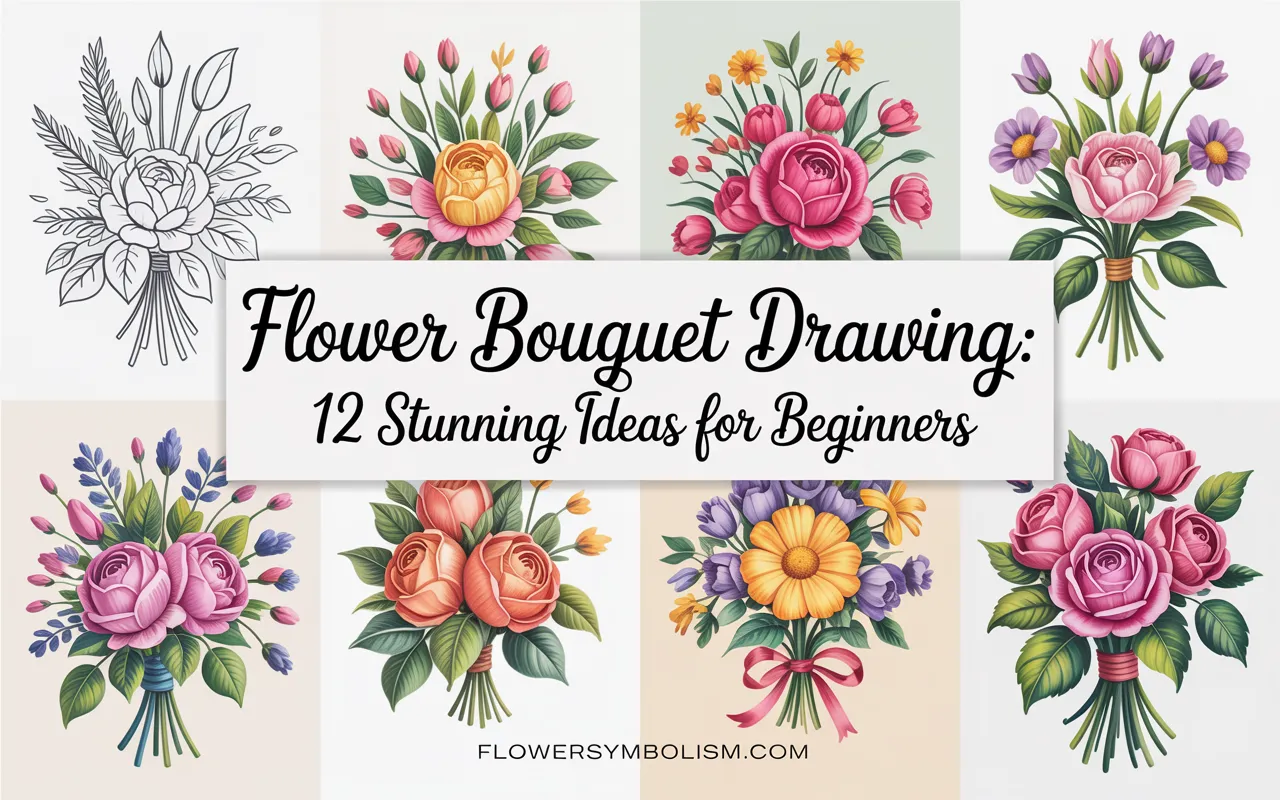
There is something universally captivating about a bouquet of flowers. It’s a timeless symbol of beauty, celebration, and nature’s artistry. Capturing that beauty on paper can feel like a daunting task, especially for beginners.
Many aspiring artists look at a complex bundle of petals, leaves, and stems and don’t know where to start. But a beautiful flower bouquet drawing is far more achievable than you think.
The secret isn’t about perfectly replicating every single petal. It’s about understanding simple shapes, building up layers, and letting go of the pressure to be perfect.
Drawing flowers is a wonderfully relaxing and rewarding activity that allows you to create something beautiful with just a pencil and paper. If you’ve always wanted to draw florals but felt intimidated, this guide is for you. Here are 12 stunning and simple ideas to get you started on your first flower bouquet drawing.
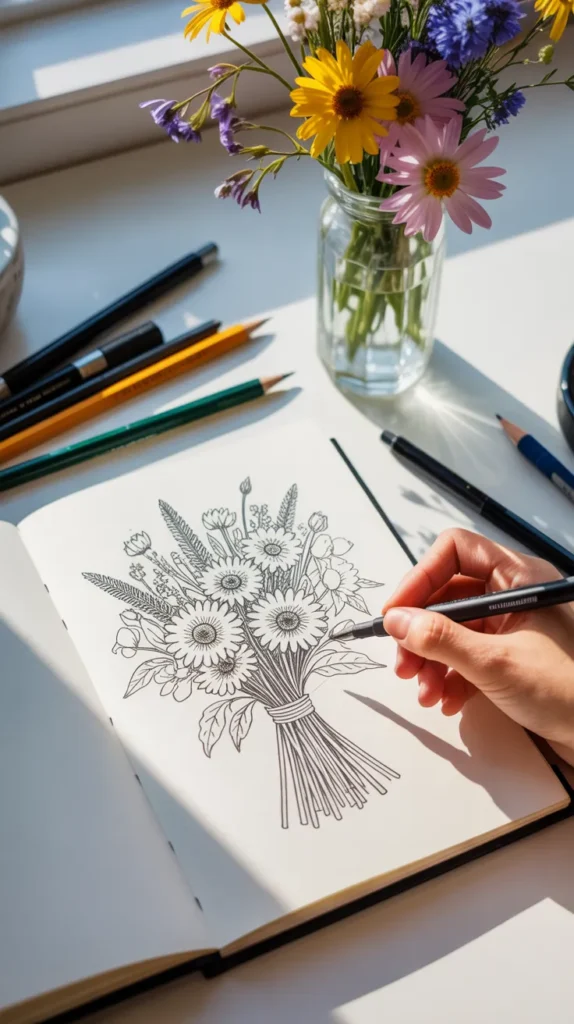
1. The Simple Three-Stem Posey
Don’t start with a dozen roses. The easiest way to begin is by drawing a very small bouquet, or posey, of just three flowers. This allows you to focus on the basic shapes without feeling overwhelmed.
Start by drawing three circles of different sizes, lightly sketched, to map out where your main flowers will go. These will be your guides.
From there, draw three stems that converge at a single point. Now, go back to your circles and build out your simple flower shapes—they can be basic daisies or simple five-petal blooms. This foundational exercise teaches you composition in its simplest form.
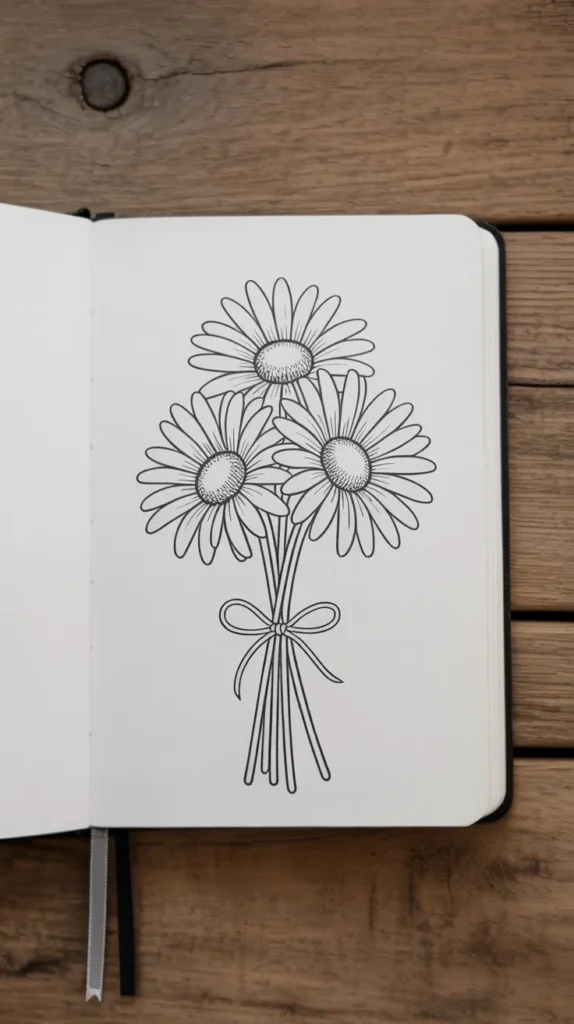
2. The Wildflower Line Art Bouquet
Wildflowers are perfect for beginners because they are inherently imperfect and organic. This style is less about realism and more about capturing the free-spirited essence of the blooms using simple line art.
Use a good quality fine-liner pen, like one from a {Sakura Pigma Micron Pen Set}, to draw a loose collection of wildflowers. Think about varying the heights and shapes: draw some tall, wispy stems, some round poppy-like heads, and some delicate lavender sprigs. Don’t worry about perfect lines; a little bit of wobble adds to the charm.
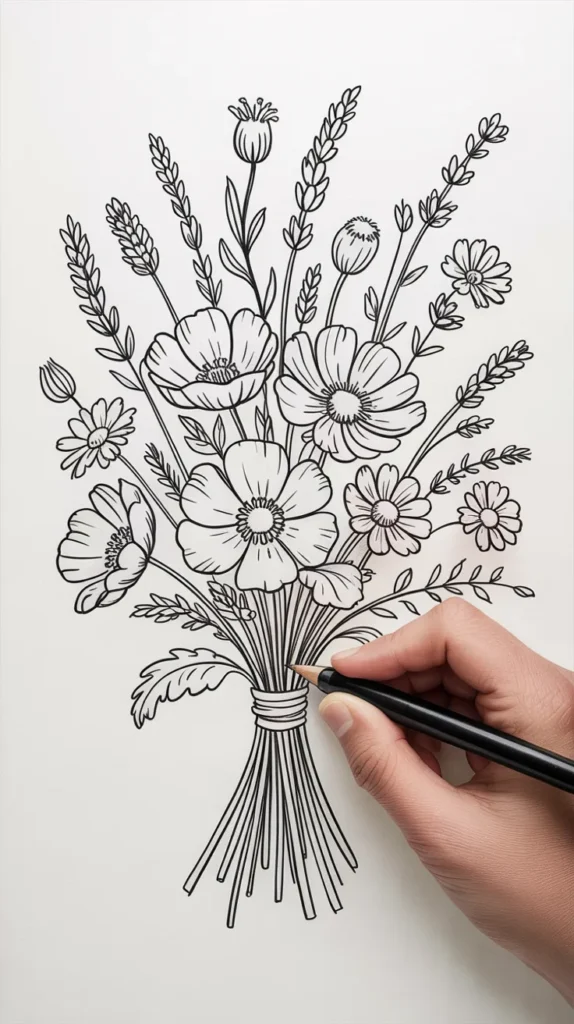
3. The Single-Variety Bunch
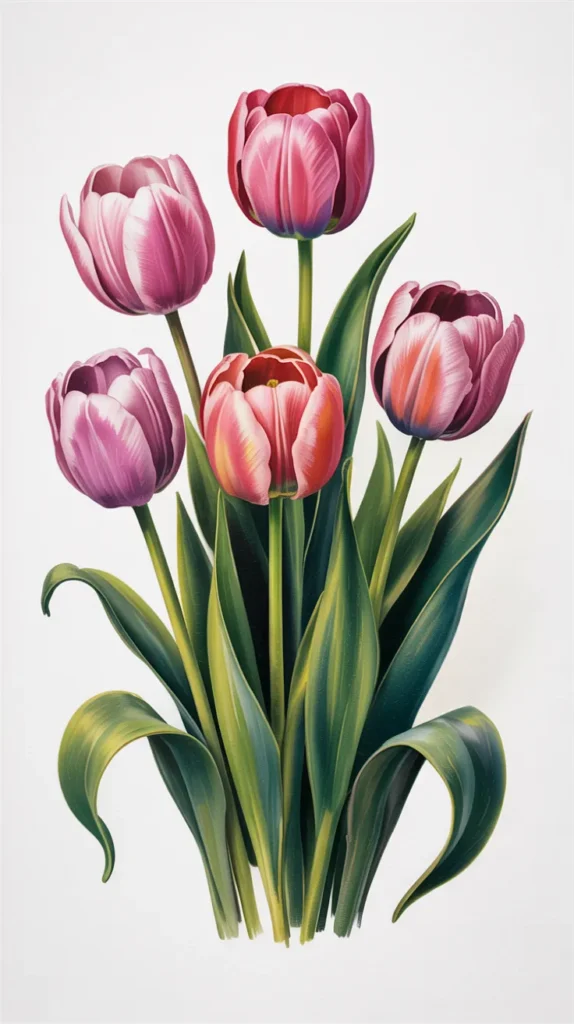
Another great way to simplify the process is to draw a bouquet made of only one type of flower. This allows you to master drawing one specific bloom and then repeat it, which is much easier than trying to learn five different flower types at once.
Tulips or daisies are excellent for this. Start by drawing a cluster of ovals or U-shapes for the tulip heads, then draw the stems coming down from them. Because you’re only drawing one type of flower, you can really focus on the small details that make it recognizable.
4. The Bouquet in a Mason Jar
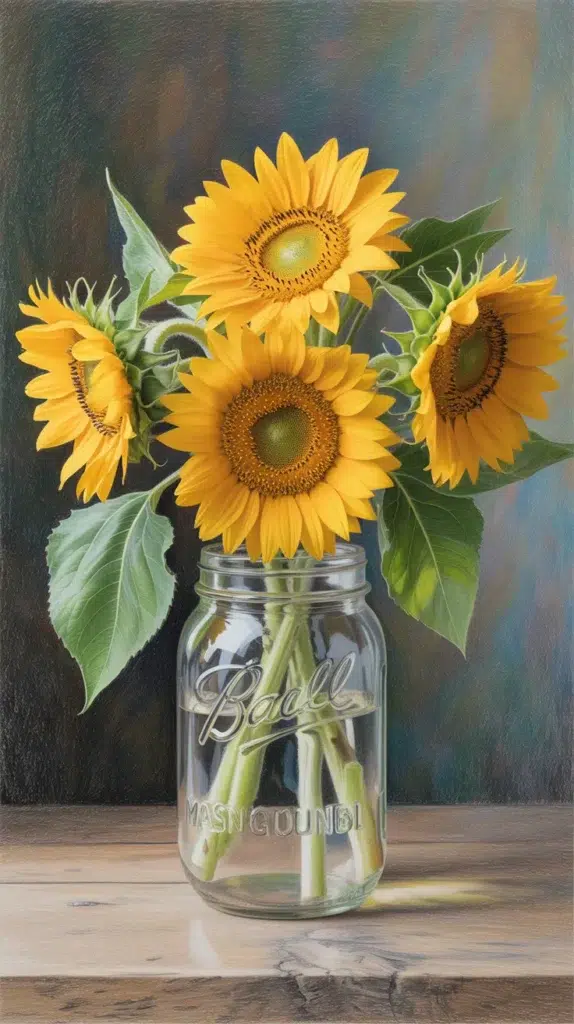
Sometimes, adding a container to your flower bouquet drawing can help ground the composition and make it feel more complete. A simple mason jar is one of the easiest vessels to draw and adds a lovely rustic touch.
Lightly sketch the shape of the jar first. Then, draw your flower stems as if they are inside the jar, stopping at the water line. From there, build your bouquet on top, letting some flowers and leaves spill over the sides. Remember to add a few lines to indicate the screw top of the jar!
5. The Basic Rose Bouquet
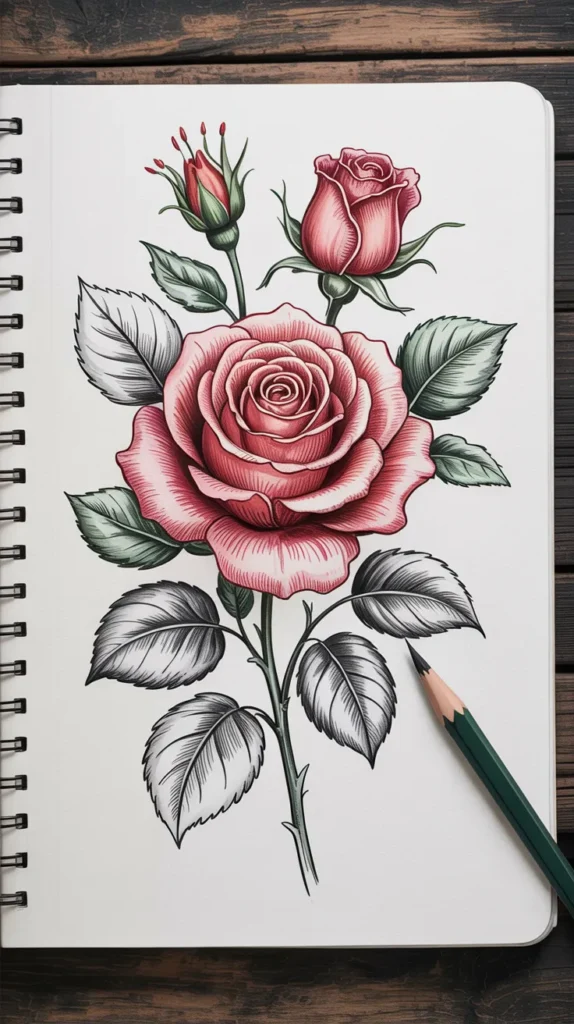
Roses can seem incredibly complex, but you can draw a beautiful rose using a very simple spiral technique. This is a game-changer for any beginner who has been intimidated by this classic flower.
Start by drawing a small, tight spiral for the center of the rose. Then, draw “C” shapes and “U” shapes around the spiral to build out the petals. Add a few larger, open petals around the outside. Repeat this 3-5 times to create a simple rose bouquet. The entire process is much more intuitive than trying to copy a photo petal by petal.
6. The Heart-Shaped Bouquet
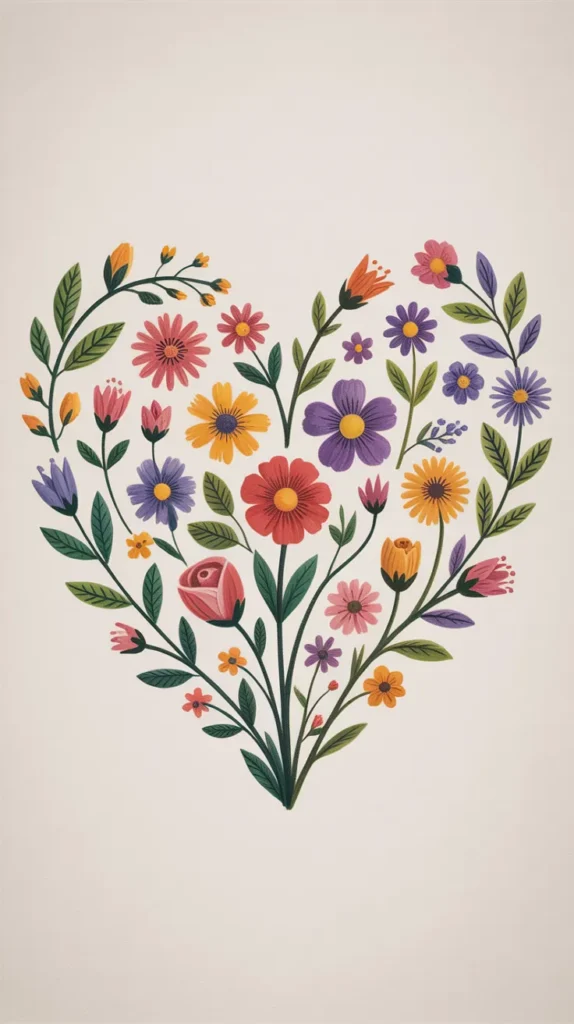
For a cute and whimsical twist, arrange your flowers into a larger shape, like a heart. This is a fun compositional challenge that results in a really sweet and charming drawing, perfect for a card or gift.
Lightly sketch a large heart on your paper as a guide. Then, fill the outline with your flowers, making sure the outermost blooms follow the curve of the heart shape. You can use a mix of different simple flowers to fill in the shape.
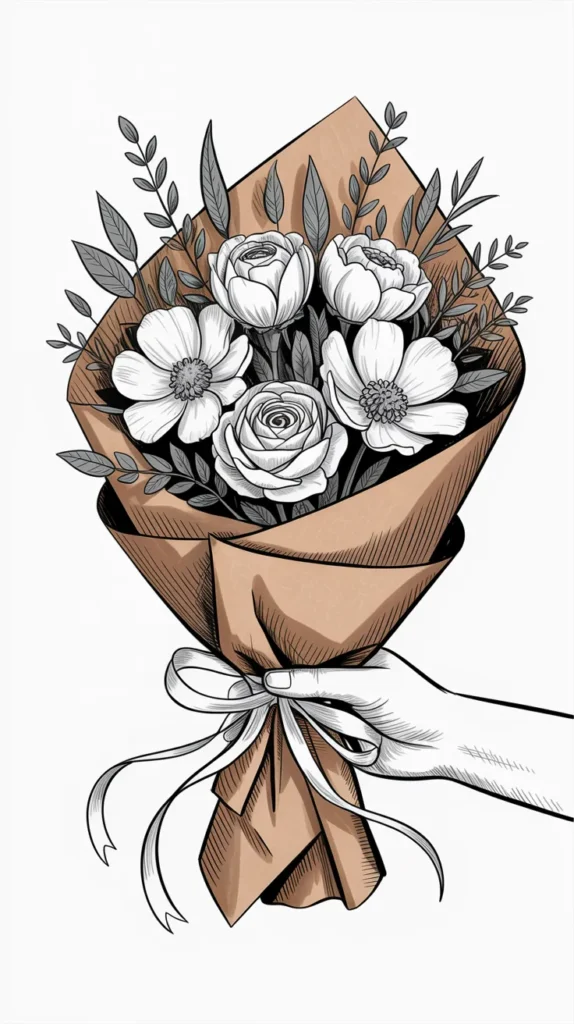
7. The Wrapped Market Bouquet
A wrapped bouquet has a wonderful, gift-like quality. The paper cone adds structure to the drawing and is surprisingly simple to create.
First, draw your bouquet of flowers, keeping the stems long and straight. Then, draw two large, overlapping triangles or trapezoids around the stems to represent the wrapping paper. Add a few fold lines to give the paper dimension. Finish it off by drawing a simple bow where the bouquet is tied.
8. The Leafy Greenery Bouquet
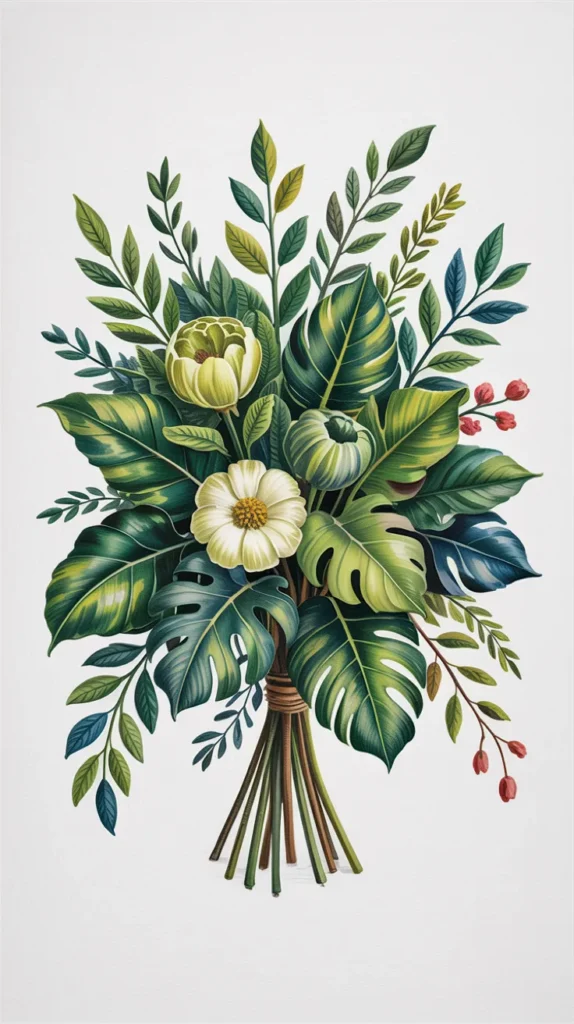
Who says a bouquet has to be all about flowers? A flower bouquet drawing can also focus on foliage. Drawing leaves is a fantastic way to practice shapes and lines, and an all-greenery bouquet is modern and chic.
Practice drawing different leaf shapes: the long, slender leaves of eucalyptus, the intricate fronds of a fern, and the broad leaves of a monstera. Combine them into a lush arrangement. You can color them in various shades of green using a good set of {Prismacolor Premier Colored Pencils} to create depth and realism.
9. Adding Simple Fillers: Baby’s Breath
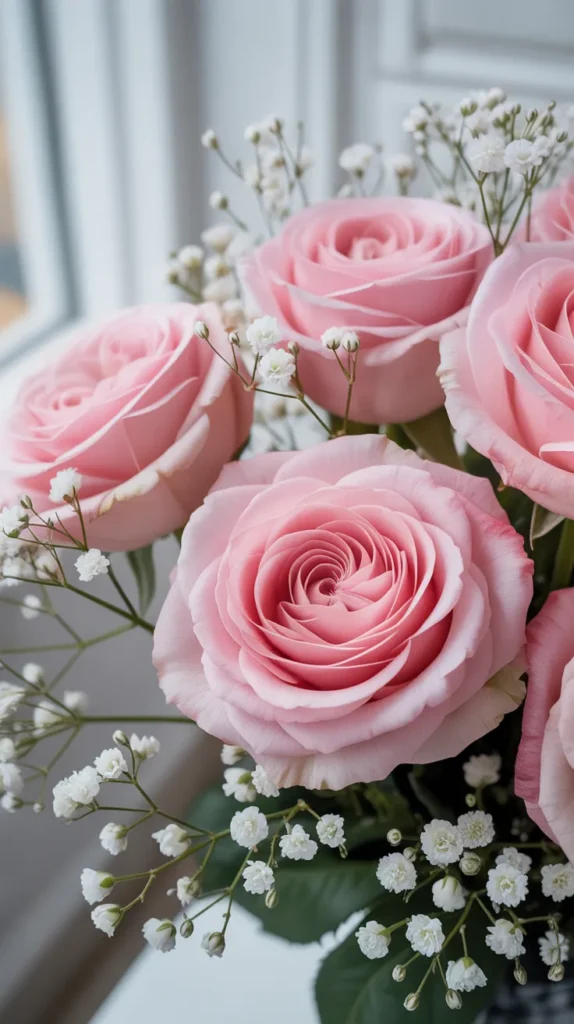
The tiny, cloud-like clusters of baby’s breath (gypsophila) are the perfect filler for any bouquet. They add texture and softness, and they are incredibly easy to draw.
Simply draw thin, branching stems, and then add tiny circles or dots at the ends of the branches. Don’t draw every single flower; just create clusters of dots to give the impression of baby’s breath. It’s a quick way to make your bouquet look fuller.
10. The One-Line Bouquet Drawing
A one-line drawing is a fantastic artistic challenge where you draw an entire subject without lifting your pen from the paper. This forces you to simplify shapes and creates a wonderfully fluid and abstract piece of art.
Start with the center of one flower and let your pen wander, creating the outlines of petals, stems, and leaves all in one continuous, looping line. Don’t worry about it being accurate; the goal is to create a unique and artistic impression.
11. Using a Sketchbook for Practice
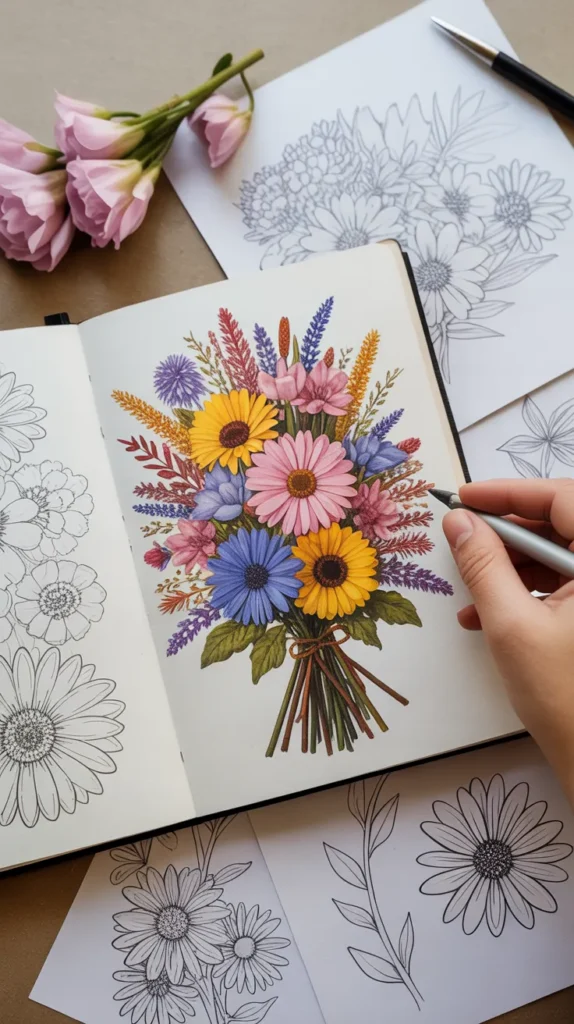
The absolute best way to improve is to practice consistently. Having a dedicated sketchbook just for your floral doodles encourages you to draw often without pressure. A quality mixed-media sketchbook like a {Canson XL Series Mix Media Pad} is ideal because its paper can handle pencil, pen, and even light washes of watercolor.
Fill pages with drawings of individual petals, leaves, and full bouquets. Your sketchbook is your playground for experimentation.
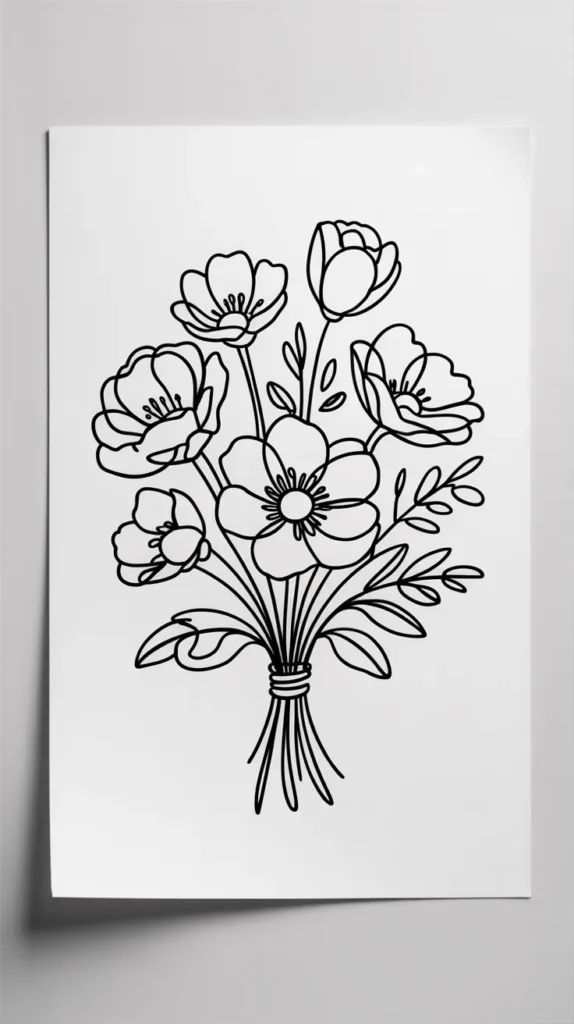
12. Erasing and Refining Your Sketch
No drawing is perfect on the first try. A good eraser is one of a beginner’s most important tools. It allows you to clean up your initial messy sketches and refine your lines.
Start your drawing with a light-grade pencil, then once you’re happy with the shapes, go over them with a darker pencil or pen. Finally, use a high-quality eraser like a {Tombow MONO Zero Eraser} to remove the initial guidelines. Its fine tip is perfect for getting into small spaces without smudging your final lines.
Recommended Products for Your Drawing Journey
| Product | Use Case |
|---|---|
| {Sakura Pigma Micron Pen Set} | Perfect for creating clean, crisp lines for wildflower and line art drawings. |
| {Prismacolor Premier Colored Pencils} | A high-quality set for adding rich, blendable color to your bouquet drawings. |
| {Canson XL Series Mix Media Pad} | A versatile sketchbook that can handle pencil, pen, and light watercolor washes. |
| {Tombow MONO Zero Eraser} | A precision eraser ideal for cleaning up guidelines without smudging final lines. |
Let Your Creativity Bloom
A flower bouquet drawing is a beautiful journey, not a destination. The goal is to enjoy the process of watching something beautiful emerge from a blank page. Start with these simple ideas, and don’t be afraid to experiment and develop your own style.
Every artist starts with a single line. So grab a pencil, pick a simple bloom, and make that first mark. You have a whole garden of creative possibilities waiting for you.
