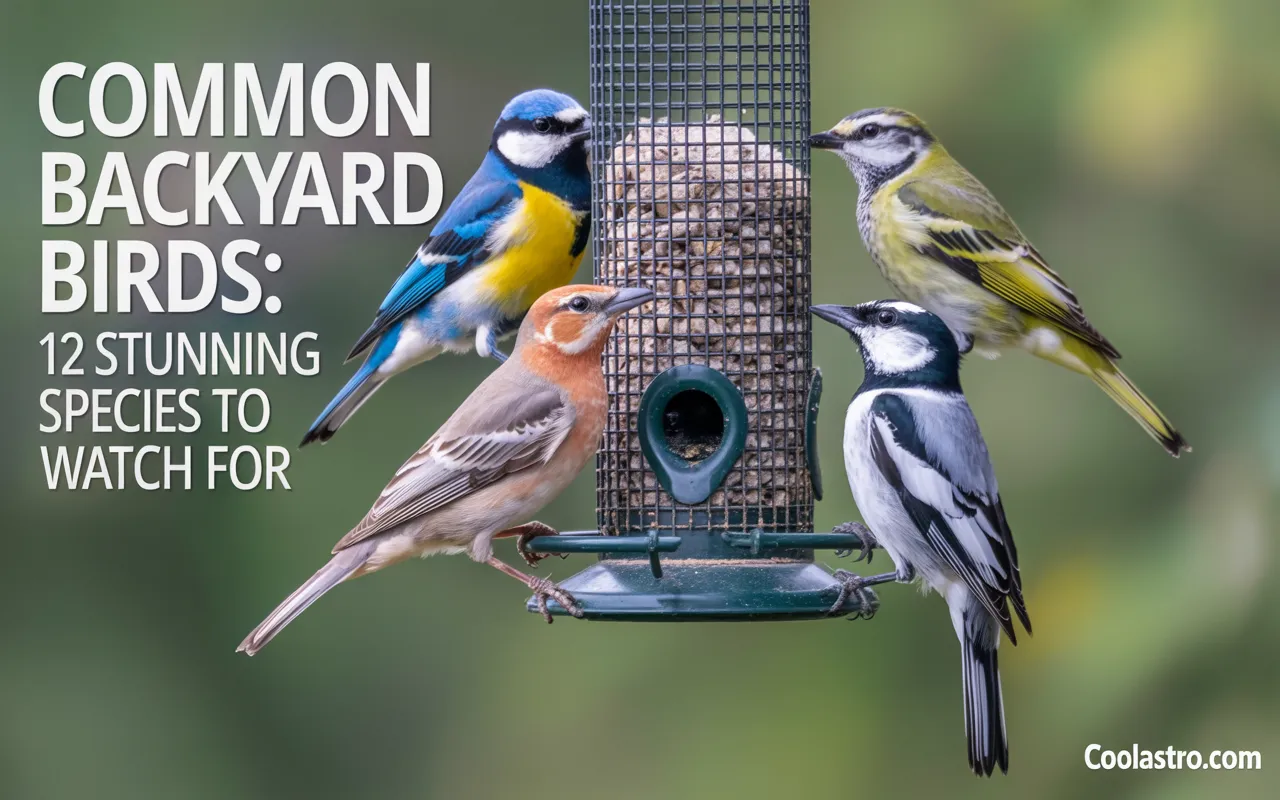
Have you ever noticed the flashes of color and snippets of song that bring your backyard to life? From the brilliant red of a cardinal to the cheerful chirp of a chickadee, a vibrant world of birds is waiting right outside your window.
Learning to identify these visitors can transform a simple glance outdoors into a daily source of joy and connection with nature.
This guide is your perfect starting point. We’ll introduce you to 12 of the most common backyard birds found across the United States.
You’ll learn what they look like, what they eat, and how you can easily attract them for a closer look. Get ready to meet your new feathered neighbors and turn your yard into their favorite local hotspot.
Getting to Know Your Common Backyard Birds
1. Northern Cardinal
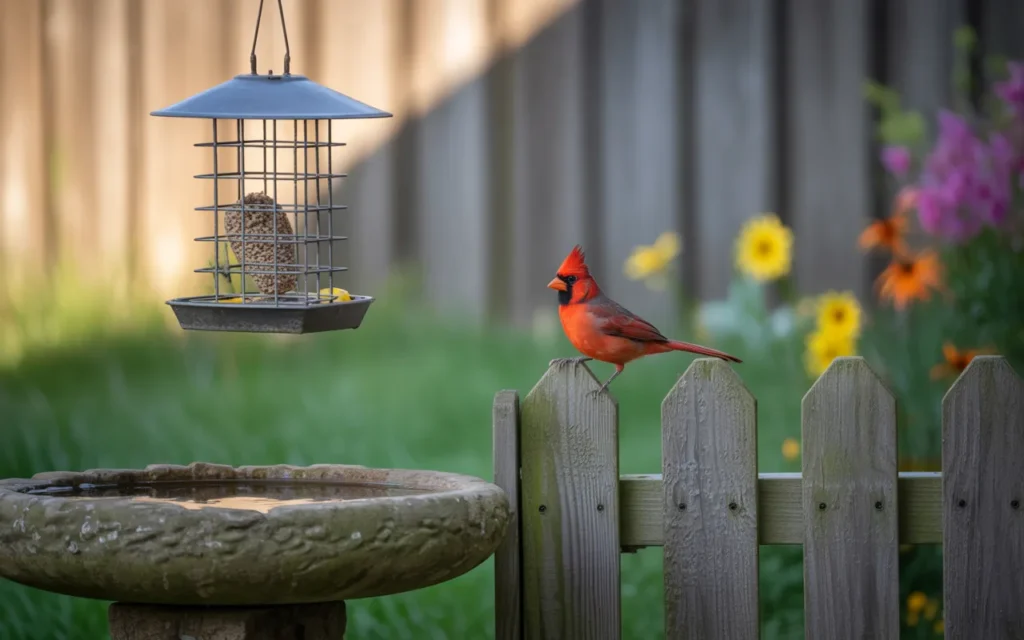
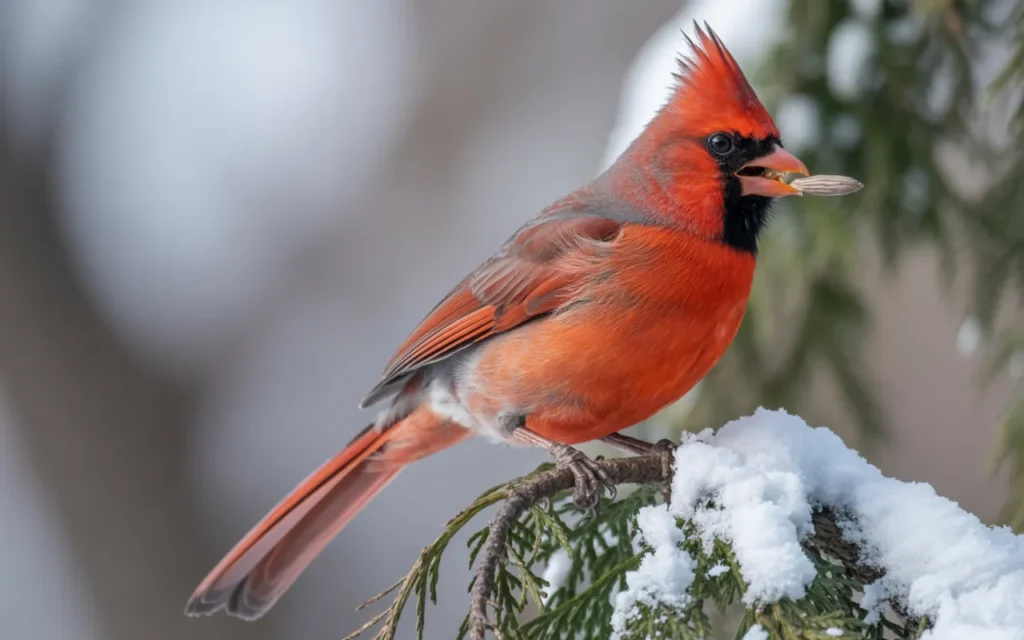
It’s hard to miss a male Northern Cardinal. His brilliant, all-over red plumage, pointed crest, and black facial mask make him one of the most recognizable and beloved common backyard birds.
The females are beautiful in their own right, with warm, brownish-tan feathers and charming reddish accents on their crest, wings, and tail.
Cardinals are year-round residents in many areas and have a strong, cone-shaped beak designed for cracking seeds.
To bring them to your yard, fill a feeder with black oil sunflower seeds or safflower seeds.
A sturdy feeder like the {Brome Squirrel Buster Plus} is ideal because it keeps squirrels away while giving cardinals a comfortable place to perch and eat.
2. American Robin
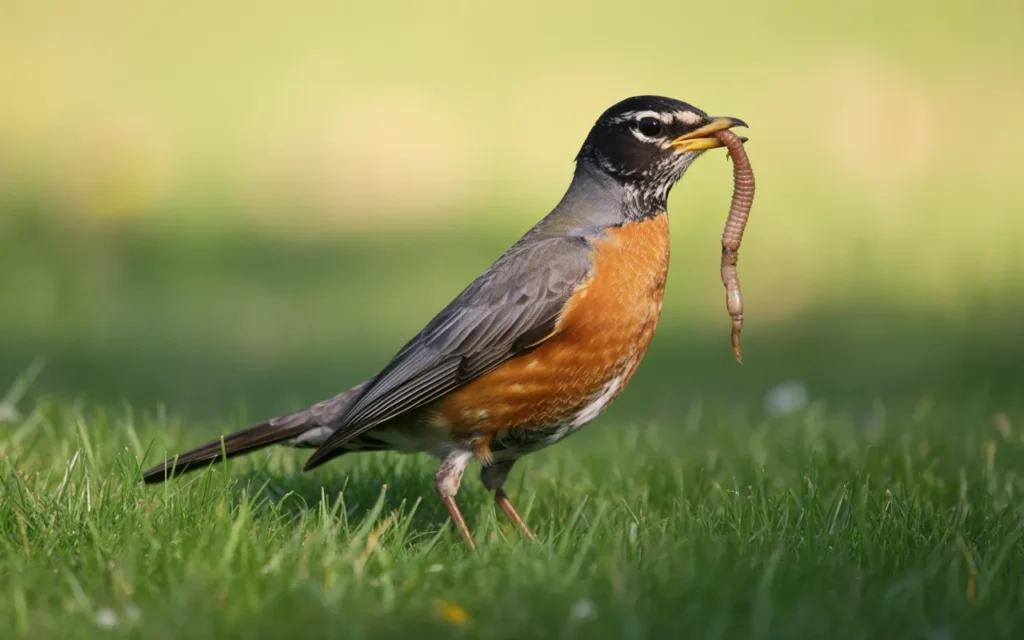
Often seen as a herald of spring, the American Robin is a familiar sight hopping across lawns. With a dark gray back, a nearly black head, and a warm, rusty-orange breast, they are easy to identify.
They famously run, stop, and cock their heads, listening intently for earthworms moving under the soil.
Robins aren’t big on seeds. Instead, you can attract them with a reliable water source. A simple bird bath, like the {VIVOHOME Polyresin Bird Bath}, will become a neighborhood hub for robins looking to drink and bathe. You can also offer them mealworms or chopped fruit on a platform feeder.
3. Blue Jay
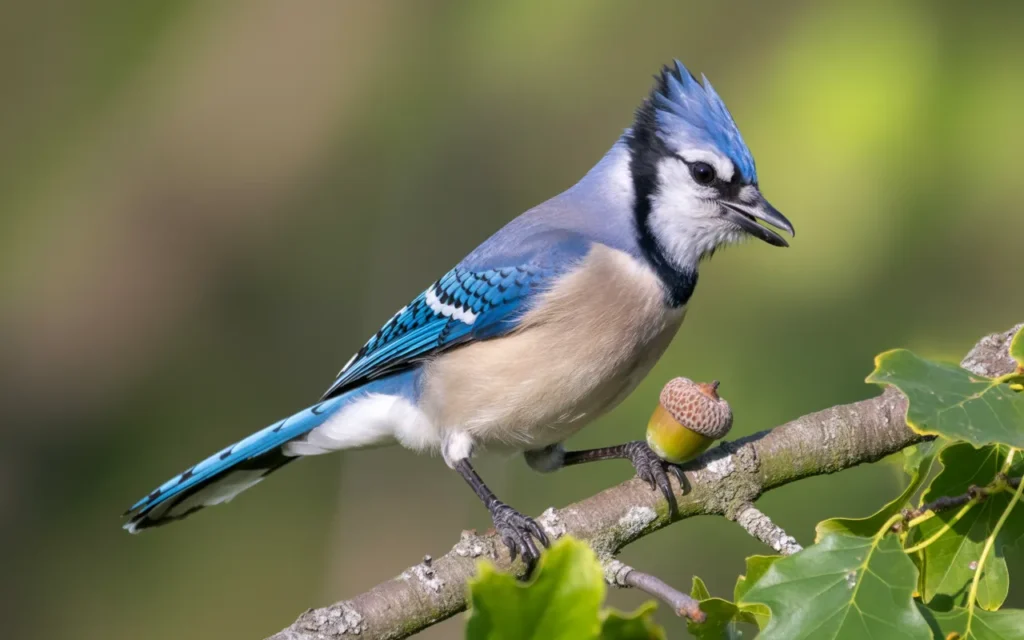
Blue Jays are loud, intelligent, and impossible to ignore. These large songbirds are adorned in various shades of blue, white, and black, with a prominent crest that they raise and lower depending on their mood.
Their wings and tail have beautiful black barring that adds to their striking appearance.
These birds have a varied diet but are especially fond of acorns and peanuts. A platform feeder is best for accommodating their size and their favorite foods.
The {Gray Bunny Classic Platform Feeder} is a great choice, as it’s open design makes it easy for jays to land and pick out their preferred treats.
4. Mourning Dove
You can identify a Mourning Dove by its soft, cooing song that often fills the air in the morning and evening.
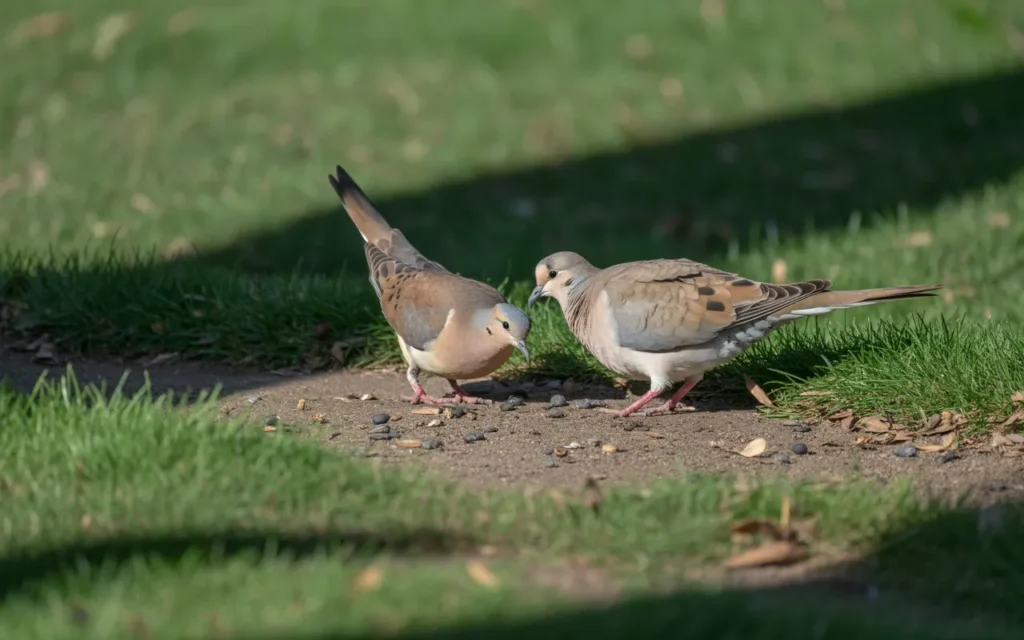
These slender, graceful birds have gentle, grayish-tan bodies, black spots on their wings, and long, pointed tails. When they take off, their wings produce a distinct, high-pitched whistle.
Mourning Doves are ground feeders, primarily eating seeds like millet, cracked corn, and sunflower seeds.
You’ll often see them foraging peacefully beneath your hanging feeders, cleaning up any spilled seed. Scattering some seeds on the ground or using a low tray feeder will make your yard especially inviting for them.
5. Downy Woodpecker
The Downy Woodpecker is the smallest woodpecker in North America, making it a delightful and tiny visitor to backyards.
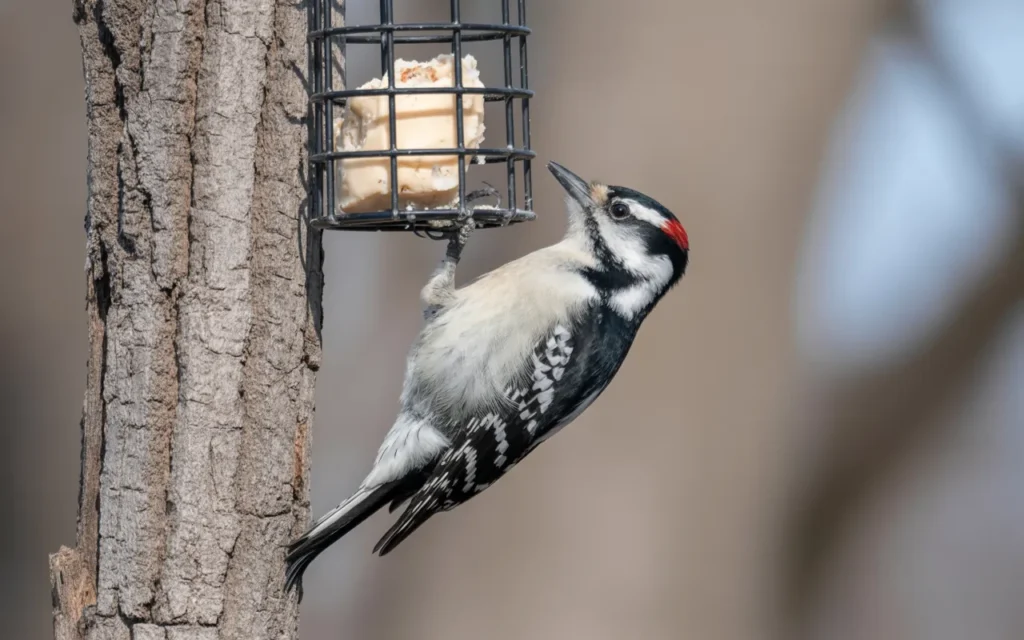
It has a distinctive black-and-white checkered body, a white stripe down its back, and a very short bill. Males can be identified by the small, bright red patch on the back of their heads.
These birds love suet more than anything. Hanging a simple suet cage filled with a high-quality {C&S High Energy Suet Cake} is the surest way to attract them.
They will cling to the feeder, often upside down, pecking away at the energy-rich treat, especially during colder months.
6. Black-capped Chickadee
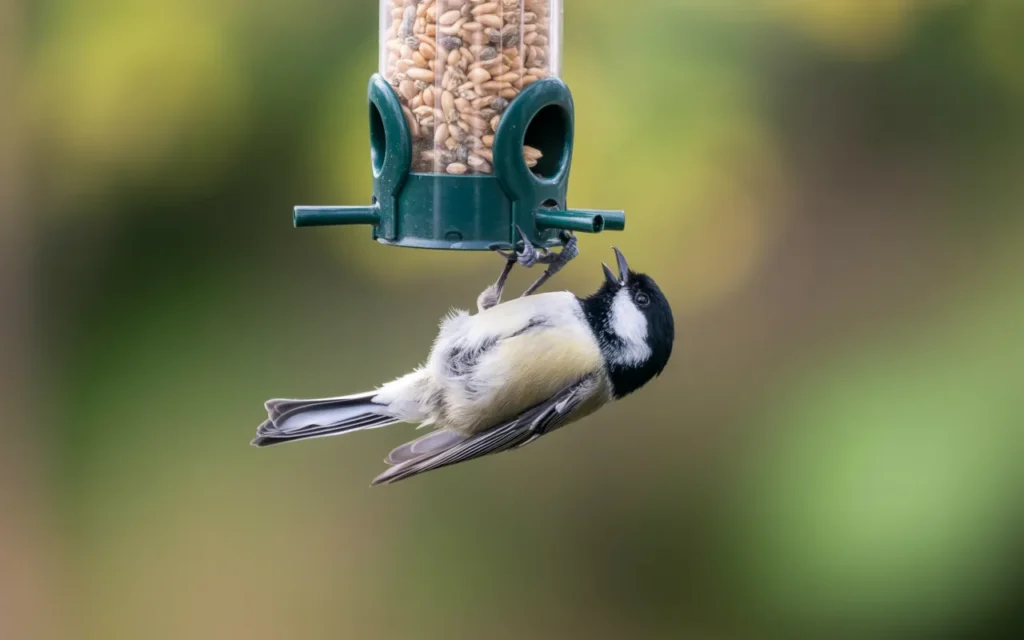
A tiny bird with a giant personality, the Black-capped Chickadee is a bundle of energy and curiosity. It has a distinctive black cap and “bib,” bright white cheeks, a soft gray back, and a buffy-white underside.
You’ll often hear their cheerful, inquisitive “chick-a-dee-dee-dee” call as they explore your yard.
Chickadees are nimble acrobats that can cling to almost any feeder. They love black oil sunflower seeds and suet.
They’ll often grab a single seed and fly to a nearby branch to hammer it open with their beak. Their trusting nature makes them a favorite among common backyard birds.
7. American Goldfinch
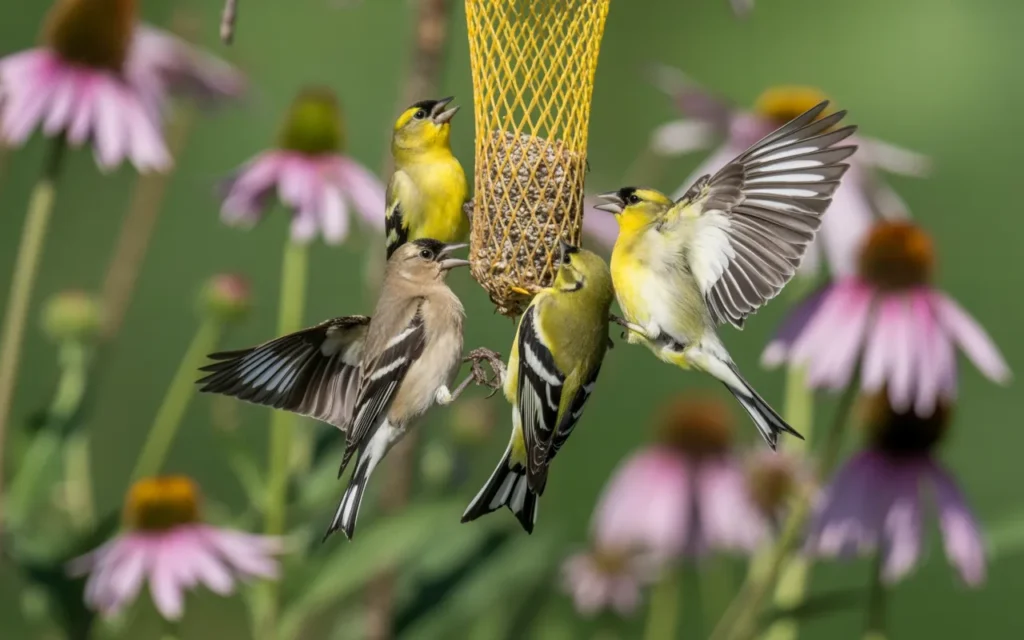
Often called a “wild canary,” the male American Goldfinch is a brilliant lemon yellow during spring and summer, with a sharp black cap and black wings. Females are a more muted olive-yellow.
In winter, both sexes change to a duller brownish-gray but continue to visit feeders in lively flocks.
Goldfinches have small, conical beaks perfect for eating tiny seeds. Their absolute favorite is Nyjer (thistle) seed.
To attract these cheerful birds, you’ll need a special finch feeder, like the {Stokes Select Thistle Finch Feeder}, which has small ports designed specifically for this fine seed.
8. House Finch
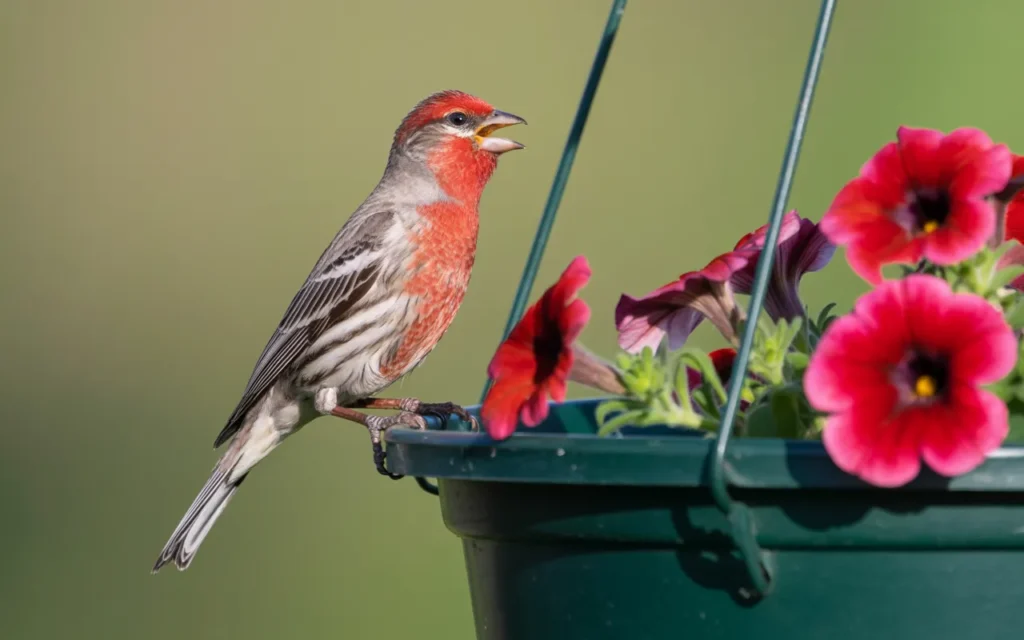
One of the most widespread common backyard birds, the House Finch is very social and often gathers in noisy groups.
The male has a rosy red head and breast that contrasts with his brown-streaked back and belly. Females are less flashy, with blurry brown streaks all over a grayish-brown body.
House Finches are not picky and will happily eat from nearly any type of feeder, enjoying black oil sunflower seeds and Nyjer seeds.
Their bubbly, warbling song adds a lively and pleasant soundtrack to gardens and suburbs across the country.
9. Tufted Titmouse
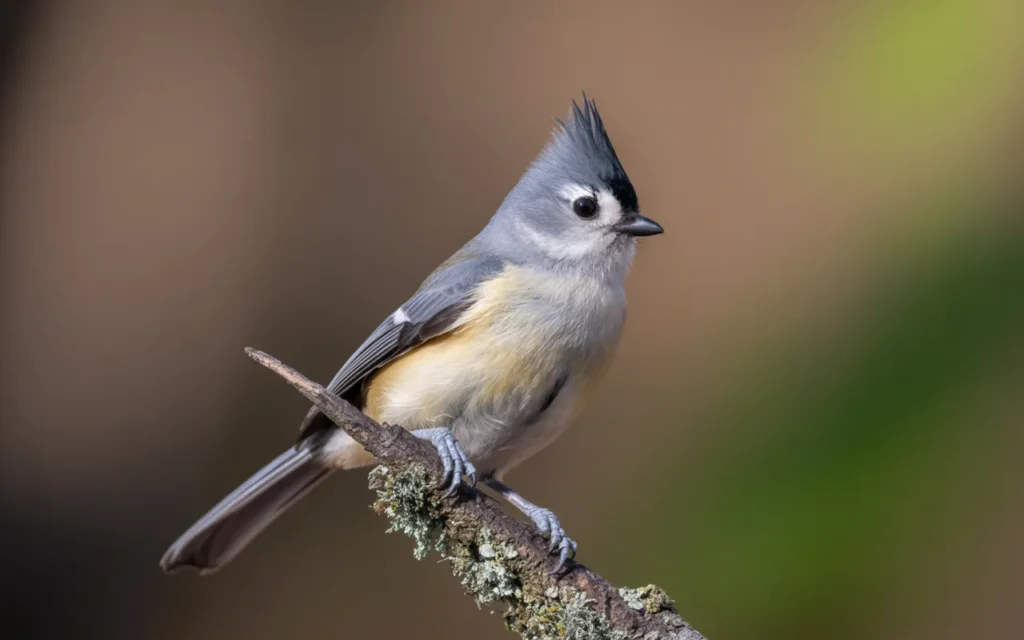
A close relative of the chickadee, the Tufted Titmouse is a small, gray bird with a dashing crest, large black eyes, and a wash of peachy-orange color on its flanks.
They are active and vocal birds, often traveling in mixed flocks with chickadees and nuthatches during the winter.
Titmice love sunflower seeds, peanuts, and suet. They have a charming habit of taking one seed from a feeder, flying to a safe branch, holding the seed with their feet, and hammering it open with their bill.
10. White-breasted Nuthatch
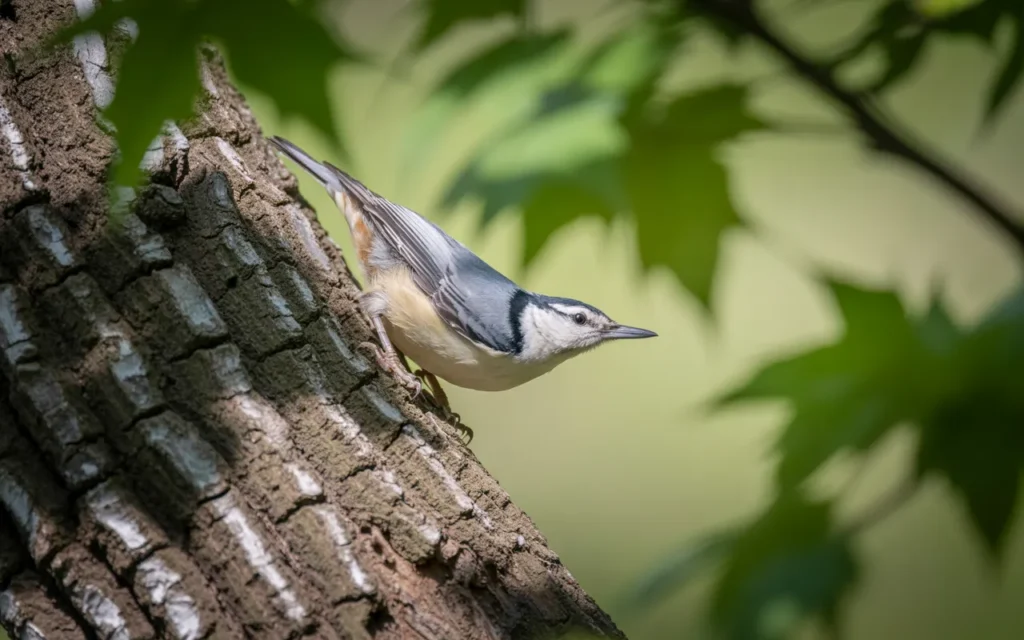
This bird is the original “upside-down” bird. The White-breasted Nuthatch is known for its habit of creeping down tree trunks headfirst in search of insects.
It has a blue-gray back, a bright white face and belly, and a black cap. Its call is a nasal, repetitive “yank-yank-yank.”
Nuthatches are big fans of suet, peanuts, and sunflower seeds. They can easily cling to any feeder, no matter the orientation. Their unique foraging method makes them fascinating to watch.
11. Eastern Bluebird
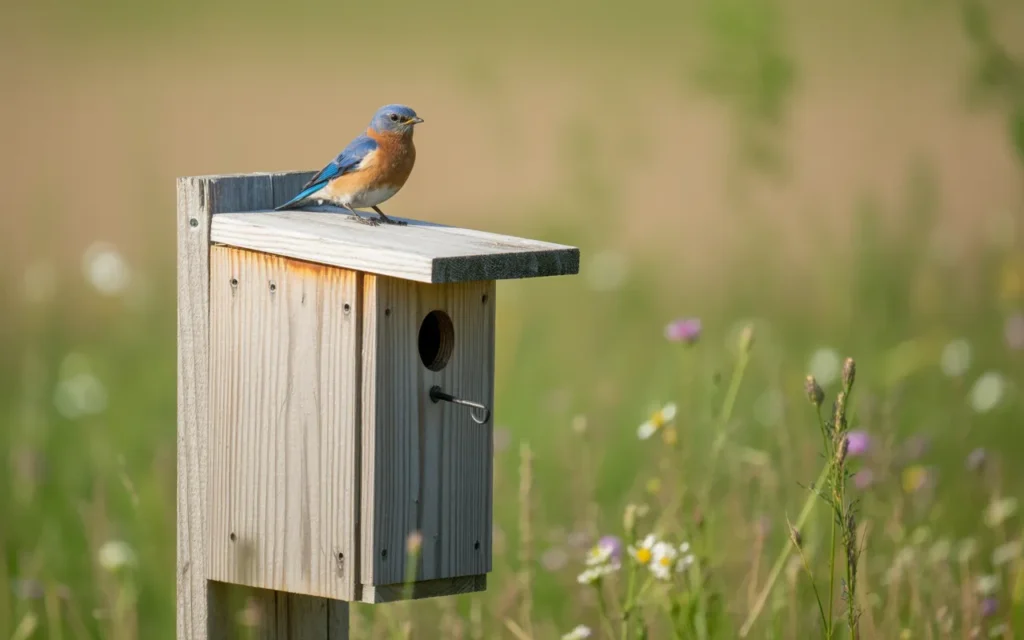
Spotting an Eastern Bluebird is a special treat. The male is a stunning sky blue on his back, head, and wings, complemented by a warm, rusty-red breast. Females are more subdued and grayish, but they have lovely blue tints on their wings and tail.
Bluebirds are not typical seed-eaters. They primarily hunt for insects in open, grassy areas. The best way to attract them is to offer mealworms or by putting up a nesting box.
A properly designed house like the {Nature’s Way Cedar Bluebird Box}, mounted on a pole in an open yard, can convince a pair to raise a family in your backyard.
12. House Sparrow
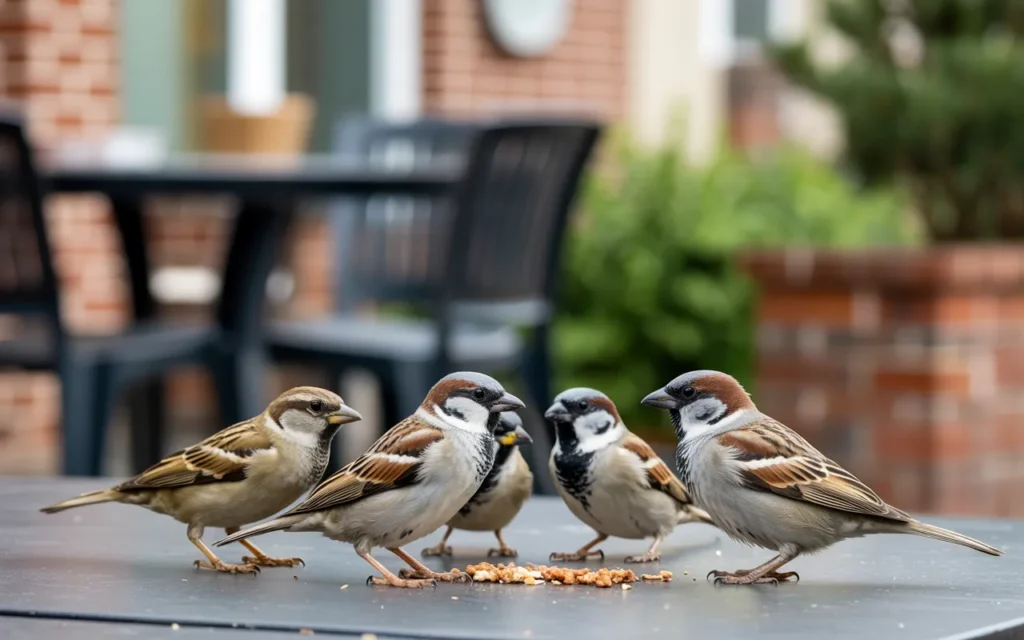
Originally from Europe, the House Sparrow is now one of the most widespread common backyard birds in the world. Males have a gray crown, black bib, and streaked brown back.
Females are a plainer buffy brown. They are highly social and often found in noisy flocks.
House Sparrows are not picky and will eat almost anything, from discarded food to seeds at a feeder. They particularly enjoy millet and cracked corn. While some birders see them as pests, they are a fixture of the urban and suburban landscape.
Your Backyard Birdwatching Starter Kit
Here is a quick summary of the products mentioned in this guide to help you attract some of these common backyard birds.
| Product Name | Brand | Best For |
|---|---|---|
| Squirrel Buster Plus | Brome | Keeping squirrels off your feeder |
| Polyresin Bird Bath | VIVOHOME | Providing a clean water source for all birds |
| Classic Platform Feeder | Gray Bunny | Serving large seeds and attracting jays |
| High Energy Suet Cake | C&S | Attracting woodpeckers, wrens, and chickadees |
| Thistle Finch Feeder | Stokes Select | Feeding Nyjer seed to goldfinches |
| Cedar Bluebird Box | Nature’s Way | Providing a safe nesting site for bluebirds |
Conclusion: Start Your Birdwatching Adventure
Now that you can identify some of the most common backyard birds, the real fun begins. By providing food, water, and a little bit of shelter, you can create a thriving habitat that supports local wildlife and provides you with endless entertainment and a deeper connection to the natural world.
Start small with a single feeder or a bird bath and see who shows up. You’ll be amazed at how quickly your yard can become a bustling hub of activity.
Grab a pair of binoculars, a cup of coffee, and enjoy the beautiful, feathered show right outside your window. Happy birding
