There is something incredibly soothing about picking up a pencil or a brush and capturing the beauty of nature on paper. A colorful flowers drawing isn’t just an art project; it’s a way to relax, express yourself, and bring a permanent burst of joy into your sketchbook.
Whether you are a complete beginner holding a colored pencil for the first time or an experienced artist looking for fresh inspiration, flowers offer an endless variety of shapes, textures, and vibrant hues to explore.
Many people feel intimidated by the idea of drawing, thinking they need natural talent to create something beautiful. But drawing flowers is wonderfully forgiving.
Nature is full of perfect imperfections—a bent petal, a slightly uneven leaf—which means your drawing doesn’t have to be photorealistic to be stunning.
This guide is designed to walk you through 12 inspiring ideas for your next colorful flowers drawing, ranging from simple doodles to more detailed studies.
We’ll explore different mediums, techniques, and styles to help you find your unique artistic voice.
So, grab your sketchbook and your favorite art supplies. It’s time to let your creativity bloom and fill your pages with color!
1. The Classic Vibrant Rose
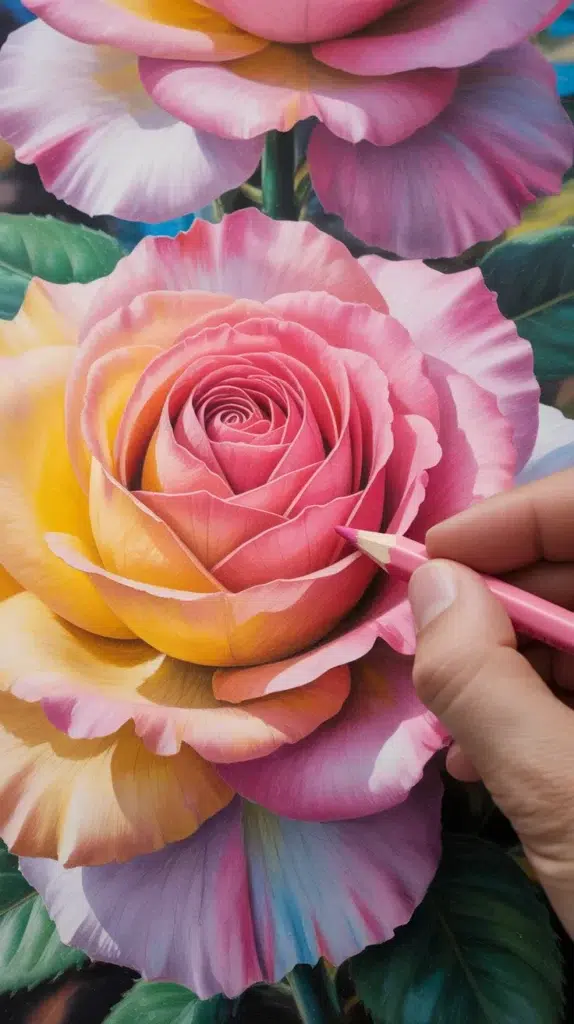
The rose is a timeless subject for any artist. Its intricate layers of petals offer a wonderful challenge for shading and depth.
For a stunning colorful flowers drawing, try moving away from the standard red rose and experiment with a sunset palette—blending yellows into oranges and pinks.
Start by drawing a tight spiral in the center of your page. As you move outward, draw curved lines that overlap, getting larger and looser to represent the opening petals.
Don’t worry about perfect symmetry; roses are organic! Once your outline is done, bring it to life with color.
Layering is key here. Using a high-quality set of pencils like the {Prismacolor Premier Colored Pencils} allows you to blend colors seamlessly.
Their soft cores are perfect for creating that buttery smooth transition from a deep orange center to pale yellow petal tips, giving your rose a realistic, glowing look.
2. Minimalist Line Art with Watercolor Pops
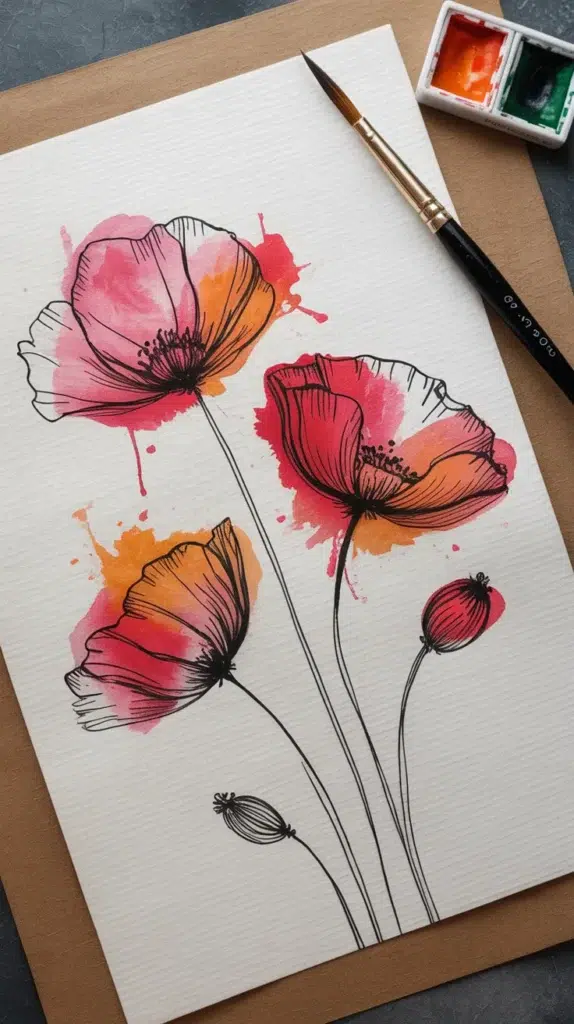
If you love a modern, clean aesthetic, this idea is for you. This style combines the precision of ink drawing with the loose, expressive nature of watercolor. It’s a fantastic way to create a colorful flowers drawing that feels fresh and artistic without needing to fill every inch of the paper.
Begin by sketching a simple floral stem—perhaps a tulip or a poppy—using a fine-point waterproof pen. Focus on clean, confident lines.
Once the ink is dry, it’s time for the fun part. load your brush with watery paint and loosely dab color over the petals. The color doesn’t have to stay inside the lines! In fact, letting it bleed slightly outside the edges adds to the charm.
Using a dedicated paper pad like the {Canson XL Series Watercolor Pad} is essential here. Its texture and weight prevent the paper from buckling when wet, ensuring your beautiful washes stay flat and vibrant.
3. A Field of Wildflowers
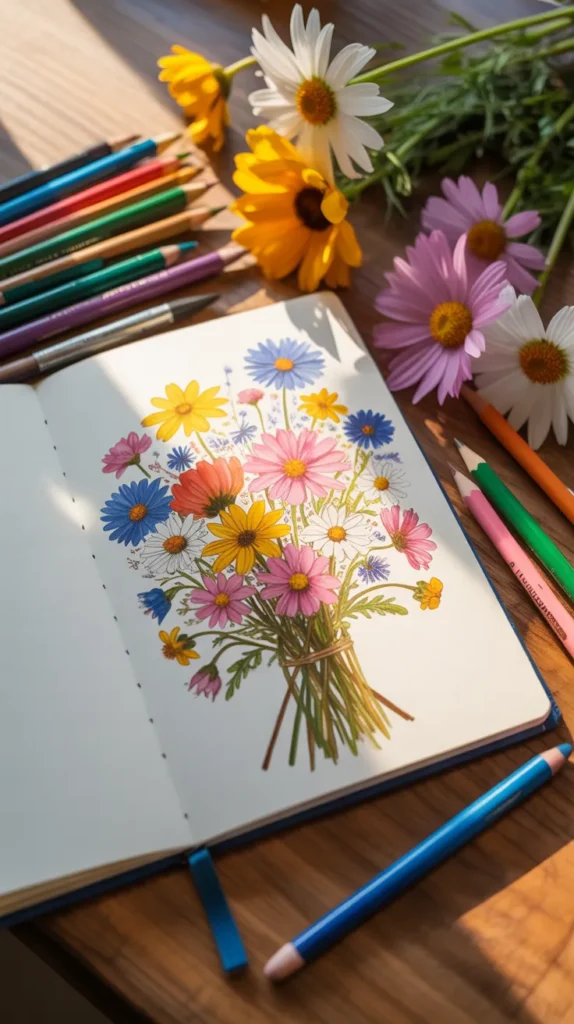
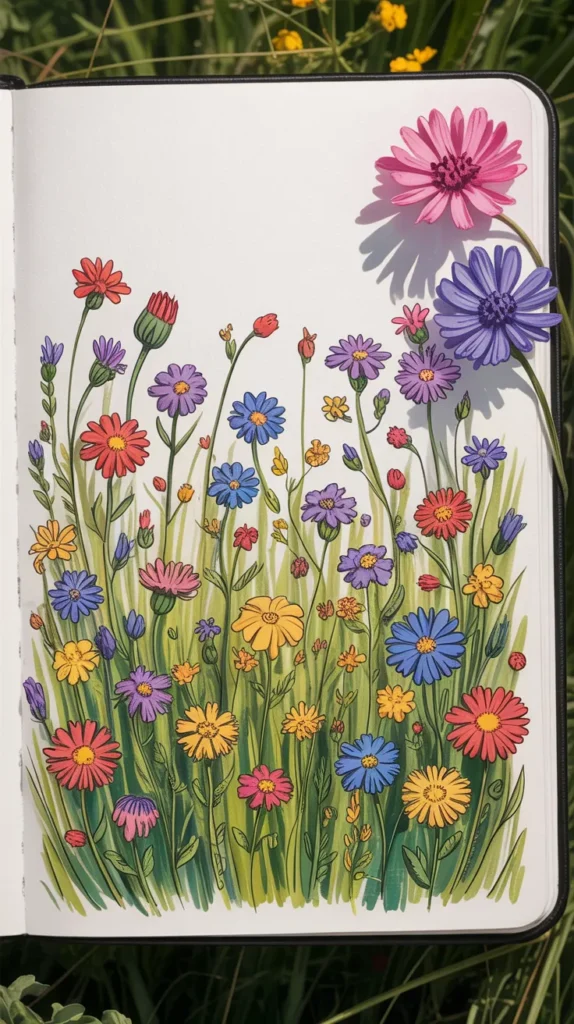
Why stop at one flower when you can draw a whole field? Creating a dense collection of different blooms is a great way to practice variety and composition in your colorful flowers drawing. This idea is all about chaos and color—think tall grasses, tiny daisies, purple lavenders, and bright red cornflowers all jumbled together.
Start by drawing the stems at varying heights to create depth. Then, add the flower heads. Keep the shapes simple: small circles for centers, teardrops for petals, and jagged lines for leaves. When coloring, use a mix of mediums to create texture.
You might use markers for the bold poppies and colored pencils for the delicate grasses.
This drawing is a great excuse to use every color in your box! It captures the untamed beauty of a meadow in full bloom.
4. Detailed Botanical Study
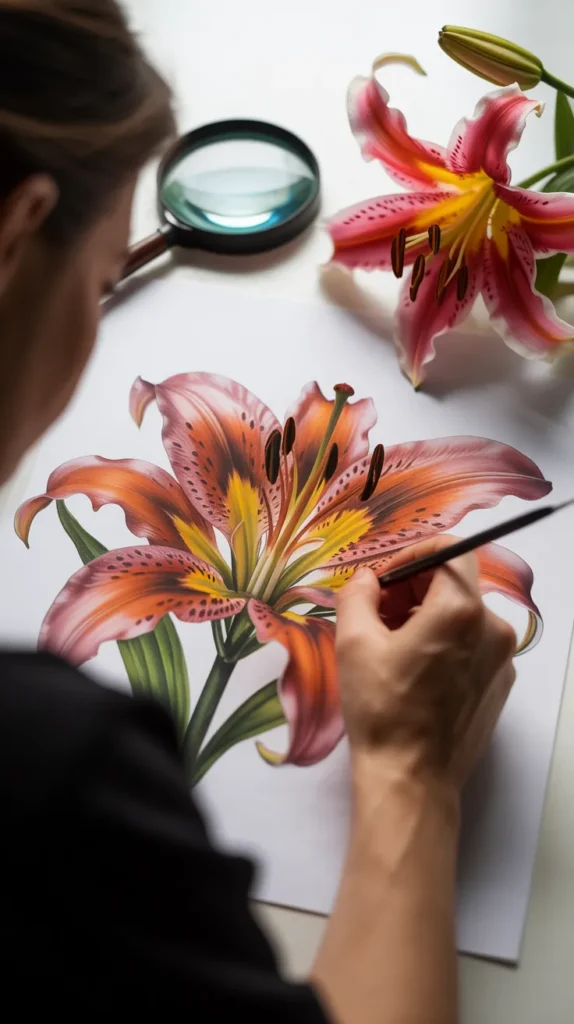
For those who love science and nature, a botanical study focuses on accuracy and detail. This type of colorful flowers drawing is about observing the specific characteristics of a plant—the veins in the leaves, the texture of the stem, and the exact shade of the petals. It’s a meditative process that trains your eye to see the small things.
Choose a single specimen, maybe a lily or an orchid, and observe it closely. Sketch the outline lightly first. Then, build up the color slowly.
Pay attention to the light source and where the shadows fall. To get those incredibly fine details, like the pollen on a stamen or the serrated edge of a leaf, you need a sharp, reliable tool.
The {Uni-ball Kuru Toga Roulette Mechanical Pencil} is fantastic for the initial sketch and fine details because it has a rotating mechanism that keeps the lead sharp at all times, ensuring your botanical lines are crisp and precise.
5. Geometric Flower Patterns
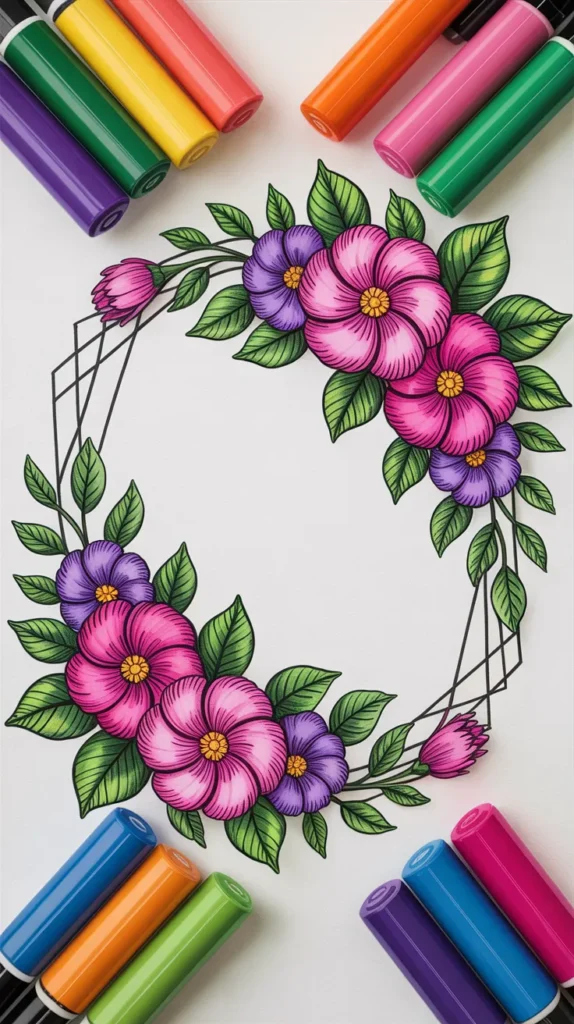
Combine the organic shapes of nature with the rigid structure of geometry for a unique twist. This idea involves drawing flowers inside geometric shapes like triangles, hexagons, or circles, or creating a flower entirely out of geometric forms.
This modern take on a colorful flowers drawing is perfect for designing cards, logos, or just doodling.
Try drawing a diamond shape and filling it with a lush arrangement of peonies and leaves, letting some leaves spill out of the border for a dynamic look.
Or, draw a sunflower where every petal is a perfect triangle. Use bold, contrasting colors to make the geometry pop. Markers work wonderfully for this style as they provide solid, even coverage.
6. Sunflower with textured centers
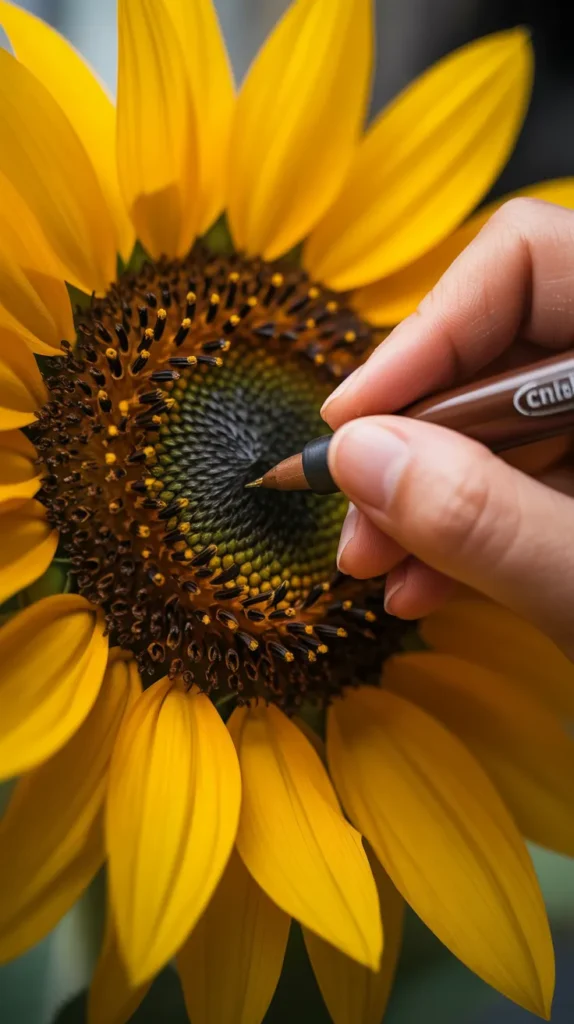
Sunflowers are the epitome of happiness, and they are fantastic subjects for practicing texture. The contrast between the bright, smooth yellow petals and the dark, textured center makes for a visually striking colorful flowers drawing.
Draw a large circle for the center and surround it with two layers of long, slightly messy petals. The real magic happens in the middle. Instead of just coloring it brown, use a stippling technique (lots of small dots) or small cross-hatching marks to mimic the seeds.
You can layer dark browns, blacks, and even deep purples to create depth. For the petals, blend rich yellows into oranges near the center.
To keep your work clean and prevent your hand from smudging your textured center, wearing an {Artify Artist Glove} can be a game-changer. It covers the side of your hand and pinky, allowing your hand to glide over the paper without smearing your hard work.
7. Negative Space Floral Art
Flip your perspective with negative space drawing. Instead of drawing the flower itself, you draw the space around it. This technique challenges your brain to see shapes differently and results in a bold, artistic colorful flowers drawing.
Lightly sketch the outline of a flower cluster—hydrangeas or lilacs work well for this—on your paper. Then, instead of coloring inside the flower lines, color the background with a deep, dark color like navy blue, black, or forest green.
Leave the flower shape white, or shade it very lightly. The silhouette of the flower emerges from the dark background, creating a dramatic and elegant effect.

8. Pastel Chalk Blossoms on Toned Paper
Using pastel chalks on toned paper (gray or tan) creates a soft, dreamy quality that is hard to replicate with other mediums.
The toned paper acts as a mid-tone value, meaning you can add both dark shadows and bright highlights that really pop. This is a wonderful technique for a soft, romantic colorful flowers drawing.
Choose a paper like a tan Kraft paper. Sketch a simple cherry blossom branch. Use dark browns for the branch, then come in with soft pinks and whites for the petals.
The chalk allows for beautiful smudging and blending with your fingers. Add bright white highlights to the tips of the petals to make them look like they are catching the sunlight.
To keep your pastel drawing safe from smudging once you’re done, a fixative spray is often used, but careful storage is also key.

9. Mandala Flower Garden
Drawing mandalas is a known meditative practice. Combining the radial symmetry of a mandala with floral elements creates a deeply relaxing and intricate colorful flowers drawing.
It’s less about capturing a specific flower and more about creating a stylized, rhythmic pattern inspired by petals and leaves.
Start with a center point and draw a small flower. Draw a circle around it, and add a layer of petals. Continue adding concentric circles, filling each layer with different floral shapes—vines, leaves, buds, and blooms. Keep expanding outward until you fill the page.
When it comes to coloring, the possibilities are endless. You can create a gradient effect, radiating from warm colors in the center to cool colors at the edges.
Fine-tip pens are excellent for the intricate outlines. The {Sakura Pigma Micron Fineliner Pens} are the gold standard for this; their archival ink doesn’t bleed, allowing you to create crisp, tiny details in your mandala without worrying about lines blurring together.

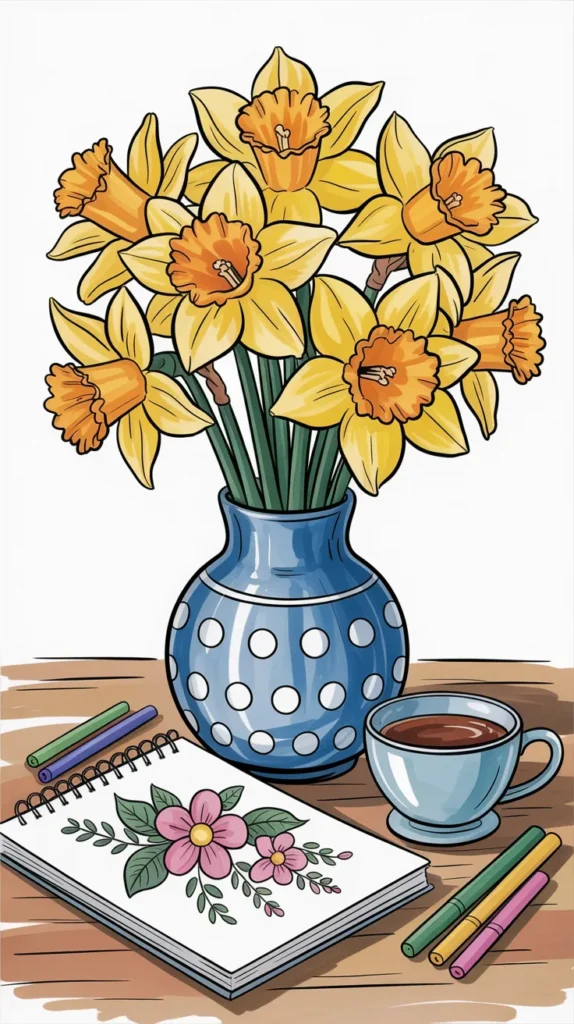
11. Bouquet in a patterned Vase
Add personality to your floral drawing by placing your blooms in a unique, patterned vase. This adds another element of design to your colorful flowers drawing and allows you to play with contrasting patterns.
You can contrast the organic, flowing lines of the flowers with rigid stripes, polka dots, or chevrons on the vase.
Draw a large, funky vase shape first. Fill it with a wild arrangement of tulips and daffodils. Then, dedicate time to designing the vase.
Maybe it’s a blue and white porcelain pattern, or perhaps it’s a modern geometric design with bright neon colors. This idea tells a story about the setting of the flowers, making it feel like a still life from a cozy home.
12. “Mood Board” Color Swatch Flowers
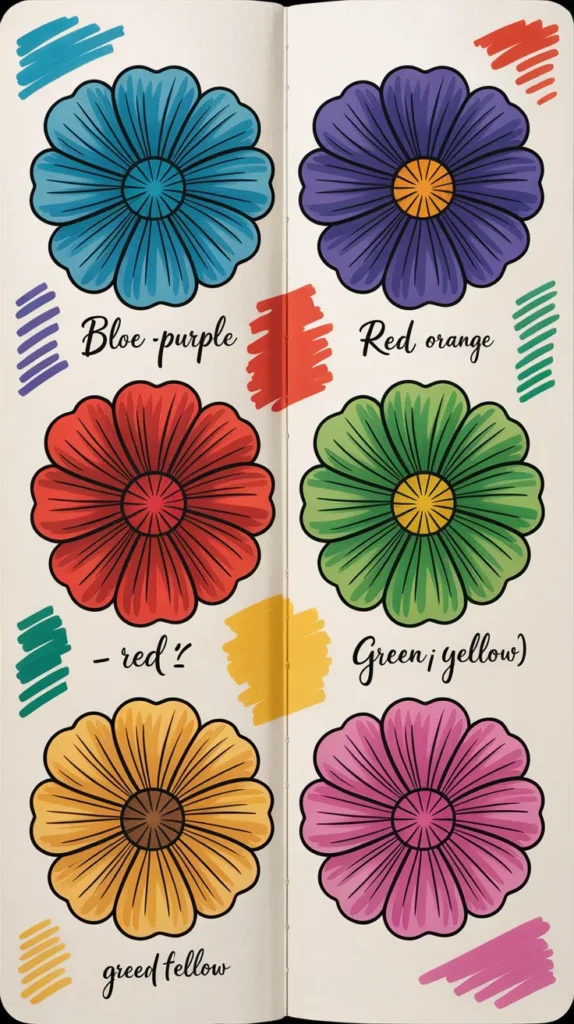
This is a fun exercise for testing out color palettes. Instead of a full composition, draw a series of small, simple flowers, each dedicated to a specific color palette. One flower might be painted in shades of “ocean blues,” another in “forest greens,” and another in “citrus brights.”
Draw 4-6 identical flower outlines on a page. Underneath each, write a theme name. Then, fill them in using only colors that fit that theme. It’s a fantastic way to learn which colors work well together and serves as a reference for future, larger colorful flowers drawing projects.
It turns your sketchbook into a functional and beautiful color guide. To keep your color swatches organized and your lines sharp, a good eraser is vital for cleaning up sketches before coloring.
The {Tombow MONO Zero Eraser} is a precision tool with a tiny tip, perfect for erasing small stray marks inside your flower petals without ruining the surrounding sketch.
Helpful Tools for Your Art Journey
To help you get started on creating your own masterpieces, here is a summary of the high-quality art supplies mentioned in this guide. Having the right tools can make the drawing process smoother and even more enjoyable.
| Product Name | Brand | Use |
|---|---|---|
| Premier Colored Pencils | Prismacolor | Soft-core pencils perfect for smooth blending and layering colors. |
| XL Series Watercolor Pad | Canson | Heavyweight paper that prevents warping when using watercolor paints. |
| Kuru Toga Roulette Mechanical Pencil | Uni-ball | Keeps a consistently sharp point for fine details and botanical lines. |
| Artist Glove | Artify | Prevents hand oils and smudging while drawing on textured areas. |
| Pigma Micron Fineliner Pens | Sakura | Creates crisp, bleed-free outlines for intricate mandala work. |
| MONO Zero Eraser | Tombow | Precision erasing for cleaning up tiny details and sketches. |
Conclusion: Let Your Creativity Bloom
Drawing is a journey, not a destination. Whether you spent an hour meticulously shading a botanical rose or five minutes doodling a whimsical wildflower field, the act of creating a colorful flowers drawing adds a little more beauty to the world.
Don’t be afraid to make mistakes. A wobbly line can become a unique petal shape; a color smudge can become a shadow.
The most important thing is that you are expressing yourself and having fun. We hope these 12 ideas have sparked your imagination and inspired you to open your sketchbook.
So, pick up that pencil, choose your favorite colors, and start drawing. Your personal garden of art is waiting to grow
