There is something inherently therapeutic about putting pencil to paper and watching a bloom come to life.
Whether you are an experienced artist or someone just picking up a sketchbook for the first time, creating colorful drawings flowers is one of the most accessible and rewarding ways to express your creativity.
Nature provides an endless source of inspiration, with shapes, textures, and color palettes that challenge us to look closer and draw freely.
In a world that often feels digital and fast-paced, slowing down to capture the delicate curve of a petal or the vibrant hue of a poppy centers us. It connects us to the natural world and allows us to create beauty with our own hands.
But where do you start? How do you capture the vibrancy of a garden on a flat sheet of paper? The secret often lies not just in talent, but in observation, technique, and having the right tools at your fingertips.
In this guide, we are going to explore 15 breathtaking ideas for your next floral masterpiece. We will cover a range of styles, from realistic botanical studies to whimsical, abstract doodles.
We’ll also share practical tips on blending, shading, and selecting the perfect colors to make your colorful drawings flowers pop off the page.
Whether you use colored pencils, markers, or pastels, get ready to fill your sketchbook with a garden of color!
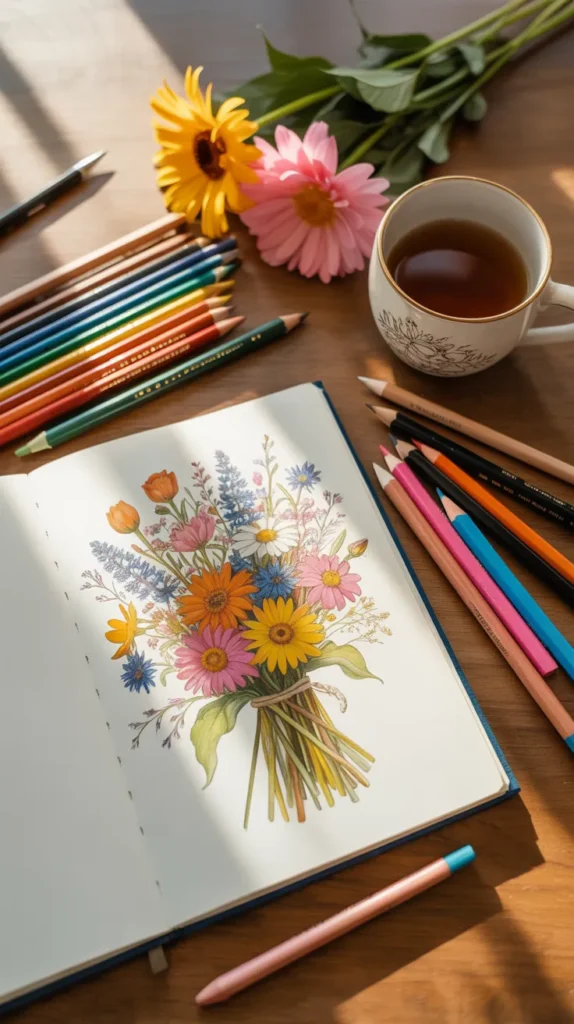
1. The Classic Red Rose Study
The red rose is perhaps the most iconic subject for any floral artist. It challenges you to understand layers, shadows, and the velvety texture of petals.
When creating colorful drawings flowers, mastering the rose is a rite of passage.
The deep crimson hues require patience to build up, forcing you to move beyond a single red pencil and explore the depths of burgundies, violets, and even browns to create realistic shadows.
Start by lightly sketching the spiral center and working your way out, petal by petal. Don’t press too hard initially; build your color in layers.
To achieve that rich, saturated look without damaging the paper, you need a pencil that lays down pigment smoothly. {Prismacolor Premier Colored Pencils} are the gold standard for this.
Their soft, wax-based cores allow for incredible blending and shading, helping you achieve the buttery, smooth transition from light highlight to deep shadow that makes a rose look three-dimensional.
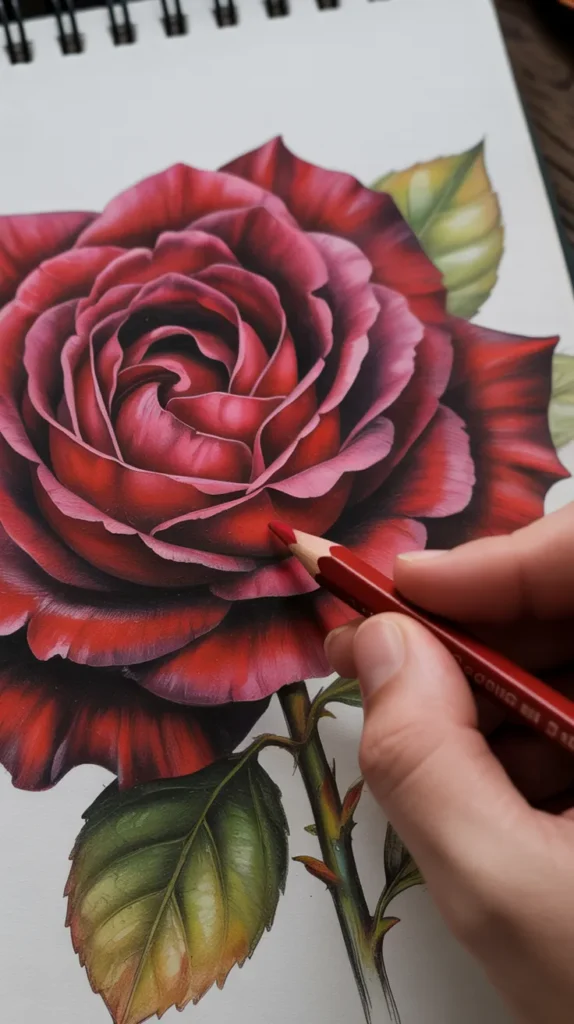
2. Vibrant Sunflower Fields
Sunflowers are pure joy on paper. Their simple structure—a large dark center surrounded by bright ray florets—makes them an excellent subject for beginners wanting to attempt colorful drawings flowers.
The contrast between the deep browns and purples of the seed head and the brilliant yellows and oranges of the petals creates an image that instantly grabs attention.
When drawing sunflowers, don’t be afraid to be messy with the center. Use stippling (lots of little dots) to create the texture of the seeds.
For the petals, mix sunny yellows with ochre and burnt orange to show depth and movement. Sunflowers are rarely perfect; their petals twist and turn, so let your lines be loose and expressive.
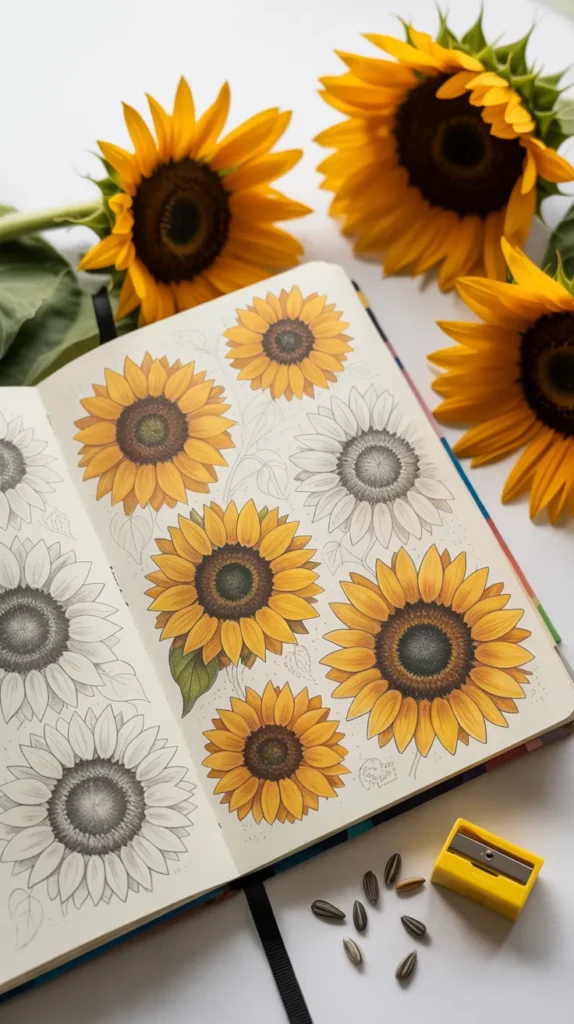
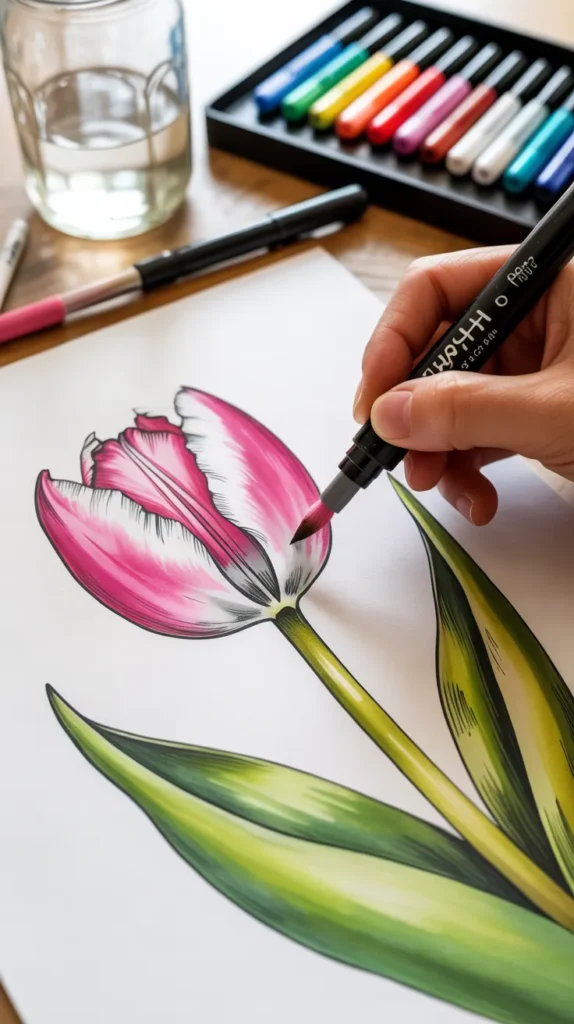
3. Delicate Watercolor-Style Tulips
You don’t need paint to create a watercolor effect. You can achieve soft, dreamy colorful drawings flowers using water-soluble pencils or markers.
Tulips, with their smooth, cup-shaped petals and elegant stems, are perfect for this style. They allow for broad strokes of color and gentle gradients that mimic the look of spring rain.
Draw the outline of your tulips lightly. Then, instead of coloring them in solidly, use a light hand to add color near the base and tips of the petals. If you are using watercolor pencils, this is the moment to activate them with a damp brush.
If you prefer markers, alcohol-based markers are fantastic for seamless blending.
The {Ohuhu Alcohol Markers Double Tipped Art Markers} offer a brush tip that mimics the feel of a paintbrush, allowing you to sweep color onto the page and blend shades of pink and peach effortlessly for that soft, translucent tulip look.
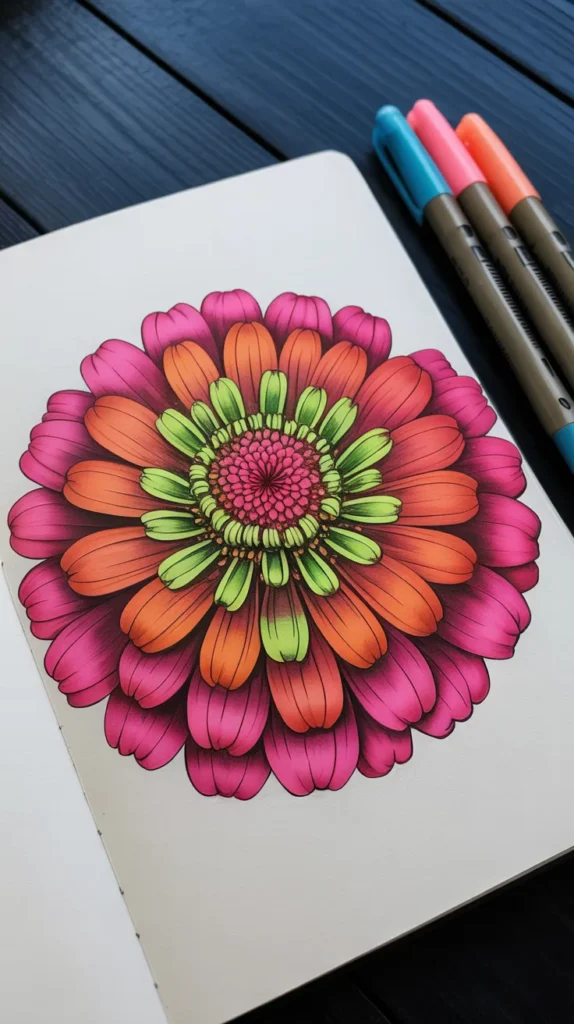
4. Intricate Zinnia Patterns
Zinnias are nature’s geometry lesson. With their layers upon layers of petals radiating from a center, they are fantastic for practicing precision and pattern in your colorful drawings flowers. They come in almost every color, from electric lime green to hot pink, giving you permission to use the brightest colors in your box.
Start with a small circle in the center and draw rows of petals around it, getting larger as you move outward. Pay attention to how the petals overlap.
This subject is great for practicing shading between layers to create depth. If you make the shadows deep enough, the petals will look like they are popping right off the page.
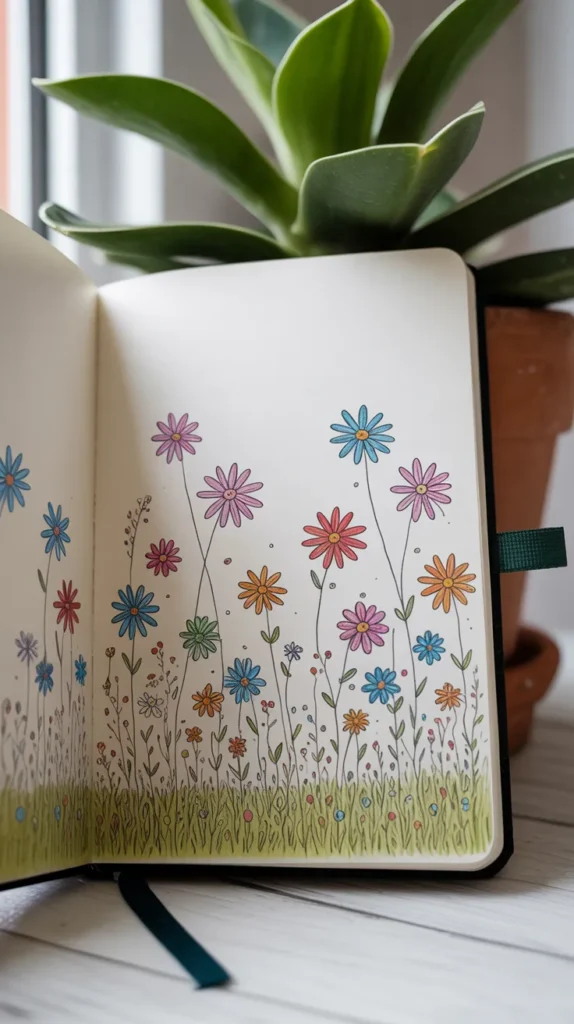
5. The Wildflower Meadow Doodle
Sometimes, you don’t want to draw just one flower; you want a whole field of them. A wildflower meadow drawing allows for freedom and whimsy.
It’s less about botanical accuracy and more about capturing the chaos and color of nature. This style of colorful drawings flowers is perfect for filling a page with small, diverse shapes.
Combine poppies, cornflowers, daisies, and lavender. Vary the heights of your stems to create a sense of depth—some flowers should feel close, while others fade into the background. Since this style involves lots of fine lines and tiny details, you need a paper that won’t bleed or feather. A sketchbook with smooth, heavyweight paper is essential.
The {Strathmore 400 Series Sketch Pad} provides a durable, fine-tooth surface that handles ink, pencil, and marker beautifully, ensuring your tiny wildflower details remain crisp and clean.
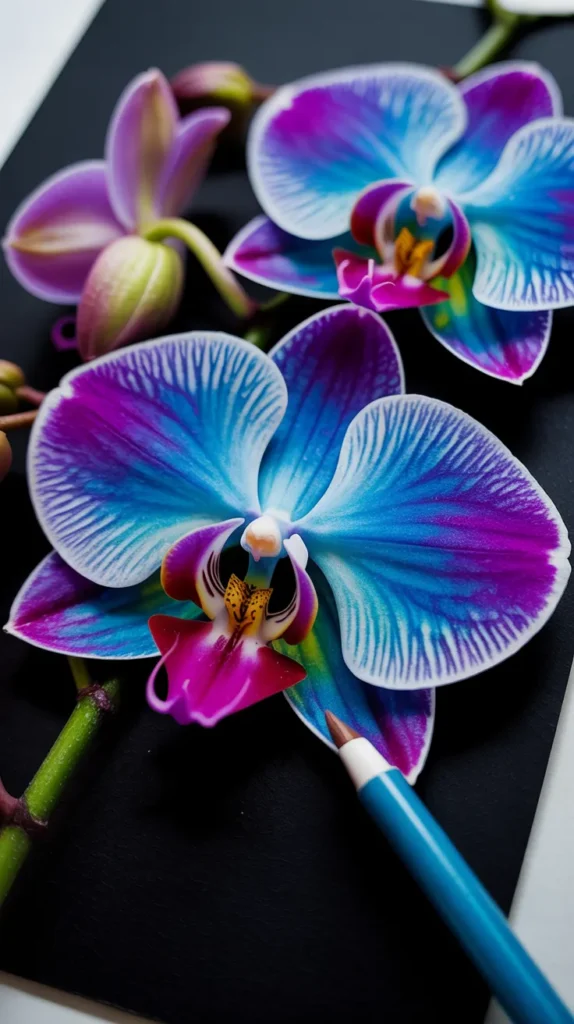
6. Moody Midnight Florals
Flip the script on traditional bright florals by drawing on black paper. Creating colorful drawings flowers on a dark background makes the colors appear luminescent and magical, almost like neon lights or glowing embers. It’s a striking technique that forces you to think differently about light and shadow.
You work in reverse here: instead of adding shadows, you are adding light. Use opaque, bright colors like mint green, electric blue, and fluorescent pink.
Gel pens or specialized colored pencils work best for this. The contrast is immediate and stunning, making simple shapes look dramatic and sophisticated.
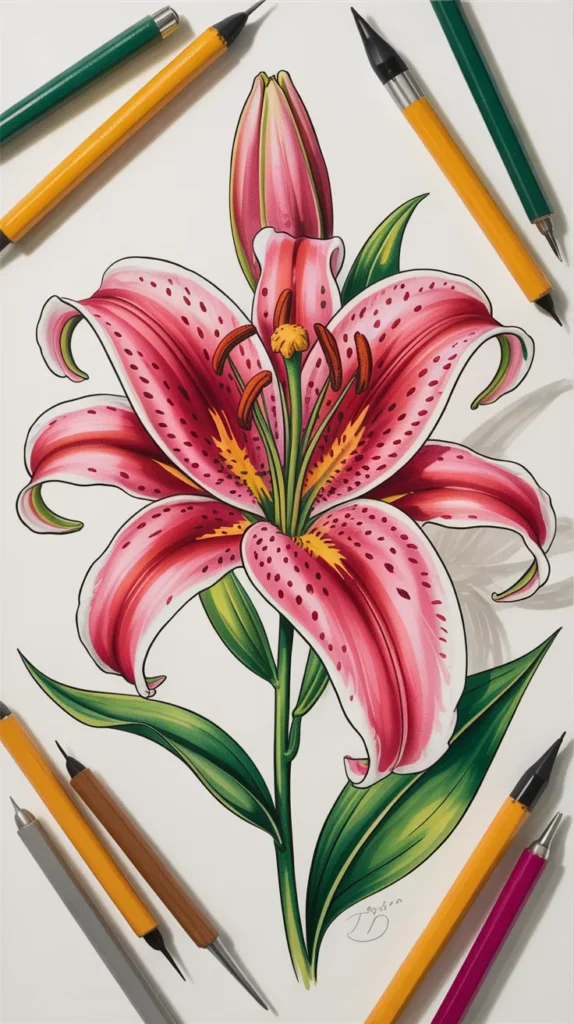
8. Realistic Lilies and Stamens
Lilies are elegant, dramatic, and offer a fantastic opportunity to practice drawing details like stamens and pollen. The trumpet shape is distinct, and the way the petals curl back adds dynamic movement to your colorful drawings flowers. Whether it’s a spotted Stargazer lily or a pure white Calla lily, the curves are key.
Focus on the center of the flower. The stamens are long and tipped with pollen-covered anthers. Capturing the dusty texture of that pollen against the smooth, waxy petal is a great challenge.
Use deep oranges and rusty browns for the pollen, and don’t forget to draw the shadow the stamens cast on the petals below.
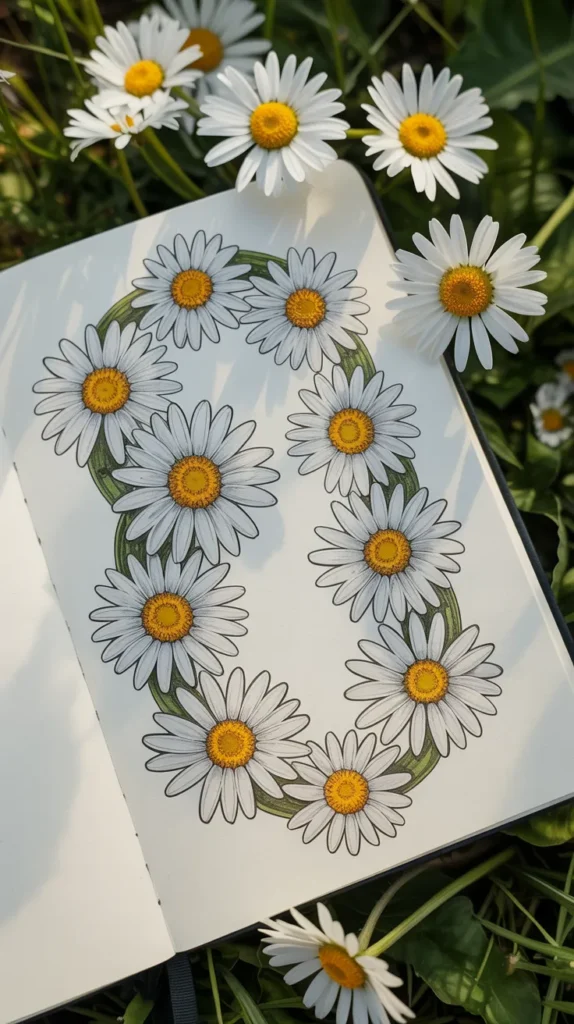
9. Cheerful Daisy Chains
Daisies are the symbol of innocence and cheerfulness. Drawing a chain of daisies is a fun exercise in perspective and repetition.
As the chain curves, the angle of the flower heads changes—some face you directly, some are in profile, and some face away. This adds complexity to a simple subject in your collection of colorful drawings flowers.
Keep the petals simple and white, but use cool grays and blues to shade them. White is never just white in a drawing; it reflects the sky and shadows around it. For the centers, use a mix of yellow and light brown to give them a textured, bumpy look.
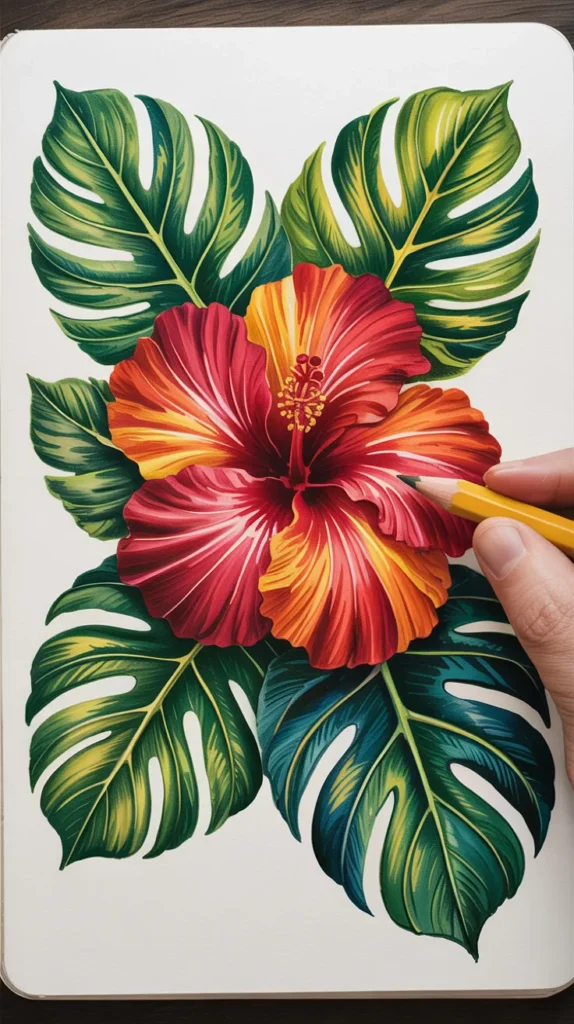
10. Exotic Tropical Hibiscus
Transport yourself to the tropics with a drawing of a hibiscus. These flowers are bold, colorful, and feature a prominent central pistil that adds a unique element to the composition.
Drawing colorful drawings flowers like the hibiscus allows you to play with gradients of hot pink, sunset orange, and deep red.
The petals of a hibiscus are often ruffled at the edges. Use wavy lines to capture this texture. The long central pistil ends in bright yellow pads; make sure this stands out against the darker throat of the flower.
To keep your vibrant colors sharp and prevent them from becoming muddy or dull, you need to keep your tools in top shape.
A high-quality sharpener is non-negotiable. The {T’GAAL Pencil Sharpener} allows you to adjust the sharpening angle, giving you a long, sharp point for details or a shorter, sturdy point for coloring large areas, ensuring your tropical petals look crisp.
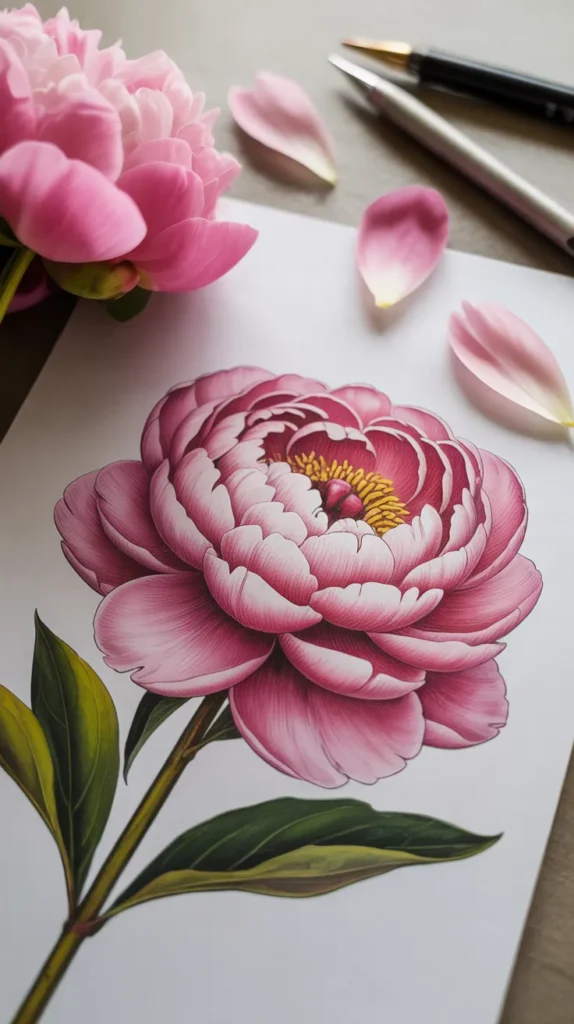
11. Soft Pastel Peonies
Peonies are beloved for their massive, fluffy blooms. Drawing them can be intimidating because of the sheer number of petals, but breaking them down into general shapes first helps.
A peony is essentially a ball; shade it as a sphere first, then add the petal details. These colorful drawings flowers look especially beautiful in soft pastel hues.
Use light strokes to suggest the delicate, tissue-paper quality of the petals. Don’t outline every single petal with a hard line; let the shadows define the edges. Soft pinks, creams, and pale peaches work beautifully here. This is a great subject for practicing soft blending techniques.
12. Structured Succulent Rosettes
While not traditional flowers, succulents form beautiful, flower-like rosettes that are fantastic for drawing practice. They have thick, fleshy leaves and often feature gorgeous gradients of color, from dusty blue to purple-tipped green. Including them in your repertoire of colorful drawings flowers adds variety and modern flair.
Focus on the geometry. Succulents grow in a spiral pattern. Start from the center and work out. The leaves are smooth and often have a waxy coating, so keep your shading smooth. Leave bright white highlights to indicate the shiny or waxy surface of the leaves.

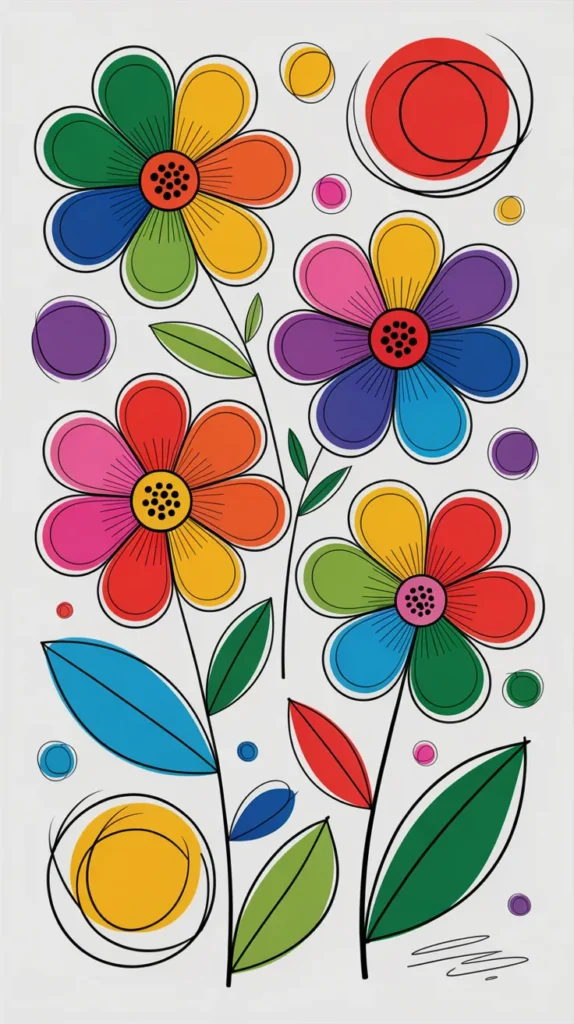
13. Abstract Floral Shapes
You don’t always have to be realistic. Abstract floral art focuses on the feeling of a flower rather than its botanical accuracy.
Use sweeping curves, splashes of color, and bold geometric shapes to represent blooms. This approach to colorful drawings flowers is incredibly freeing and great for breaking through artist’s block.
Play with non-traditional colors. Who says a leaf has to be green? Make it blue or purple! Focus on composition and balance. Use circles, teardrops, and organic blobs to build your garden. To make your abstract shapes really stand out, outline them with a bold, black line.
Fine liner pens are perfect for this contrast. The {Sakura Pigma Micron Fineliner Pens} are archival and waterproof, meaning you can draw your black lines first and color over them without smudging, or add crisp lines on top of your color for a definitive, graphic look.
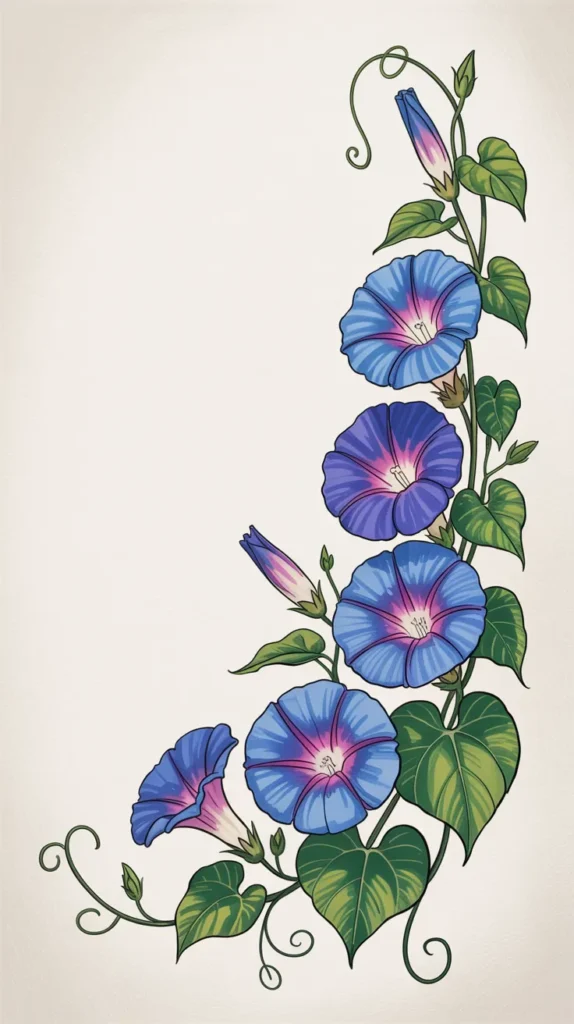
14. Climbing Morning Glories
Morning glories offer the opportunity to draw vines and movement. Their trumpet-shaped flowers open in the morning and twist shut at night. Capturing the twisting vines and heart-shaped leaves adds a dynamic element to your colorful drawings flowers.
These flowers usually come in intense shades of blue and purple with white throats. Drawing the vines requires fluid, confident lines.
Practice drawing “S” curves to mimic the natural growth habit of the plant. Show how the vines wrap around a trellis or each other.
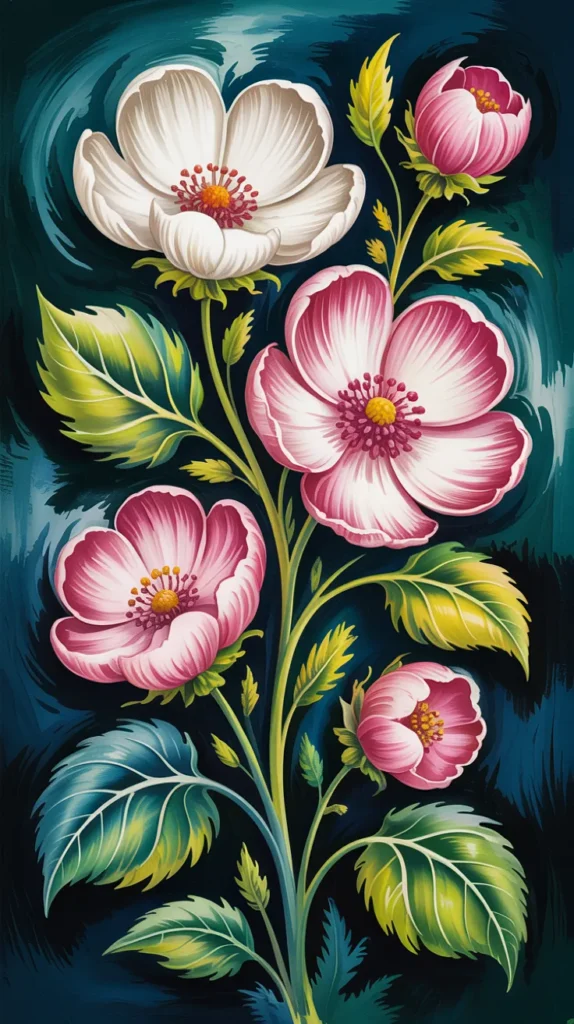
15. The “Negative Space” Floral
Negative space drawing is a technique where you color the background, leaving the subject (the flower) white or uncolored. It creates a stunning, silhouette-like effect. It forces you to focus on the spaces between the petals and stems. This unique take on colorful drawings flowers is striking and modern.
Sketch your flowers lightly. Then, instead of coloring the petals, color the space around them with a dark or vibrant color.
You can add light shading to the white petals to give them form, but the primary definition comes from the background. It’s a brain-teasing exercise that results in a beautiful, high-contrast image.
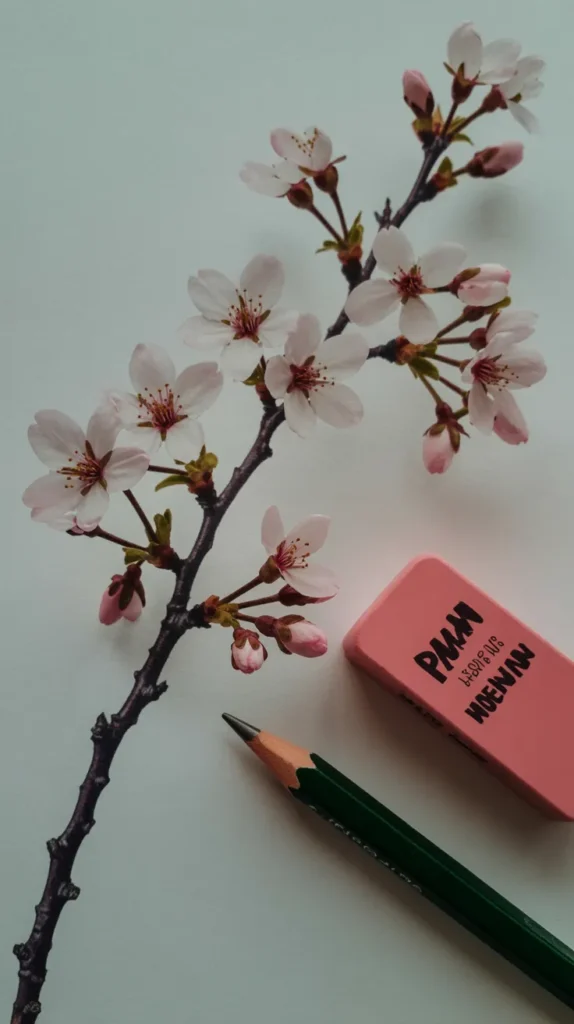
16. Cherry Blossom Branches
Cherry blossoms are delicate, fleeting, and symbolize renewal. Drawing a branch of cherry blossoms allows you to practice composition and the balance between wood and petal.
The contrast between the rough, dark bark and the delicate pink flowers is the essence of this colorful drawings flowers subject.
Draw the branch first, making it jagged and textured. Then add the small clusters of five-petaled flowers. Keep the pinks very light, almost white, with just a hint of darker pink at the center. Don’t forget the tiny green leaves and buds that are just starting to emerge.
Your Floral Artist Toolkit
Creating vibrant, lasting art requires tools that can keep up with your creativity. Here is a summary of the helpful products mentioned to help you execute your floral drawings.
| Product Name | Brand | Use |
|---|---|---|
| Premier Colored Pencils | Prismacolor | Soft, wax-based cores allow for smooth blending and rich, saturated color layers. |
| Alcohol Markers Double Tipped | Ohuhu | Brush tips mimic paint for soft, watercolor-like gradients and seamless blending. |
| 400 Series Sketch Pad | Strathmore | Heavyweight, fine-tooth paper that prevents bleeding and handles multiple mediums well. |
| Pencil Sharpener | T’GAAL | Adjustable sharpening angle to create long points for detail or short points for coloring. |
| Pigma Micron Fineliner Pens | Sakura | Waterproof, archival ink perfect for adding crisp outlines without smudging. |
Conclusion: Let Your Creativity Bloom
Drawing is a journey, not a destination. The beauty of creating colorful drawings flowers is that nature is perfectly imperfect. A crooked stem or a lopsided petal only adds character to your artwork.
This practice allows you to observe the world more closely and find beauty in the small details of a garden.
We hope these 15 ideas have inspired you to open your sketchbook and start experimenting. Whether you choose the bold strokes of markers or the soft shading of pencils, remember that every drawing is a step forward in your artistic journey.
So grab your pencils, find a sunny spot, and let your creativity bloom on the page. Which flower will you draw first?
