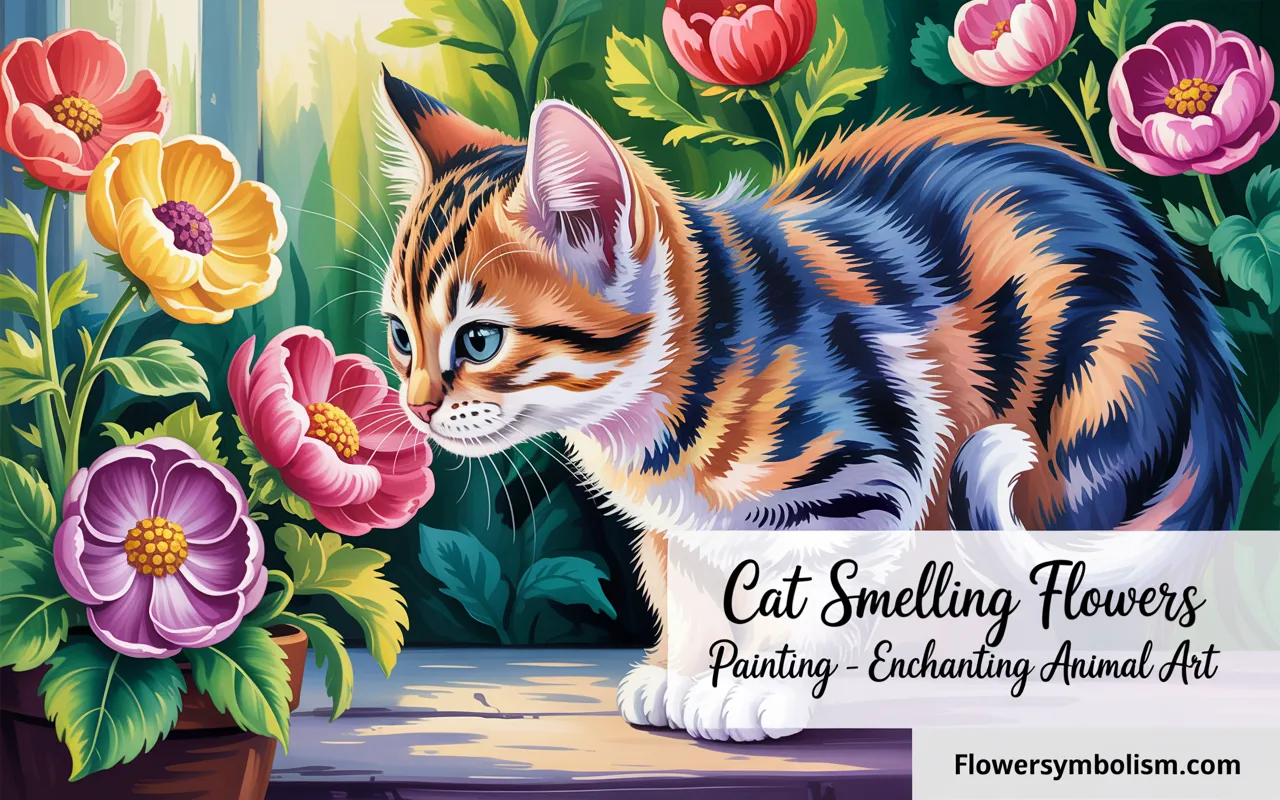
There’s a quiet, enchanting magic captured in a cat smelling flowers painting. This simple, heartwarming image combines the elegant curiosity of our feline friends with the delicate beauty of nature’s blooms.
It’s a scene that speaks of peace, innocence, and the joy found in life’s simple moments, making it a beloved subject for artists and art lovers alike.
A painting of a cat sniffing a flower is more than just adorable animal art. It can be a tribute to a cherished pet, a celebration of nature, or a reflection of a gentle, mindful spirit.
The endless combinations of cat breeds, flower types, and artistic styles mean that every cat smelling flowers painting can be a unique and deeply personal masterpiece.
This guide will take you on a journey through the enchanting world of this beautiful art subject. We’ll explore various painting styles, from whimsical watercolors to classic oils, and even provide tips for aspiring artists who want to create their own.
Let’s dive into this world of artistic inspiration and discover the perfect way to capture this whisker-twitching, petal-sniffing moment on canvas.
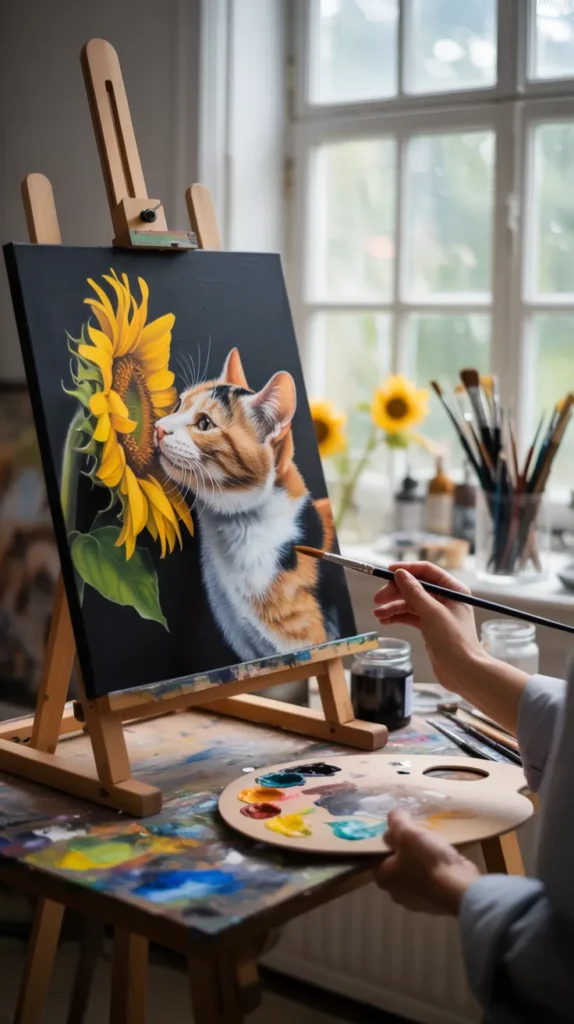
The Enduring Appeal of a Cat Smelling Flowers Painting
Why does this particular image resonate so deeply with us? The appeal lies in the beautiful contrast and harmony it represents. Cats are often seen as independent, mysterious creatures, yet this scene captures their softer, more curious side. It’s a glimpse into a moment of pure, unguarded innocence.
- Symbolism of Gentleness: The act of gently sniffing a delicate flower showcases the cat’s careful and graceful nature.
- Connection to Nature: The painting is a celebration of the simple, beautiful connection between animals and the botanical world.
- A Moment of Peace: In a busy world, this image is a visual reminder to slow down, be present, and appreciate the small wonders around us.
- Personal Tribute: For many, a cat smelling flowers painting is a loving homage to a specific pet, capturing a beloved personality trait in a timeless work of art.
This theme offers artists a wonderful opportunity to play with color, texture, and emotion. The soft fur of the cat against the velvety petals of a flower, the vibrant colors of the bloom, the curious expression in the cat’s eyes—it’s a subject rich with artistic potential.
Exploring Different Artistic Styles
A cat smelling flowers painting can be brought to life in countless artistic styles. Each style offers a different mood and feeling, so you can choose one that perfectly matches your personality and home decor.
1. The Whimsical Charm of Watercolor
Watercolor is a perfect medium for capturing the light, delicate, and sometimes unpredictable nature of this subject.
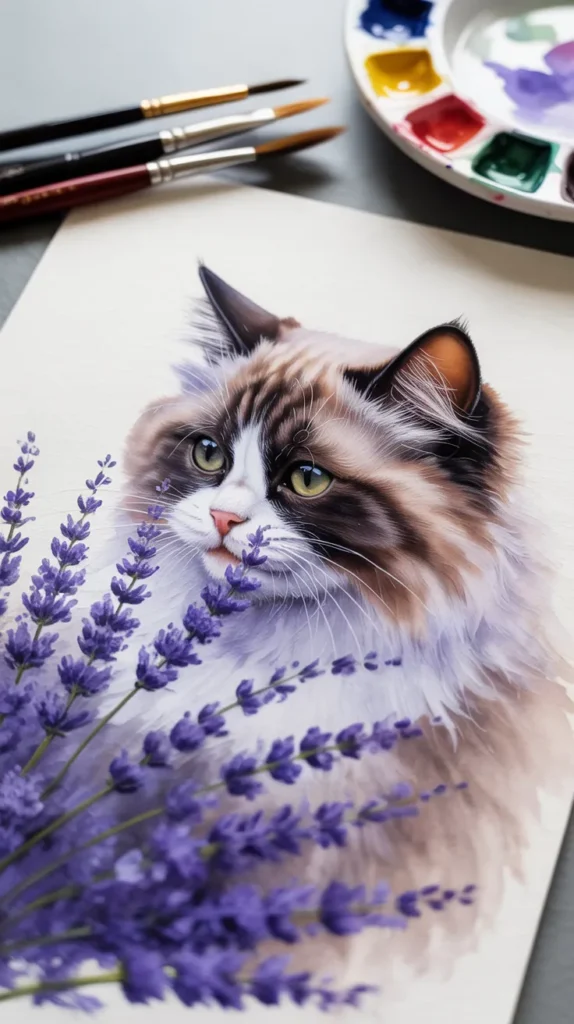
The transparent quality of watercolor paints can create a soft, dreamy atmosphere. Imagine a fluffy white cat leaning into a sprig of lavender, with soft purple and green hues bleeding into the white paper around it.
This style is less about photorealism and more about capturing a feeling. The fluidity of the medium lends itself to a whimsical and enchanting interpretation.
For artists looking to try this style, a quality set of paints like the {Winsor & Newton Cotman Watercolour Paint Set} offers a brilliant range of colors and is perfect for both beginners and experienced painters.
2. The Timeless Elegance of Oil Painting
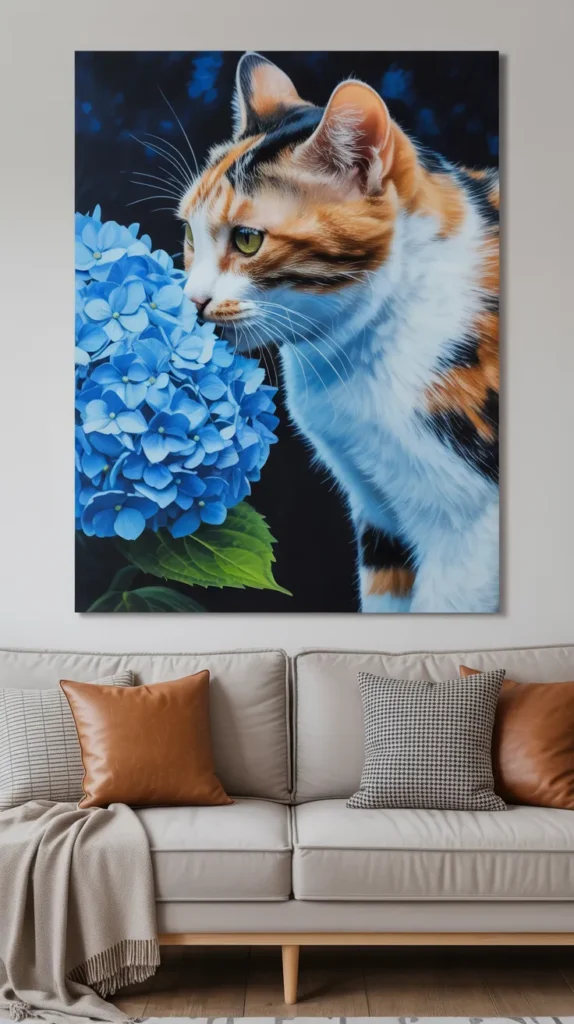
For a classic, rich, and textured look, oil painting is an unparalleled choice. Oils allow for deep, luminous colors and the ability to build up layers, creating a sense of depth and realism. An oil cat smelling flowers painting can feel like a timeless masterpiece you’d find in a traditional art gallery.
Think of a detailed portrait of a sleek black cat against a dark background, its fur catching the light as it sniffs a single, dramatically lit white lily.
The slow drying time of oil paints allows the artist to blend colors smoothly and work on intricate details, like the glint in the cat’s eye or the delicate veins on a flower petal. This style is perfect for a statement piece of art that will be cherished for generations.

3. The Modern Appeal of Acrylics
Acrylic paints offer the best of both worlds: they have the vibrant, opaque color of oils but dry quickly like watercolors.
This versatility makes them a popular choice for a contemporary cat smelling flowers painting. An artist can create sharp, graphic designs or soft, blended scenes with equal ease.
An acrylic painting could feature a stylized ginger tabby cat against a bright, solid-colored background, sniffing a bouquet of cheerful daisies.
The fast-drying nature of acrylics is ideal for layering colors and creating crisp edges. For those wanting to start painting, a comprehensive set like the {Arteza Acrylic Paint Set} provides a wide spectrum of colors to bring any feline and floral vision to life.
4. The Playful Simplicity of Gouache
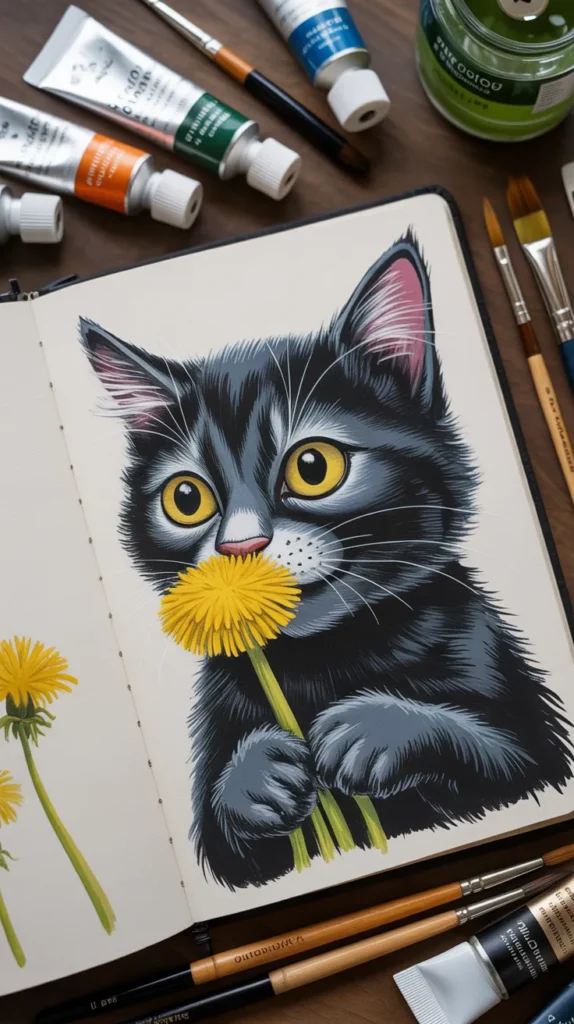
Gouache is an opaque watercolor that has a unique, velvety matte finish. It’s often used in illustration and design for its flat, vibrant color. A cat smelling flowers painting done in gouache would have a charming, storybook quality.
Imagine a cute, cartoonish tuxedo cat with big, curious eyes, looking at a cheerful sunflower. The opaque nature of gouache allows for layering light colors over dark, creating a look that is both playful and graphically strong. This style is perfect for nursery art or for anyone who loves a touch of sweet, illustrative charm.
Creating Your Own Cat Smelling Flowers Painting: A Beginner’s Guide
Feeling inspired to create your own masterpiece? You don’t have to be a professional artist to enjoy the process of painting. Here is a simple, step-by-step guide to creating your own acrylic painting.
Step 1: Gather Your Supplies
Before you start, you’ll need a few basic supplies. A beginner’s kit can be a great, cost-effective way to get everything you need.
- Canvas: A pre-stretched canvas is easiest for beginners. An 8×10 or 11×14 inch canvas is a good starting size.
- Acrylic Paints: A basic set with primary colors (red, blue, yellow), plus white and black, is sufficient.
- Brushes: Get a small set with a few different sizes, including a flat brush for backgrounds, a round brush for details, and a smaller detail brush. The {Mont Marte Gallery Series Brush Set} is a great, affordable option for beginners.
- Palette: A simple paper plate or a dedicated plastic palette will work.
- Other Supplies: A cup of water for rinsing brushes, paper towels for blotting, and an easel (optional).
Step 2: Find Your Inspiration and Sketch Your Design
Find a reference photo that you love. It could be a picture of your own cat, or an image you find online (be sure to respect copyrights if you plan to sell your work).
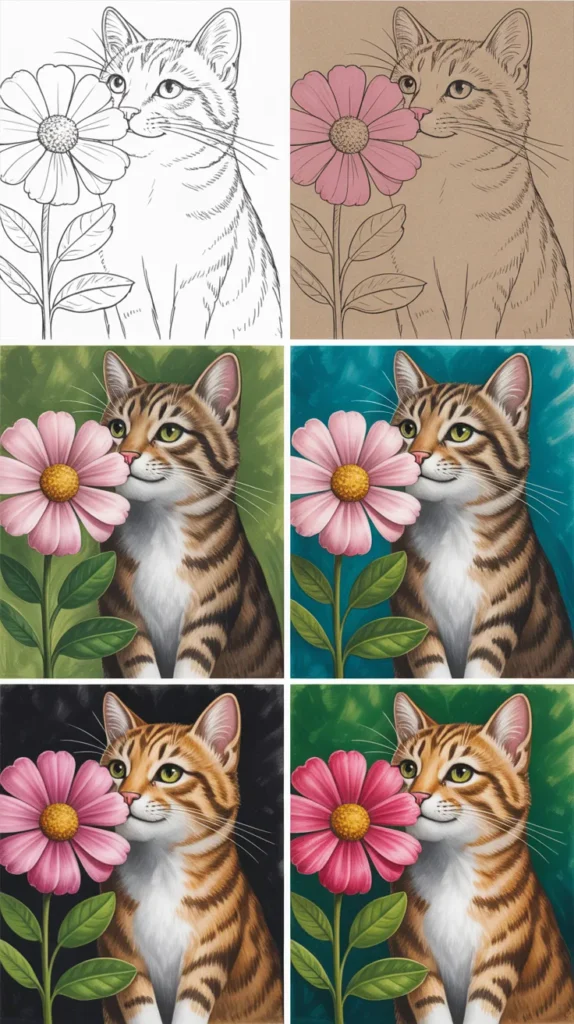
Lightly sketch the main shapes of the cat and the flower onto your canvas with a pencil. Don’t worry about details yet; just focus on the overall composition.
Step 3: Paint the Background
It’s usually easiest to start with the background. This helps to set the mood of the painting. Choose a color that will complement your cat and flower.
It could be a solid color, a soft gradient, or a textured, abstract background. Use your larger flat brush to cover the canvas.
Step 4: Block in the Main Colors
Once the background is dry, start blocking in the main colors of your cat and the flower. Don’t worry about shading or details at this stage.
Just lay down the base colors for the fur, the petals, and the leaves. This is like creating a coloring book outline that you will fill in later.
Step 5: Add Shading and Highlights
This is where your painting starts to come to life. Mix your base colors with a little black or a darker complementary color to create shadows. Mix them with white to create highlights.
Look at your reference photo to see where the light is coming from. Add shadows to the areas that are turned away from the light and highlights to the areas that are catching the light.
Step 6: Paint the Details
Switch to your smallest detail brush for the final touches. This is the time to paint the cat’s eyes, whiskers, the texture of its fur, and the delicate center of the flower.
Take your time with this step. It’s the details that will give your painting personality. A steady hand and a good quality detail brush are key. Using a product like the {AIT Art Premium Detail Paint Brush Set} can make a huge difference in your ability to paint those fine lines.
Step 7: Sign and Seal Your Work
Congratulations, you’ve created your own cat smelling flowers painting! Once it’s completely dry, sign your name in a corner. If you want to protect your painting from dust and fading, you can apply a coat of clear acrylic varnish.
Ideas and Inspiration for Your Painting
The possibilities for a cat smelling flowers painting are truly endless. Here are a few more creative ideas to get your imagination flowing:
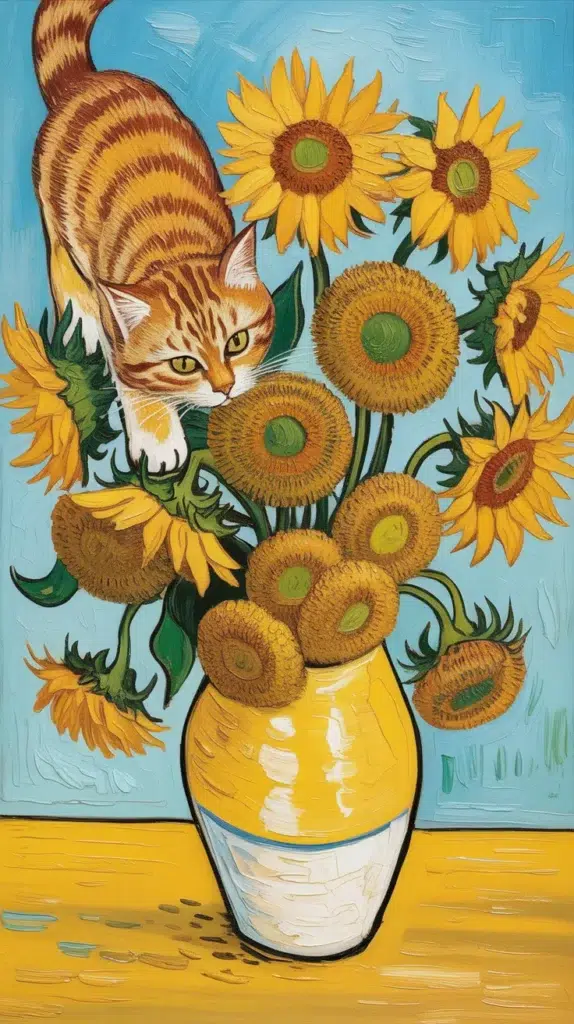
- A Cat in a Famous Painting: Reimagine a classic masterpiece, like Van Gogh’s Sunflowers or Monet’s Water Lilies, but with a curious cat peeking into the scene and sniffing the famous blooms.
- Zodiac and Birth Flowers: Create a mystical painting that incorporates a cat with your zodiac constellation in the background, sniffing your personal birth flower.
- A Kitten’s First Spring: Paint a scene of a tiny, wide-eyed kitten discovering its very first garden, surrounded by an explosion of spring flowers like tulips and daffodils.
- Seasonal Themes: Create a series of four paintings, each showing a cat smelling a flower specific to a season: a crocus in winter, a rose in summer, a mum in autumn.
When commissioning a piece from an artist, don’t be afraid to share your ideas. The best pet portraits often come from a collaboration between the client’s vision and the artist’s skill. Provide clear photos of your pet and be specific about the flowers and mood you envision.
To keep your finished painting looking its best, hang it out of direct sunlight. For unframed canvases, a simple product like the {3M CLAW Drywall Picture Hanger} allows for easy and secure hanging without much damage to your walls.
Recommended Art Supplies for Your Masterpiece
Whether you’re painting for the first time or are a seasoned artist, having quality supplies can make the creative process more enjoyable.
| Product Name | Brand | Why We Recommend It |
|---|---|---|
| {Winsor & Newton Cotman Watercolour Paint Set} | Winsor & Newton | A high-quality watercolor set with vibrant pigments, perfect for creating soft, dreamy paintings. |
| {Arteza Acrylic Paint Set} | Arteza | A comprehensive set of acrylic paints with a huge range of colors, ideal for beginners and beyond. |
| {Mont Marte Gallery Series Brush Set} | Mont Marte | An affordable and versatile set of acrylic brushes with comfortable handles for easy use. |
| {AIT Art Premium Detail Paint Brush Set} | AIT Art | A set of fine-tipped brushes essential for painting intricate details like whiskers and eye highlights. |
| {3M CLAW Drywall Picture Hanger} | 3M | An easy-to-use and strong hanger for displaying your finished canvas art securely. |
Conclusion
A cat smelling flowers painting is more than just a piece of decor; it’s a celebration of gentleness, curiosity, and the quiet beauty of the natural world. It captures a fleeting, heartwarming moment and transforms it into a lasting source of joy.
Whether you choose to buy a piece from a talented artist or take the brave step of creating your own, you are participating in a timeless tradition of honoring our feline companions and the simple wonders of nature.
We hope this guide has inspired you to explore the many artistic interpretations of this enchanting subject. Let the image of a cat sniffing a flower be a reminder to find your own moments of peaceful curiosity.
Surround yourself with art that makes you happy, and perhaps, pick up a brush and discover the joy of creating it for yourself.
