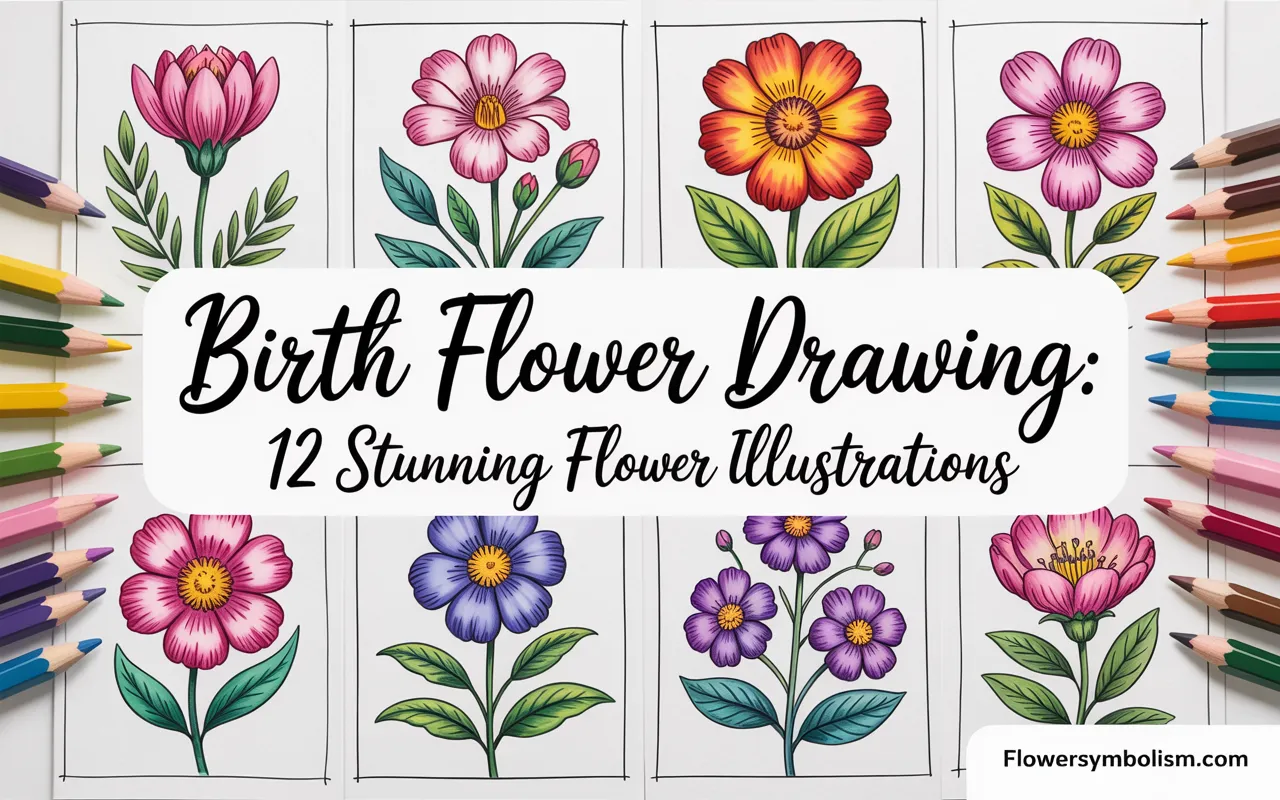
There’s a special kind of magic in translating the delicate beauty of a flower onto paper. It’s a quiet, meditative process that connects us to nature and allows us to express our creativity.
When that flower is a birth flower, the art becomes even more meaningful. A birth flower drawing is more than just a sketch; it’s a personal emblem, a celebration of a loved one, or a beautiful way to honor your own story.
Each month’s designated flower carries a unique history and symbolism. Capturing its form with pencil or pen is a wonderful way to explore its character—from the hardy ruffles of a January carnation to the joyful star shape of a September aster.
This art form allows you to create deeply personal gifts, stunning home decor, or designs for your next tattoo.
This guide will take you on a journey through the year, exploring 12 stunning floral illustrations. We’ll look at different artistic styles and offer simple tips to help you start your own birth flower drawing project.
Whether you are a seasoned artist or just beginning to explore your creative side, you’ll find inspiration to bring these beautiful blooms to life.

The Joy of Botanical Illustration
Drawing flowers is a timeless artistic pursuit. It teaches us to observe the fine details of the natural world—the gentle curve of a petal, the intricate veins on a leaf, the way light creates shadows. A birth flower drawing adds a layer of personal narrative to this practice.
It becomes a way to connect with your own birth month or to create a heartfelt, handmade gift for someone special.
You don’t need to be a professional artist to start. The journey begins with a single line. With a few simple tools and a bit of patience, you can learn to capture the essence of any flower. Let’s look at each month’s bloom and discover how to draw it.
January: The Resilient Carnation
Symbolism: Love, fascination, distinction, resilience.
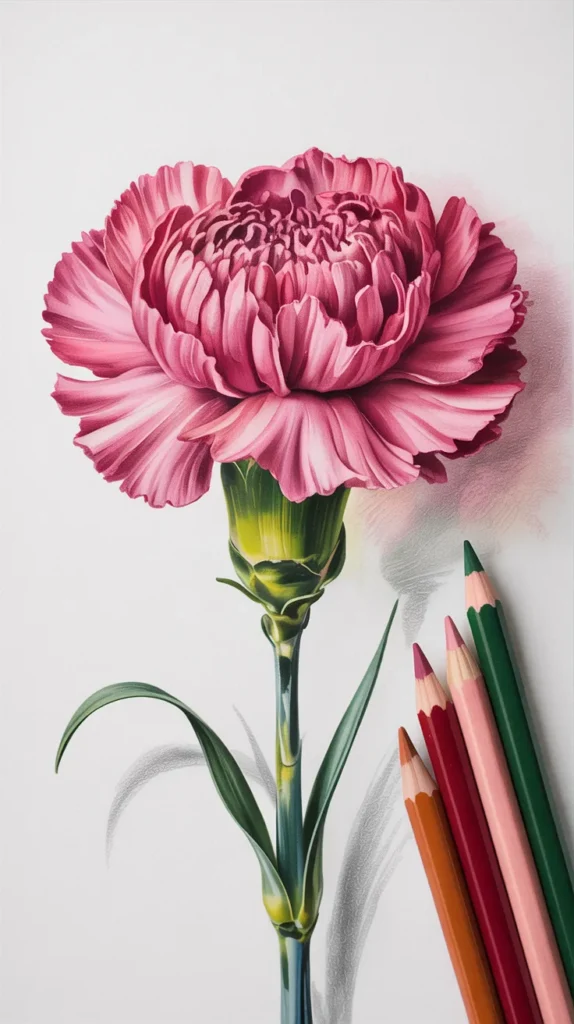
The carnation is known for its dense, ruffled petals, which can be a fun challenge to draw. The key is to focus on the overall shape first, then build up the layers of petals.
- Style Idea: Colored Pencil Realism. The many layers of a carnation are perfect for rendering with colored pencils. You can use a set like the {Prismacolor Premier Colored Pencils} to build up rich layers of color, from deep shadows within the folds to bright highlights on the petal edges.
Start with a light sketch and gradually add layers of pink, red, or white, using darker shades to create depth. This technique gives your birth flower drawing a soft, velvety texture.
February: The Shy Violet
Symbolism: Modesty, faithfulness, spiritual wisdom.
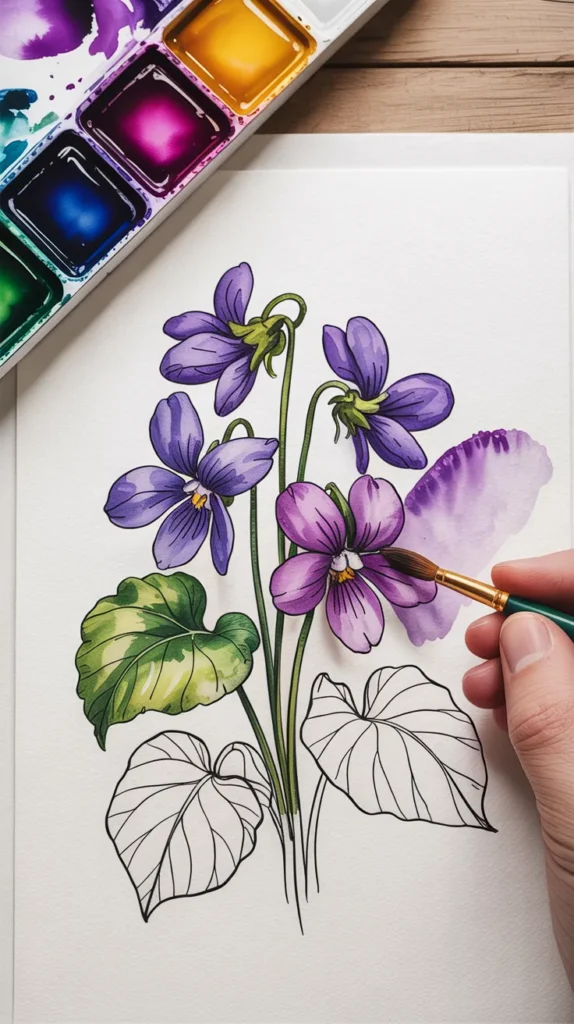
The violet is a sweet, simple flower, characterized by its heart-shaped leaves and delicate, five-petaled blooms. Its simplicity makes it a great subject for beginners.
- Style Idea: Watercolor and Ink. This style combines the clean lines of an ink pen with the fluid beauty of watercolor. First, create a light drawing of a cluster of violets using a waterproof fine-liner pen, like those in the {Sakura Pigma Micron Pen Set}.
Once the ink is dry, use watercolor paint to add soft washes of purple and blue to the petals and green to the heart-shaped leaves. Let the colors bleed outside the lines a bit for a dreamy, illustrative look.
March: The Cheerful Daffodil
Symbolism: New beginnings, rebirth, happiness.
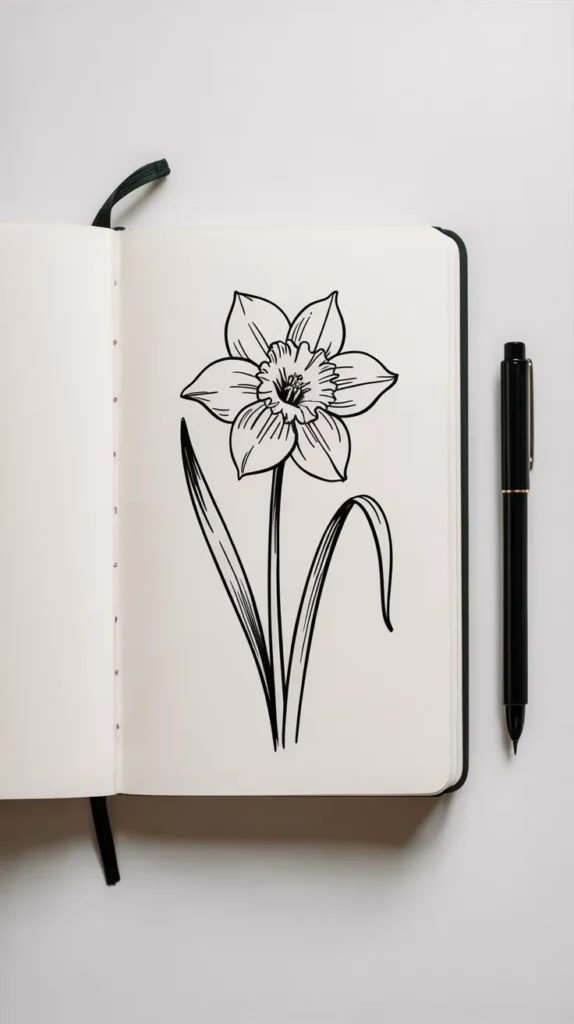
The most distinctive feature of the daffodil is its central trumpet, or corona, surrounded by six outer petals. Capturing this three-dimensional shape is the key to a successful daffodil drawing.
- Style Idea: Simple Line Art. The daffodil’s strong, graphic shape is perfect for a clean, minimalist line art drawing. Using a single black pen, focus on the outline of the flower. Draw the star-like shape of the outer petals first, then add the ruffled, cup-like shape of the trumpet in the center.
A simple birth flower drawing like this is elegant, modern, and focuses entirely on the flower’s beautiful form.
April: The Innocent Daisy
Symbolism: Innocence, purity, true love.
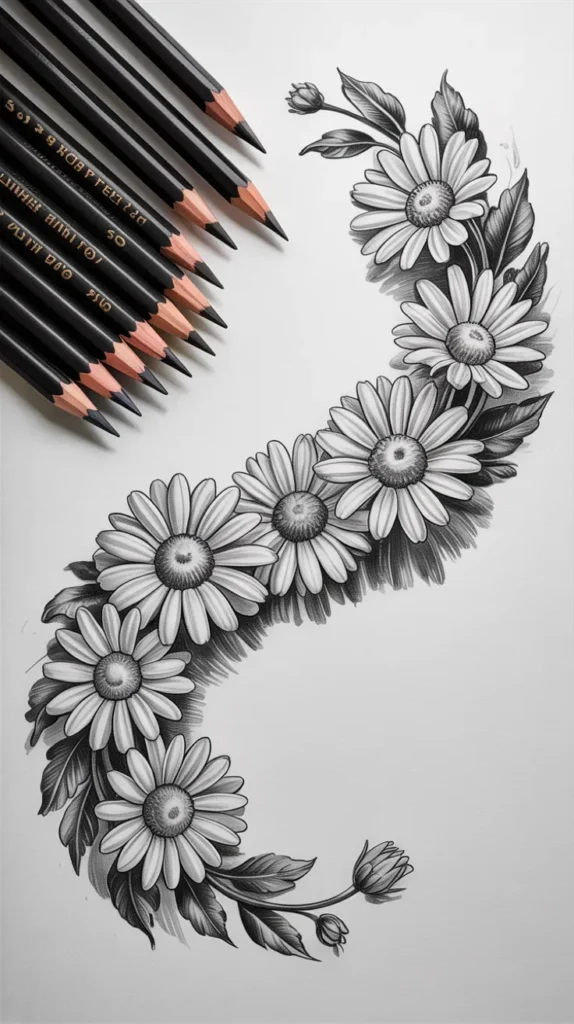
The daisy is one of the most recognizable and beloved flowers. Its beauty lies in the simple, radiating pattern of its long, white petals around a sunny yellow center.
- Style Idea: A Daisy Chain in Graphite. A classic pencil drawing is a wonderful way to capture the simple charm of the daisy.
Using a set of graphite pencils with varying hardness, like the {Derwent Graphic Drawing Pencils}, you can create a beautiful daisy chain.
Start with light outlines for the petals and centers. Use a soft, dark pencil (like a 6B) to shade the yellow centers and a harder pencil (like a 2H) to add subtle shadows on the white petals to make them look three-dimensional.
May: The Delicate Lily of the Valley
Symbolism: Sweetness, humility, motherhood.
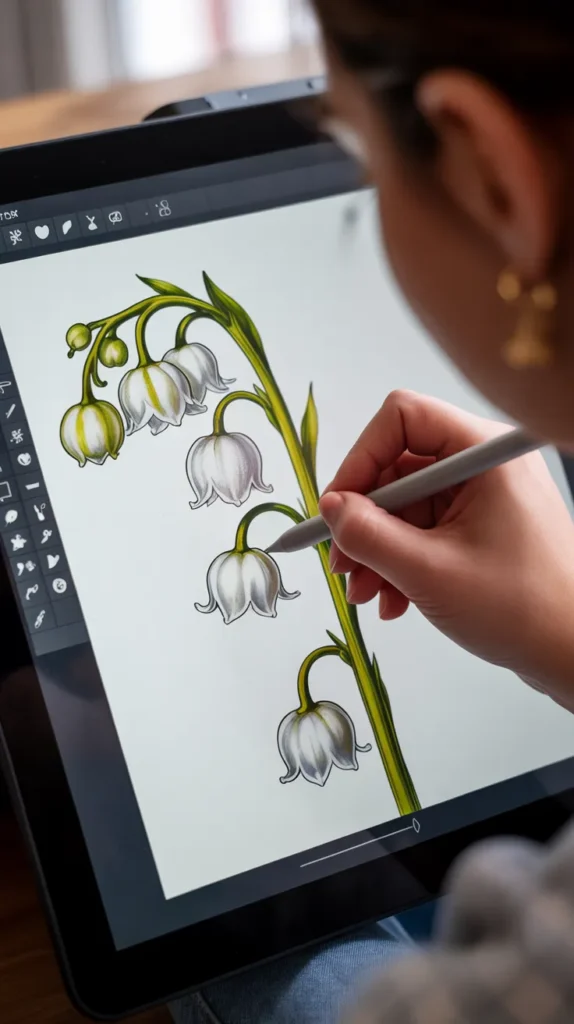
This flower is a unique drawing challenge, with its arching stem and tiny, bell-shaped blossoms. The key is to capture the delicate, hanging posture of the flowers.
- Style Idea: A Digital Illustration. The clean, precise nature of digital drawing is perfect for capturing the delicate details of the Lily of the Valley.
Using a tablet and a program like Procreate or Adobe Illustrator, you can use a fine-tipped brush to draw the clean lines of the stem and bells.
Digital art allows for easy layering, so you can add soft green and white colors and subtle shading without disturbing your line work.
A good drawing tablet, such as the {Wacom Intuos Graphics Drawing Tablet}, gives you the pressure sensitivity needed for organic-looking lines.
June: The Romantic Rose
Symbolism: Love, beauty, honor, devotion.
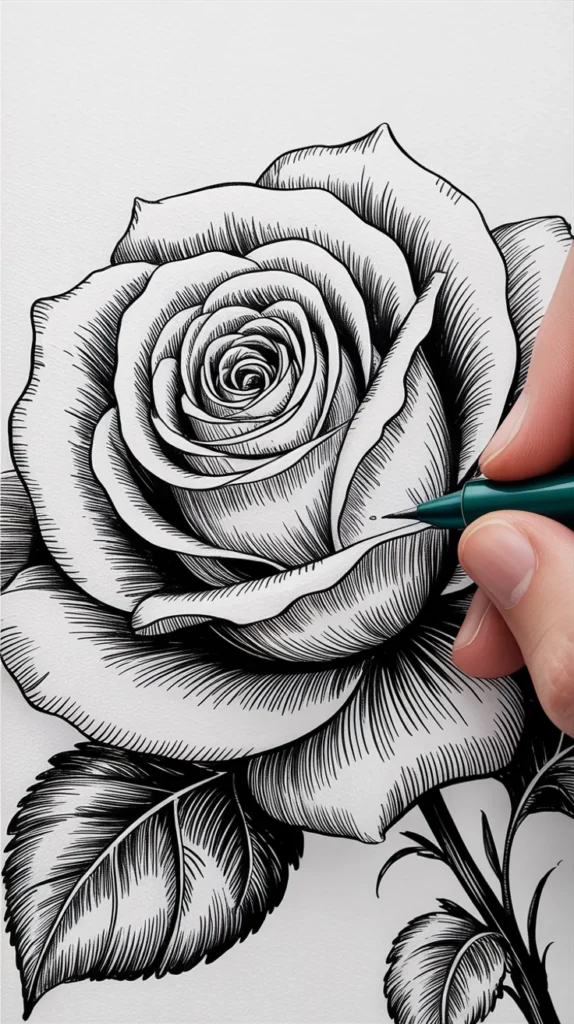
The rose is a classic subject for artists, but its complex, spiraling petals can be intimidating. The secret is to start from the inside out. Lightly sketch the innermost, swirling bud, and then gradually add the larger, outer petals as they unfurl.
- Style Idea: Black and Grey Stippling. Stippling is a technique that uses thousands of tiny dots to create shading and texture. It’s a time-consuming but meditative process that yields stunning results for a rose.
Using a fine-tipped black pen, create your birth flower drawing outline. Then, instead of shading with lines, build up shadows by adding more dots in the darker areas—deep within the petals and under the leaves. The result is a drawing with incredible depth and a unique, grainy texture.
July: The Elegant Larkspur
Symbolism: Open heart, levity, lightness.
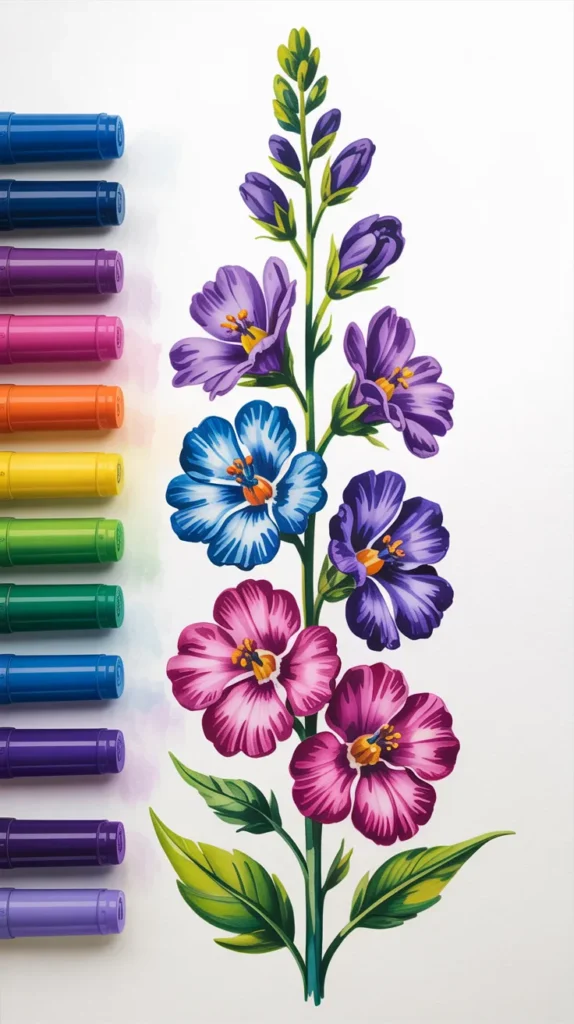
The larkspur is a tall, stately flower with clusters of small, dolphin-shaped blooms running up its stem. Its verticality makes it a perfect subject for a drawing that emphasizes graceful lines.
- Style Idea: A Study in Markers. Alcohol markers, like the popular {Copic Sketch Markers}, are excellent for creating smooth, vibrant, and blendable color.
For a larkspur drawing, you can use a few shades of blue or purple to create a beautiful gradient on the petals.
The fine tip of the markers is also great for drawing the delicate stems and leaves. Markers give a birth flower drawing a clean, professional, and graphic quality.
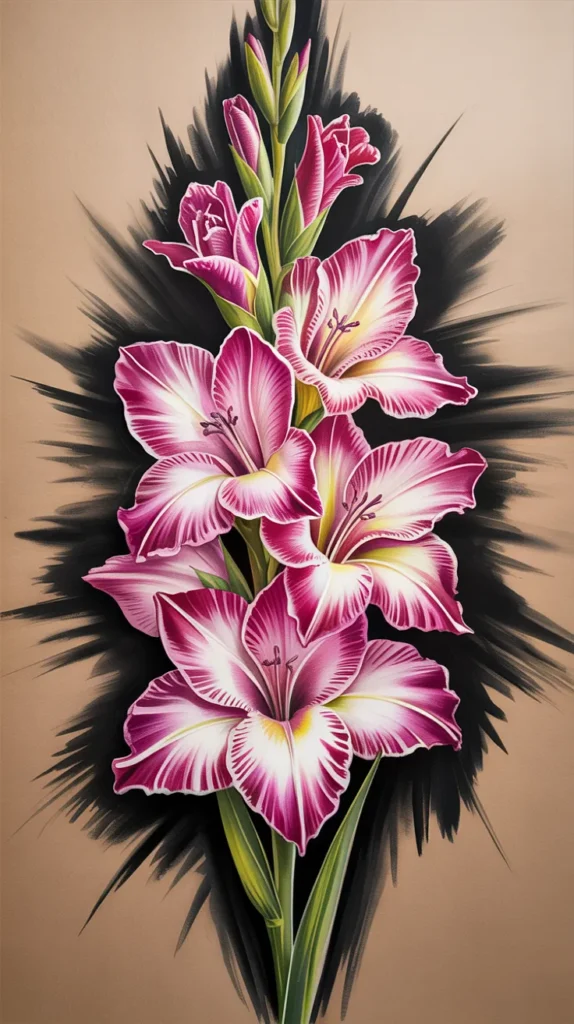
August: The Strong Gladiolus
Symbolism: Strength of character, integrity, remembrance.
The gladiolus is another tall flower, but its blooms are much larger and more dramatic than the larkspur’s. The flowers often bloom up one side of the stem, creating a striking, sword-like silhouette.
- Style Idea: Charcoal and White Pastel on Toned Paper. For a dramatic and high-contrast birth flower drawing, try working on toned (grey or tan) paper. Use charcoal pencils to lay down the dark shadows and outlines of the gladiolus.
Then, come in with a white charcoal or pastel pencil to add the bright highlights where the light hits the petals.
Working on a mid-tone paper allows your whites to really pop, creating a powerful and three-dimensional effect. A great paper for this is the {Strathmore 400 Series Toned Sketch Pad}.
September: The Mystical Aster
Symbolism: Love, wisdom, faith, valor.
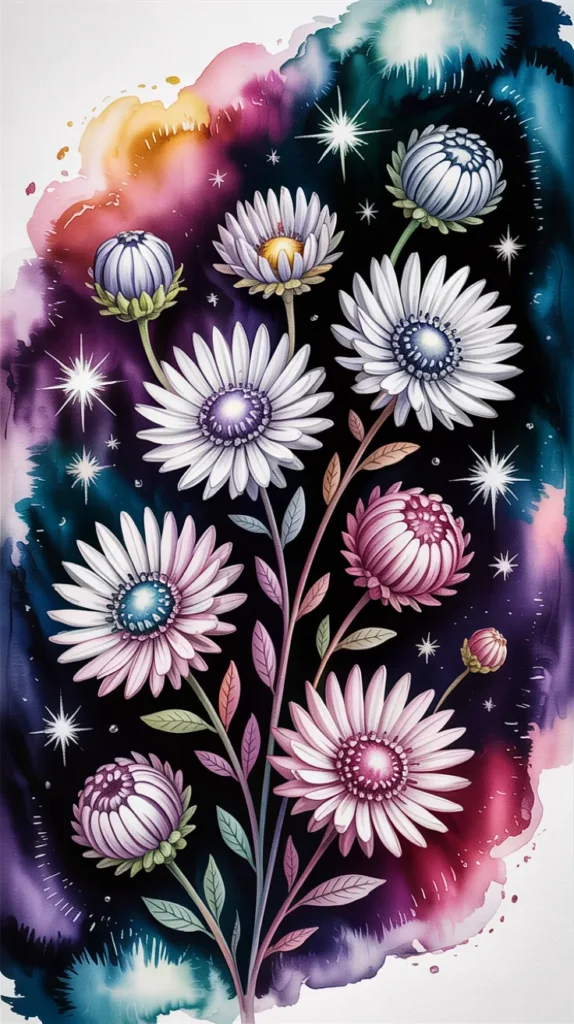
The aster is a beautiful, star-shaped flower with a dense, button-like center and many fine, radiating petals. It looks like a wilder, more chaotic version of a daisy.
- Style Idea: A Celestial Mixed Media Piece. Lean into the aster’s “star” meaning with a mixed media drawing.
On a heavy mixed media paper, start by creating a loose watercolor wash of dark blue and black for a “night sky” background. Once dry, draw your asters over the top with white or silver gel pens.
You can add tiny white dots for stars. This creative approach turns your birth flower drawing into a magical, celestial scene.
October: The Vibrant Marigold
Symbolism: Passion, creativity, fierce love.
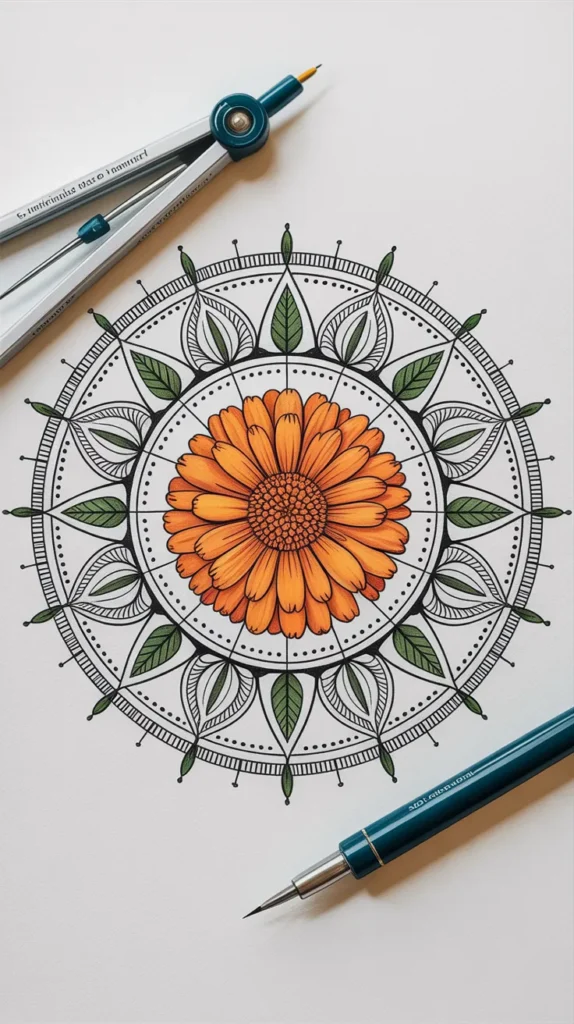
The marigold is a dense, pom-pom-like flower with tightly packed, wavy petals. Its shape lends itself well to stylized, circular designs.
- Style Idea: A Marigold Mandala. The round, symmetrical shape of a marigold is the perfect starting point for a mandala drawing.
Start by drawing a stylized marigold in the center of your paper. Then, using a compass and ruler, create concentric circles and radiating lines.
Fill the sections with intricate patterns, dots, and lines, all inspired by the shapes of the marigold’s petals. This is a meditative and spiritual way to create a birth flower drawing.
November: The Complex Chrysanthemum
Symbolism: Joy, optimism, longevity, friendship.
The chrysanthemum is one of the most complex flowers to draw, with hundreds of long, thin, curving petals. The key is not to draw every single petal, but to suggest the texture and flow.
- Style Idea: A Brush Pen Illustration. A brush pen, which has a flexible, brush-like tip, is the perfect tool for capturing the energetic, flowing lines of a chrysanthemum’s petals. You can vary your line weight from thick to thin in a single stroke, mimicking the calligraphic strokes of East Asian art. This is a dynamic and expressive way to create a birth flower drawing that feels full of life and movement.
December: The Simple Narcissus (Paperwhite)
Symbolism: Hope, wealth, good wishes, respect.
The Paperwhite narcissus is a simpler relative of the daffodil. It has six pointed outer petals and a very small, shallow central cup. Its beauty is in its clean, elegant simplicity.
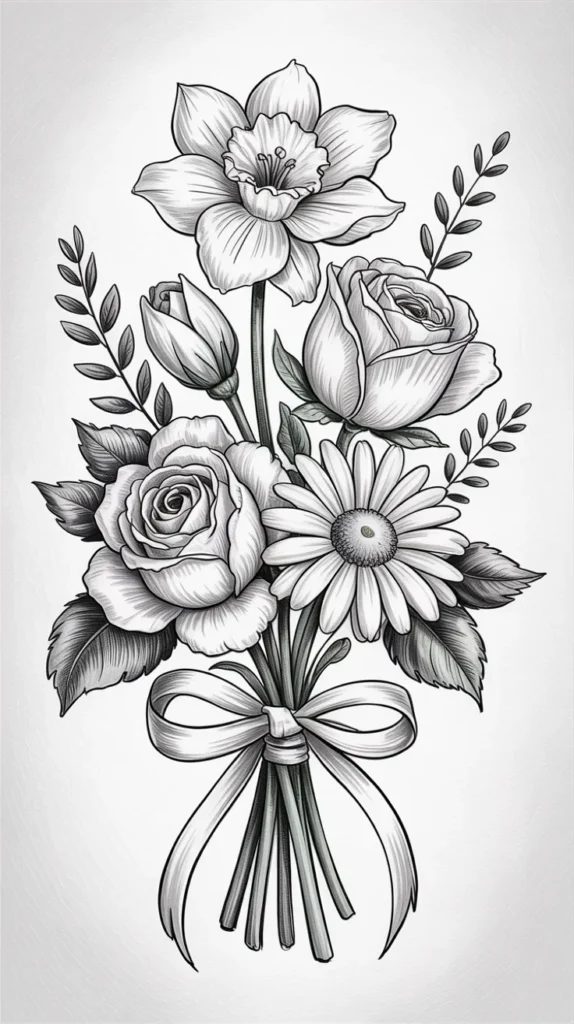
- Style Idea: A Family Bouquet Sketch. The simple shape of the narcissus makes it a great “supporting actor” in a larger family bouquet drawing. Create a beautiful pencil sketch that combines the birth flowers of all your loved ones.
The narcissus for December can be a bright, simple star in a composition that might also include a complex June rose and a tall August gladiolus. This birth flower drawing becomes a beautiful, personal tribute to your entire family.
Recommended Supplies for Your Drawing Journey
Having the right tools can make all the difference. Here are some excellent products to help you get started on your botanical illustrations.
| Product Name | Brand | Why We Recommend It |
|---|---|---|
| {Prismacolor Premier Colored Pencils} | Prismacolor | A professional-quality set with a soft, waxy core perfect for blending and layering rich, vibrant colors. |
| {Sakura Pigma Micron Pen Set} | Sakura | A set of high-quality, archival ink pens in various sizes, perfect for waterproof outlines in ink and wash drawings. |
| {Derwent Graphic Drawing Pencils} | Derwent | A versatile set of graphite pencils in a range of hardnesses, ideal for sketching and creating detailed tonal drawings. |
| {Wacom Intuos Graphics Drawing Tablet} | Wacom | An excellent, beginner-friendly tablet that provides the pressure sensitivity needed for natural-looking digital art. |
| {Copic Sketch Markers} | Copic | Professional-grade alcohol markers known for their smooth blending and vibrant colors, ideal for illustrative work. |
| {Strathmore 400 Series Toned Sketch Pad} | Strathmore | High-quality, toned paper that provides a mid-tone background, making your highlights and shadows pop for dramatic drawings. |
Conclusion
Creating a birth flower drawing is a beautiful way to slow down, connect with nature, and make something that is uniquely personal.
Each flower offers a new opportunity to explore different shapes, textures, and artistic techniques.
Whether you create a simple line drawing of your own birth flower or an intricate bouquet for your whole family, the process itself is a rewarding act of creation.
We hope this journey through the year has sparked your creativity and demystified the process of drawing these beautiful blooms.
Grab a pencil, a piece of paper, and start with a single petal. You might be surprised by the beautiful garden you can grow on the page.
