Watching bees visit your garden is a delightful experience, but have you ever thought about offering them a drink? Just like us, bees need water to survive, especially during hot, dry weather. This is where a bee cup comes in.
Creating small, safe watering stations is a simple yet powerful way to support these essential pollinators.
Adding a few charming bee cups for your garden can make a huge difference for your local bee population.
This guide is filled with 12 charming and creative ideas for bee cups for your garden. We’ll explore everything from simple DIY projects to beautiful decorative options.
You’ll learn how to create safe and attractive water sources that will have bees and other pollinators flocking to your yard. Let’s get started and add another layer of care to your pollinator paradise.
Why Bee Cups are Essential for Your Garden
Before we dive into the creative options, let’s talk about why providing water is so important. Bees use water for several vital reasons:
- Drinking: Just like any living creature, bees need to stay hydrated.
- Cooling the Hive: On hot days, bees carry water back to the hive and fan their wings to evaporate it, creating a natural air conditioning system.
- Diluting Honey: They use water to dilute thick, crystallized honey to make it edible for the colony.
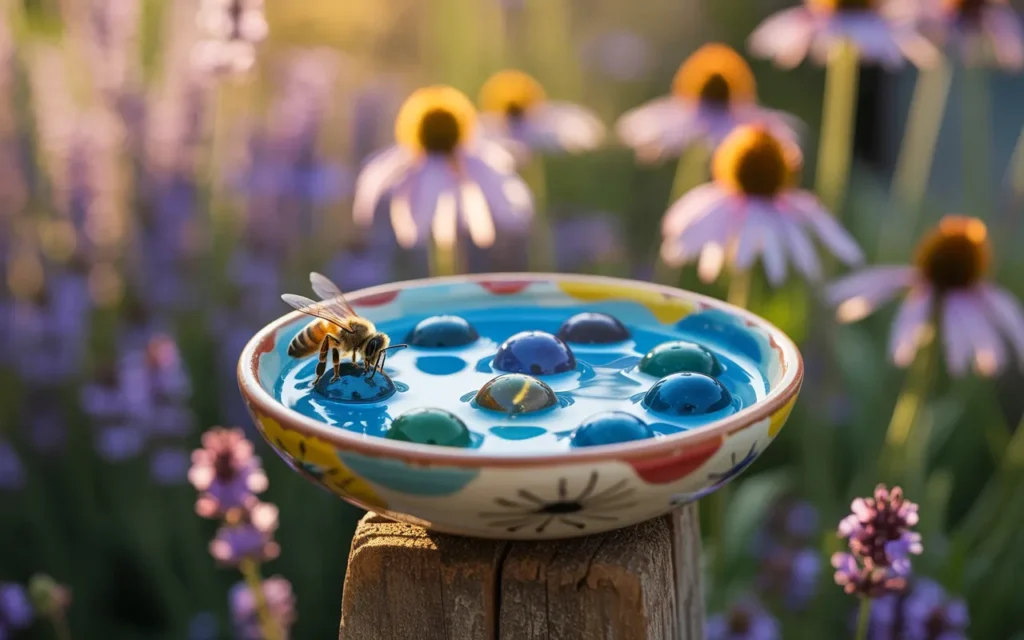
A simple bee cup for your garden provides a safe and reliable water source, preventing bees from drowning in deeper water like pools, buckets, or birdbaths. The key is to provide a shallow basin with “landing pads” like stones or marbles.
Now, let’s explore some enchanting ideas for your own bee cups!
1. The Classic Terracotta Saucer
One of the easiest and most classic bee cups for a garden is a simple terracotta plant saucer. Their natural, earthy look blends seamlessly into any garden setting. The shallow depth is perfect for pollinators.
Simply take a clean saucer and fill it with small pebbles, colorful river rocks, or glass marbles. Add just enough fresh water so that the tops of the pebbles remain dry.
This gives the bees a safe place to land and drink without the risk of falling in. To keep your saucers clean and free of algae, a good scrub brush like the {OXO Good Grips Dish Brush} is perfect for the job.
2. The Decorative Glass Dish
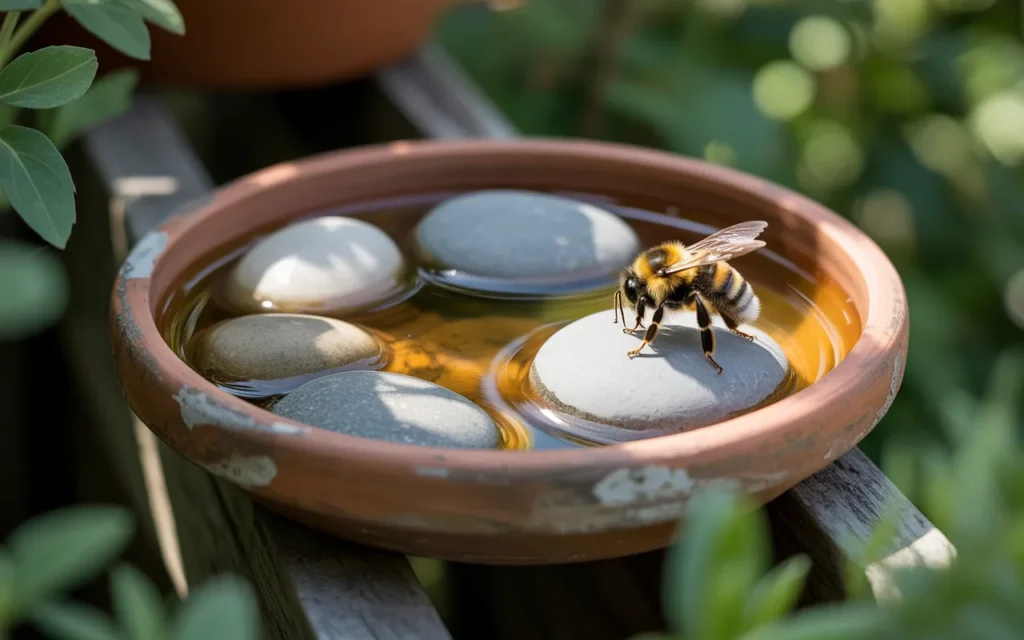
For a touch of sparkle, use a decorative glass dish as your bee cup. A colorful candy dish, a vintage glass ashtray, or even a small, ornate bowl from a thrift store can be repurposed into a beautiful watering station.
Fill the dish with vibrant glass gems, sea glass, or colorful marbles to catch the sunlight and attract the bees’ attention.
The light reflecting off the glass and water can act as a beacon for thirsty pollinators. This is a wonderful way to add a pop of color to your bee friendly garden.
3. The Natural Stone Basin
If you prefer a more rustic and natural look, a carved stone basin or a large rock with a natural indentation makes a perfect bee cup for your garden. This option looks like it was always part of the landscape.
You can find shallow stone bowls at garden centers, or you might even find a suitable rock on your own property. If the depression is a bit deep, be sure to add plenty of small pebbles or gravel to create safe landing zones. This rugged option is durable and will last for many years.
4. The Hanging Bee Cup
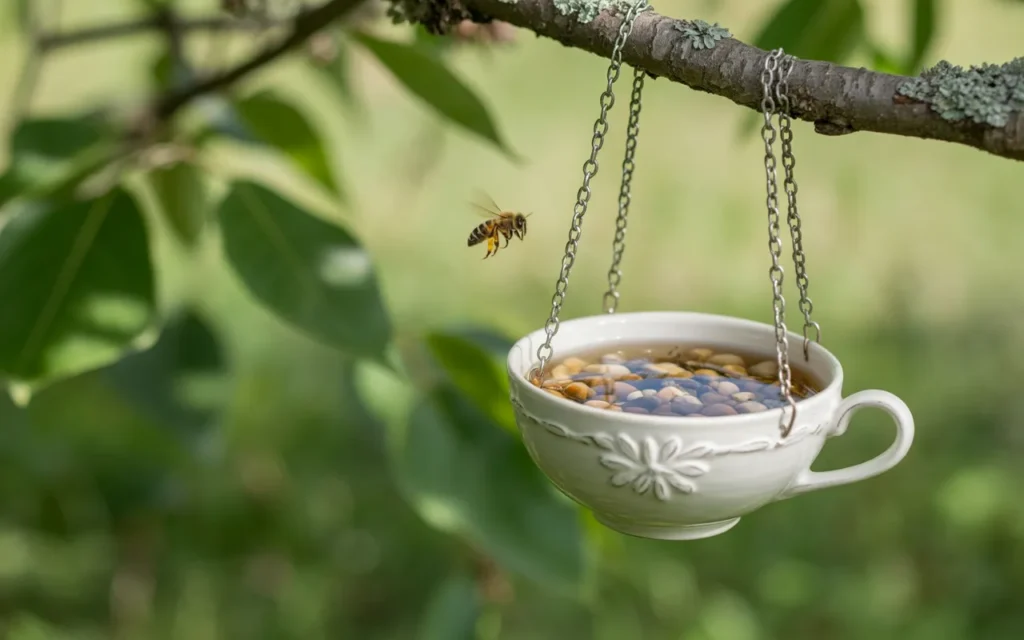
If ground space is limited or you want to keep your bee cup away from pets, a hanging version is a great idea. You can use a small hanging planter, a coconut shell half, or even a teacup attached to chains.
Use a macrame plant hanger or some sturdy twine to suspend your chosen vessel from a tree branch or a shepherd’s hook. Fill it with your landing materials and water.
This places the water source right at flight level, making it easy for bees to spot. You can use a durable cord like the {Mandala Crafts Macrame Cord} to create your own custom hangers.
5. The Repurposed Wine Bottle Waterer
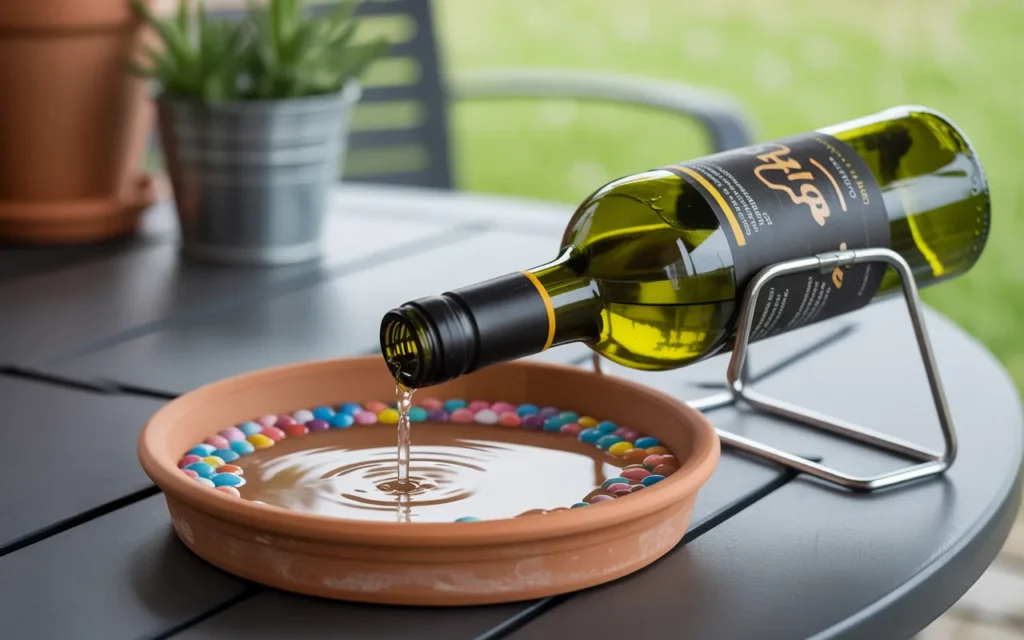
This DIY project is both functional and stylish. A self-filling wine bottle waterer provides a continuous supply of fresh water, so you don’t have to refill it as often.
To make one, you’ll need an empty wine bottle, a small terracotta saucer, and some decorative pebbles. Fill the wine bottle with water, place the saucer on top, and quickly flip them over together.
The water will fill the saucer to the rim of the bottle and will automatically release more as the bees drink it.
Just be sure to add pebbles to the saucer first! Using a product like {Goo Gone Original Liquid} makes removing the bottle’s label clean and easy before you start.
6. The Stacked Rock Cairn with Pools
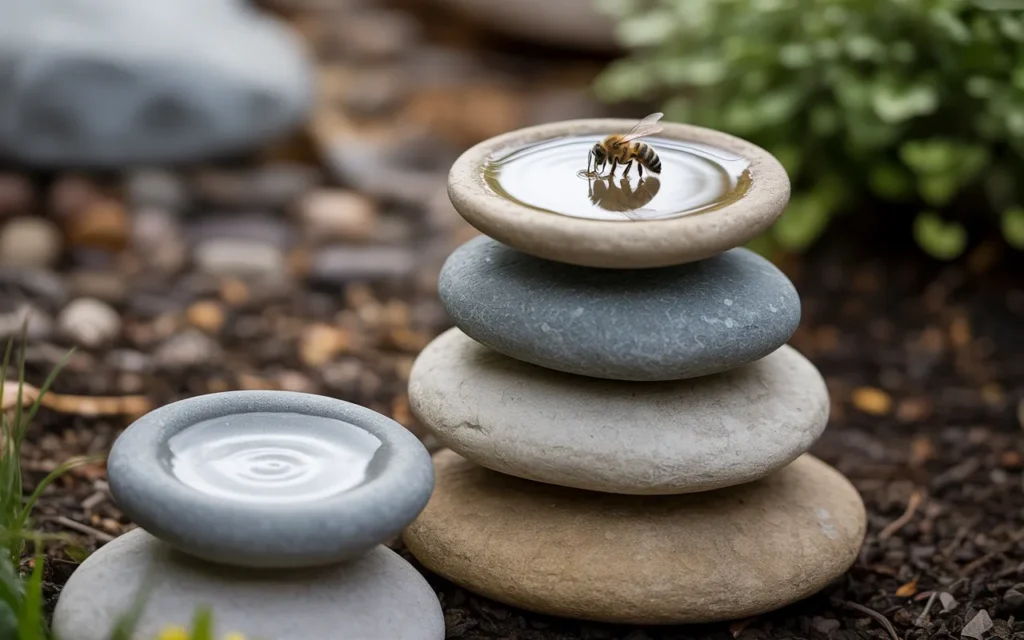
Create a piece of garden art that also serves as a bee cup. A small, stacked rock cairn can have multiple little pools of water for pollinators.
Select several flat rocks of varying sizes. On a few of the rocks, use a strong, waterproof adhesive to glue a smaller rock or a ring of pebbles to create a shallow basin.
Stack the rocks artfully. Fill the little pools with water. This creates a multi-level water station that can serve many bees at once.
7. The Seashell Bee Bath
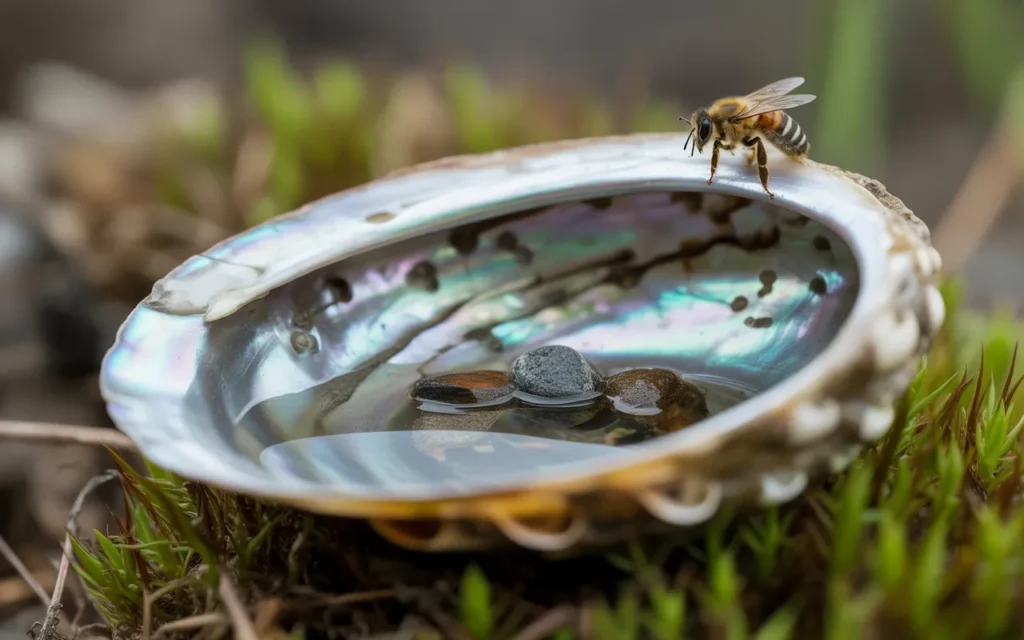
Bring a touch of the coast to your garden by using large seashells as your bee cups. The natural shape of a large clam or scallop shell makes a perfect, shallow basin.
Place a few large shells in your garden beds or in your container pots. Add a few tiny pebbles or some sand to the bottom, then fill with a little water. Their iridescent interiors will shimmer in the sun, and they provide a beautiful, organic look.
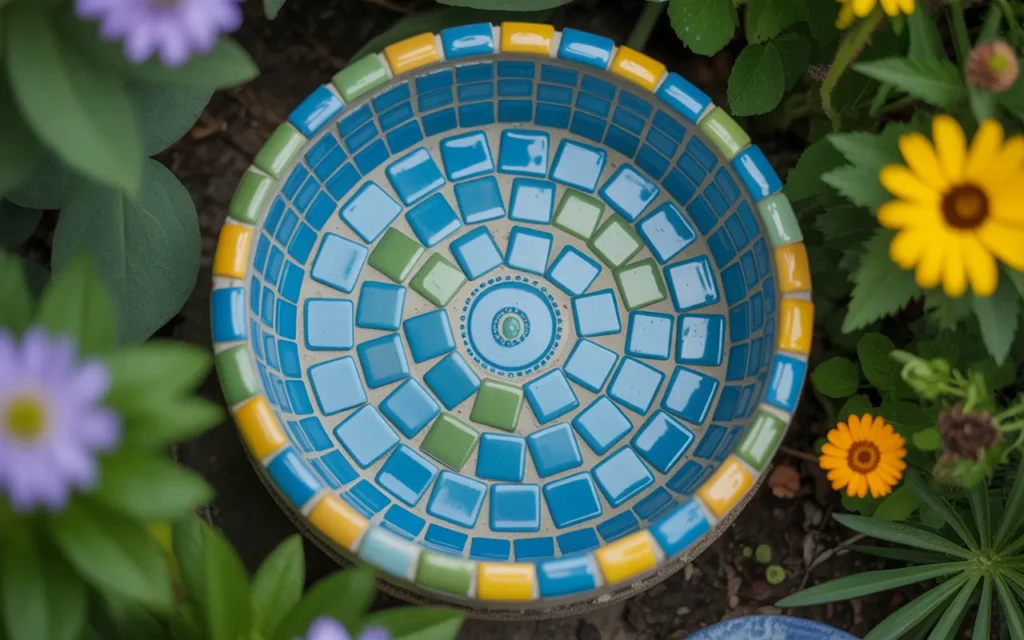
8. The Playful Mosaic Dish
Get creative and make your own mosaic bee cup! Start with a simple terracotta saucer or a plain ceramic dish. Break up old, colorful tiles or plates and glue the pieces to the inside of the dish using a strong, waterproof glue like {Gorilla Waterproof Caulk & Seal}.
Once the glue is dry, you can fill in the gaps with grout. After the grout cures, your custom mosaic dish is ready. The uneven surface of the mosaic pieces provides plenty of texture for bees to grip, and it’s a fun, artistic project.
9. The Leaf-Imprinted Concrete Bowl
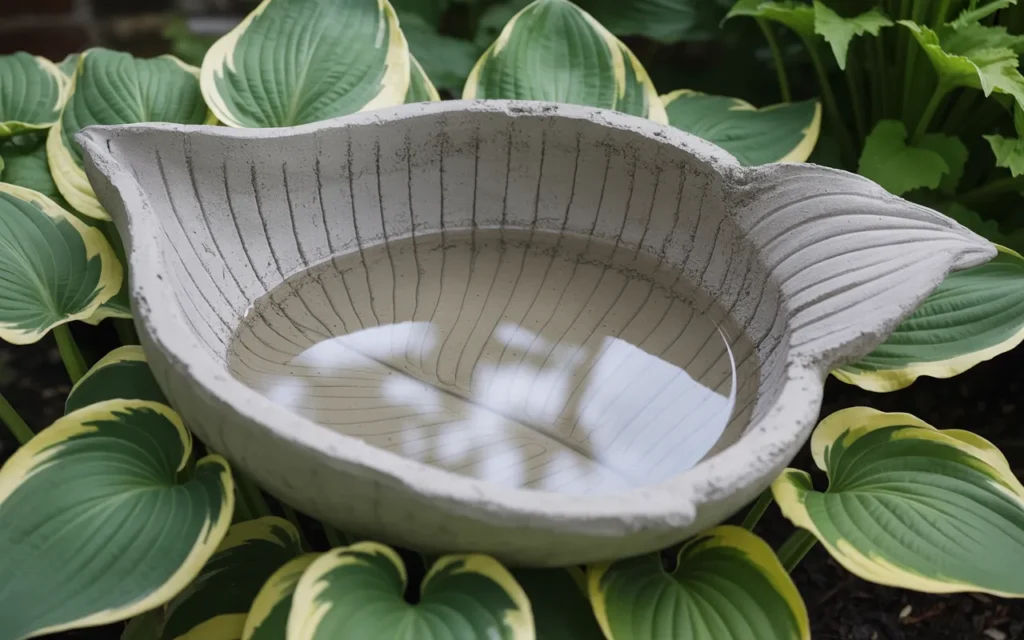
This is another wonderful DIY project that results in a beautiful, natural-looking bee cup. You’ll need a large leaf (like rhubarb or hosta), some sand, and a small bag of quick-setting concrete mix.
Make a mound of sand and press the large leaf, vein-side up, into the sand. Mix the concrete and pour it over the leaf, spreading it evenly.
Once it sets, you can peel the leaf away, revealing its beautiful imprint. This creates a gorgeous, textured bowl that is perfectly shallow for bees. Protect your hands during this project with a sturdy pair of {DEX FIT Nitrile Work Gloves}.
10. The Small Cast Iron Pan
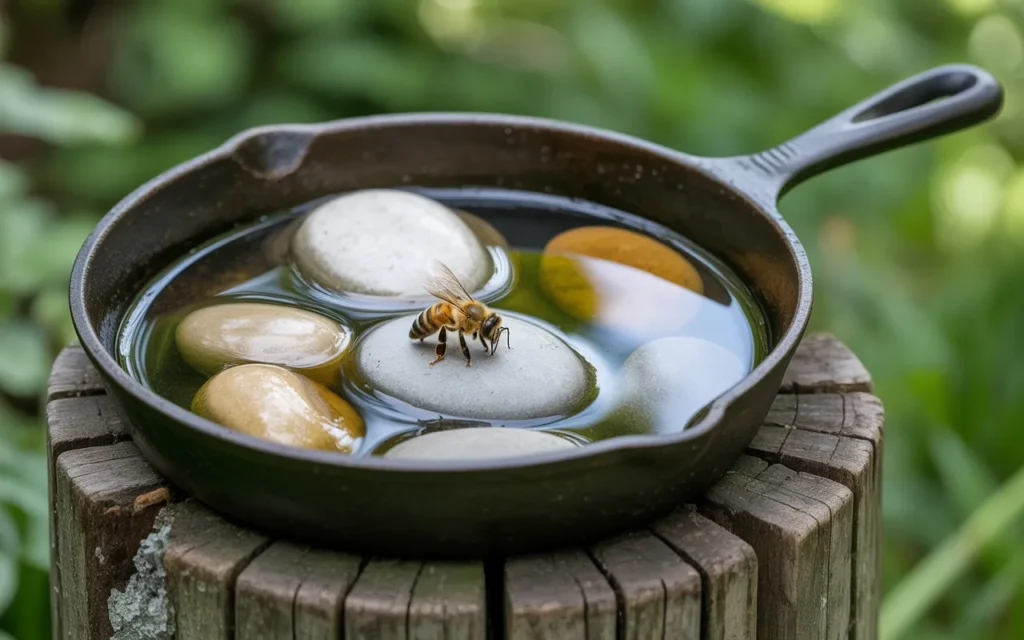
For a rustic, farmhouse-style bee cup, consider a small, old cast iron pan. A tiny skillet or pot can be a durable and charming addition to your garden.
The weight of cast iron makes it very stable, and its dark color helps warm the water slightly on sunny days, which bees appreciate. Just like other bee cups, fill it with rocks or marbles to provide safe landing spots for thirsty pollinators.
11. The Tiered Cupcake Stand
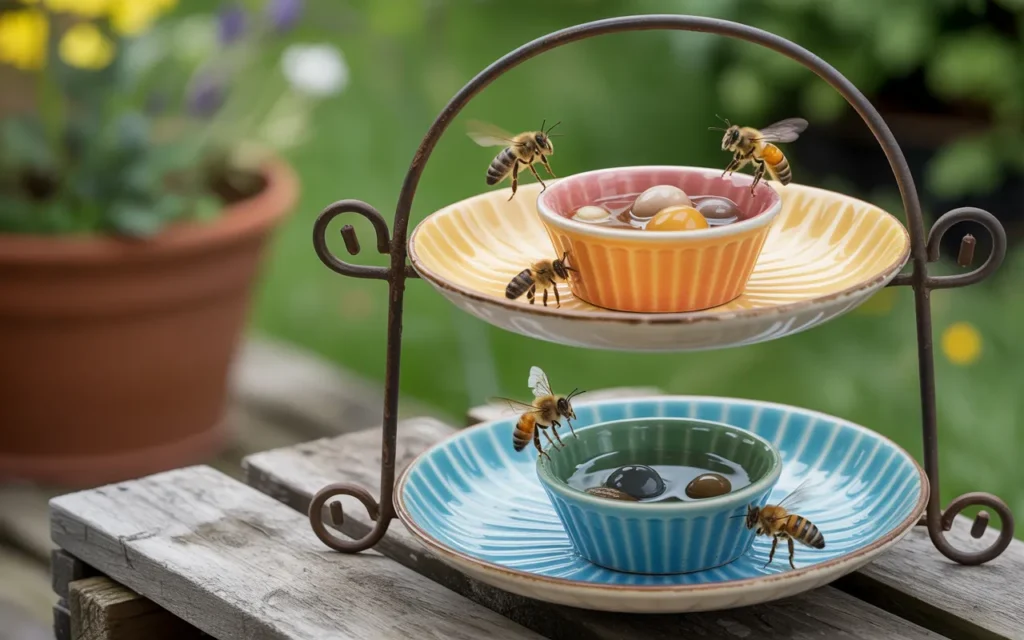
Repurpose a vintage cupcake or dessert stand to create a multi-level bee watering station. A two or three-tiered stand allows you to place several small bee cups at different heights.
Place a small saucer or dish on each tier. Fill each dish with different materials—one with pebbles, one with sea glass, one with moss. This provides variety for the bees and creates a beautiful, decorative feature for your garden.
12. The Simple Pie Tin
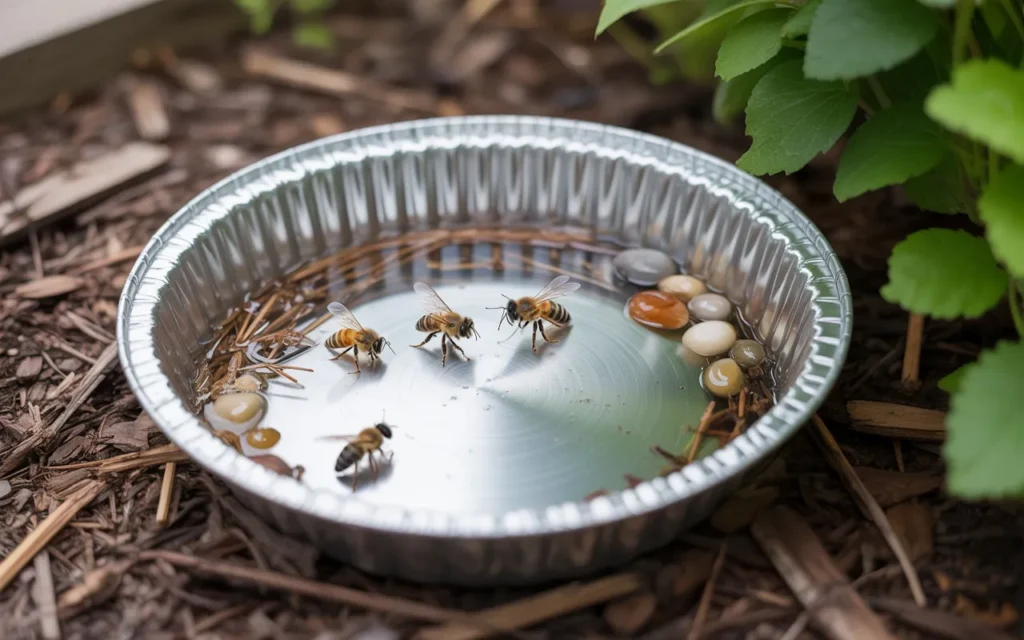
You don’t need anything fancy to help the bees. A simple aluminum pie tin can work just as well as any other bee cup for your garden. It’s a great, budget-friendly option.
To make it more stable, you can press it slightly into the soil or mulch. Fill it with plenty of rocks, corks, or twigs so the bees have lots of places to land. It’s a testament to the fact that helping pollinators doesn’t have to be complicated or expensive.
Product Recommendations for Your Garden Projects
Here is a quick summary of the helpful tools and products mentioned to help you create the perfect bee cups for your garden.
| Product Name | Brand | Use in the Garden |
|---|---|---|
| Good Grips Dish Brush | OXO | Keeps your bee cups clean and free of algae. |
| Macrame Cord | Mandala Crafts | Create your own stylish hangers for suspended bee cups. |
| Goo Gone Original Liquid | Goo Gone | Easily removes sticky labels from bottles for DIY projects. |
| Waterproof Caulk & Seal | Gorilla | Strong, waterproof adhesive for making mosaic bee cups. |
| Nitrile Work Gloves | DEX FIT | Protects your hands during concrete and other messy projects. |
Your Garden’s New Watering Hole
Adding bee cups for your garden is a small change that can have a big impact. It’s a simple act of kindness that helps support the health of your entire garden ecosystem.
By providing a safe and reliable water source, you’re creating a more complete and welcoming habitat for bees.
Choose an idea that speaks to you, whether it’s a simple saucer or a creative DIY project. Remember to change the water every couple of days to keep it fresh and clean.
Your efforts will be rewarded with the happy buzzing of hydrated bees and a garden that is even more full of life.
