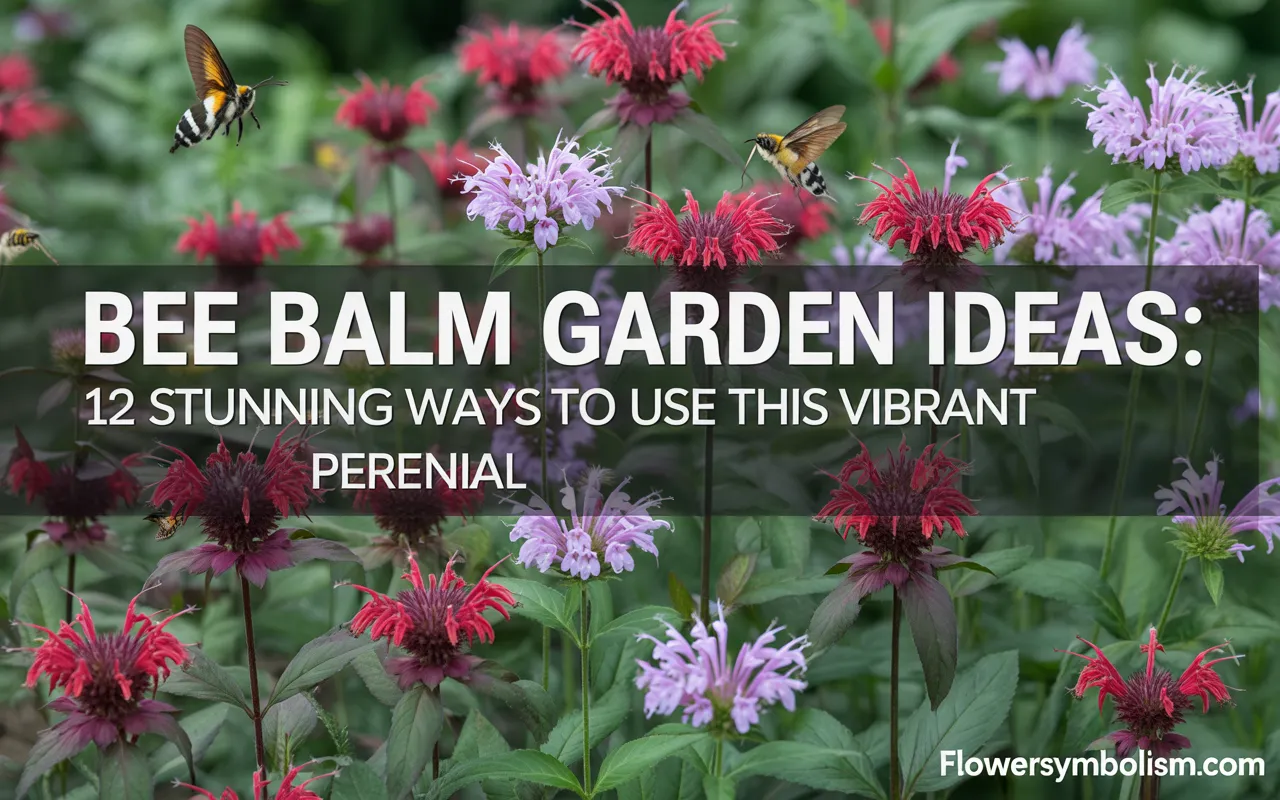
If you’re looking for a plant that brings a burst of color, unique texture, and a crowd of happy pollinators to your yard, look no further than bee balm.
This vibrant perennial, also known as Monarda, is a powerhouse in the garden, and its spiky, firework-like blooms are a favorite of bees, butterflies, and hummingbirds.
Exploring different bee balm garden ideas is a fantastic way to incorporate this stunning and hardworking plant into your landscape.
This guide is filled with 12 beautiful bee balm garden ideas to inspire you. We’ll look at how to use this versatile plant in everything from classic cottage gardens to modern monochromatic schemes.
Whether you’re a seasoned gardener or just starting, you’ll find easy and enchanting ways to make bee balm the star of your outdoor space.
Let’s dive in and discover how to put this pollinator magnet to work.
Getting to Know Bee Balm (Monarda)
Before we explore the design ideas, let’s quickly cover the basics of bee balm.
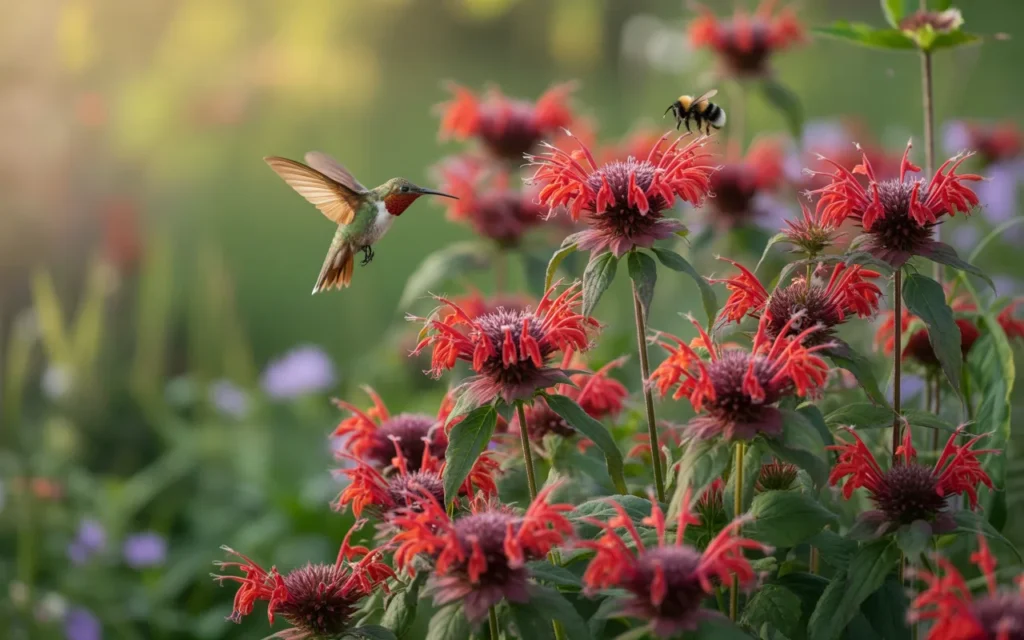
- Varieties: Bee balm comes in many colors, including shades of red, pink, purple, and white. There are tall varieties that can reach 4 feet and dwarf types that stay under 12 inches.
- Growing Conditions: It loves full sun but can tolerate some afternoon shade. It prefers moist, well-draining soil but can be quite adaptable.
- Pollinator Magnet: Its nectar-rich, tubular flowers are perfectly shaped for hummingbirds and long-tongued bees.
- A Note on Mildew: Bee balm can be prone to powdery mildew. Look for newer, mildew-resistant cultivars and ensure good air circulation around your plants.
With that in mind, here are some stunning bee balm garden ideas for your yard.
1. The Classic Cottage Garden Star
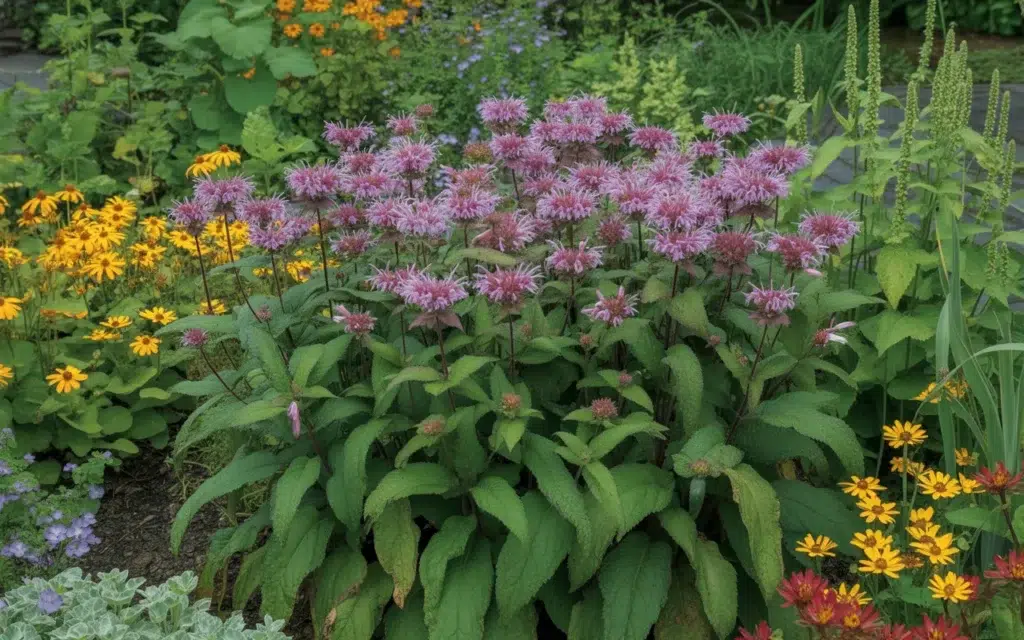
In a classic cottage garden, bee balm’s slightly wild and informal shape fits right in. Its height and bold colors make it a perfect mid-border plant, adding a splash of drama amongst softer-textured flowers.
Pair it with other cottage garden favorites like phlox, daisies, and lavender. Plant it in large drifts of three or five plants for a natural, abundant look.
The cheerful chaos of a cottage garden is the perfect setting for bee balm’s exuberant blooms.
To keep your garden plans organized, a durable notebook like the {Rite in the Rain Weatherproof Top-Spiral Notebook} is perfect for outdoor use, rain or shine.
2. The Hummingbird Haven
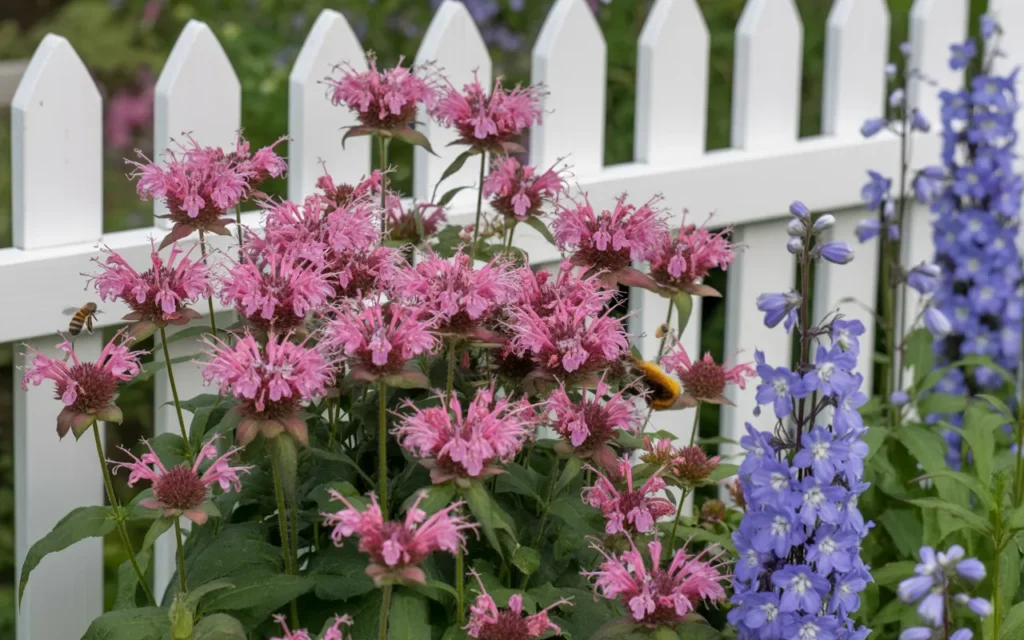
If you want to attract hummingbirds, planting red bee balm is a must. Hummingbirds are highly attracted to the color red, and the flower’s tubular shape is perfectly suited for their long beaks. This is one of the most effective bee balm garden ideas for bird lovers.
Create a dedicated “hummingbird hot spot” by planting a large patch of a red variety like ‘Jacob Cline’. Combine it with other hummingbird favorites like salvia, cardinal flower, and trumpet vine to create an irresistible buffet they will visit all summer long.
3. A Stunning Monochromatic Design
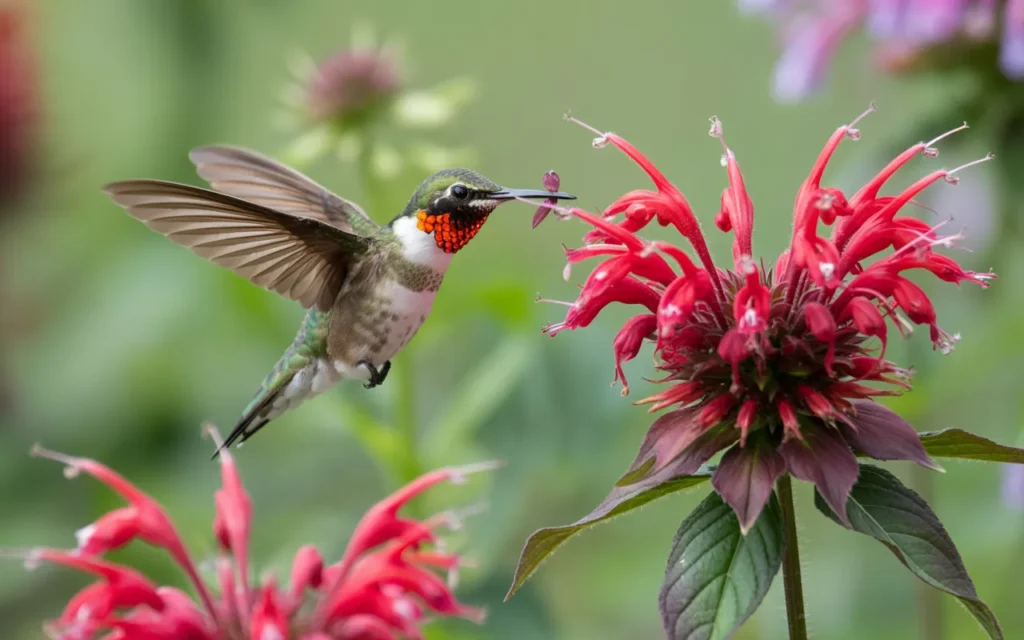
For a modern and sophisticated look, use bee balm in a monochromatic garden design. Planting flowers primarily in shades of a single color creates a bold, cohesive statement.
A purple-themed garden could feature a purple bee balm variety like ‘Purple Rooster’ alongside alliums, catmint, and ‘May Night’ salvia. This allows you to play with different heights, shapes, and textures within a single color family, creating a visually stunning effect.

4. The Native Plant and Wildflower Meadow
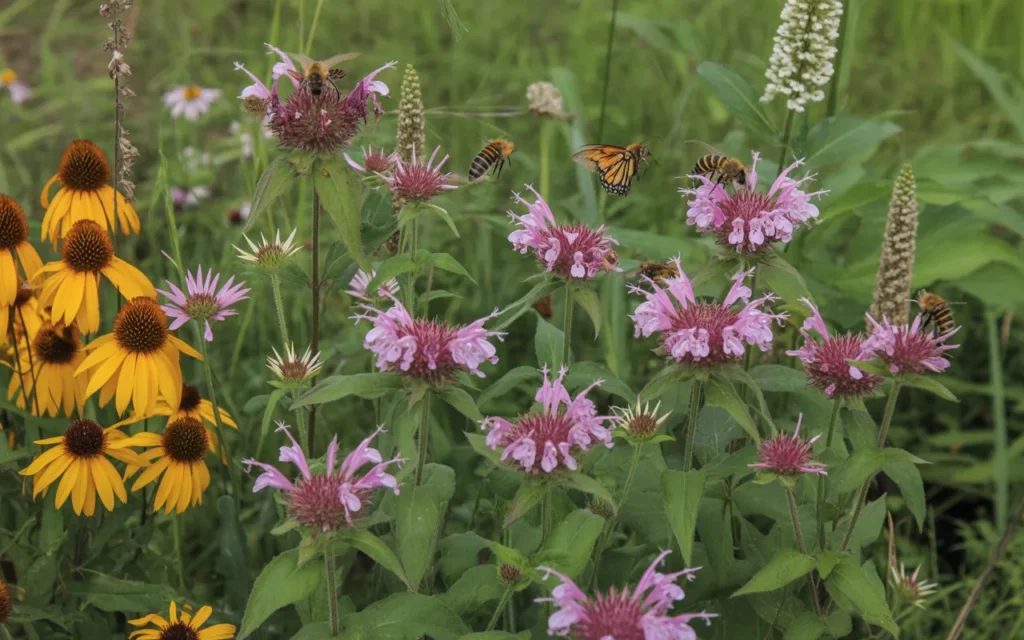
Bee balm is native to North America, making it an essential component of any native plant garden or mini wildflower meadow. It provides a vital food source for native pollinators that have co-evolved with it.
Combine it with other native powerhouses like coneflower (Echinacea), Black-Eyed Susan (Rudbeckia), and blazing star (Liatris).
This approach creates a low-maintenance, ecologically beneficial garden that buzzes with local life. A sturdy pair of {Cooljob Gardening Gloves for Women and Men} will protect your hands from scratches and dirt while you plant your native meadow.
5. A Bold Container “Thriller”
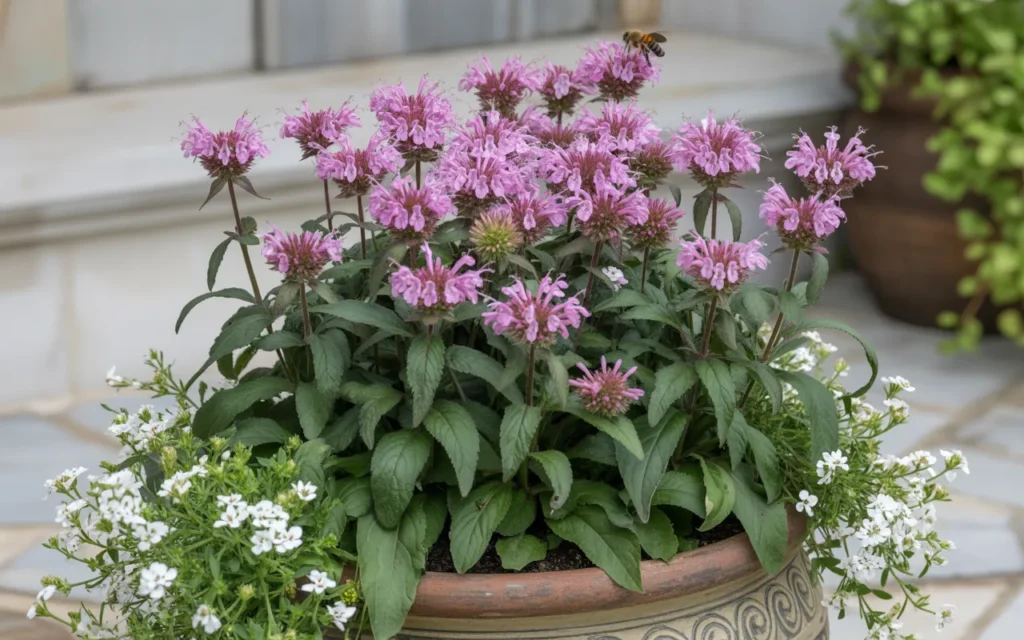
Don’t have a large yard? No problem! Dwarf varieties of bee balm, such as ‘Pardon My Pink’, make a fantastic “thriller” plant in a container garden. Its upright habit and striking flowers provide height and drama.
Follow the “thriller, filler, spiller” design principle. Use the bee balm as your tall thriller, add a mounding plant like petunias as the filler, and a trailing plant like sweet potato vine as the spiller.
Using a premium potting mix like {FoxFarm Ocean Forest Potting Soil} will give your container the rich nutrients it needs to support abundant blooms.
6. The Edible and Herbal Tea Garden
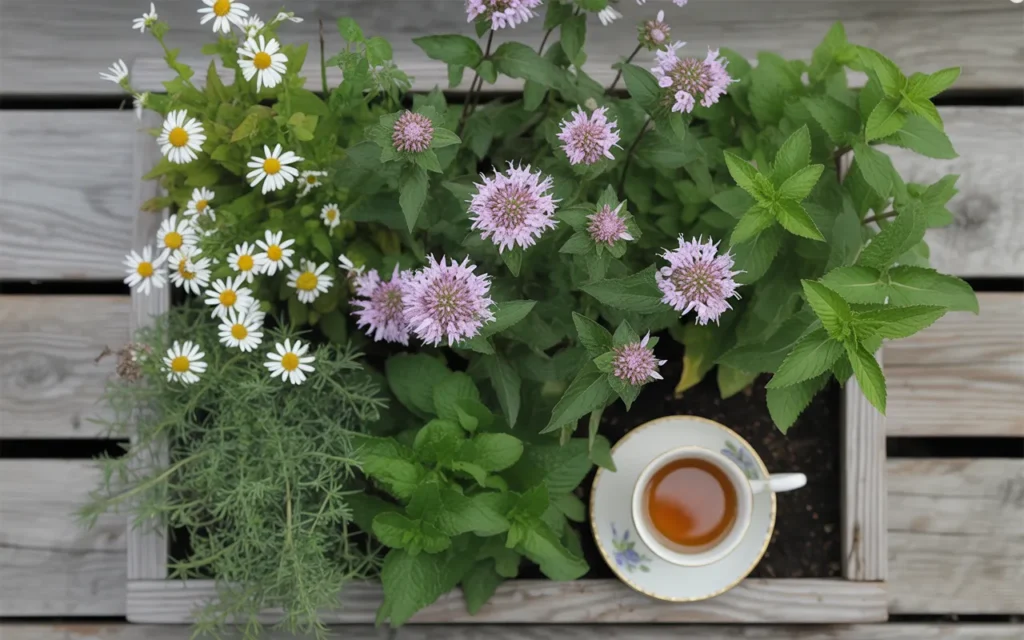
Did you know that bee balm, especially the wild bergamot variety (Monarda fistulosa), has a long history of use as an herbal tea? Its leaves have a minty, slightly spicy flavor. This makes it a perfect addition to a garden focused on edible plants.
Plant it alongside other tea herbs like chamomile, mint (in a container to control its spread!), and lemon balm. You can harvest the leaves for a fragrant, homegrown tea, and the flowers will provide a feast for pollinators.
7. A Late Summer and Fall Border
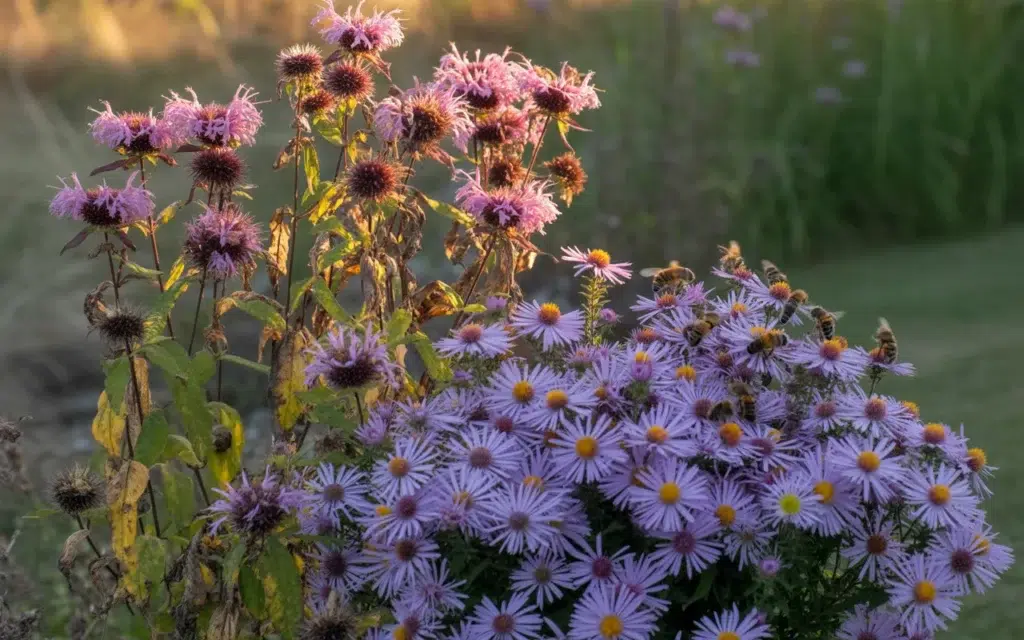
While many bee balm varieties are mid-summer bloomers, they add fantastic structure to a garden border even after they finish flowering. Their seed heads provide winter interest and can be a food source for birds.
Pair bee balm with classic fall-blooming plants like asters, goldenrod, and sedum. The combination ensures your garden has a final burst of color and continues to be a hub for pollinators well into the autumn months. To keep your borders neat, a sharp pair of pruning shears like the {Fiskars Bypass Pruning Shears} is great for trimming back spent perennials.
8. A Rain Garden Standout
Bee balm thrives in moist soil, making it an excellent choice for a rain garden. A rain garden is a shallow depression designed to temporarily hold and soak in rainwater runoff from roofs or driveways.
Plant bee balm in the middle zone of the rain garden, where the soil stays consistently moist but isn’t waterlogged.
Combine it with other moisture-loving natives like swamp milkweed, joe-pye weed, and cardinal flower for a beautiful and highly functional garden that also helps manage stormwater.
9. Create a Privacy Screen or “Living Fence”
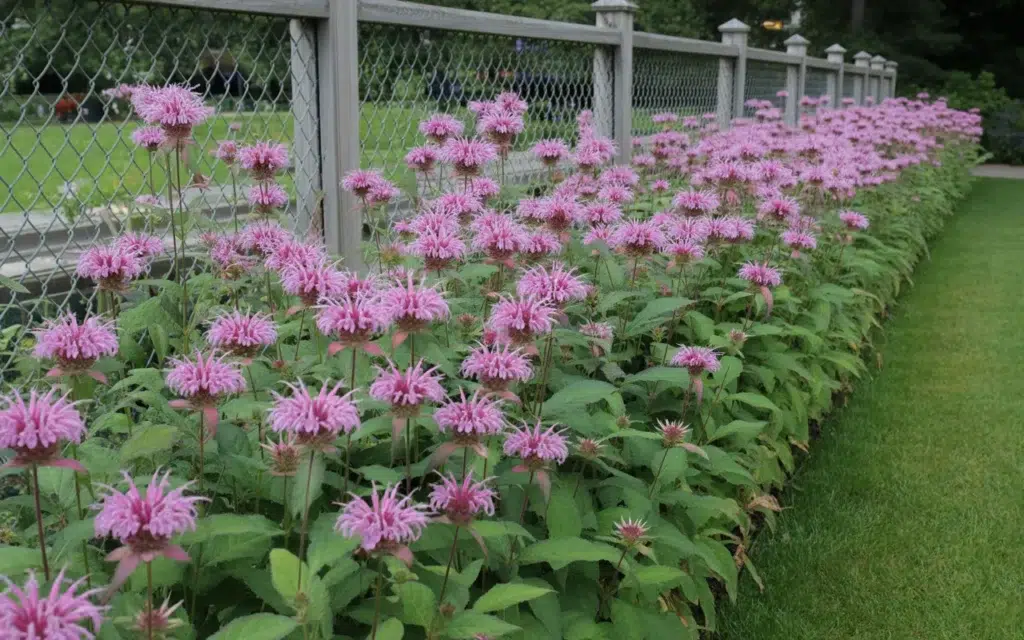
Taller varieties of bee balm can grow up to 4 feet, creating a dense and beautiful summer privacy screen. This is one of the most practical bee balm garden ideas for sectioning off parts of your yard or blocking an unwanted view.
Plant a long row of a tall, sturdy variety like ‘Marshall’s Delight’ along a property line or in front of a chain-link fence. The thick foliage and profusion of flowers will create a living wall that also hums with pollinator activity.
10. A Cut Flower Garden Staple
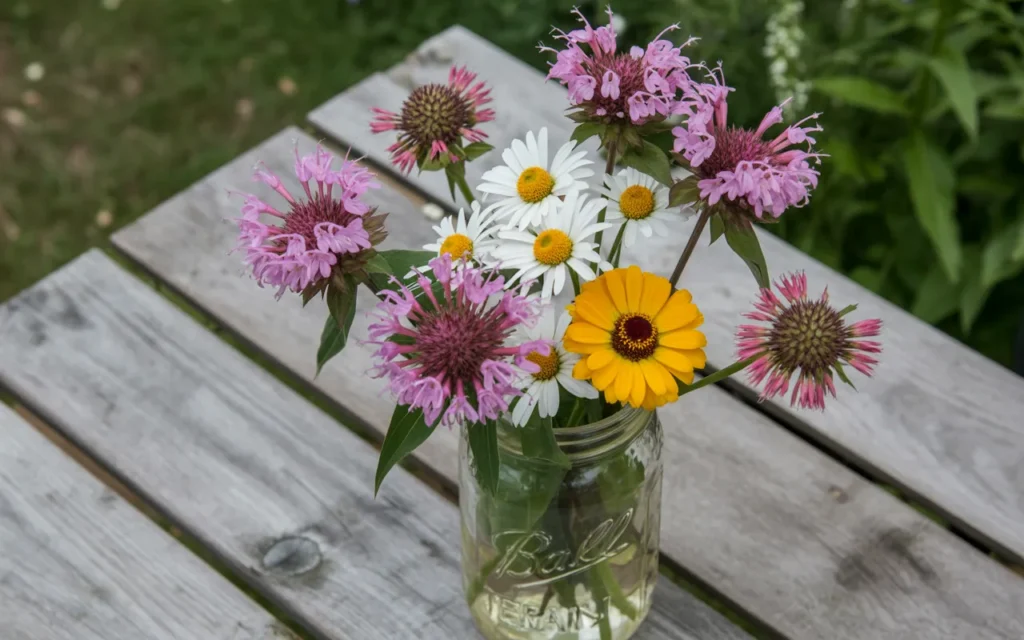
Bee balm’s unique flowers and long, sturdy stems make it an excellent choice for a cut flower garden. Their whimsical shape adds a touch of wildflower beauty to any bouquet.
Grow them in dedicated rows alongside other cutting favorites like zinnias, cosmos, and sunflowers. Cut the stems in the morning when the flowers are just beginning to open for the longest vase life.
For making precise cuts and carrying your haul, a garden tool set like the {Scuddles Garden Tools Set} with a tote is very convenient.
11. The Deer-Resistant Border
If you struggle with deer in your garden, bee balm is your new best friend. As a member of the mint family, its fragrant foliage is highly unpalatable to deer and rabbits.
Use bee balm to create a protective border around more vulnerable plants.
A thick planting of bee balm around a bed of deer-candy like hostas or tulips can help deter them from venturing further in. It’s a beautiful and effective way to practice defensive gardening.

12. A Garden for All Senses
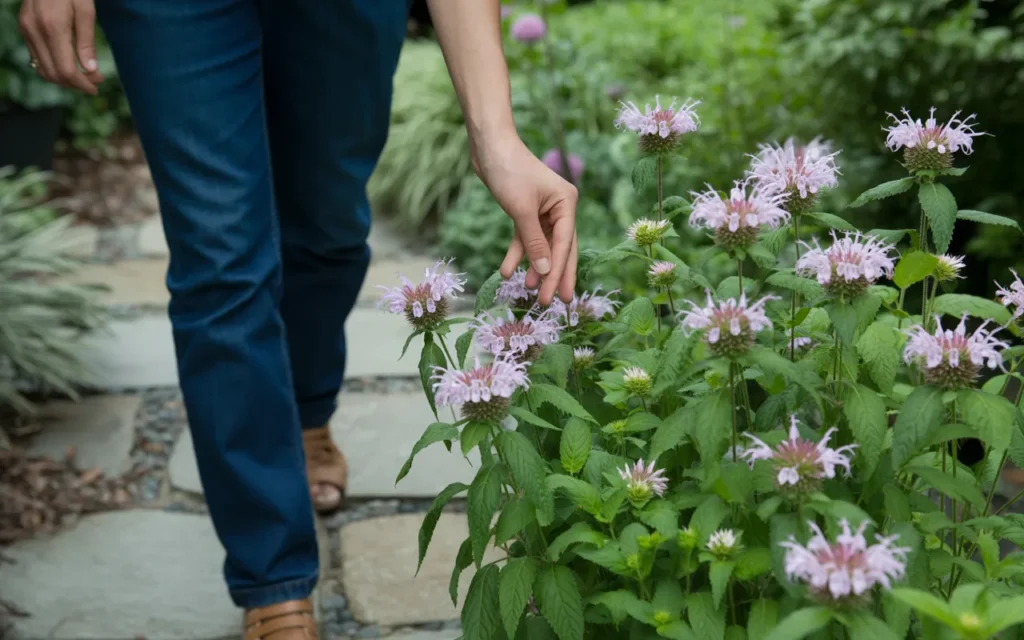
Bee balm engages more than just the sense of sight. Its leaves release a lovely minty-spicy scent when brushed against or crushed. Plant it along a pathway where you will frequently walk past it.
Combine it with other fragrant plants like lavender, rosemary, and scented phlox. This creates a multi-sensory experience, filling your garden with beautiful sights, sounds of buzzing bees, and delightful fragrances.
Product Recommendations for Your Bee Balm Garden
Here is a quick summary of the helpful tools and products mentioned to help you bring your bee balm garden ideas to life.
| Product Name | Brand | Use in the Garden |
|---|---|---|
| Weatherproof Top-Spiral Notebook | Rite in the Rain | Plan your garden layout and take notes, even in damp conditions. |
| Gardening Gloves for Women and Men | Cooljob | Protect hands from dirt and thorns while planting and weeding. |
| Ocean Forest Potting Soil | FoxFarm | Enriches container gardens with nutrients for lush growth and more blooms. |
| Bypass Pruning Shears | Fiskars | For deadheading spent blooms and keeping plants tidy. |
| Garden Tools Set | Scuddles | Provides all the essential hand tools for planting and maintaining a cut flower garden. |
Your Vibrant Bee Balm Garden Awaits
Bee balm is truly a garden superstar—it’s beautiful, easy to grow, and a lifeline for pollinators. By trying a few of these bee balm garden ideas, you can create a dynamic and ecologically important space in your own backyard.
Don’t be afraid to experiment with different colors and companion plants. Start with one or two ideas that excite you and watch as your garden transforms into a vibrant sanctuary.
Your reward will be a stunning display of color and the joyful buzz of happy bees, butterflies, and hummingbirds all summer long.
