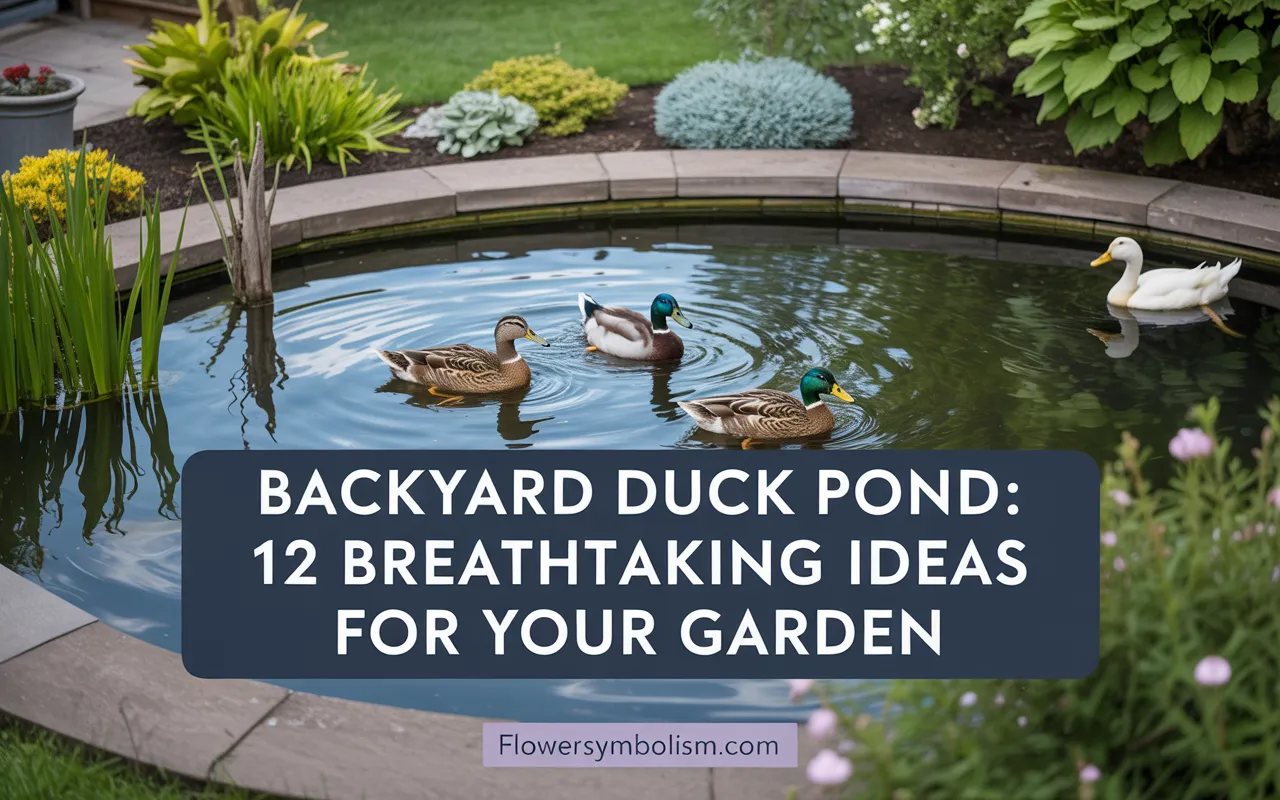
There’s nothing quite like the charm and personality that ducks bring to a garden. Watching them waddle, forage, and splash around can bring a smile to anyone’s face.
If you’re dreaming of adding these delightful birds to your homestead, creating a backyard duck pond is the most important step you can take.
A proper pond provides them with a place to swim, preen, and stay healthy and happy. It becomes the heart of their world and a stunning focal point for your garden.
This guide is here to inspire you with 12 breathtaking ideas for your very own backyard duck pond.
We’ll explore a variety of designs, from simple, budget-friendly options to more elaborate naturalistic ponds.
We’ve tailored these ideas for beginners, with plenty of helpful tips and product suggestions to make the process smooth and enjoyable.
Whether you have a small urban yard or a sprawling country garden, there’s a perfect pond design waiting for you.
Let’s dive in and start planning a beautiful and functional water feature for your future feathered friends.
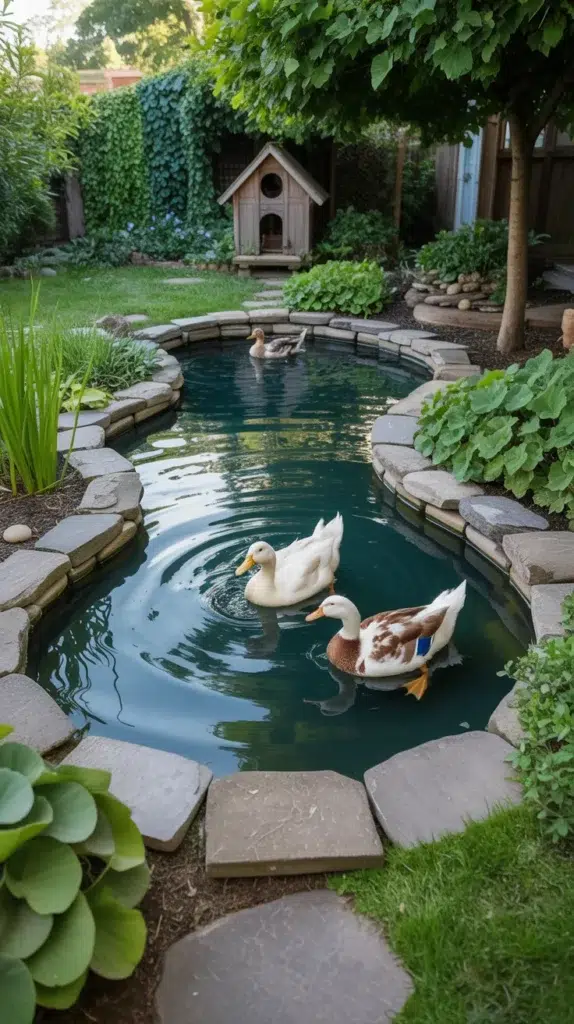
Planning the Perfect Backyard Duck Pond
Before you start digging, it’s crucial to understand that a backyard duck pond has different needs than a simple garden or fish pond.
Ducks are messy, and a successful pond design accounts for their habits from the very beginning. A little planning will ensure your pond is easy to clean, safe for your ducks, and a beautiful addition to your garden.
Key Considerations for a Duck Pond:
- Duck-Proofing: Ducks will nibble on and trample plants. Choose tough, resilient plants and protect their roots, or place delicate plants just outside their reach.
- Easy Cleaning: Ducks produce a lot of waste, which means pond water gets dirty quickly. Your design must include an easy way to drain and clean the pond regularly.
- Safe Entry and Exit: The pond must have a non-slip, gently sloping ramp or “beach” area so ducks can easily get in and out of the water. Steep, slippery sides are a drowning hazard.
- Filtration (or Lack Thereof): While some large ponds use biological filters, many smaller backyard duck pond designs focus on simple “dump and fill” cleaning methods, as duck waste can quickly overwhelm standard pond filters.
Keeping these duck-specific needs in mind will help you choose the best design from our list and create a pond that works for both you and your flock.
12 Breathtaking Backyard Duck Pond Ideas
Ready to get inspired? Here are 12 fantastic and practical ideas for creating the perfect backyard duck pond.
1. The Pre-Formed Liner Pond
For beginners, a rigid, pre-formed plastic pond liner is one of the easiest ways to create an in-ground backyard duck pond.
These shells come in various sizes and shapes, taking the guesswork out of the design.
The process is simple: dig a hole that matches the liner’s shape, set the shell in place, and ensure it’s level. The most important step for ducks is to build a gentle ramp on one side.
You can pile up rocks or gravel inside the pond to create a non-slip slope for easy entry and exit. To clean, you can use a small pump to empty the water and then scrub and refill it.
2. The Kiddie Pool Duck Pond
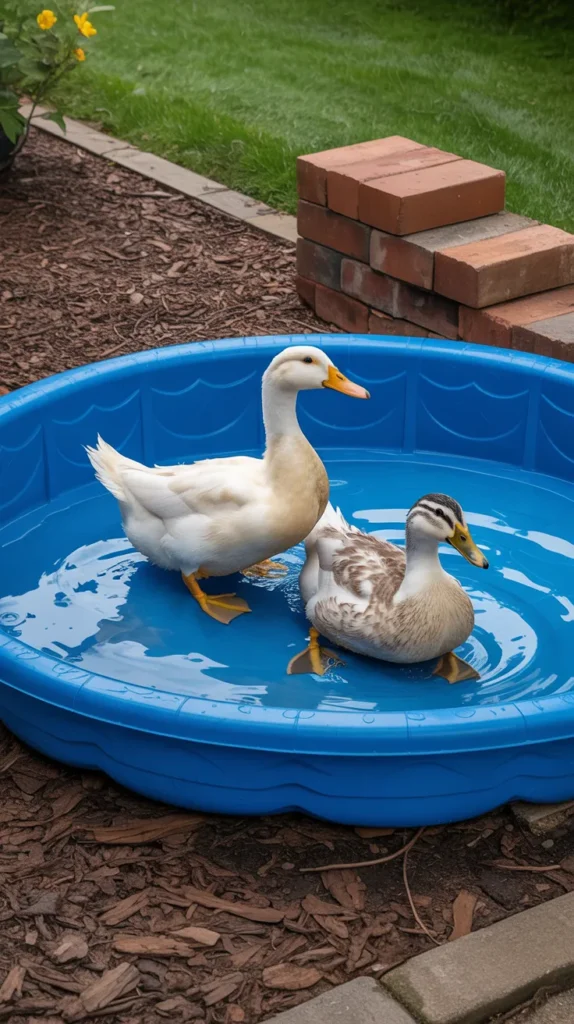
This is the ultimate starter pond and one of the most popular backyard duck pond ideas for new duck owners. It’s incredibly cheap, easy to set up, and simple to clean.
A hard-sided plastic kiddie pool makes a perfect splashing spot for a few ducks. To make it safe, you can partially bury it in the ground or use bricks or pavers to create a small ramp leading up to the edge.
The best part is the cleaning process: just tip it over, give it a quick scrub, and refill with fresh water from your garden hose. It’s a low-commitment way to provide your ducks with the water they need.
To make cleaning even faster, a hose with a good nozzle is a must.
The {Gorilla Grip Heavy Duty Spray Nozzle} is durable and has multiple spray patterns, making it perfect for rinsing out the pool and refilling it quickly.
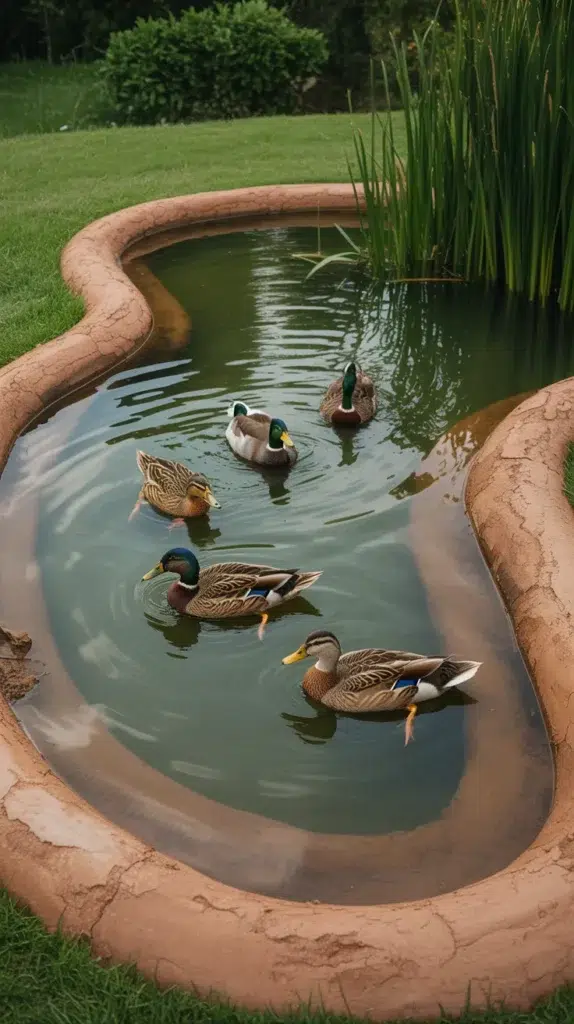
3. The Naturalistic Clay-Lined Pond
If you have the right soil and want a truly natural backyard duck pond, a clay-lined pond is a beautiful, albeit labor-intensive, option.
This method uses bentonite clay, a natural material that swells when wet to create a waterproof seal.
You excavate the pond to your desired shape, ensuring you create a very gentle, sloping beach on at least one side.
Then, you line the entire pond with a thick layer of bentonite clay powder, cover it with soil, and compact it thoroughly before slowly filling it with water.
This creates a pond that looks and feels like a natural body of water and can support a variety of tough, water-side plants.
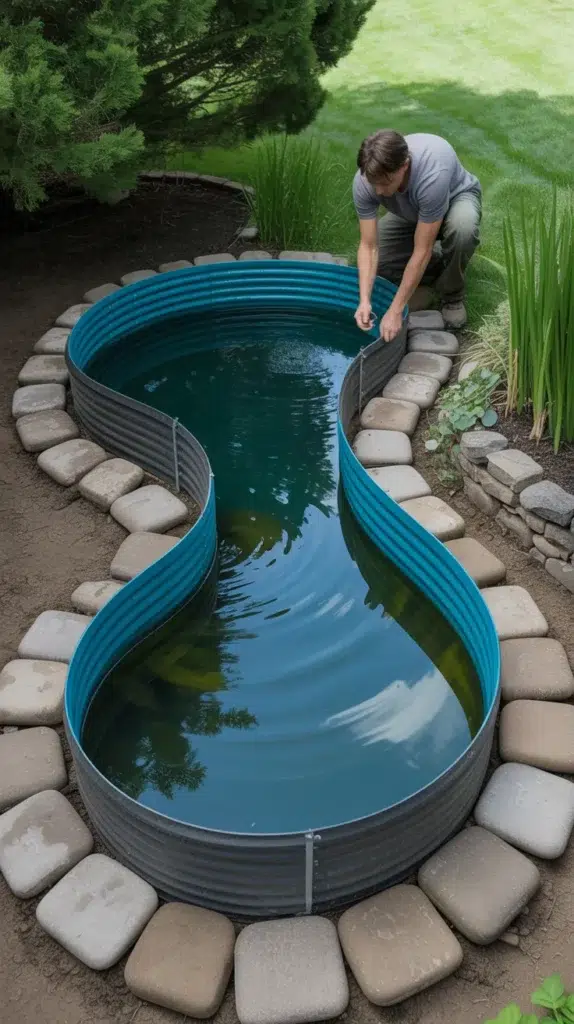
4. The Stock Tank Duck Pond
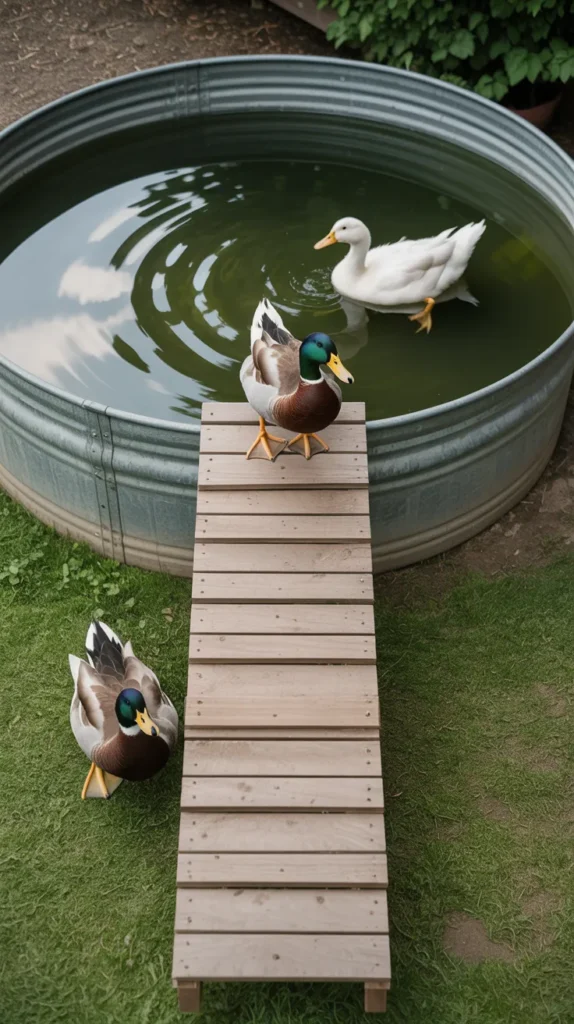
Galvanized steel or heavy-duty plastic stock tanks make fantastic, durable, and stylish above-ground duck ponds. They have a modern farmhouse or industrial aesthetic and are incredibly tough.
A large, shallow stock tank is ideal. As with any above-ground pond, you must provide a safe and sturdy ramp for your ducks.
You can build a simple wooden ramp with cross-strips for grip, or pile up stones and pavers against the side.
To clean, a simple drain plug can be installed near the bottom, making it easy to empty the tank for a scrub-down. This is a great semi-permanent backyard duck pond solution.
5. The Flexible Liner Pond with a Drain
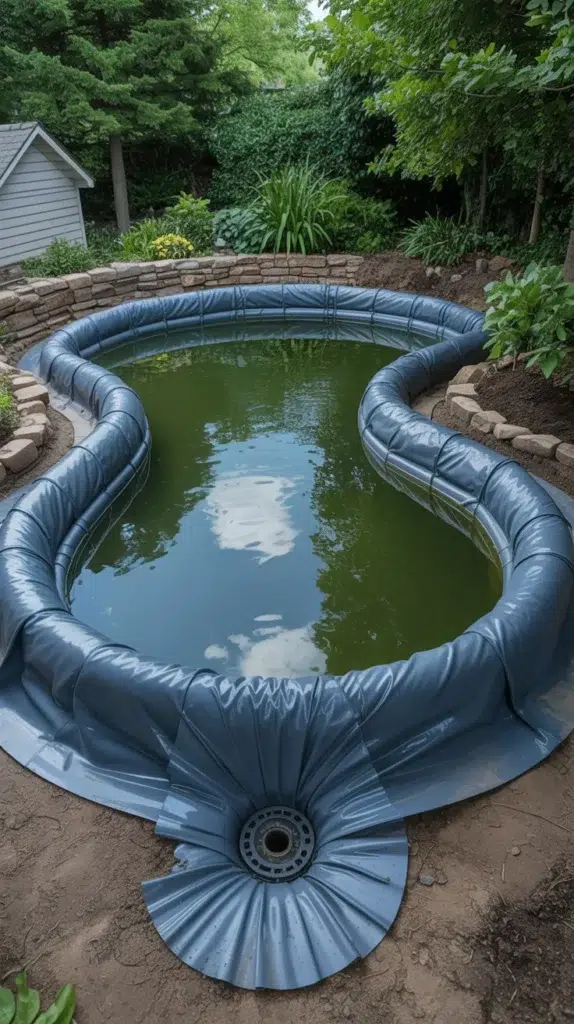
For a larger, custom-shaped in-ground pond, a flexible EPDM rubber liner is the way to go. This allows you to create any shape you desire.
The key to making this design work as a backyard duck pond is to plan for easy cleaning from the start. As you dig your pond, create a deeper sump area at one end.
When you install the liner, you can install a bottom drain in this sump, which connects via underground pipe to an area outside the pond.
To drain the pond, you simply open a valve on the pipe. This makes cleaning a large pond much more manageable. A high-quality liner is a must for this build.
The {Firestone 45mil EPDM Pond Liner} is fish-safe, extremely durable, and puncture-resistant, making it a reliable choice for a long-lasting pond.
6. The Pond with an Integrated Bog Filter
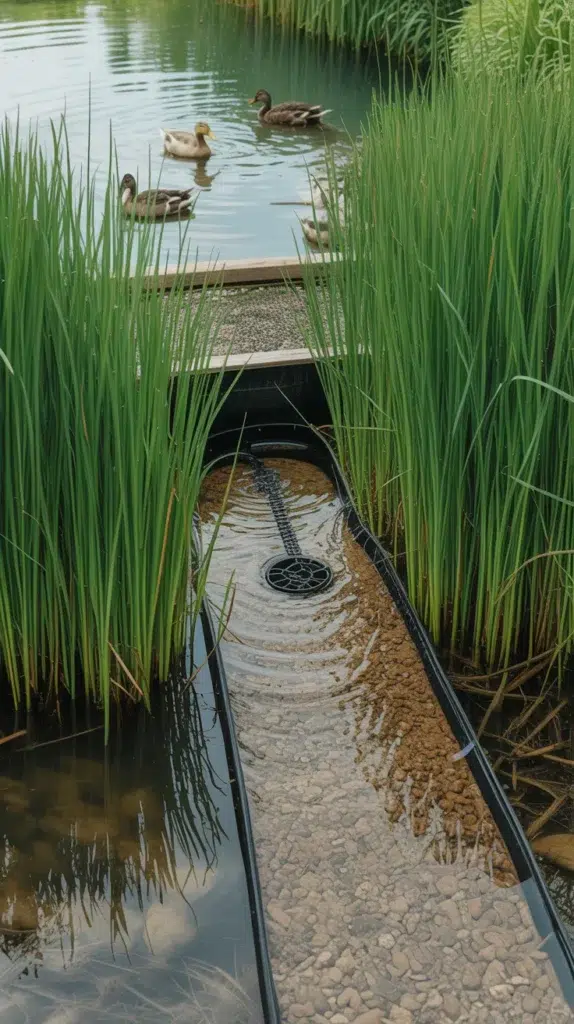
While duck waste can overwhelm typical filters, a large, well-designed bog filter can help process nutrients and keep a larger backyard duck pond healthier.
A bog filter is a separate, shallow area filled with gravel and planted with nutrient-hungry plants like reeds, rushes, and irises.
A pump moves the dirty pond water into the bog, where the plants and beneficial bacteria in the gravel act as a living filter.
The clean water then flows back into the pond, often via a small stream or waterfall.
This won’t eliminate the need for occasional draining, but it can significantly extend the time between cleanings and reduce odors.
A powerful and reliable pump is needed to move the mucky water. An external pump like the {Sequence 4000 Series Pond Pump} is a great choice as it’s designed to handle solids and can be placed outside the pond for easy maintenance.
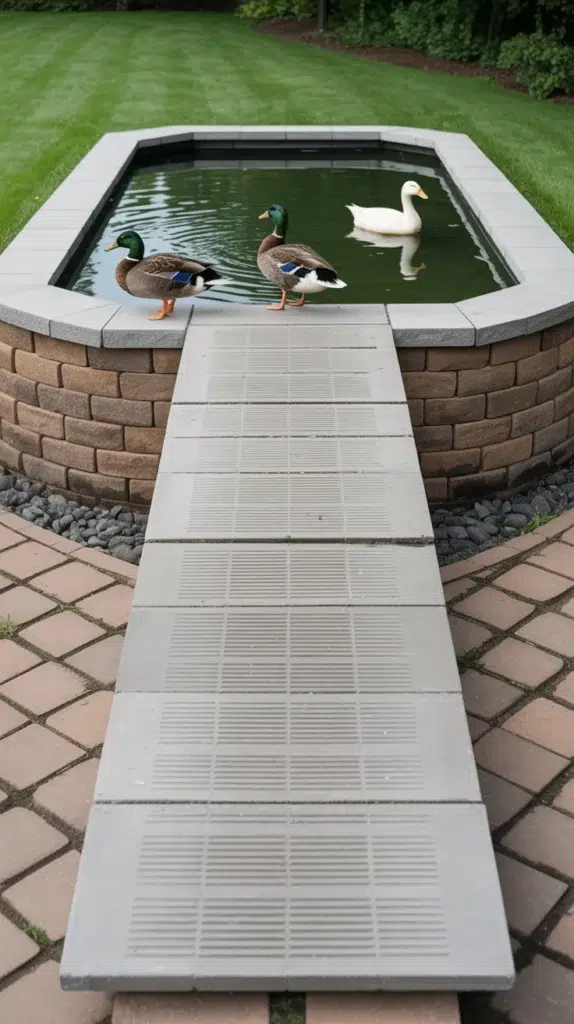
7. The Raised Block and Liner Pond
Building a raised backyard duck pond with concrete or retaining wall blocks is an excellent DIY project that doesn’t require major excavation.
You simply build the walls of your pond to the desired height and shape on a level piece of ground. Then, you drape a flexible pond liner inside, securing it under the capstones.
This creates a formal, architectural look. For ducks, it’s vital to build a wide, permanent ramp.
A ramp made of wood or poured concrete with a rough, non-slip surface is essential for their safety. The raised edge can also help contain splashes and make the pond area easier to manage.
8. The Pond and Stream Combination
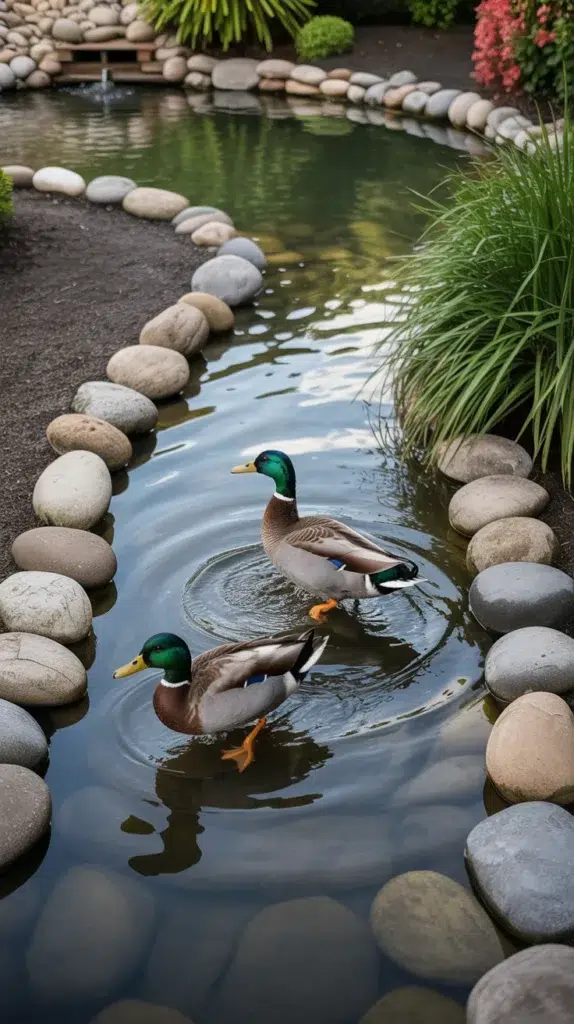
If you have a bit of a slope in your yard, you can create a delightful pond and stream feature for your ducks.
The stream can meander down the slope before emptying into a larger ponding area at the bottom. Ducks love to play and forage in the moving water of a stream.
You’ll use a single, long piece of flexible pond liner to create both the stream and the pond. A pump placed in the main pond sends water up to the top of the stream to keep it flowing.
This creates a dynamic, beautiful, and engaging environment for your flock. Keeping the stream area clean of leaves and debris is important to prevent clogs.
A durable net like the {TETAKE Pond Skimmer Net} with a long handle makes it easy to scoop out any obstructions.
10. The Wine Barrel Mini-Pond
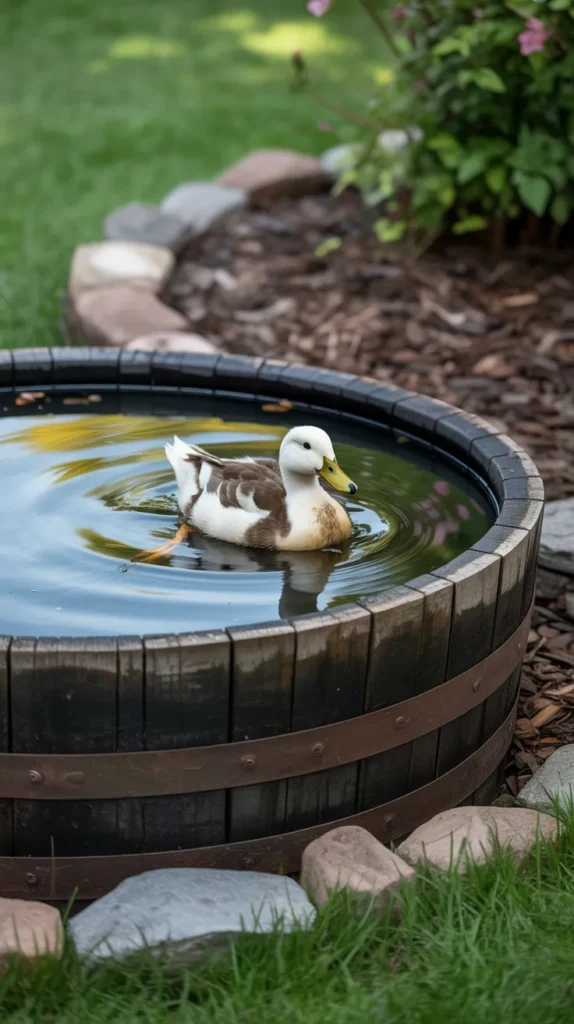
For just one or two small Bantam ducks like Call ducks, a half-barrel can serve as a charming mini-pond. A real oak wine or whiskey barrel provides a wonderful rustic look.
You will need to line the barrel with a fish-safe pond liner to prevent anything from the wood from leaching into the water.
Sink the barrel into the ground so the rim is at ground level, and build up one side with soil and pebbles to create an easy walk-in entrance.
This is a very small-scale backyard duck pond, so it will need to be cleaned every day or two, but it’s a perfect, space-saving solution for a tiny garden.
11. The DIY Concrete Pond
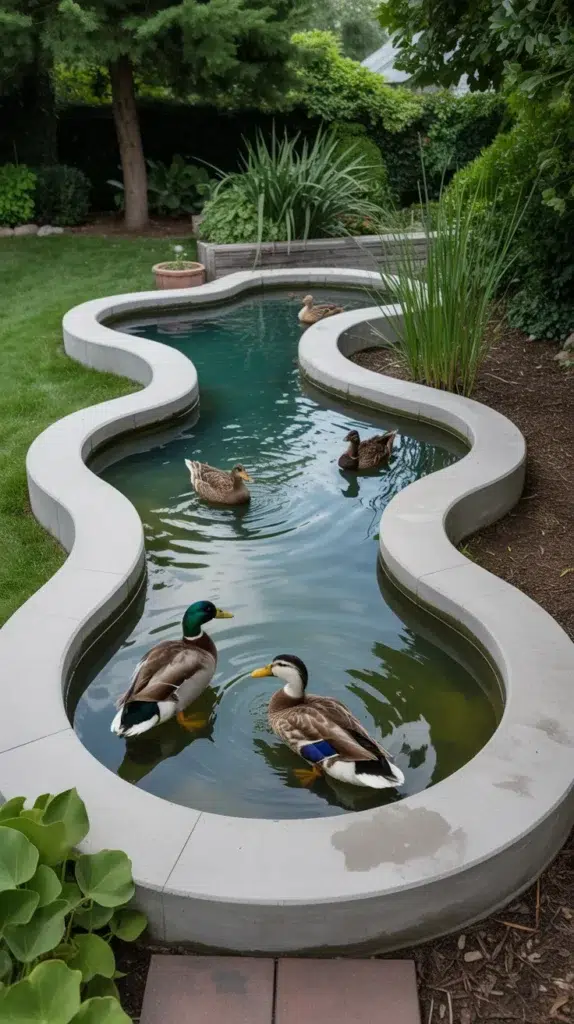
For a permanent, incredibly durable backyard duck pond, concrete is the ultimate material.
While it’s a more advanced DIY project, it allows you to create any shape and size you can imagine, with built-in ramps, steps, and planting shelves.
The process involves excavating the hole, building a rebar framework, and then pouring or hand-packing the concrete.
Once cured, the concrete must be sealed with a pond-safe sealant to make it waterproof and prevent lime from leaching into the water, which can be harmful to ducks.
To keep the water circulated and add a pleasant sound, a simple fountain can be added.
A floating fountain like the {OASE Floating Fountain with Lights} is a great option as it requires no complex installation and helps to aerate the water.
12. The Multi-Pond System
Why have just one pond? A multi-pond system can be both beautiful and practical. You can have a main swimming pond for the ducks, which is designed for easy cleaning.
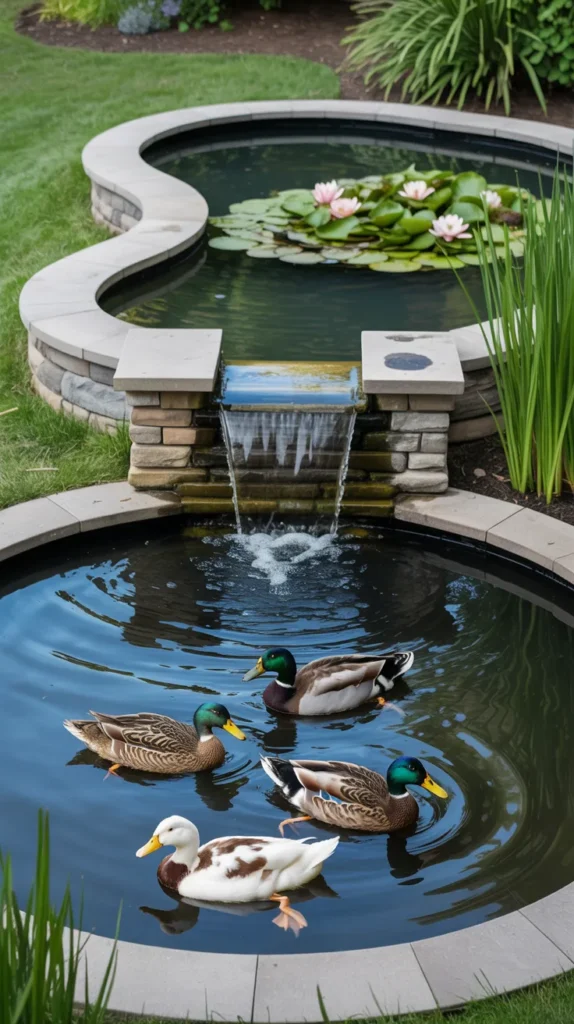
This pond can then overflow into a secondary, “duck-free” pond that is heavily planted.
This second pond can be a beautiful water garden with delicate plants and even small fish, as it receives nutrient-rich water from the duck pond but is protected from the ducks themselves.
A pump can circulate water from the plant pond back to the duck pond. This creates a visually interesting, multi-level feature that gives you the best of both worlds.
Monitoring the health of your plants is key. A simple plant food like the {API Pond Aquatic Plant Food Tablets} can be used in the plant-only pond to ensure your water lilies and other botanicals get the nutrients they need to thrive.
Recommended Products for Your Duck Pond Project
The right tools and supplies will make your backyard duck pond project a success. Here is a quick summary of the helpful products mentioned in our ideas.
| Product Name | Brand | Best For |
|---|---|---|
| Heavy Duty Spray Nozzle | Gorilla Grip | Quickly rinsing and refilling kiddie pool ponds |
| 45mil EPDM Pond Liner | Firestone | Creating a durable, custom-shaped in-ground pond |
| External Pond Pump | Sequence | Powering a large bog filter with duck-mucky water |
| Pond Skimmer Net | TETAKE | Clearing leaves and debris from a pond and stream |
| Floating Fountain with Lights | OASE | Adding easy aeration and beauty to a concrete pond |
| Pond Aquatic Plant Food Tablets | API | Fertilizing plants in a “duck-free” secondary pond |
Your Garden Oasis Awaits
Creating a backyard duck pond is one of the most rewarding projects you can do for your feathered friends and for your own enjoyment.
A pond provides your ducks with an essential outlet for their natural behaviors, keeping them clean, healthy, and endlessly entertained. For you, it becomes a beautiful, living water feature that brings sound, movement, and a lot of personality to your garden.
We hope these 12 ideas have inspired you and shown you that a functional and beautiful duck pond is well within your reach.
Whether you start with a simple kiddie pool or build a large, naturalistic pond, the joy of watching your happy ducks splash and swim is immeasurable.
So pick a design that fits your space and budget, and get ready to create a delightful haven for your flock.
