There’s a simple, profound joy that comes from noticing the world outside your window.
It’s the thrill of seeing a flash of brilliant blue, the peace of listening to a morning song, and the quiet fascination of watching a tiny creature build its world.
Starting a journey into backyard birds watching is like opening a door to a secret, bustling universe that has been there all along, just waiting to be discovered.
But if you’re just getting started, it can feel a little overwhelming. A flurry of brown and gray birds might all look the same, and you might wonder how anyone tells them apart.
The secret is that with a little guidance, you can quickly learn to identify the unique and beautiful species that call your neighborhood home.
Each one has its own look, voice, and fascinating story.
This guide is your personal invitation to the delightful hobby of backyard birds watching.
We will introduce you to 15 common and captivating species you can find right in your own yard.
You’ll learn the key features to look for, the sounds to listen for, and the simple things you can do to attract them.
Get ready to turn casual glances into moments of genuine connection and transform your backyard into a stage for nature’s most enchanting show.
Getting Started with Backyard Birds Watching
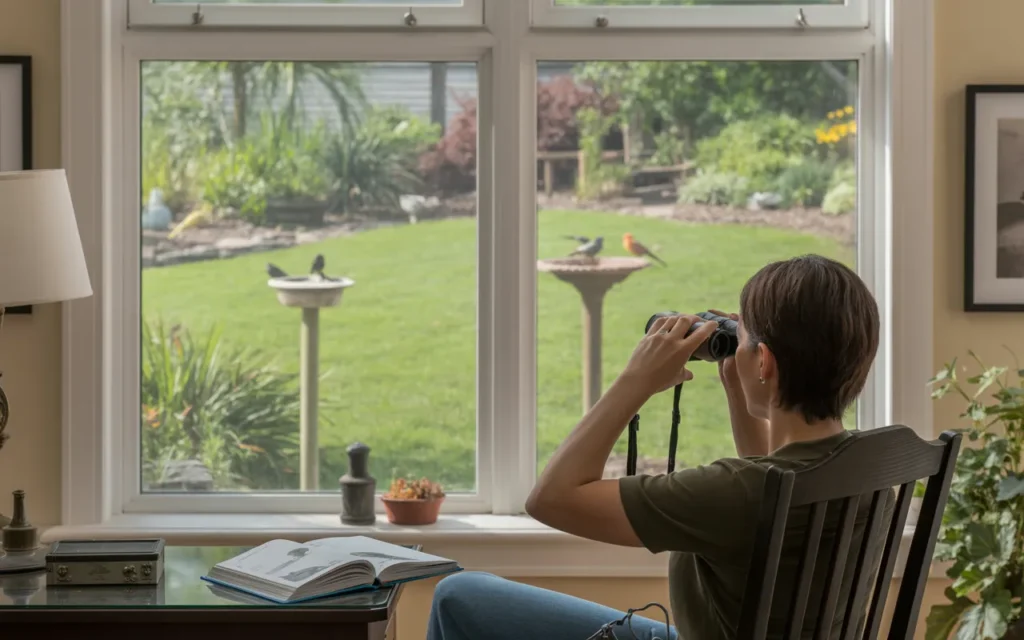
The best part about this hobby is that you don’t need much to begin. Your most important tools are your own eyes and ears.
However, a few simple things can greatly enhance your experience and help you identify more birds.
- A Good Field Guide: While apps are great, a physical field guide for your specific region is an invaluable tool. It allows you to flip through pages and compare similar-looking species. The {Sibley Birds East or West Guide} (depending on your location) is widely considered the gold standard, with beautiful, detailed illustrations.
- A Pair of Binoculars: Birds are small and often shy. Binoculars bring them “closer,” allowing you to see crucial details like eye rings, wing bars, and beak shape that are key to identification. You don’t need a high-powered, expensive pair to start. A model like the {Celestron Nature DX 8×42 Binoculars} is a fantastic choice for beginners, offering a bright, clear image at an affordable price.
- A Journal: Keeping a simple list of the birds you see, where you saw them, and the date is a wonderful way to track your progress. You’ll be amazed at how your life list grows over time!
With these tools in hand, you’re ready to start observing. Here are 15 fascinating species to look for.
15 Fascinating Species for Your Backyard Birds Watching Adventure
This list covers some of the most common and beloved birds found across North America. Learning to identify them will give you a fantastic foundation for your new hobby.
1. Northern Cardinal
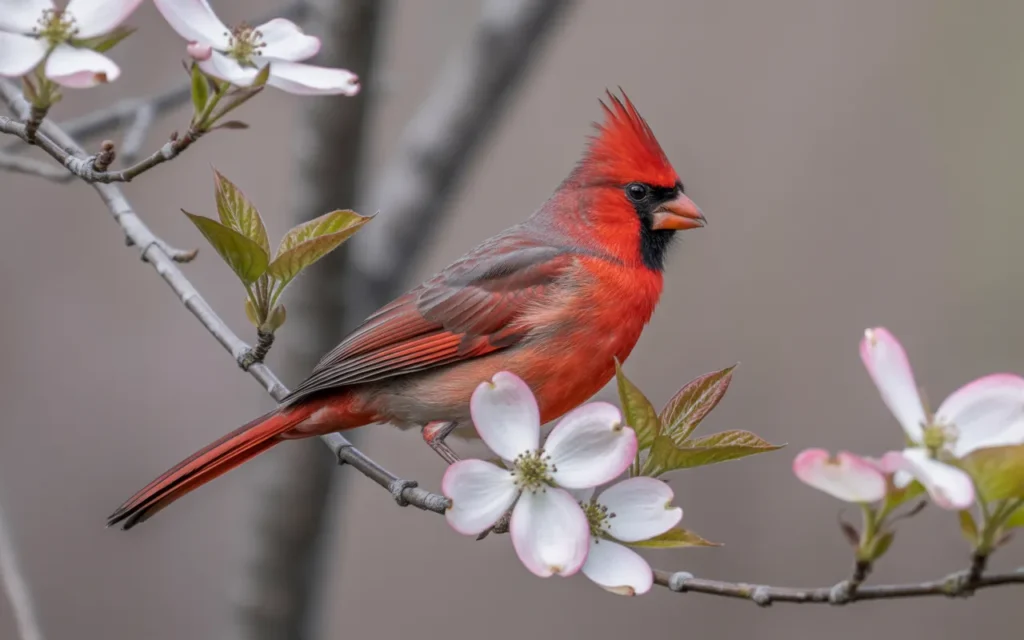
The Northern Cardinal is a superstar of the backyard. The male is a breathtaking, fiery red from the tip of his crest to the end of his tail, with a neat black mask.
The female is a more subtle but equally beautiful warm-tan with red accents.
Their presence is a gift year-round, but they are especially stunning against a fresh winter snow. They are a perfect first bird for any aspiring watcher.
- What to Observe: Notice how the male’s color seems to glow in the morning light. Watch how they use their thick, powerful, cone-shaped beak to crack open tough seeds like sunflower and safflower. Listen for their loud, whistling cheer, cheer, cheer or birdie, birdie, birdie song.
- How to Attract Them: Cardinals are ground feeders by nature, so they are most comfortable on sturdy, stationary feeders.
They love black oil sunflower seeds and safflower seeds offered in a hopper feeder, a platform feeder, or a tube feeder with a large tray. A squirrel-proof feeder like the {Brome Squirrel Buster Plus} is excellent for ensuring the cardinals get the seed, not the squirrels.
2. Black-Capped Chickadee
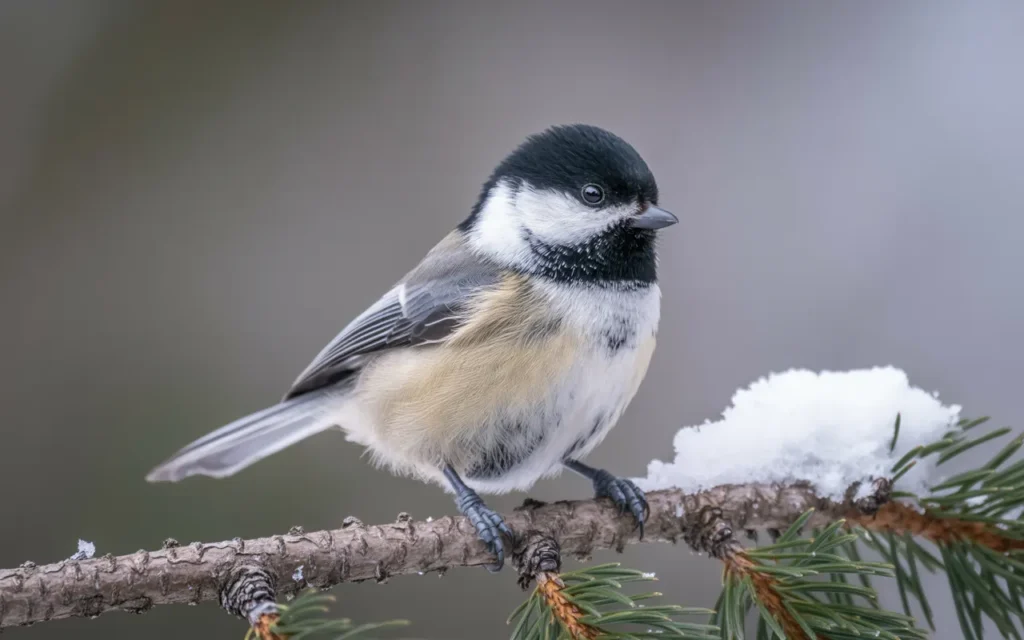
The Black-Capped Chickadee is the embodiment of cuteness and curiosity. This tiny, acrobatic bird has a round body, an oversized head with a neat black cap and bib, and bright white cheeks.
They are fearless and energetic, often being the first to explore a new feeder or perch near you. Their namesake chick-a-dee-dee-dee call is a familiar and friendly sound in the woods.
- What to Observe: Watch their amazing acrobatic skills as they hang upside down from branches and feeders. Observe their feeding behavior: they will grab a single seed, fly to a nearby “safe” branch, hold the seed between their feet, and hammer it open with their tiny beak. The more “dees” in their call, the more agitated or alarmed they are.
- How to Attract Them: Chickadees are easy to please. They love black oil sunflower seeds, suet, peanuts, and sunflower hearts. They will happily visit tube feeders, hopper feeders, and suet cages. They are often bold enough to use a window feeder, providing an incredible up-close observation opportunity.
3. American Goldfinch
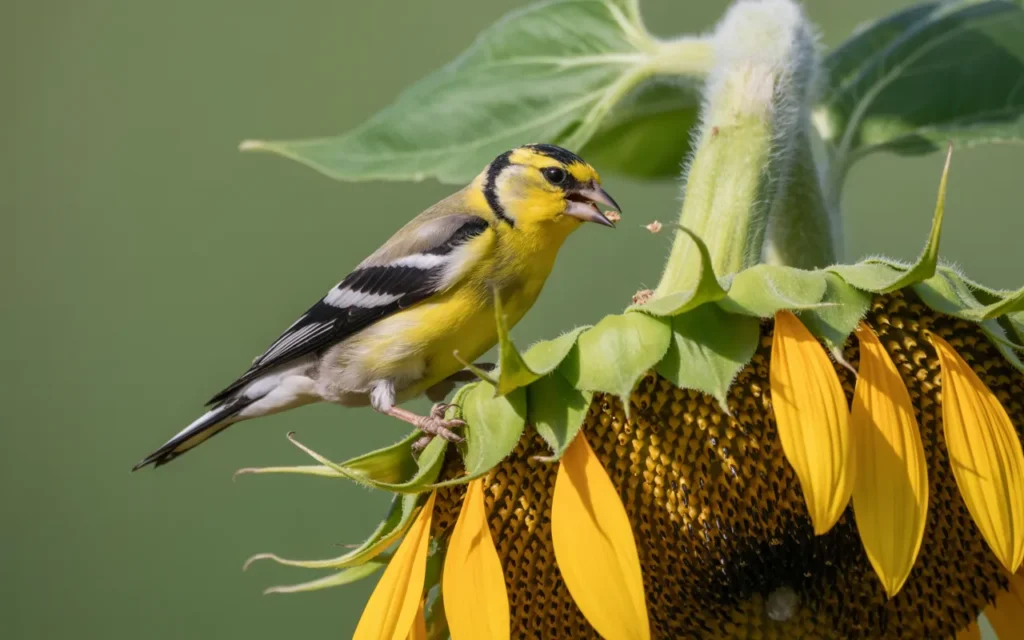
Often called “wild canaries,” American Goldfinches bring a splash of pure sunshine to the garden. In summer, the male is a dazzling lemon-yellow with a sharp black cap and black wings.
The female is a more subdued olive-green. They are very social birds, and their bouncy, undulating flight pattern and lively, twittering calls make a flock’s arrival a joyful event.
- What to Observe: Notice how they molt completely, changing from their bright summer colors to a much duller brownish-beige in the winter. Watch them deftly cling to flower heads like coneflowers and thistle, pulling out tiny seeds with their delicate beaks.
- How to Attract Them: Goldfinches are seed-eating specialists. To attract them in droves, offer Nyjer seed (a tiny, black, oil-rich seed) in a specialty feeder with tiny ports or a mesh sock.
They also love black oil sunflower seeds. Planting native thistles and coneflowers will provide a natural food source they adore. Using a quality seed like {Wagner’s Nyjer Seed} ensures it’s clean and appealing to them.
4. Downy Woodpecker
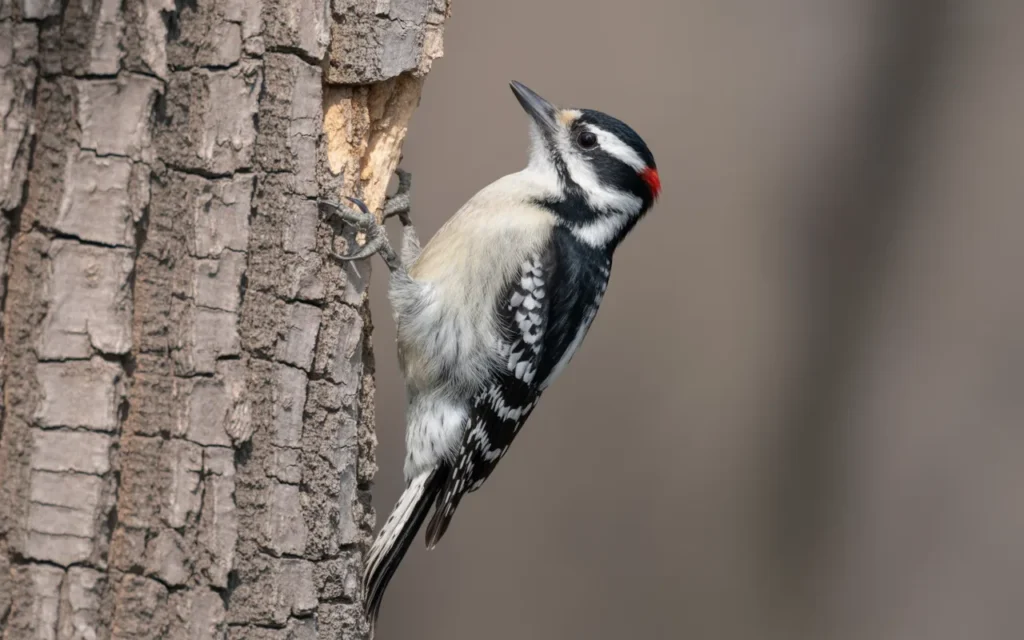
The Downy is the smallest and most common woodpecker you’ll find at your feeders. It’s a handsome black and white bird, with a white belly and a white stripe down its back.
Males sport a tiny, bright red patch on the back of their head. They are less shy than their larger cousins and will happily visit backyard feeders.
- What to Observe: Watch their unique way of moving, hitching up tree trunks and branches using their stiff tail feathers as a brace.
Observe their long, barbed tongue, which they use to extract insects from bark and suet from feeders. Compare it to the larger, but similarly patterned, Hairy Woodpecker (the Downy’s bill is much shorter and daintier, about half the length of its head).
- How to Attract Them: The absolute best way is to offer suet in a simple wire suet cage. Suet is a high-energy food that replaces the insects they would naturally eat. They will also eat sunflower seeds and peanuts. A basic but effective feeder like the {Stokes Select Suet Feeder} is all you need to bring them in.
5. Blue Jay
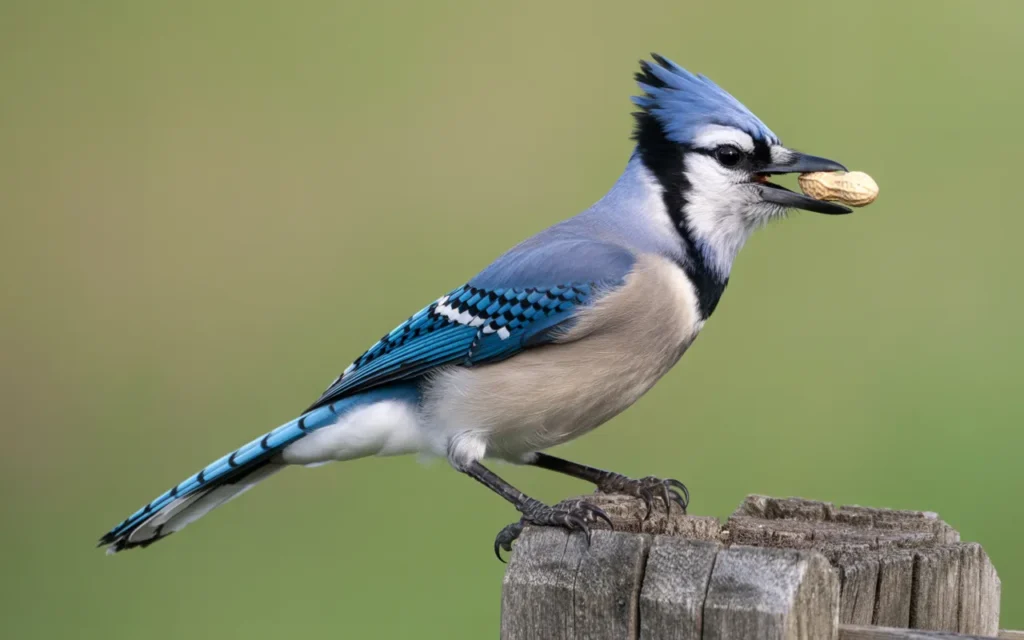
Blue Jays are large, strikingly beautiful, and famously intelligent. They are a complex mix of soft blue, brilliant cobalt, white, and black, with a large crest they can raise or lower depending on their mood.
They are members of the corvid family, known for their loud calls, complex social behaviors, and excellent memory.
- What to Observe: Listen to their incredible vocal range, from their harsh jay! jay! call to soft, gurgling “whisper songs” and even near-perfect imitations of Red-tailed Hawks. Watch their fascinating caching behavior: they will stuff multiple peanuts or acorns into a special throat pouch (gular pouch) to fly off and hide for later.
- How to Attract Them: Peanuts! Blue Jays go crazy for peanuts, both in and out of the shell. A dedicated peanut wreath or mesh feeder is a fantastic way to attract and observe them. They will also eat sunflower seeds and suet from large, sturdy platform feeders.
6. White-Breasted Nuthatch
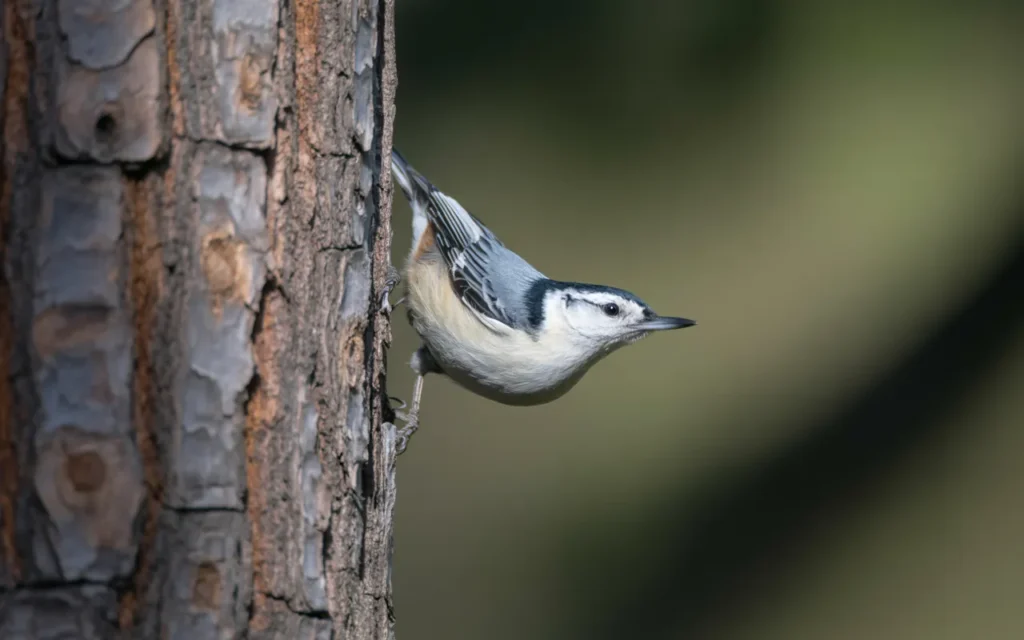
Nuthatches are the delightful upside-down birds of your backyard. The White-Breasted Nuthatch is a compact bird with a blue-gray back, bright white cheeks and belly, and a crisp black cap.
Their signature behavior is creeping down tree trunks headfirst, a unique foraging strategy that allows them to spot insects that upward-climbing birds might miss.
- What to Observe: Their unique headfirst descent down tree trunks is a must-see. Watch them take a large seed, like a sunflower seed, fly to a tree, and wedge it into a bark crevice. They then hammer it open with their long, thin bill—this “hatching” behavior is how they got their name. Listen for their nasal, repetitive yank-yank-yank call.
- How to Attract Them: Nuthatches are big fans of black oil sunflower seeds, peanuts, and especially suet. They are agile enough to use any feeder type, from tube feeders to suet cages hung on a tree trunk.
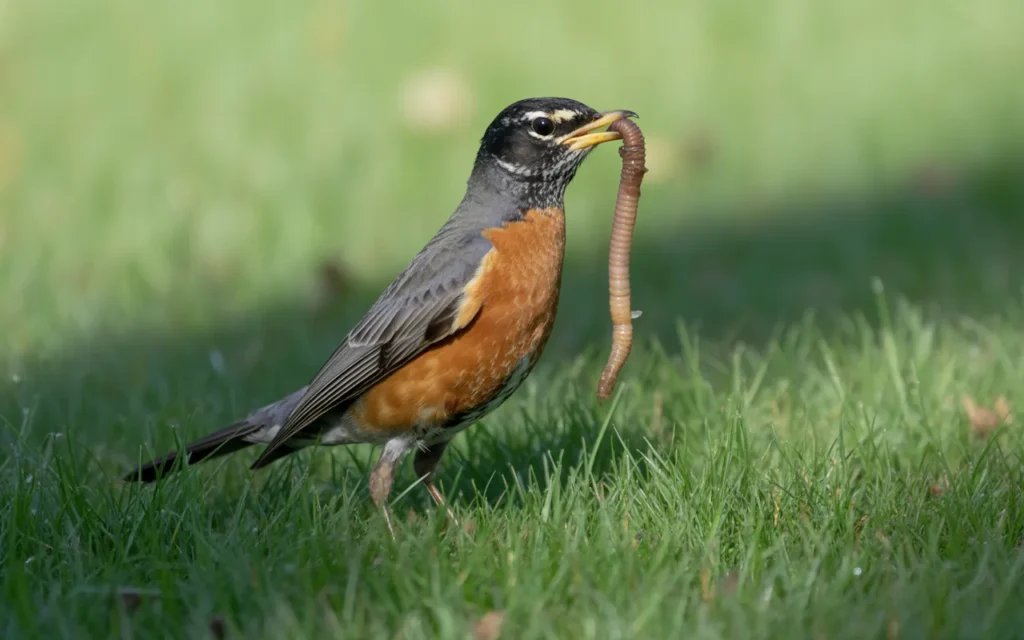
7. American Robin
The American Robin is a beloved harbinger of spring, known for its cheerful, caroling song. A large member of the thrush family, it has a warm, rusty-red breast, a sooty gray back, and a dark head.
While they are famous for their worm-pulling antics on lawns, they don’t eat seeds and won’t visit a typical feeder.
- What to Observe: Their classic foraging behavior: running a few steps on the lawn, stopping abruptly, cocking their head to the side, and then precisely pulling up an earthworm.
Contrary to popular belief, they are likely listening for the worms or feeling their vibrations, not seeing them. They also love to bathe, and watching a robin vigorously splash in a birdbath is pure joy.
- How to Attract Them: The number one way to attract robins is with water. A birdbath is an absolute magnet for them. For food, they love berries; planting native shrubs like dogwood or serviceberry is a long-term strategy.
For a special treat, offer live mealworms on a platform feeder. A heated birdbath, like the {Gesafe Heated Bird Bath}, is a game-changer in winter, attracting robins and many other species.
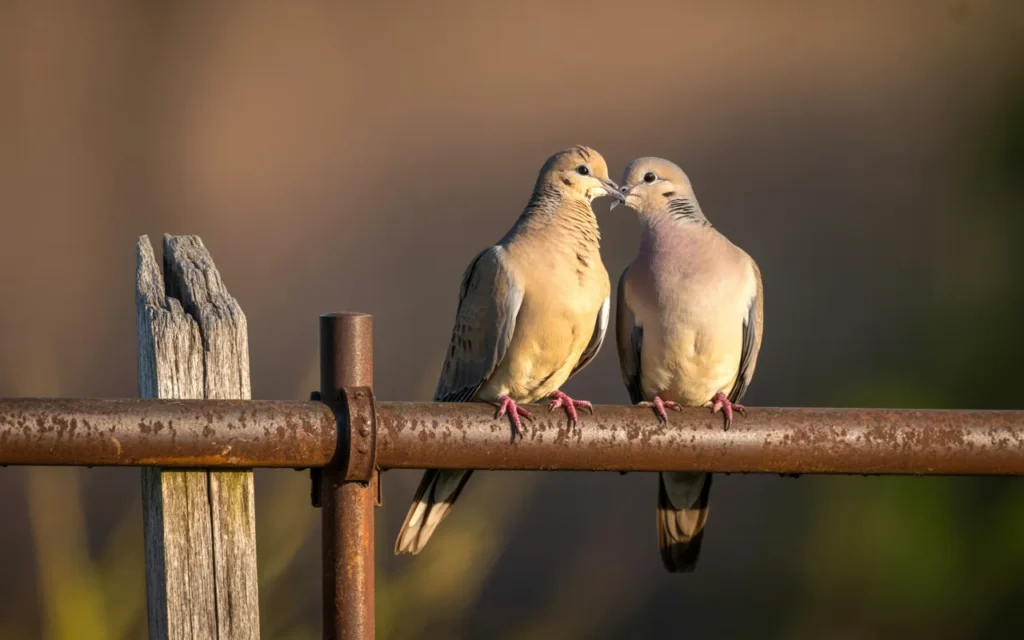
8. Mourning Dove
Mourning Doves are sleek, graceful birds with soft, fawn-colored feathers, a slender tail, and an iridescent patch on their neck that flashes pink and green in the right light.
They are named for their gentle, sorrowful-sounding song, a soft coo-OO-oo, coo, coo. They are almost always seen in pairs or small groups, foraging on the ground.
- What to Observe: Notice the distinctive whistling sound their wings make upon takeoff and landing—it’s a built-in alarm system for the flock. Watch their gentle, peaceful interactions. They are devoted mates, and you will often see pairs preening each other’s feathers.
- How to Attract Them: These birds are ground-feeders. They cannot cling to most feeders and prefer to eat on a flat, stable surface. They love white proso millet and cracked corn. You can attract them by scattering seed on the ground or by using a dedicated ground feeder or a large, pole-mounted platform feeder.
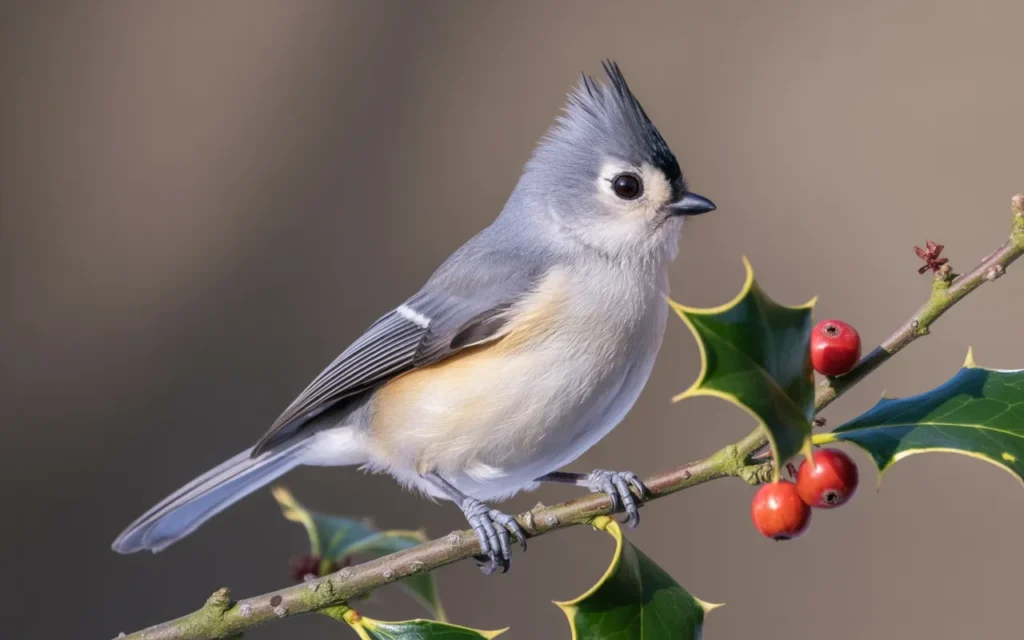
9. Tufted Titmouse
Full of personality and spunk, the Tufted Titmouse is a small gray bird with a dashing crest, large black eyes, and a wash of peachy-orange on its sides.
They are active, vocal, and social, often traveling in mixed flocks with chickadees and nuthatches. Their loud, clear, whistling peter-peter-peter call is a common sound in eastern woodlands.
- What to Observe: Watch their assertive behavior at the feeder. They will often fly in, grab the largest seed they can find (often a striped sunflower seed), and fly off to a branch to hammer it open. Observe how they use their crest—raising it when excited or agitated.
- How to Attract Them: Titmice are not picky. They enjoy sunflower seeds, suet, and shelled peanuts. They are bold and will visit any type of feeder, from hanging tube feeders to window-mounted ones, providing great observation opportunities.
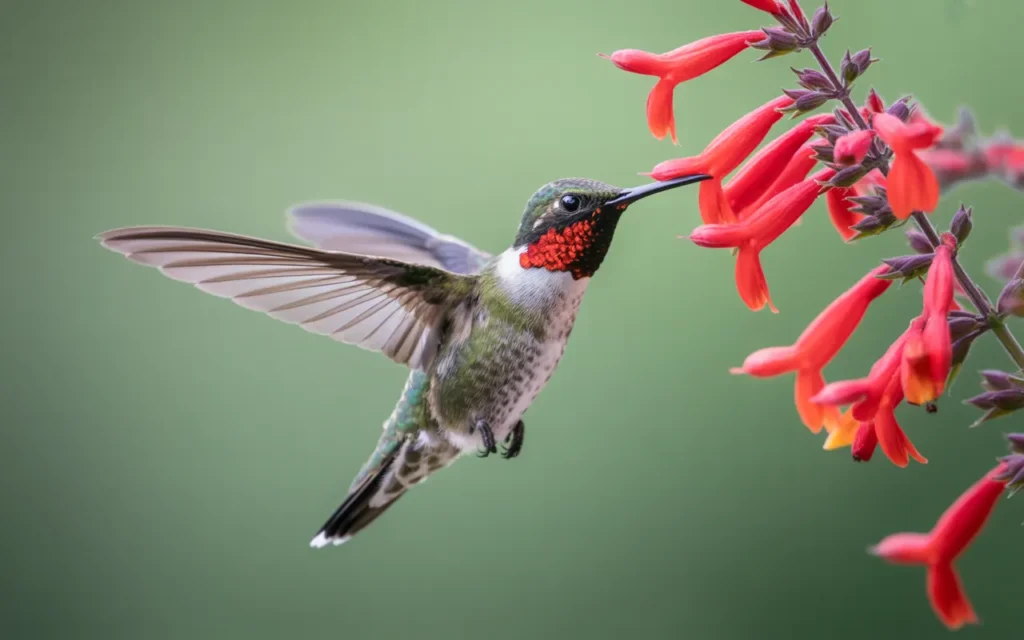
10. Ruby-Throated Hummingbird
The Ruby-Throated Hummingbird is a tiny, iridescent marvel and the only hummingbird species that breeds in the eastern half of North America.
The male has a metallic green back and a stunning, fiery red throat (gorget) that can flash like a jewel in the sun or look black in shade. The female is plainer, with a white throat. Their aerial acrobatics are a wonder to behold.
- What to Observe: Everything! Watch them hover, fly backwards, and engage in spectacular high-speed chases. Try to catch the flash of the male’s gorget as he turns his head in the sun. Listen for the high-pitched buzz of their wings, which can beat over 50 times per second.
- How to Attract Them: Plant red, tubular flowers like bee balm, cardinal flower, and trumpet vine. Supplement this with a hummingbird feeder filled with a simple 4:1 solution of water and plain white sugar (no red dye needed!).
Cleanliness is paramount; the feeder must be cleaned every 2-3 days in hot weather. A set of {Feeder Cleaning Brushes} is an absolutely essential tool for this.
11. House Finch
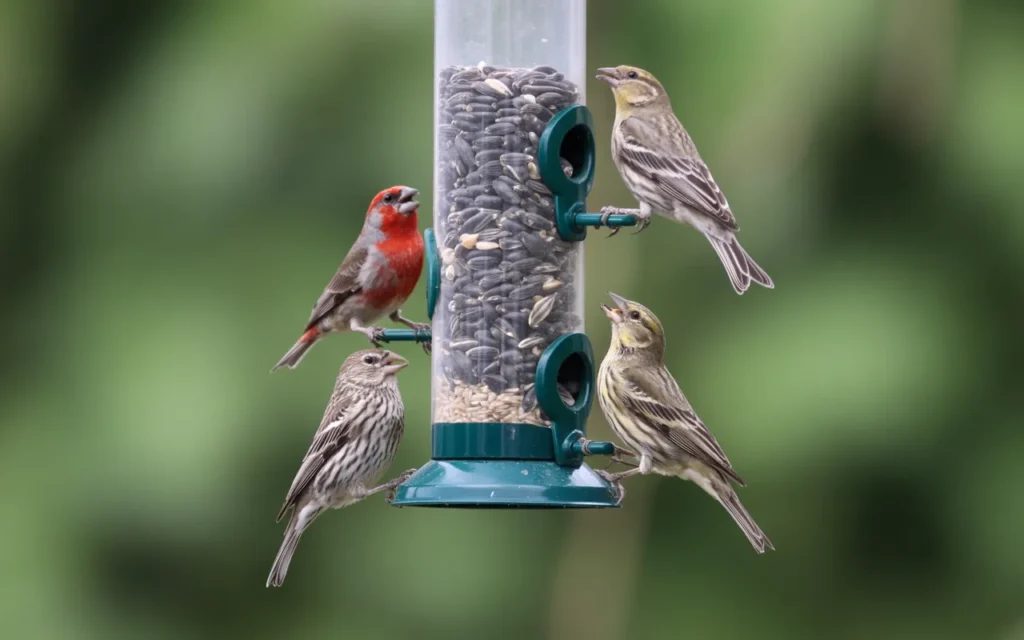
The House Finch is a cheerful, social bird that has become a common sight at feeders across the continent.
The male has a rosy-red head, breast, and rump, contrasting with his streaky brown body. The female is plain, streaky brown all over. They have a bubbly, warbling song and often gather in large, chatty flocks.
- What to Observe: Look closely at the male’s coloration—it can range from pale orange to deep purple-red depending on his diet. The more carotenoid-rich foods he eats, the redder he becomes, which makes him more attractive to females. Watch the flock dynamics at a busy feeder.
- How to Attract Them: They are primarily seed-eaters and love black oil sunflower seeds and Nyjer seeds. Because they are so social, they prefer feeders that can accommodate a group, such as large hopper feeders, platform feeders, or long tube feeders with multiple perches.
12. Eastern Bluebird
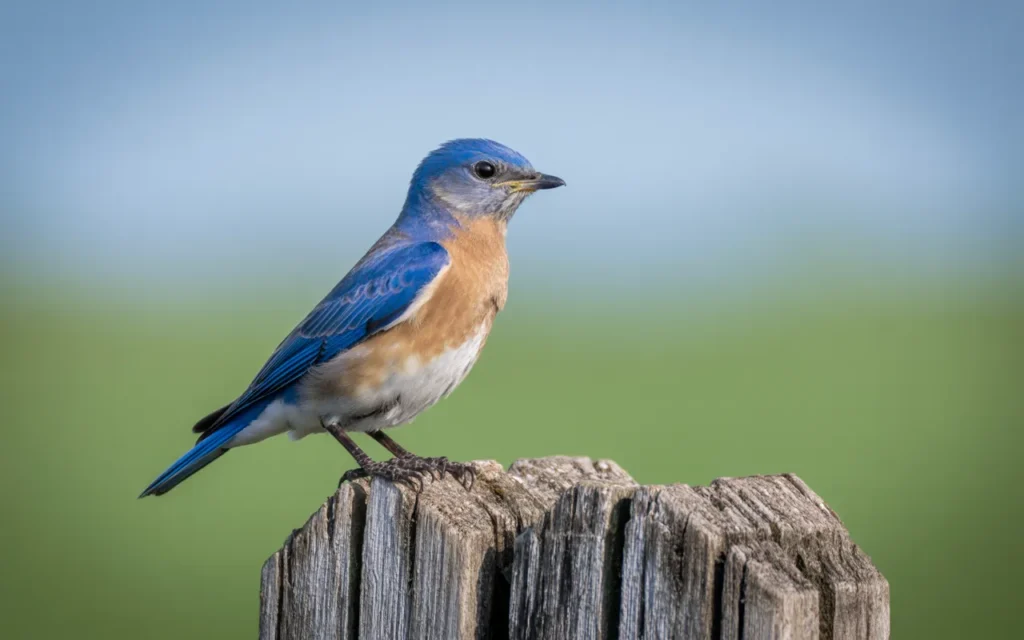
Catching a glimpse of an Eastern Bluebird is a true delight. The male is a vivid, sky-blue above with a warm, rusty-orange breast.
The female is a more muted grayish-blue. They are often seen perched on fence posts or wires in open, grassy areas, scanning the ground for insects.
Their populations have made a remarkable comeback thanks to conservation efforts and nest box campaigns.
- What to Observe: Watch their hunting technique: they perch, spot an insect on the ground, and then gracefully drop down to catch it. In the fall, watch them switch their diet to berries, often gathering in large family flocks.
- How to Attract Them: Bluebirds don’t eat seeds. The best way to attract them is by offering live or dried mealworms on a platform feeder. Even more importantly, you can provide a safe nesting site by mounting a properly designed bluebird house in an open area of your yard. A box like the {Nature’s Way Bluebird House} is built to their specific needs.
13. Song Sparrow
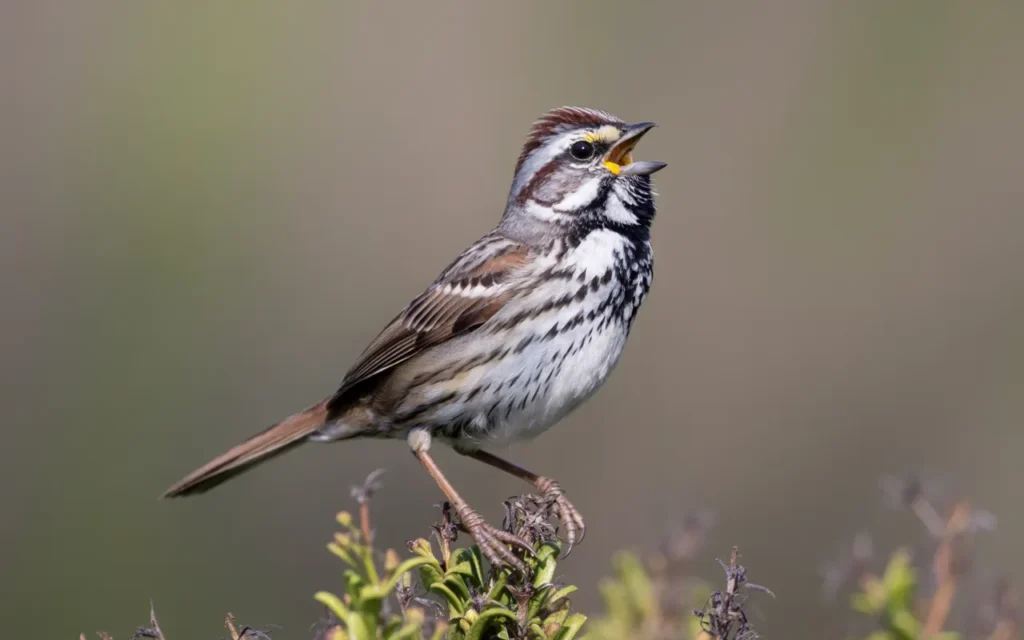
They may be a “little brown bird,” but the Song Sparrow is one of our most accomplished vocalists. They are a streaky brown sparrow, but their key identifying mark is the coarse brown streaks on their white chest that converge into a distinct dark spot, like a tie-tack. Their beautiful and complex song is a staple of spring mornings.
- What to Observe: Once you learn to recognize their song, you’ll hear them everywhere. Listen for a song that starts with a few clear notes followed by a jumbled, buzzy trill. Watch them forage on the ground, using a “double-scratch” move where they hop forward and then kick back with both feet to uncover seeds and insects.
- How to Attract Them: As ground-foragers, they appreciate seed scattered on the ground or in a low tray feeder. They enjoy a mix of millet and sunflower seeds. Providing low, dense shrubbery will give them the safe cover they love.
14. Carolina Wren
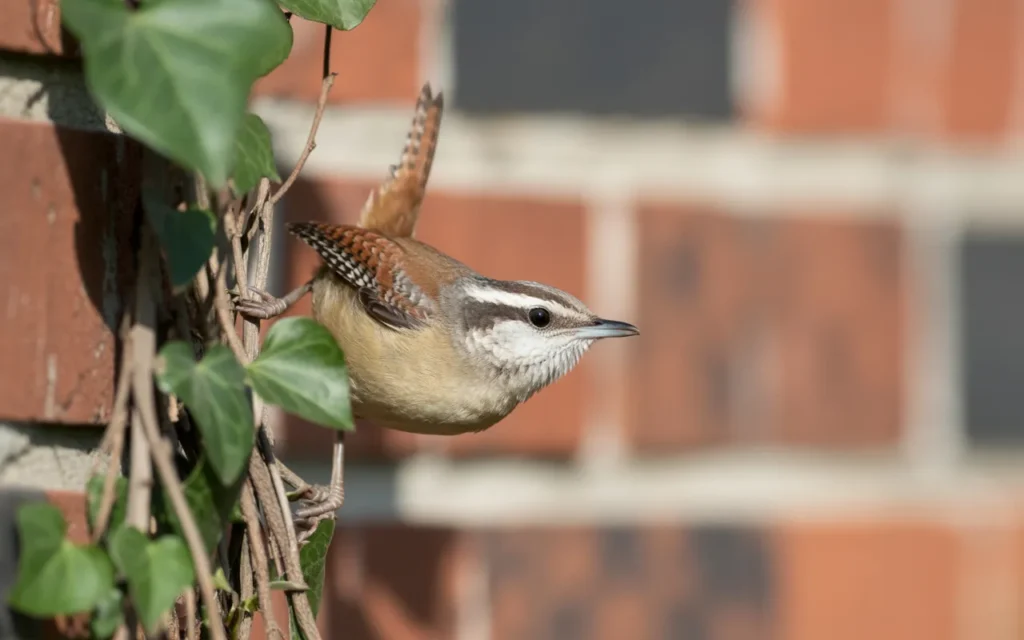
The Carolina Wren is a tiny bird with a larger-than-life personality. It’s a rich, cinnamon-brown color with a striking white eyebrow stripe and a long tail that it often holds cocked straight up over its back.
For such a small bird, it has an astonishingly loud voice, belting out a rich, rolling teakettle-teakettle-teakettle song year-round.
- What to Observe: Watch their energetic, almost frantic foraging style. They love to explore every nook and cranny, creeping through brush piles, investigating woodpiles, and even exploring garages and porches. Notice how their tail is almost always cocked up at a jaunty angle.
- How to Attract Them: These are primarily insect-eaters. They will be most attracted to a yard with lots of cover, like dense shrubs and brush piles. They are also big fans of suet and will readily visit a suet feeder, especially in winter.
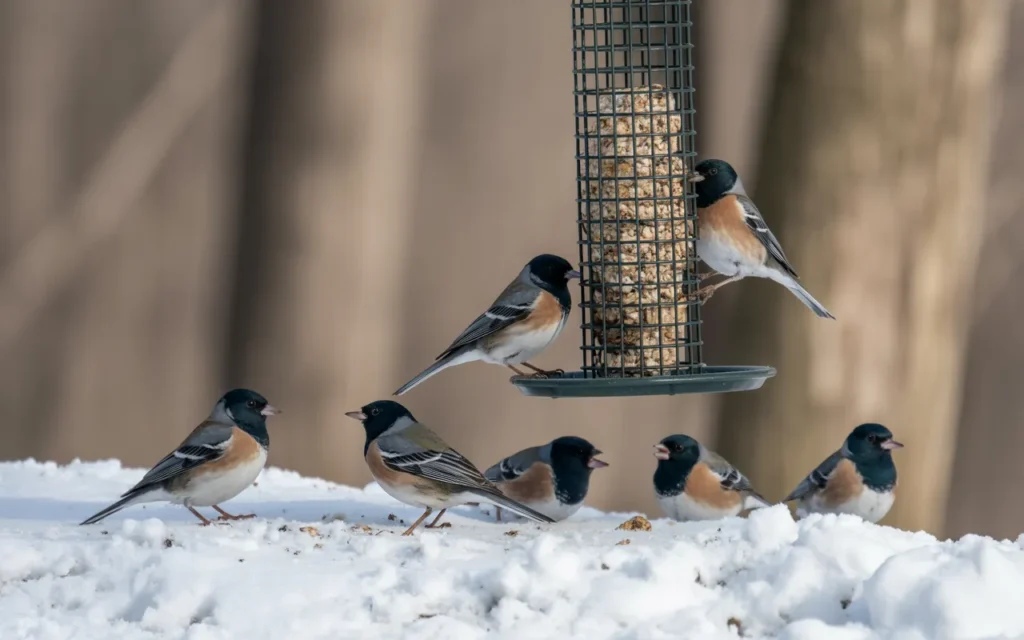
15. Dark-Eyed Junco
For many, the arrival of the Dark-Eyed Junco signals that winter is truly on its way. Often called “snowbirds,” these crisp little sparrows typically show up in the fall and stay through the spring.
They have a neat gray or dark brown “hood,” a white belly, and white outer tail feathers that flash conspicuously when they fly.
- What to Observe: The flashing of their white tail feathers is a key field mark, especially when a flock is startled and flies up from the ground. Watch them forage on the ground with a quick hopping motion. There are several regional variations, so the color of their “hood” and sides can vary from slate-gray to brown to pinkish-brown.
- How to Attract Them: Juncos are ground feeders, plain and simple. They will happily eat the seeds spilled from your other feeders. To cater to them directly, scatter white proso millet on the ground or in a low tray feeder—it’s their favorite.
Recommended Products for Backyard Birds Watching
Here is a quick-reference table of the helpful tools and products mentioned to enhance your bird-watching experience.
| Product Name | Brand | Key Benefit |
|---|---|---|
| {Sibley Birds East or West Guide} | Sibley | The definitive, beautifully illustrated guide for bird identification. |
| {Celestron Nature DX 8×42 Binoculars} | Celestron | A high-quality, beginner-friendly binocular for clear viewing. |
| {Brome Squirrel Buster Plus} | Brome | A highly effective squirrel-proof feeder to save seed for the birds. |
| {Stokes Select Suet Feeder} | Stokes Select | The essential, simple feeder for attracting woodpeckers and more. |
| {Gesafe Heated Bird Bath} | Gesafe | Provides a vital source of open water for birds in winter. |
| {Feeder Cleaning Brushes} | Various | A crucial tool for safely maintaining your hummingbird feeder. |
| {Nature’s Way Bluebird House} | Nature’s Way | A properly designed nest box to attract beautiful bluebirds. |
Conclusion: Your Adventure Begins Now
The world of backyard birds watching is a world of endless discovery. Every day can bring a new sighting, a new song, or a new behavior to observe.
It’s a hobby that costs very little to start but pays you back with a priceless sense of connection to the natural world. It encourages you to slow down, to look closely, and to appreciate the intricate beauty that is all around you.
You don’t need to be an expert to find joy in it. Start by learning one bird. Get to know the Northern Cardinal.
Then, add the Chickadee. Before you know it, your backyard will no longer be a blur of feathers but a familiar community of fascinating individuals. The adventure is waiting just outside your window. All you have to do is look.
