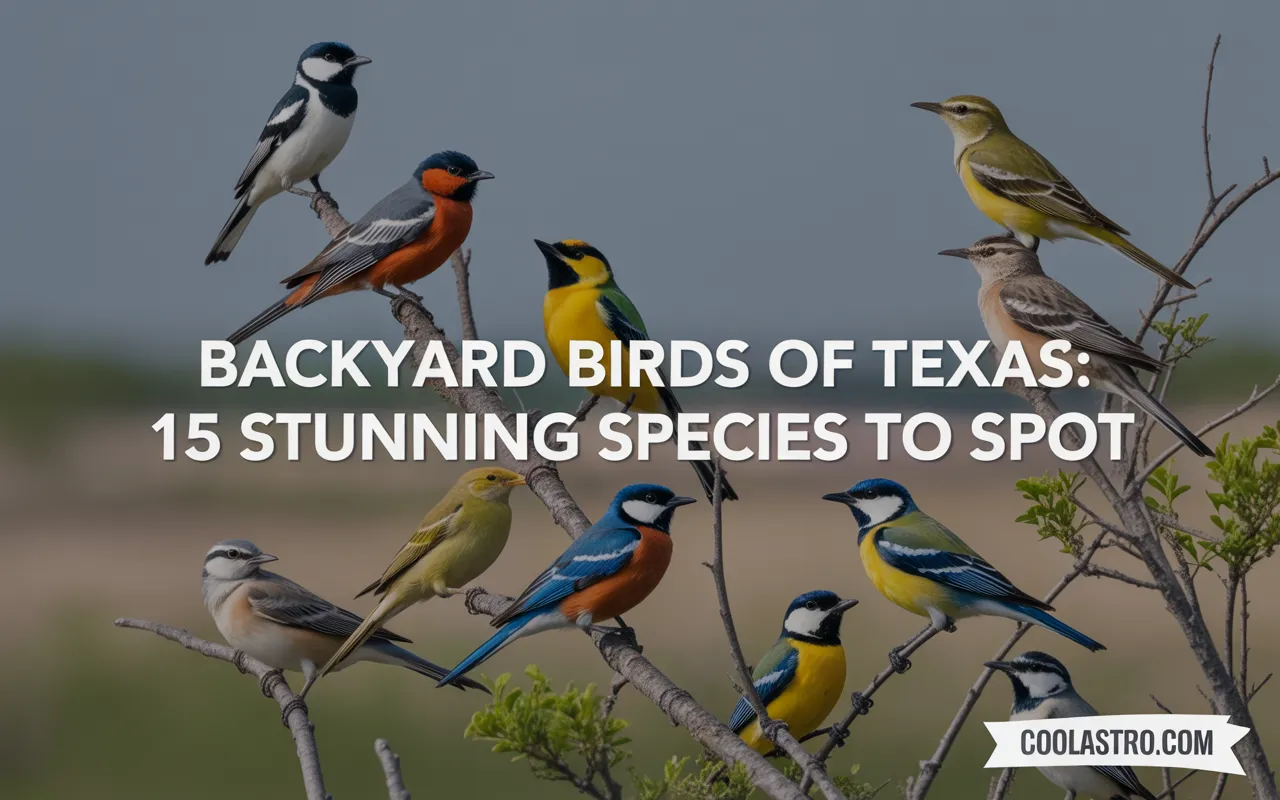
Texas is a paradise for bird lovers. Its vast size and diverse landscapes, from piney woods in the east to deserts in the west, make it a hotspot for an incredible variety of birds.
You don’t even have to travel far to see them; many stunning species can be found right in your own backyard.
Turning your yard into a welcoming spot for feathered friends is a simple joy. With a little knowledge about who might visit, you can better appreciate the flurry of color and song outside your window.
This guide is here to introduce you to some of the most common and captivating backyard birds of Texas.
We’ll look at 15 stunning species you’re likely to spot, from the fiery red Northern Cardinal to the electric-blue Painted Bunting.
Get ready to meet your new neighbors and discover the vibrant world of Texas birdwatching.

1. Northern Cardinal
The Northern Cardinal is an icon of the American backyard, and Texas is no exception. The male’s brilliant, all-over red plumage makes him impossible to miss, especially against a green lawn or a snowy backdrop.
Females are lovely too, with warm, olive-brown feathers and touches of red on their crest, wings, and tail.
These birds are year-round residents and are often the first and last to visit feeders each day. .
They love black-oil sunflower seeds, so filling a sturdy feeder like the {Brome Squirrel Buster Standard Wild Bird Feeder} is a surefire way to attract them. Their cheerful, whistling songs are a staple of neighborhood soundscapes.

2. Blue Jay
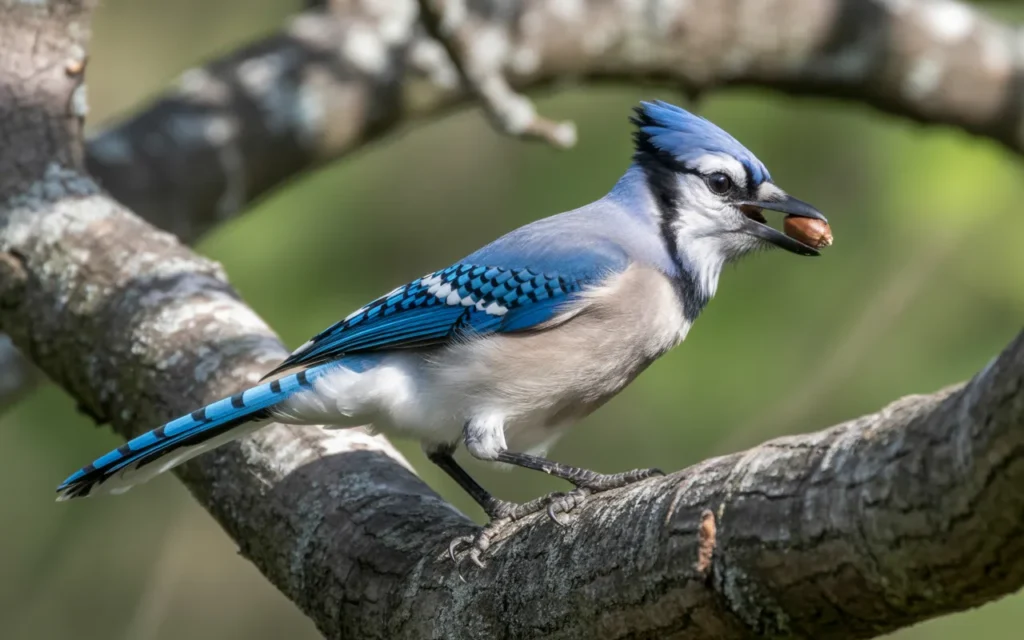
Loud, intelligent, and strikingly beautiful, the Blue Jay is a common sight among the backyard birds of Texas.
Their mix of blue, white, and black feathers, along with a perky crest, makes them one of the most handsome birds around. They are known for their boisterous calls but can also make a surprising variety of softer sounds.
Blue Jays are omnivores and have a particular fondness for acorns. In your backyard, they’ll happily visit platform feeders or the ground below to pick up larger seeds and nuts. They are highly intelligent and known for their complex social systems and tight family bonds.
3. Painted Bunting
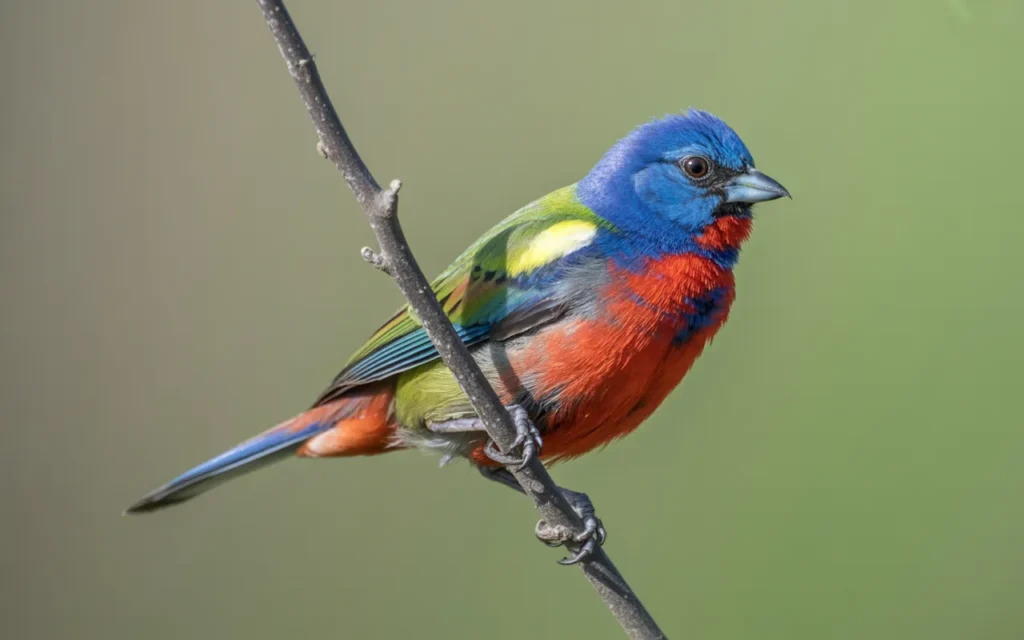
Often called the most beautiful bird in North America, the male Painted Bunting is a breathtaking sight. His plumage is a dazzling combination of a blue head, green back, and red rump and belly.
Females and young birds are a uniform, bright yellow-green. Spotting a male for the first time is an unforgettable experience.
These birds are summer visitors to Texas, breeding throughout the state.
They are shy and can be a bit harder to attract than other birds. They prefer feeders with white millet seed placed in or near low, dense shrubbery where they feel safe.
4. Mourning Dove
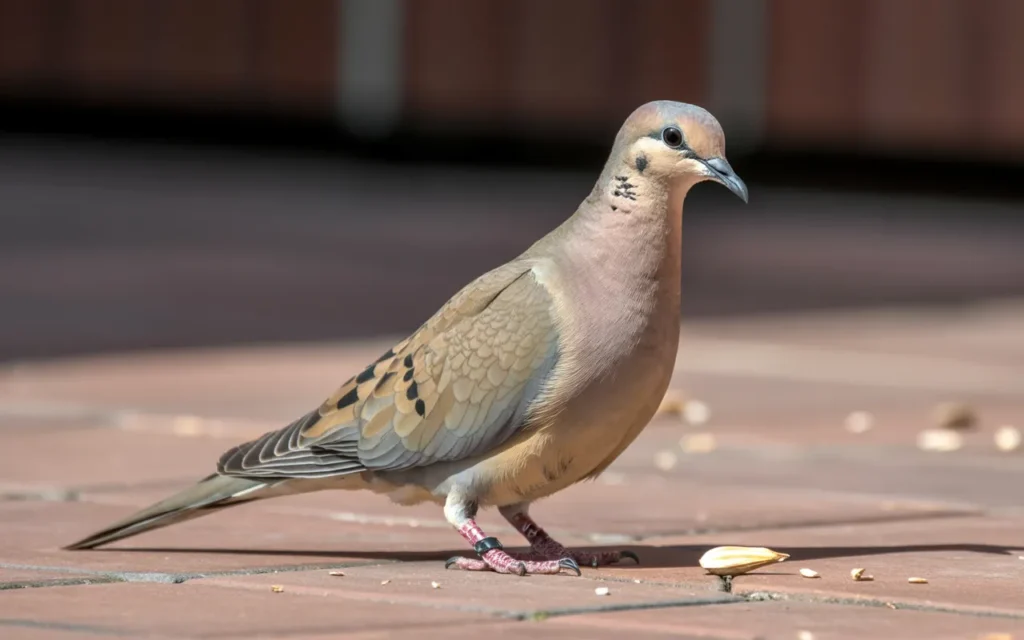
The gentle cooing of the Mourning Dove is a familiar and peaceful sound in Texas backyards. These graceful birds are recognized by their soft, fawn-colored feathers, slender tails, and the iridescent patch on their necks that can flash pink and green in the sun.
Mourning Doves are ground feeders, so you’ll often see them walking around below your bird feeders, cleaning up spilled seeds. They particularly enjoy millet, cracked corn, and sunflower seeds.
To make them feel more at home, you can scatter some seeds directly on the ground or use a low platform feeder.
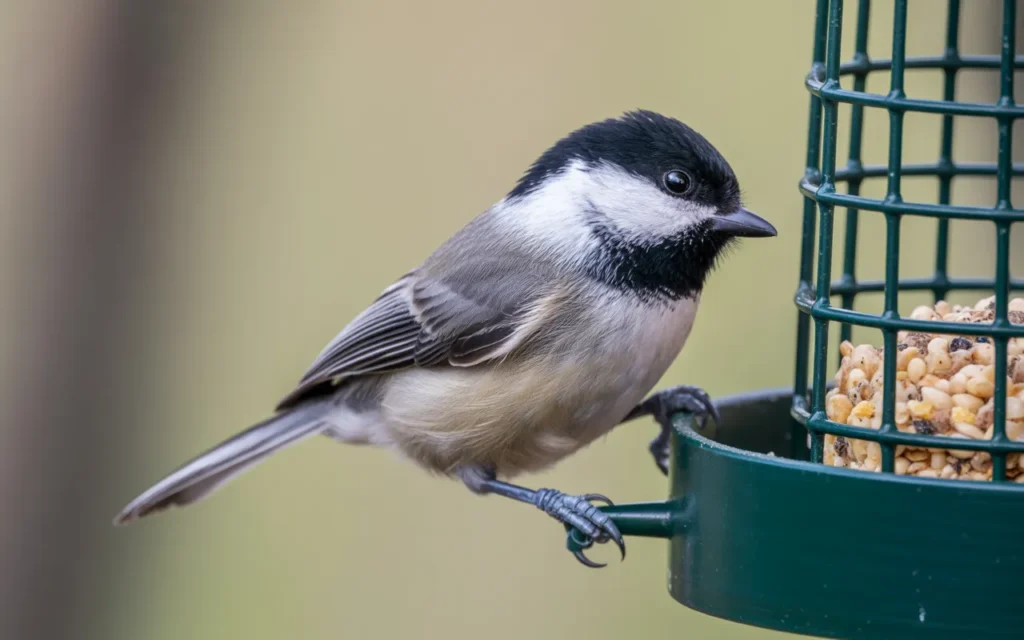
6. Carolina Chickadee
The Carolina Chickadee is a tiny, energetic bird with a big personality. You’ll recognize it by its black cap and bib, white cheeks, and soft gray back.
These acrobatic little birds are constantly on the move, flitting from branch to branch and often hanging upside down to inspect twigs for insects.
They are curious and can become quite tame, sometimes even taking seeds from a patient hand. To attract them, a simple tube feeder filled with black-oil sunflower seeds works perfectly.
The {Perky-Pet Panorama Wild Bird Feeder} is a great choice, allowing these small birds to perch and eat comfortably.
7. Tufted Titmouse
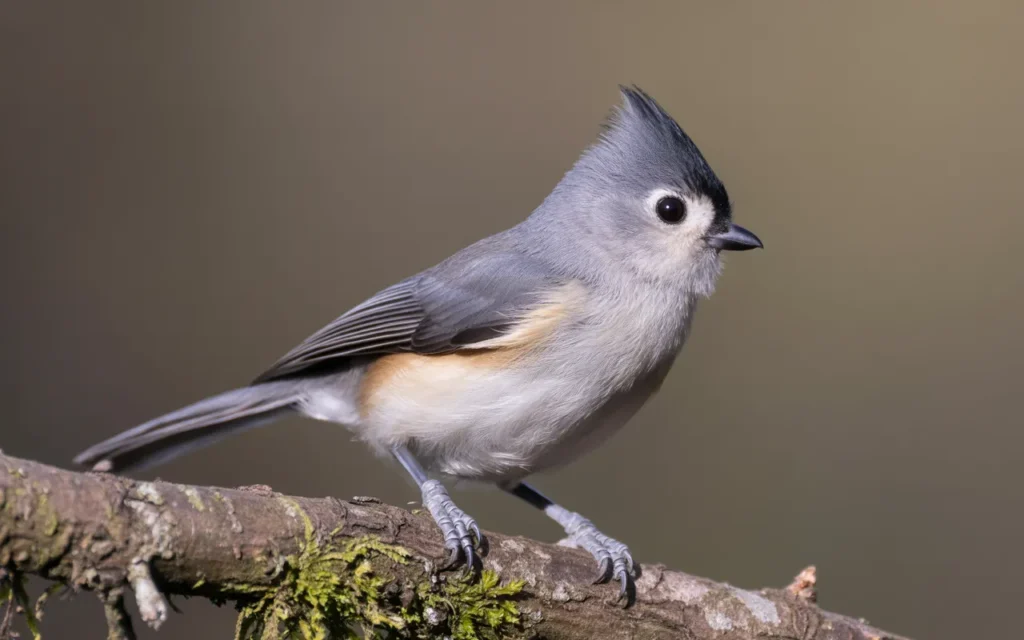
With its big black eyes, silvery-gray feathers, and perky crest, the Tufted Titmouse is an adorable and common visitor to Texas backyards.
These birds are bold and inquisitive, often seen traveling with chickadees, nuthatches, and woodpeckers in mixed-flock foraging groups.
They love sunflower seeds and suet. A Tufted Titmouse will typically fly to a feeder, grab a single seed, and fly back to a nearby branch to crack it open.
They are also cavity nesters and may use a birdhouse if you provide one with the right-sized entrance hole, such as the {Nature’s Way Cedar Wren House}, which is also suitable for titmice.
8. Carolina Wren
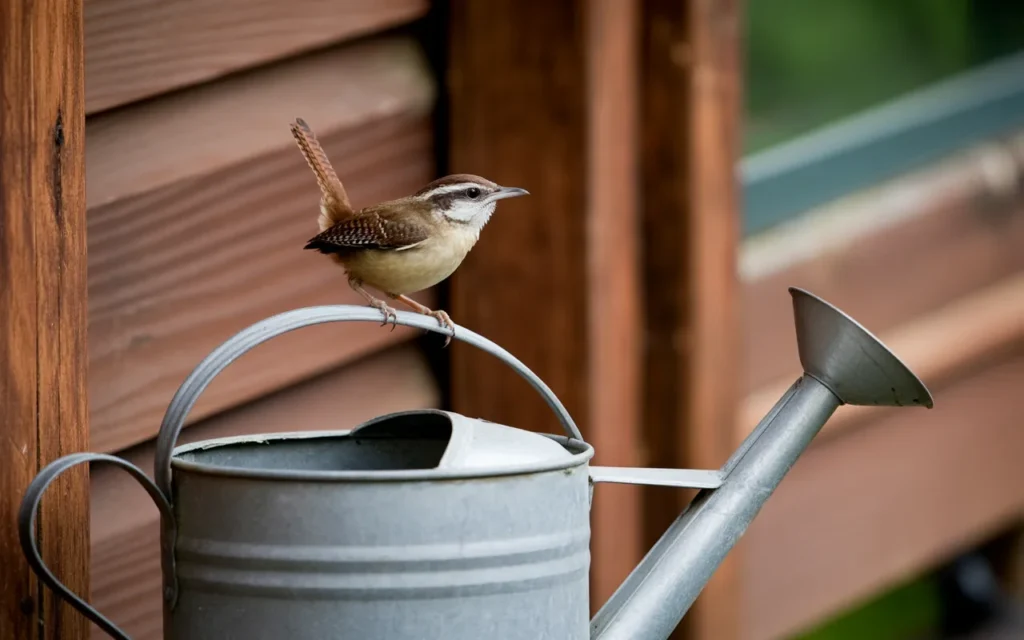
The Carolina Wren may be small, but its voice is mighty. You’ll likely hear this bird’s loud, rich song long before you see it.
These wrens are a warm, reddish-brown color with a distinct white eyebrow stripe and a long, curved beak perfect for probing into crevices for insects.
They are active and curious birds, often exploring woodpiles, brush piles, and potted plants on a porch. They love suet and peanut hearts offered in a feeder. Their bubbly personality and energetic antics make them a joy to watch.
9. Downy Woodpecker
The Downy Woodpecker is the smallest woodpecker in North America and a frequent visitor to backyard suet feeders.
It has a distinctive black and white checkered pattern, a white back, and a small red patch on the back of the male’s head.
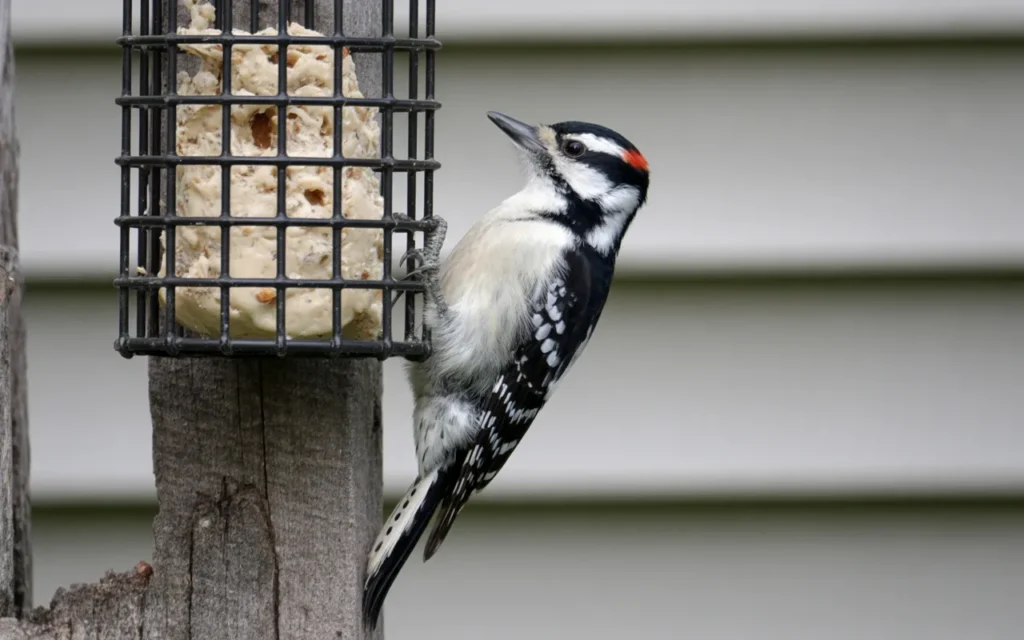
These birds are skilled at clinging to tree bark and feeder surfaces. They use their stiff tail feathers for support as they hitch their way up tree trunks, tapping to find insects. They absolutely love suet, and a simple suet basket like the {Stokes Select Suet Feeder} is the perfect way to offer this high-energy treat.
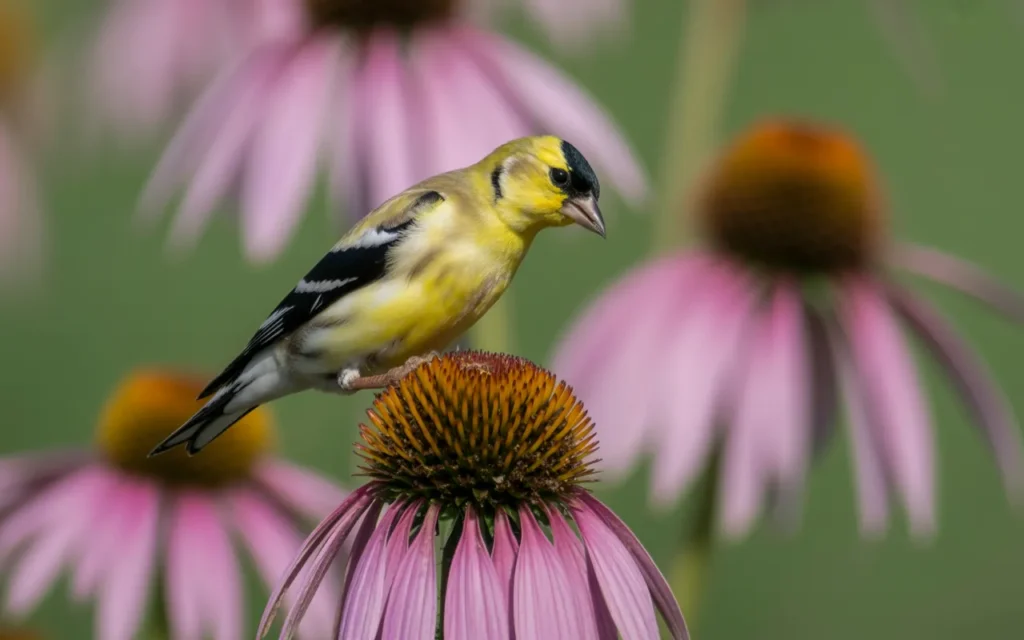
10. American Goldfinch
Sometimes called “wild canaries,” American Goldfinches bring a splash of brilliant yellow to Texas backyards. In the spring and summer, the males are a stunning, bright lemon-yellow with a black cap and black wings. Females are a more subdued olive-yellow.
These finches are specialists in eating small seeds. They are particularly fond of Nyjer (thistle) seed, so providing a dedicated thistle feeder is the best way to attract flocks of them. Watching them chatter and flutter around a feeder is a delightful sight.
11. Ruby-throated Hummingbird
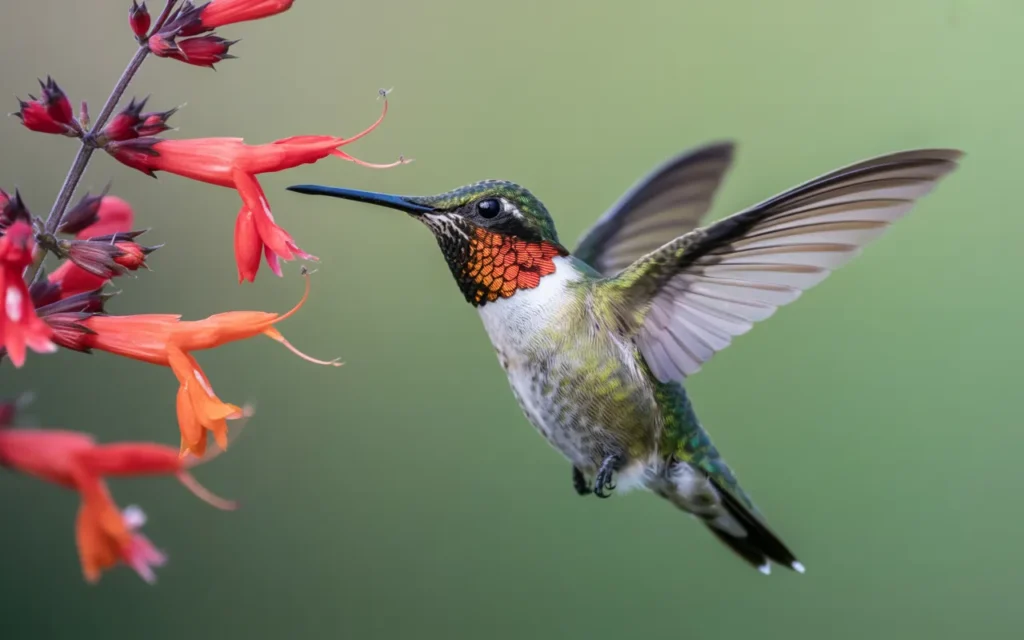
The Ruby-throated Hummingbird is a tiny, iridescent jewel that zips and hovers through gardens. Males have a brilliant, fiery-red throat (gorget) that can look black in certain light, while females have a plain white throat.
These are the most common hummingbirds east of the Rocky Mountains and are a highlight of the backyard birds of Texas.
To attract them, plant nectar-rich, tubular flowers like salvia, bee balm, and trumpet vine. A nectar feeder is also essential. The {First Nature Hummingbird Feeder} is a great, easy-to-clean option. Remember to fill it with a simple sugar-water solution (1 part sugar to 4 parts water) and avoid red dyes.
12. House Finch
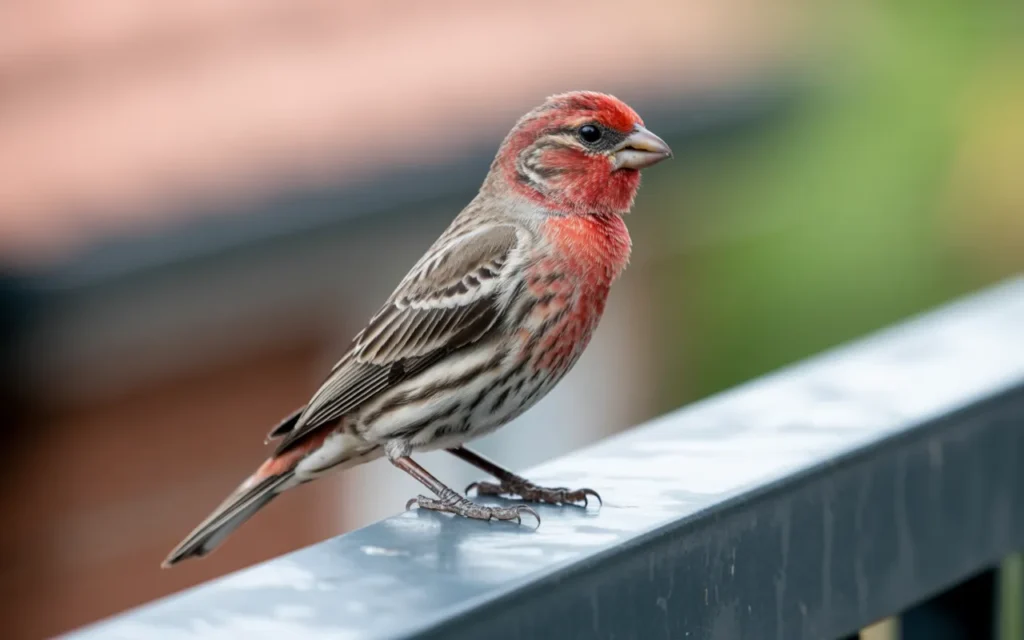
Common across Texas, the House Finch is a cheerful and social bird. The male has a rosy-red head and breast, with brown streaks on his back and belly.
Females are a plain grayish-brown with blurry streaks. They are often confused with Purple Finches, but the House Finch’s red is more of an orange-red.
These finches are not picky eaters and will readily come to tube feeders, hopper feeders, and platform feeders filled with black-oil sunflower seeds or Nyjer seeds. Their bubbly, warbling song adds a lively soundtrack to any backyard.
13. White-winged Dove
Larger and stockier than the Mourning Dove, the White-winged Dove is a classic bird of the South and a very common sight among the backyard birds of Texas.
Its name comes from the bright white stripe on the edge of its wing, which is especially noticeable when the bird is in flight.
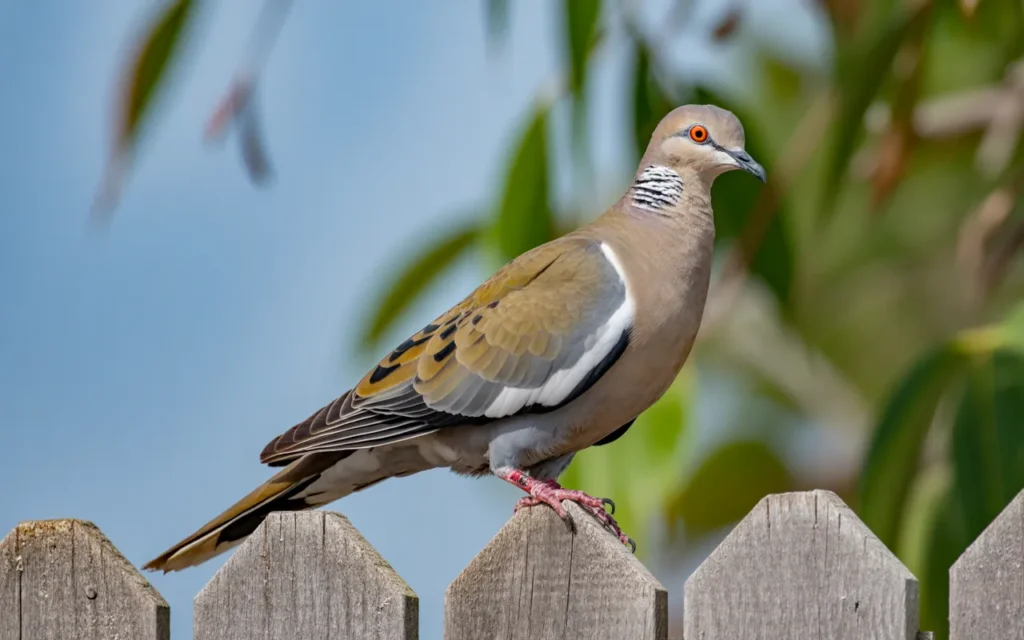
They love seeds and grains and will happily visit feeders, often bullying smaller birds out of the way. They travel in flocks and can make quite a racket with their loud, hooting calls. They are particularly fond of safflower and sunflower seeds.
14. American Robin
While many people associate robins with worms on a spring lawn, they are also frequent backyard visitors that eat a varied diet. This iconic bird with its round, orange-red belly and dark gray back is a welcome sight.
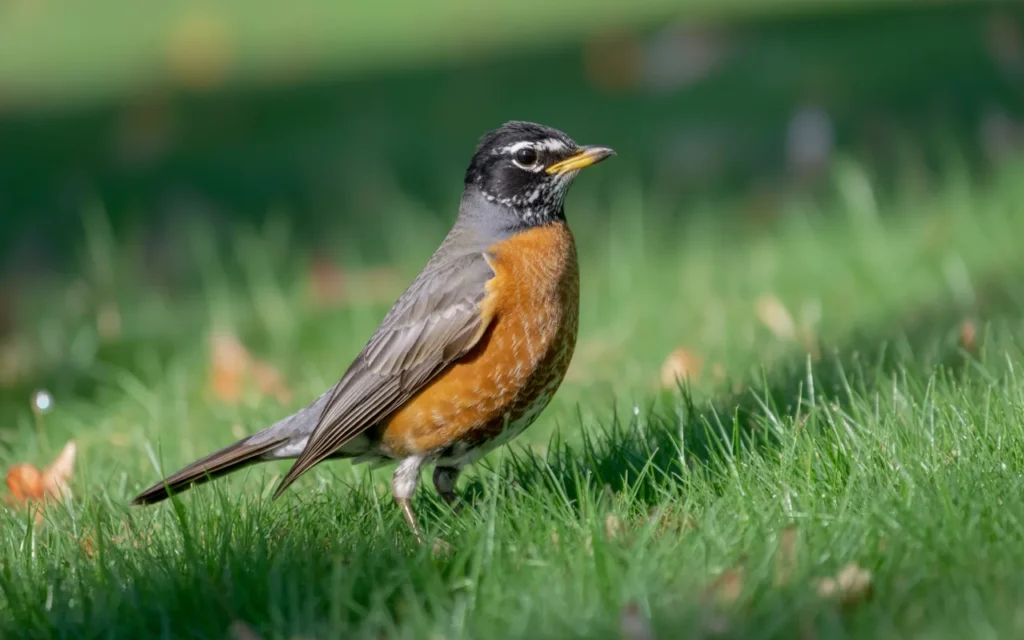
Robins love fruit and berries. Planting berry-producing shrubs like elderberry or holly will attract them naturally.
They are also drawn to birdbaths, where they will enthusiastically drink and splash around. Keeping a clean, accessible water source like the {VIVOHOME Polyresin Bird Bath} is a great way to invite them into your yard.
15. Northern Mockingbird
As the state bird of Texas, the Northern Mockingbird is a must-know species.
These slender, gray birds are famous for their incredible ability to mimic the songs of other birds, as well as car alarms and other sounds. A single male might have a repertoire of hundreds of songs.
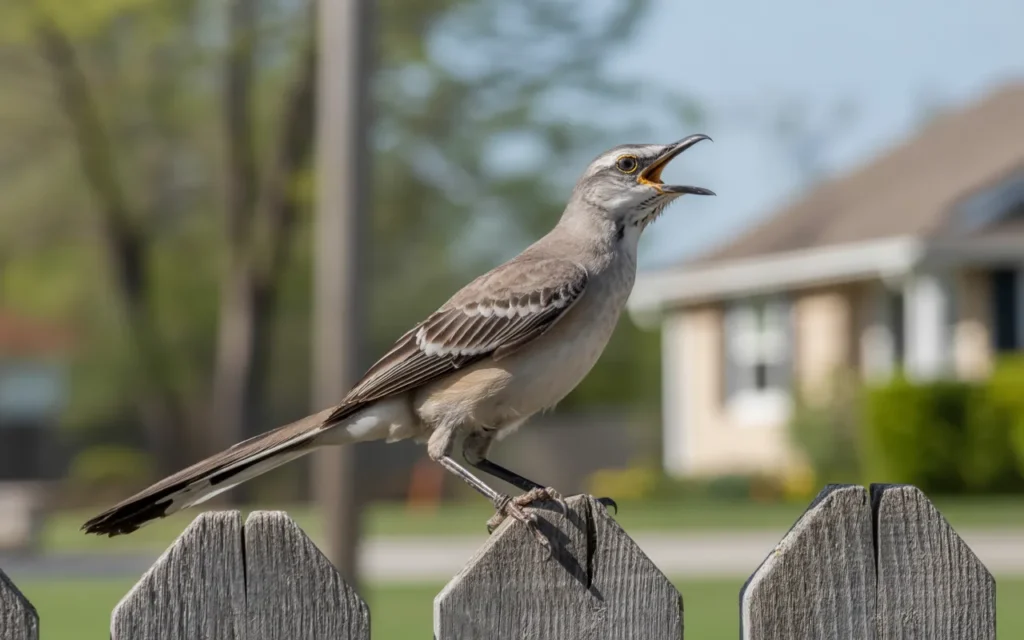
Mockingbirds are fiercely territorial and will aggressively defend their favorite food sources or nesting sites. They enjoy fruit and berries and will also visit suet feeders. Watching them flash the white patches on their wings as they perform a dance-like foraging display on the lawn is a fun spectacle.
Recommended Products for Texas Birdwatching
| Product Name | Brand | Best For |
|---|---|---|
| Squirrel Buster Standard Feeder | Brome | Keeping squirrels away from birdseed |
| Panorama Wild Bird Feeder | Perky-Pet | Attracting small songbirds like chickadees |
| Cedar Wren House | Nature’s Way | Providing nesting sites for small birds |
| Suet Feeder | Stokes Select | Offering high-energy suet to woodpeckers |
| Hummingbird Feeder | First Nature | Attracting and feeding hummingbirds |
| Polyresin Bird Bath | VIVOHOME | Providing a reliable water source for all birds |
Start Spotting Texas Birds Today!
The world of backyard birds in Texas is rich, colorful, and full of surprises. By simply putting out a feeder or a birdbath, you open the door to a fascinating hobby that connects you with the natural world right outside your home.
Start by learning to identify the common visitors, like the Northern Cardinal and Blue Jay, and soon you’ll be eager to spot the more elusive ones.
Grab a pair of binoculars, a field guide, and a comfortable chair. Your Texas backyard is waiting to reveal its avian treasures. Happy birdwatching
