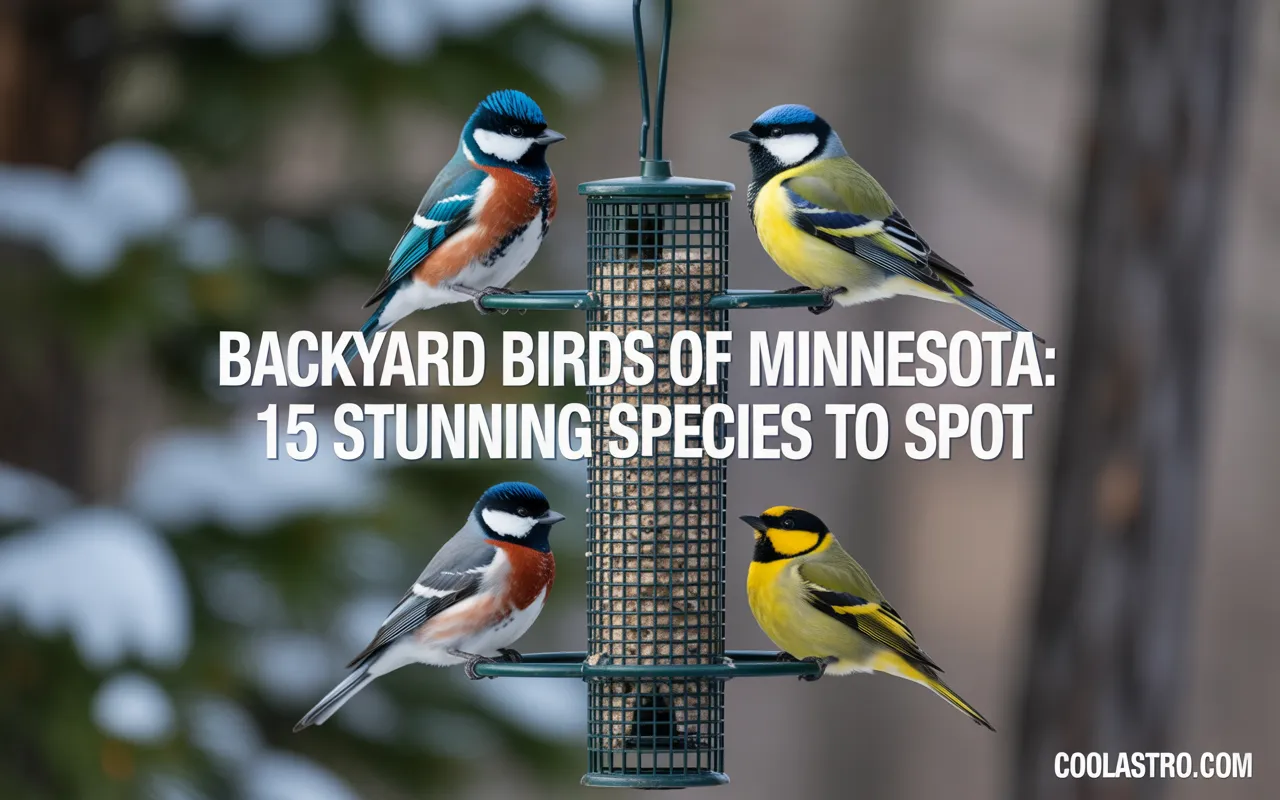
From the northern forests to the southern prairies, Minnesota offers a rich and varied habitat for an incredible number of birds.
Even with its famously cold winters, the Land of 10,000 Lakes is buzzing with avian life all year round. The best part? You don’t need to venture into the wilderness to see it.
Your own backyard can be a bustling stage for some of nature’s most beautiful performers.
This guide will introduce you to 15 of the most common and captivating backyard birds of Minnesota.
We’ll explore how to identify them, what they love to eat, and simple tricks you can use to make your yard an irresistible stop for them.
Get ready to grab your binoculars and discover the vibrant world of feathered friends just outside your door.
Identifying Common Backyard Birds of Minnesota
1. Northern Cardinal
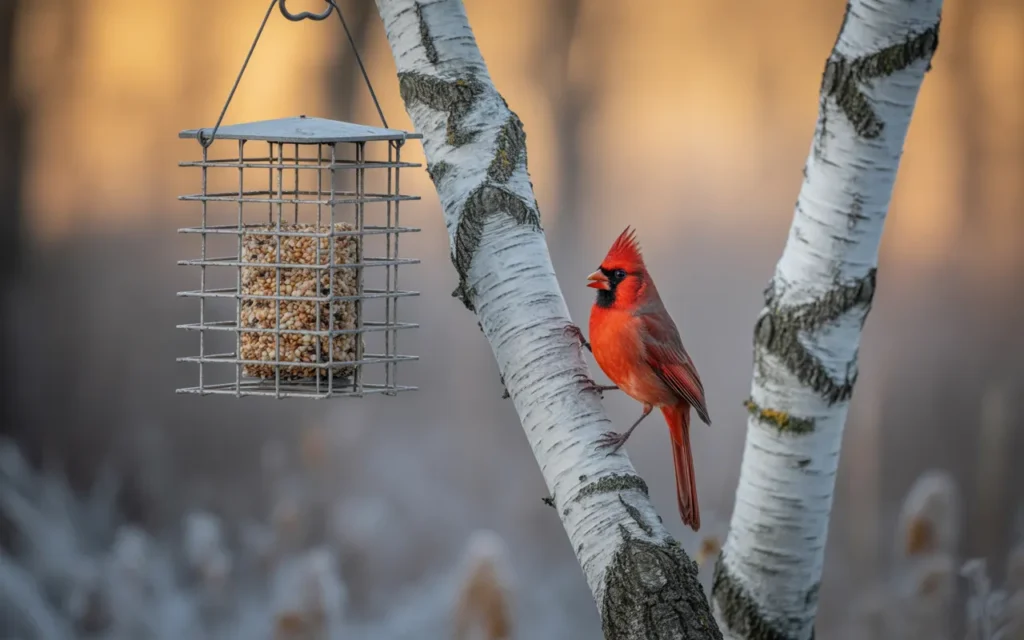
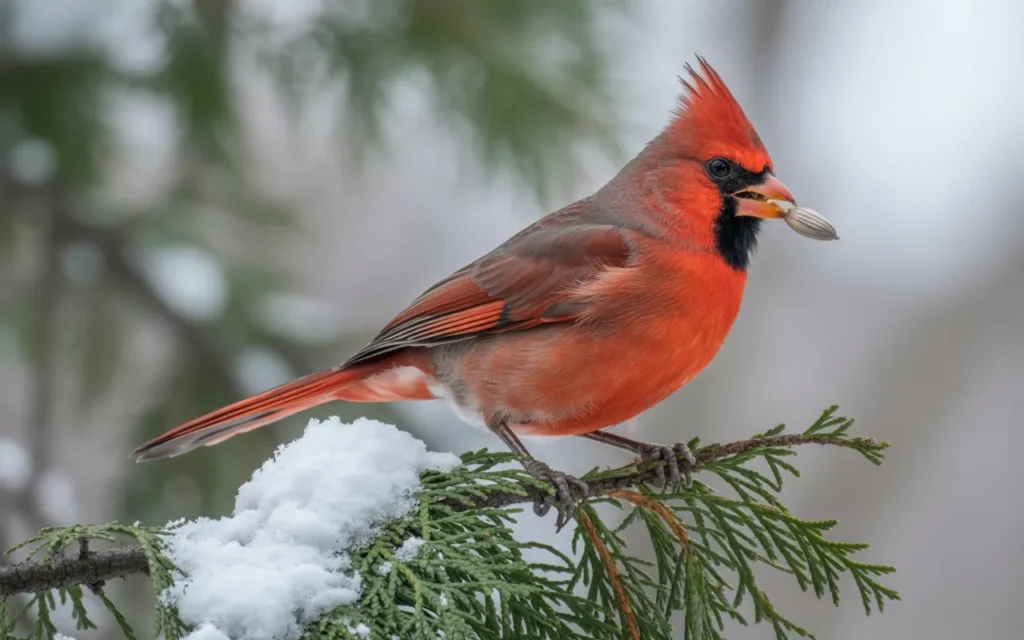
The Northern Cardinal is a dazzling sight, especially against a fresh blanket of Minnesota snow. The male is an unmistakable flash of brilliant red with a pointed crest and a black mask around his face.
Females are more subtly beautiful, with warm tan feathers and soft red highlights on their crest, wings, and tail.
Cardinals are year-round residents and have strong, conical beaks perfect for cracking seeds.
To attract these stunning birds, fill a hopper or platform feeder with black oil sunflower seeds and safflower seeds. They are often the first to arrive at feeders in the morning and the last to leave in the evening.
2. Black-capped Chickadee
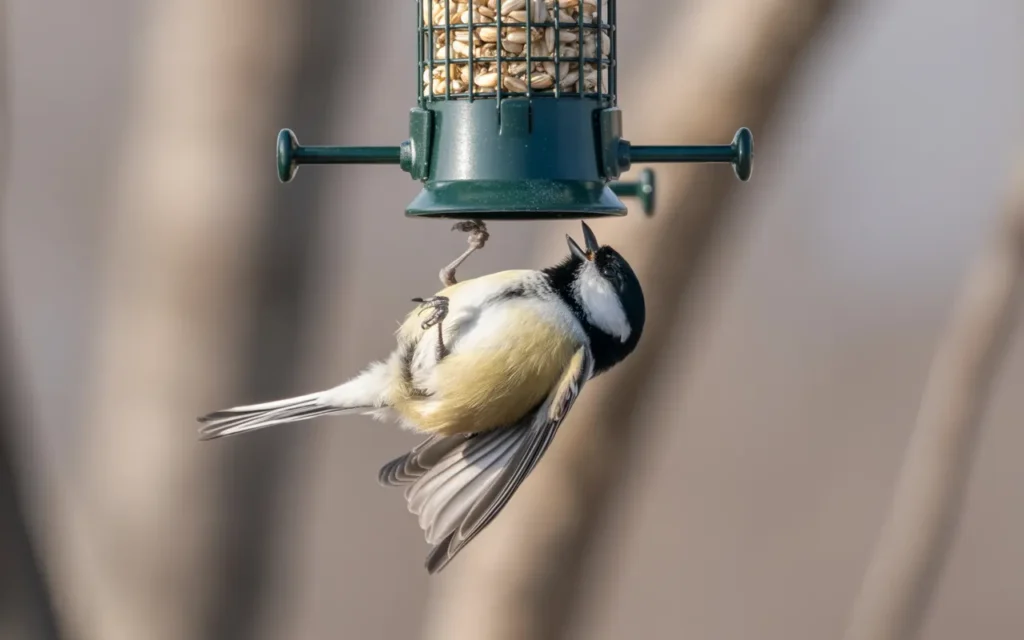
Minnesota’s state bird, the Black-capped Chickadee, is a tiny powerhouse of personality. This small, curious bird has a distinctive black cap and bib, bright white cheeks, a soft gray back, and a creamy white underside. Its cheerful “chick-a-dee-dee-dee” call is a friendly sound throughout the seasons.
Chickadees are acrobatic and will happily visit nearly any feeder. They love black oil sunflower seeds and suet.
A great way to help them through harsh winters is by providing a high-energy food source. The {C&S High Energy Suet Delight} offers the fat and protein these little birds need to stay warm and active.
3. Downy Woodpecker
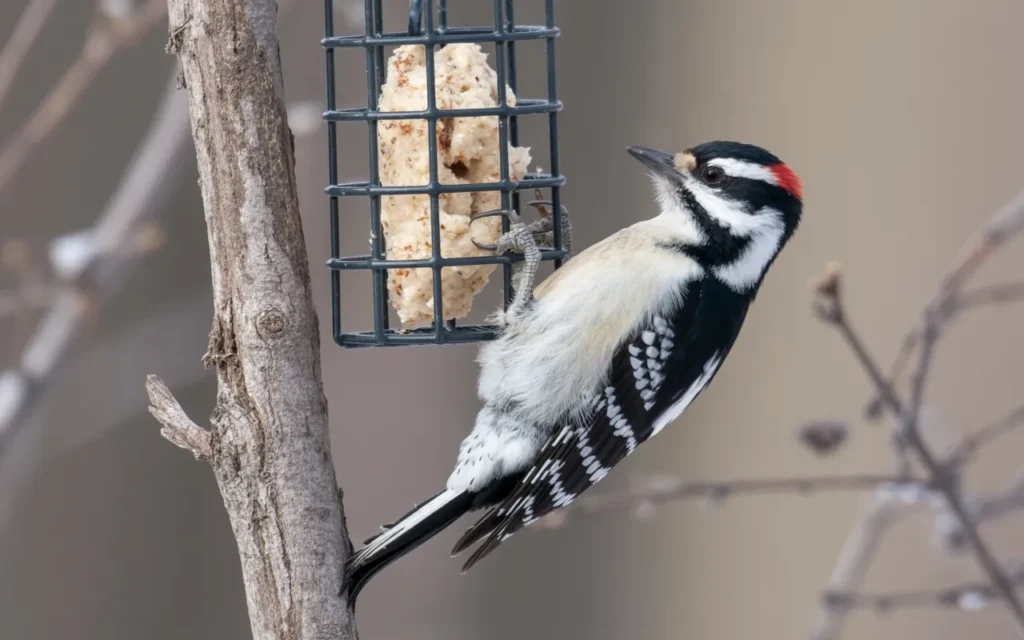
The Downy Woodpecker is the smallest and most common woodpecker you’ll find in Minnesota backyards. It features a checkered black-and-white pattern, a white stripe down its back, and a small bill. Males have a little red patch on the back of their heads. You’ll often see them hitching their way up tree trunks or feeder poles.
Downy Woodpeckers are huge fans of suet. Simply hanging a suet cage feeder is the most effective way to attract them.
They will also visit seed feeders for black oil sunflower seeds and peanuts, but a suet block is their favorite treat.
4. American Goldfinch
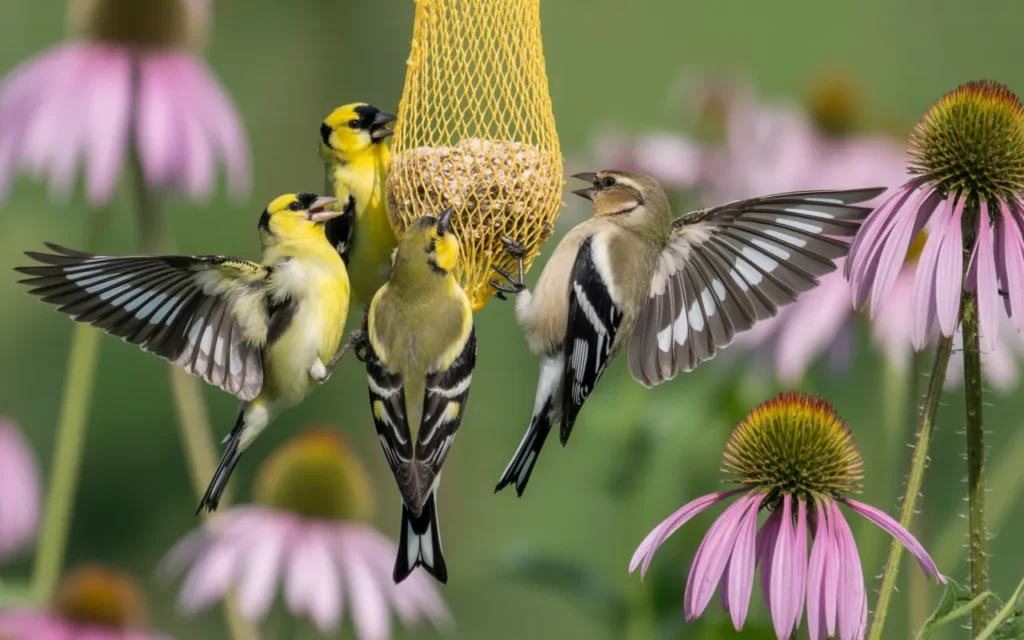
Often called a “wild canary,” the American Goldfinch brings a burst of sunshine to any yard. In spring and summer, the male is a brilliant lemon yellow with a neat black cap and black wings.
Females are a duller olive-yellow. In winter, they molt into a much plainer brownish-gray but continue to travel in lively flocks.
Goldfinches have small beaks specialized for eating tiny seeds, and their absolute favorite is Nyjer (thistle).
To attract a whole flock, hang a specialized finch feeder like the {Stokes Select Thistle Finch Feeder}, which has tiny ports perfect for dispensing the seed
5. Blue Jay
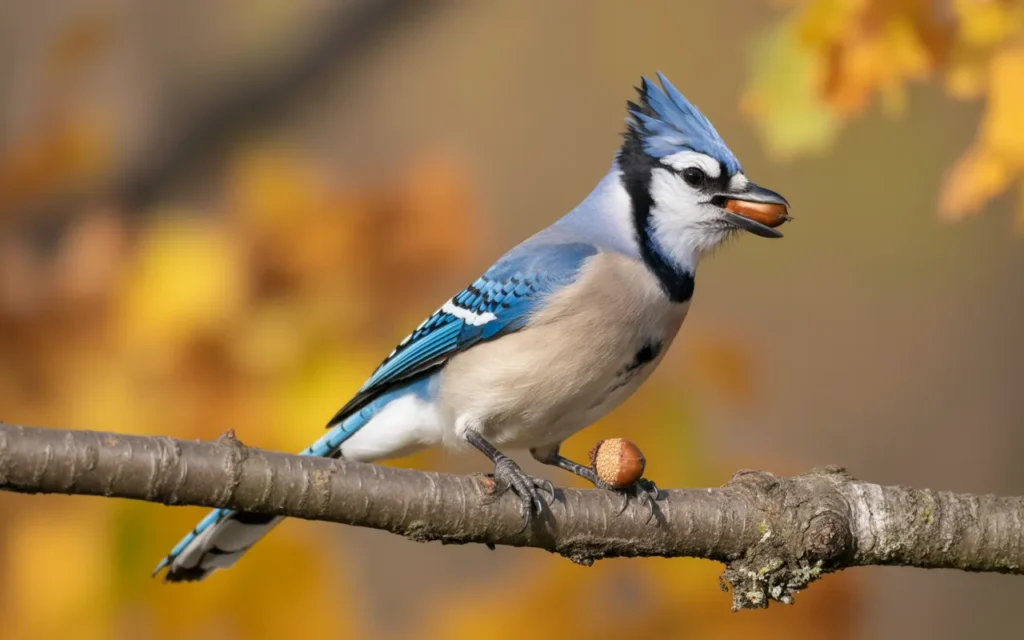
Loud, intelligent, and strikingly handsome, the Blue Jay is a common sight across Minnesota. They are adorned in shades of blue, white, and black, with a prominent crest that they can raise or lower. Their wings and tail are barred with black, creating a beautiful pattern.
Blue Jays have a varied diet but are particularly fond of acorns, peanuts, and corn. Due to their larger size, they prefer open feeding stations.
A feeder like the {Gray Bunny Classic Platform Feeder} is perfect, providing ample space for them to land and sort through the larger seeds and nuts they love.
6. White-breasted Nuthatch
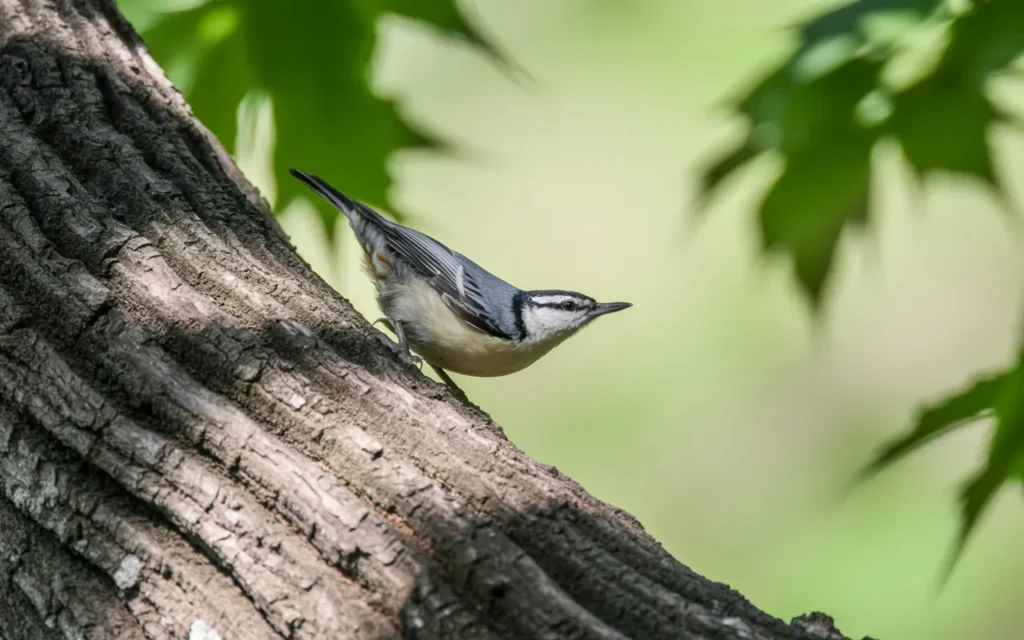
Often called the “upside-down bird,” the White-breasted Nuthatch is famous for its habit of creeping down tree trunks headfirst.
It has a blue-gray back, bright white cheeks and belly, and a black cap. Listen for its nasal, repetitive “yank-yank” call as it forages for insects in tree bark.
Nuthatches are enthusiastic visitors to feeders, where they enjoy suet, sunflower seeds, and peanuts. They are fascinating to watch as they grab a single seed, fly to a nearby tree, and wedge it into the bark to hammer it open.
7. Dark-eyed Junco
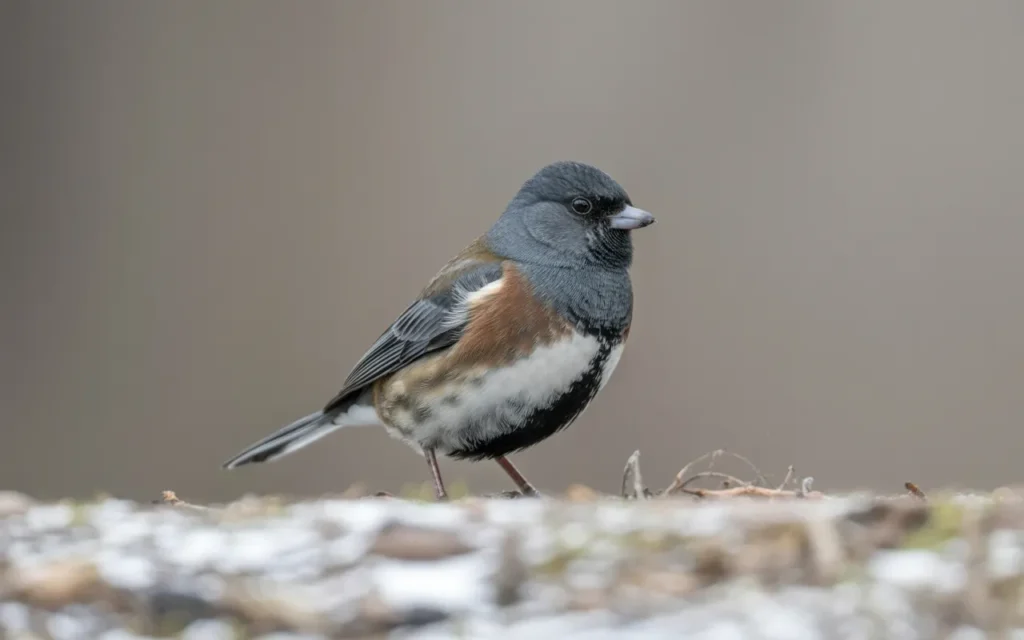
Commonly known as “snowbirds,” Dark-eyed Juncos are a frequent sight in Minnesota, especially during the winter. These small sparrows have a crisp gray or brown back, a dark hood, and a clean white belly. When they fly, they flash their white outer tail feathers, a key identification mark.
Juncos are ground-feeders and prefer to hop around on the ground beneath feeders, cleaning up spilled seeds. They particularly enjoy millet and cracked corn.
Spreading some seeds on a clear patch of ground or using a low tray feeder will make your yard a Junco hotspot.
8. American Robin
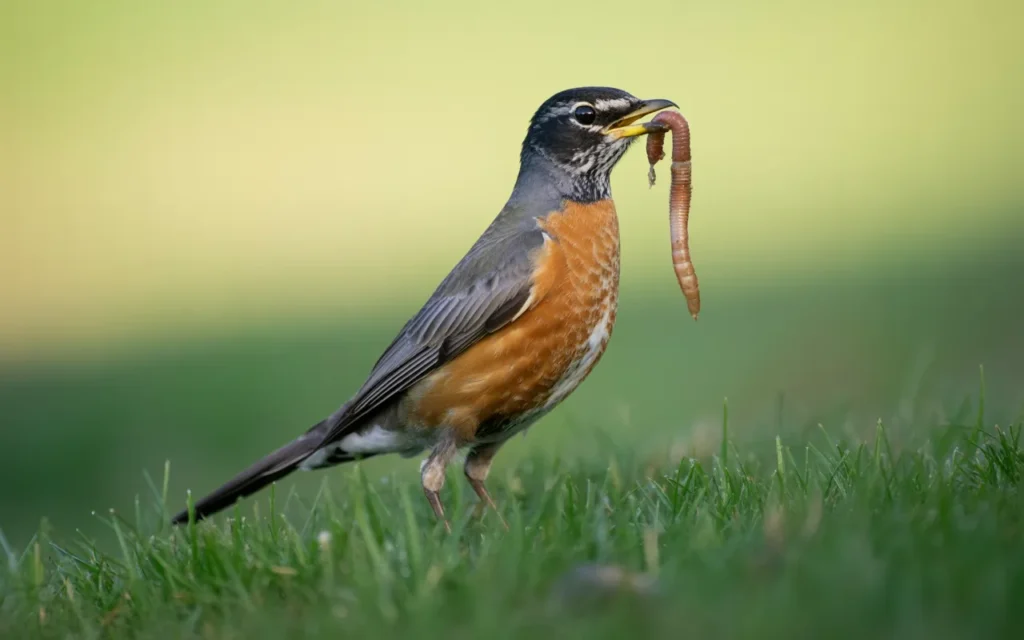
The American Robin, with its cheerful song and brick-red breast, is a beloved sign of spring. It has a gray back and a dark head, and is often seen hopping across lawns before pausing to listen for earthworms.
Robins don’t typically eat seeds from feeders. The best way to attract them is with a reliable source of water. A bird bath is a magnet for robins, who love to drink and splash around.
The {VIVOHOME 2-in-1 Polyresin Bird Bath} is a great, durable option. You can also offer them mealworms or chopped fruit on a platform feeder.
9. Hairy Woodpecker
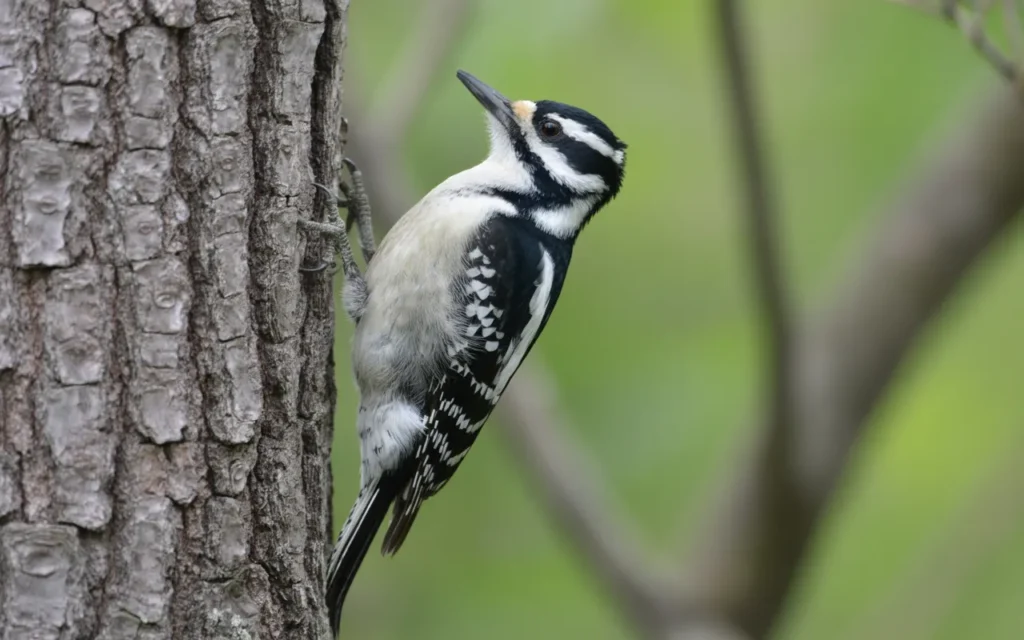
The Hairy Woodpecker looks like a larger version of the Downy Woodpecker, with a nearly identical black-and-white pattern. The key difference is its much larger bill, which is about the same length as its head. This bigger size gives it a more powerful presence at the feeder.
Like their smaller cousins, Hairy Woodpeckers are drawn to suet. They also enjoy black oil sunflower seeds and peanuts. Their stronger bill allows them to tackle larger nuts and more frozen suet blocks in the depths of winter.
10. House Finch
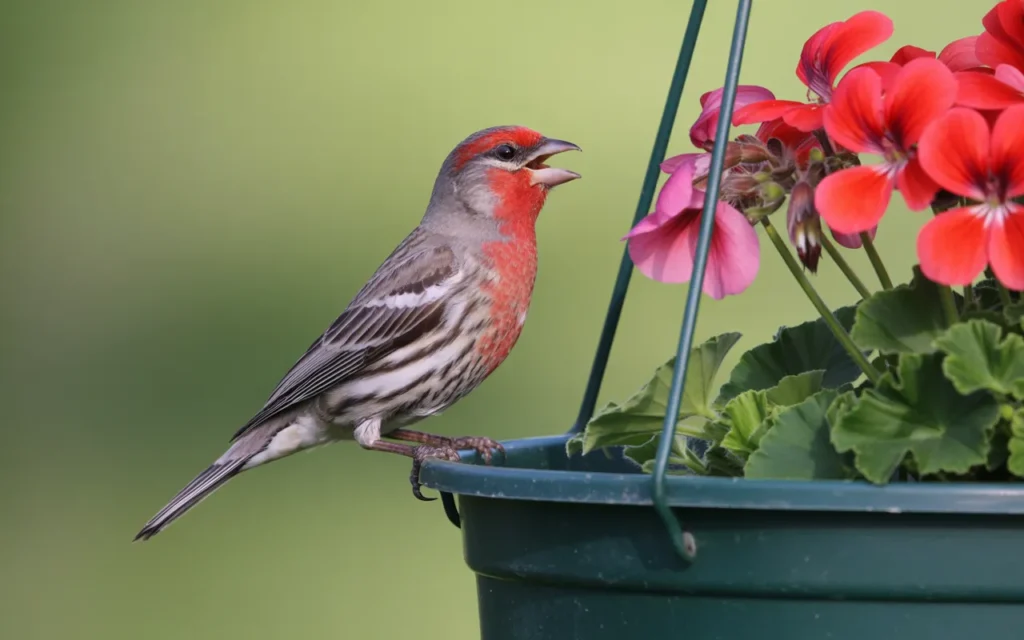
The House Finch is a common and social bird often found in suburban and urban areas. The male has a rosy red head and breast, which contrasts with his brown-streaked back and belly.
Females are plain grayish-brown with blurry streaks. They often gather in large, chattering flocks.
House Finches are not picky eaters and will happily consume black oil sunflower seeds and Nyjer seeds from tube, hopper, or platform feeders. Their cheerful, warbling song adds a lively soundtrack to any backyard.
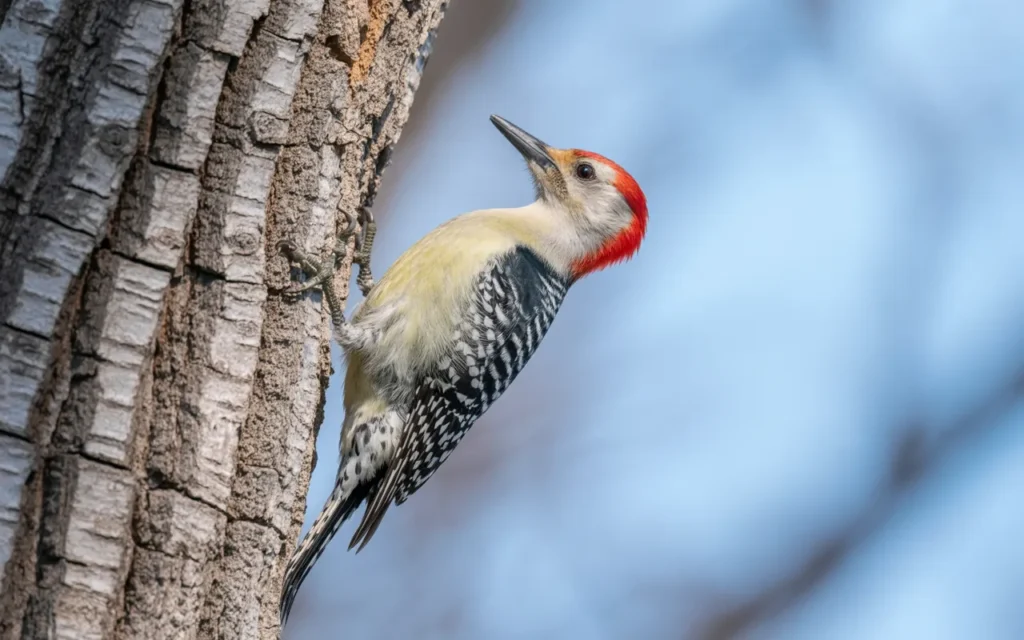
11. Red-bellied Woodpecker
Despite its name, the most noticeable feature of the Red-bellied Woodpecker is the bright red stripe running from its bill all the way down the back of its neck (in males).
They have a beautifully barred black-and-white back. The faint reddish wash on their belly is often hard to see.
These large, loud woodpeckers love suet, peanuts, and even oranges. A sturdy feeder that can support their weight is a must. They are bold and can sometimes dominate a feeding station, chasing smaller birds away.
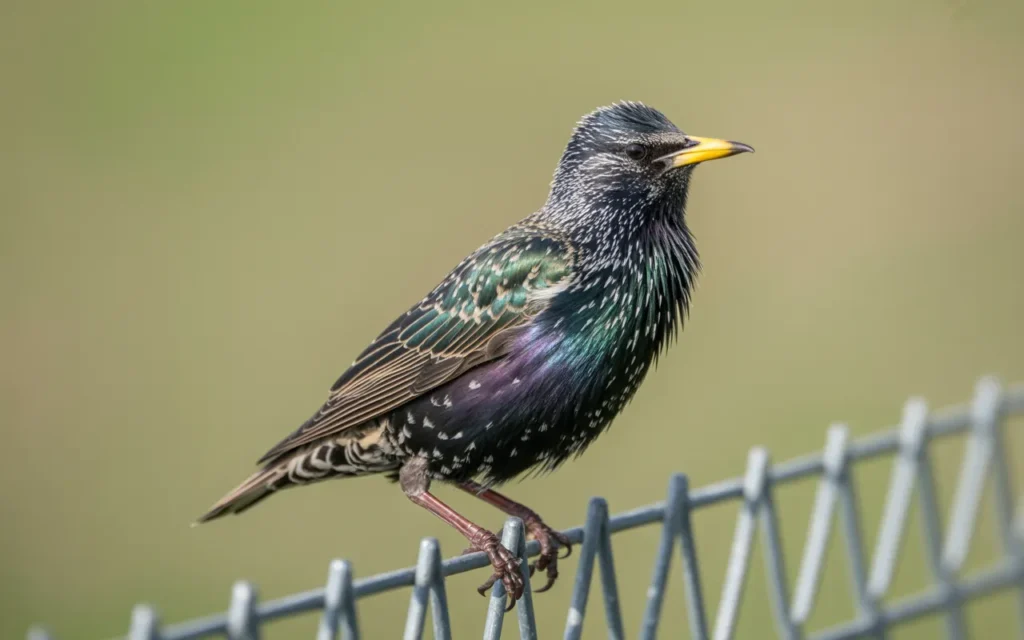
12. European Starling
Introduced to North America in the 19th century, the European Starling is now one of the continent’s most numerous songbirds.
In winter, they are covered in bright white spots. In summer, they are a glossy, iridescent black that shimmers with purple and green in the sun.
Starlings are omnivores and will eat almost anything. They often travel in large, noisy flocks and can quickly empty a suet feeder.
While some people find them aggressive, their iridescent plumage and ability to mimic other birds are fascinating.
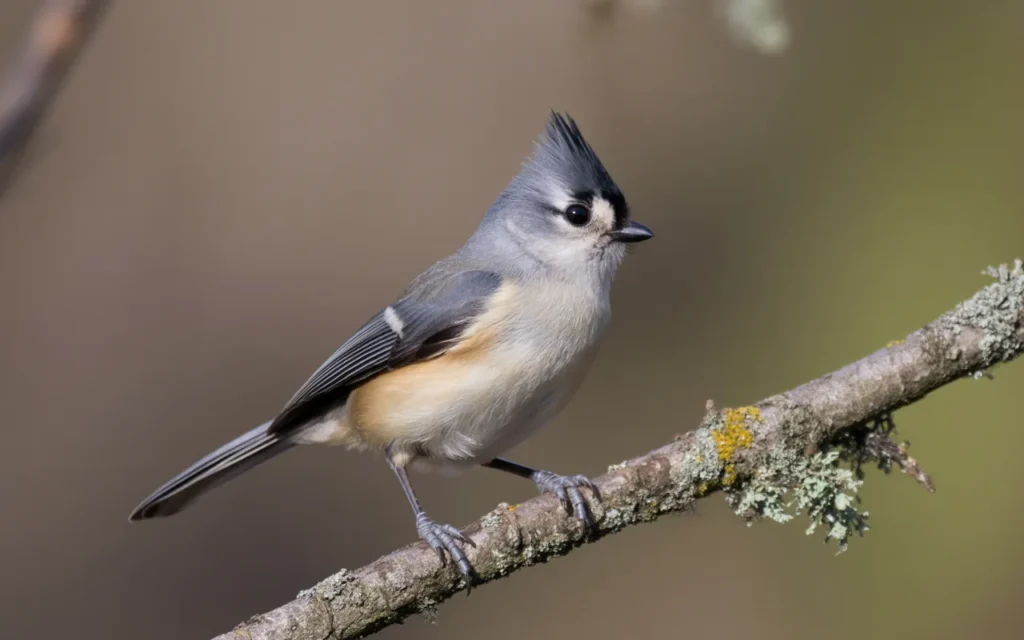
13. Tufted Titmouse
A small, gray bird with a dashing crest and large black eyes, the Tufted Titmouse is a charismatic visitor. They have a peachy-orange wash on their sides and are often seen traveling in mixed flocks with chickadees, especially during the winter.
Titmice enjoy sunflower seeds, peanuts, and suet. They have a charming behavior of taking a single seed from the feeder, flying to a nearby branch, holding it with their feet, and hammering it open with their bill.
14. Mourning Dove
Recognized by its gentle, cooing song, the Mourning Dove is a slender, graceful bird with soft, grayish-tan plumage.
They have a small head, black spots on their wings, and a long, pointed tail. When they take flight, their wings make a sharp whistling sound.
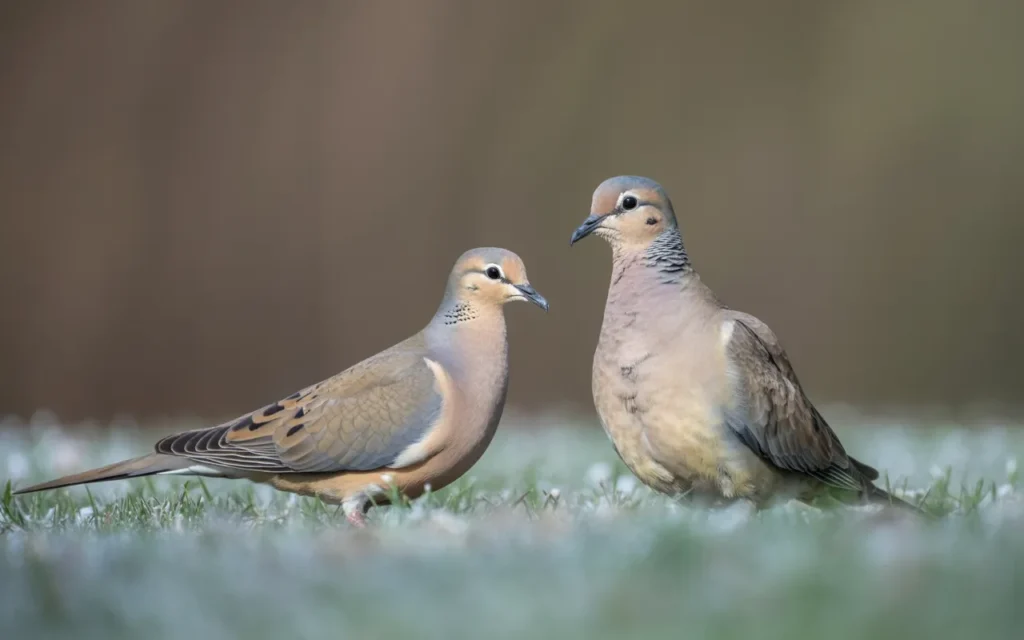
Mourning Doves are ground feeders that primarily eat seeds like millet and cracked corn. You’ll often find them foraging peacefully under your hanging feeders. To make them feel welcome, scatter some seeds on the ground or use a low tray feeder.
15. House Sparrow
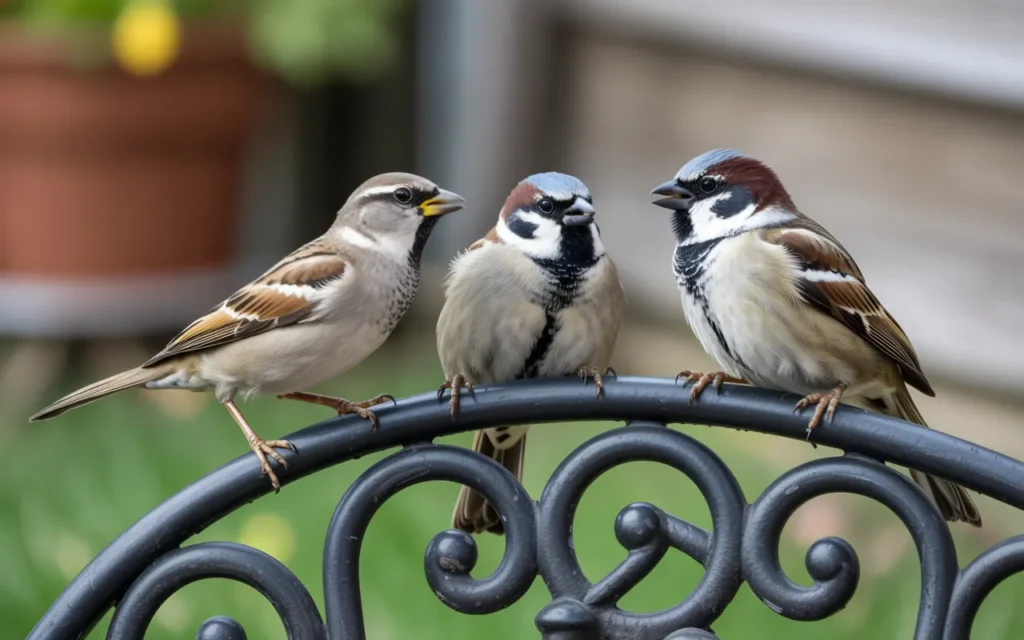
Another introduced species, the House Sparrow, is incredibly common in areas with human settlement. Males have a gray crown, a black bib, and a chestnut-brown back. Females are a plainer, buffy-brown color. They are highly social and are often seen in boisterous flocks.
House Sparrows are not picky and will eat a wide variety of seeds, grains, and discarded human food.
While they can be aggressive at feeders, they are a permanent and lively fixture of the backyard bird scene. To discourage them and favor native birds, you can try offering safflower seed, which sparrows tend to dislike.
Your Minnesota Birdwatching Product Guide
Here is a quick summary of the products mentioned in this guide to help you attract some of these stunning backyard birds of Minnesota.
| Product Name | Brand | Best For |
|---|---|---|
| High Energy Suet Delight | C&S | Providing winter energy for chickadees & woodpeckers |
| Thistle Finch Feeder | Stokes Select | Serving Nyjer seed to attract goldfinches |
| Classic Platform Feeder | Gray Bunny | Offering large seeds and nuts to jays |
| Polyresin Bird Bath | VIVOHOME | Providing a clean water source for all birds |
Conclusion: Enjoy Your Feathered Neighbors
Learning to identify the backyard birds of Minnesota is a rewarding hobby that connects you to the natural world every single day.
By providing consistent food, fresh water, and a bit of shelter, you can transform your yard into a thriving ecosystem that supports local wildlife.
Start with a simple feeder and a bird bath and see who comes to visit. You’ll soon recognize their songs and behaviors, and you’ll be amazed at the diversity of life right outside your window.
We hope this guide helps you enjoy the beautiful birds that call the North Star State home. Happy birding
