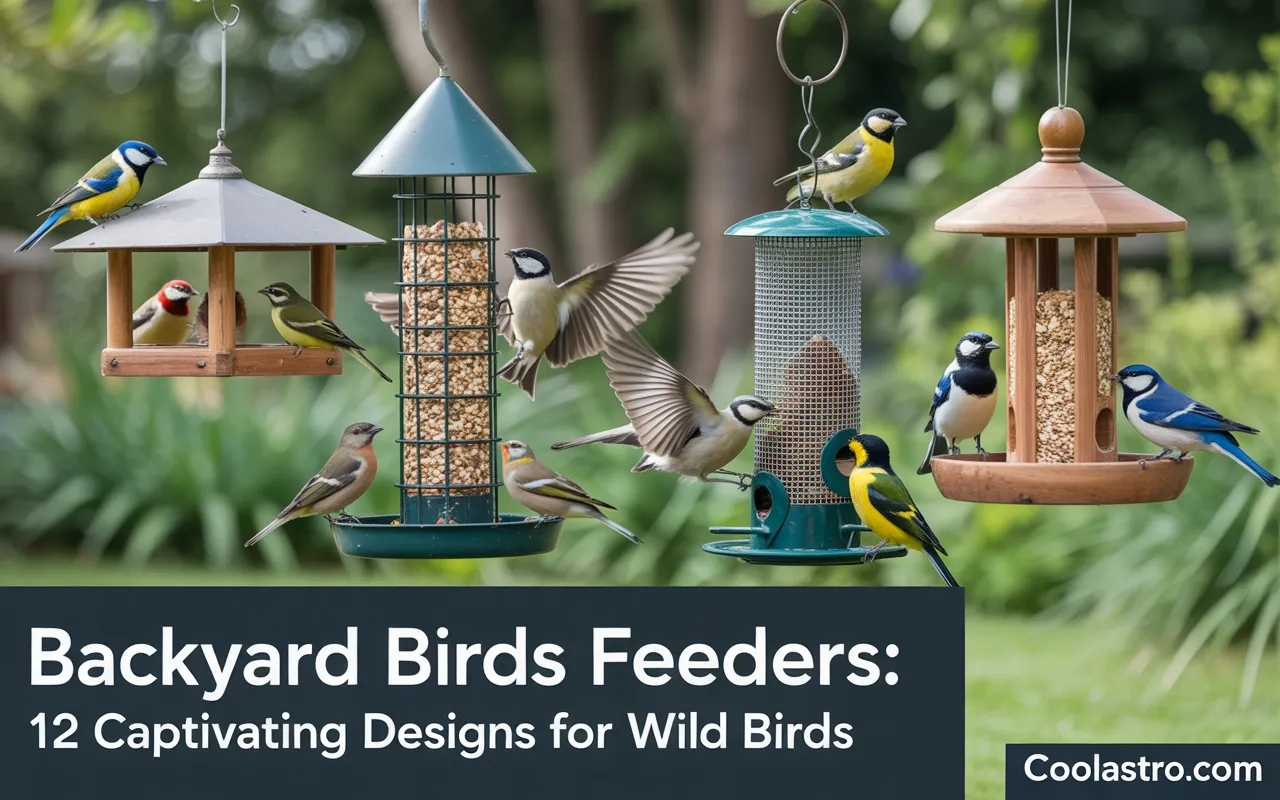
There’s a simple, quiet joy that comes from looking out your window and seeing your backyard alive with the flutter and song of wild birds.
It’s a moment of connection with nature, a peaceful pause in a busy day. Inviting these beautiful creatures into your yard is easier than you might think, and it all starts with offering them a reliable meal.
A bird feeder is more than just a container for seed; it’s an invitation, a welcome sign for a dazzling array of feathered friends.
But with so many different types of feeders out there, where do you even begin? It can feel overwhelming to choose the right one.
The secret is knowing that different birds are attracted to different types of feeders and foods. By offering a variety, you can create a bustling backyard birding paradise that will delight you all year long.
This guide is your complete introduction to the wonderful world of backyard birds feeders.
We will explore 12 captivating designs, explaining what makes each one special and which birds you are likely to attract.
You’ll learn everything you need to know to choose the perfect feeders, turning your yard into a sanctuary that brings you endless moments of wonder and joy.
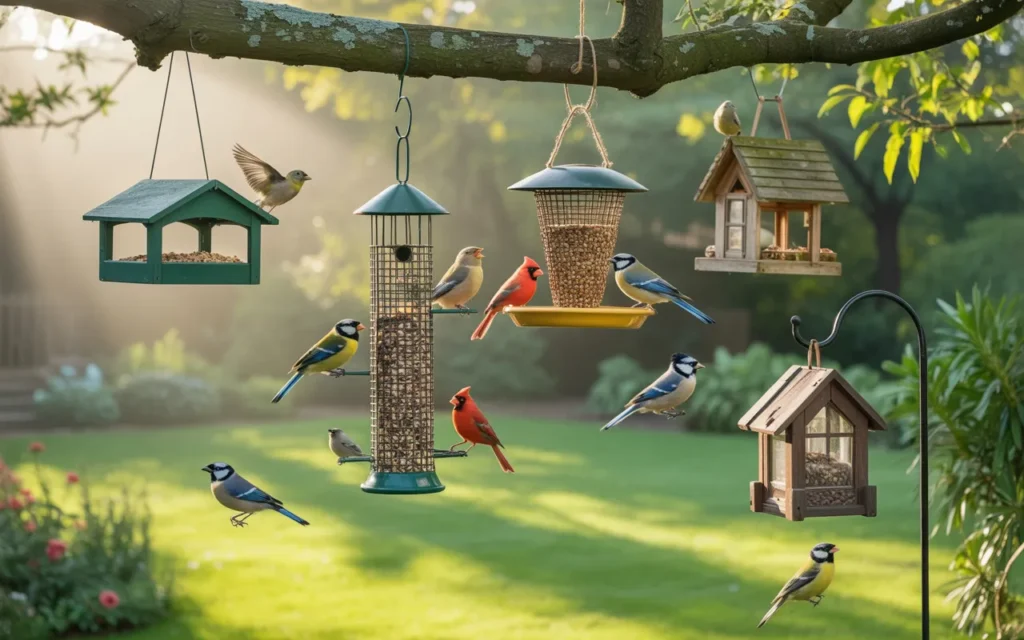
Understanding the Basics of Backyard Bird Feeding
Before we dive into the specific designs, let’s cover a few golden rules for successful bird feeding. Getting these right from the start will make your experience more enjoyable for both you and your feathered visitors.
- Location: Place your feeders where you can see them easily from a window, but also where the birds will feel safe. This usually means near natural cover like shrubs or trees, which gives them a quick escape route from predators. A spot that is about 10 feet away from cover is often ideal.
- Keep it Clean: This is the most important rule of bird feeding. Dirty feeders can harbor mold and bacteria that are harmful to birds. You should clean your feeders every one to two weeks with a solution of one part bleach to nine parts water, rinsing thoroughly and allowing them to dry completely before refilling.
- Provide Fresh Food: Birdseed doesn’t last forever. If seed gets wet and moldy, discard it immediately. Only put out enough seed to last for a few days at a time to ensure it stays fresh.
- Offer Water: A bird bath is just as important as a feeder. Birds need a reliable source of fresh water for drinking and bathing, and providing one will attract even more species to your yard.
With these simple principles in mind, you’re ready to choose the perfect backyard birds feeders for your space.
12 Captivating Backyard Birds Feeder Designs
Each type of feeder is designed to hold specific kinds of food and attract different kinds of birds. By offering a few different styles, you can create a diverse and exciting birding environment right outside your window.
1. The Classic Hopper Feeder
The hopper feeder is what most people picture when they think of a traditional bird feeder. It’s essentially a container that holds a large amount of seed, with a roof to protect it from the weather and a tray at the bottom where birds can perch and eat.
As birds consume the seed from the tray, gravity automatically dispenses more from the hopper. They are often designed to look like charming little houses, barns, or gazebos.
- Best For: All-purpose feeding. They are great for holding black oil sunflower seeds, safflower seeds, or a good quality mixed seed blend.
- Birds It Attracts: A wide variety of common backyard birds, including cardinals, blue jays, chickadees, titmice, grosbeaks, and finches.
- Why You’ll Love It: Its large capacity means you don’t have to refill it every day. The roof provides excellent protection for the seed against rain and snow, keeping it fresher for longer. A well-made wooden hopper feeder, like the beautiful {Nature’s Way Cedar Platform Tray Bird Feeder}, can also be a lovely decorative element in your garden.
2. The Tube Feeder
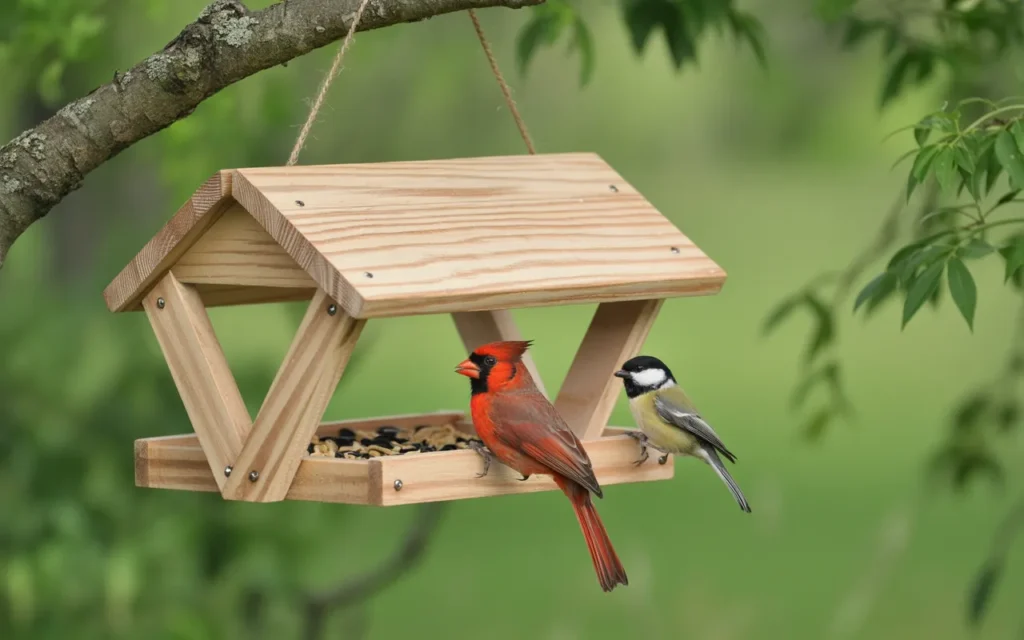
Tube feeders are a sleek and practical option, consisting of a hollow, clear plastic or acrylic tube with multiple feeding ports and perches along its length.
They are perfect for smaller seeds and are a favorite of small, clinging birds that are comfortable perching on the small pegs.
They are also relatively good at deterring larger birds like grackles and starlings if the perches are small enough.
- Best For: Smaller seeds like black oil sunflower, sunflower hearts, or specialty finch mixes like Nyjer seed.
- Birds It Attracts: Finches (American Goldfinch, House Finch, Purple Finch), chickadees, titmice, and siskins.
- Why You’ll Love It: The clear tube allows you to easily see when the seed level is getting low. They are also generally easy to clean, and many modern designs have features like quick-release bases. Filling them is a breeze with a good scoop, such as the {Droll Yankees Seed Scoop}, which is perfectly shaped for the task.
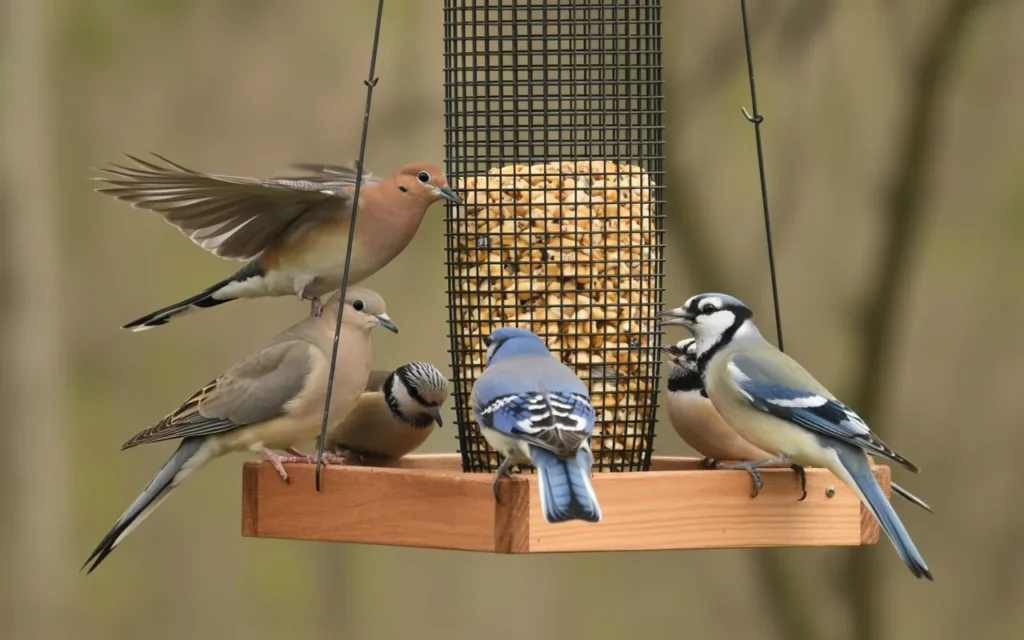
3. The Platform or Tray Feeder
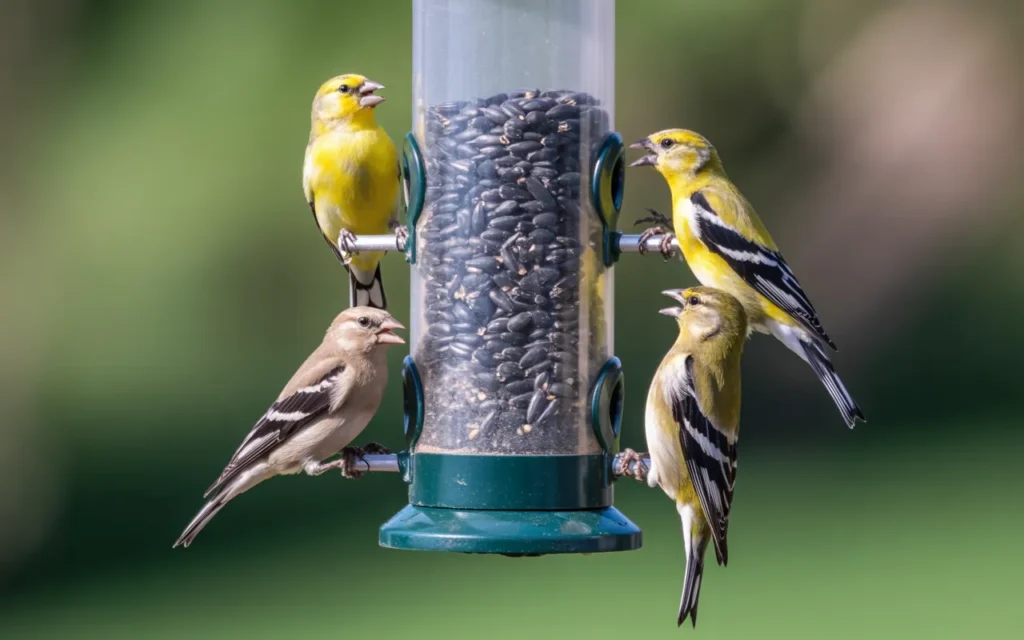
As the name suggests, a platform feeder is simply a flat, open tray where you can offer a wide variety of foods. It can be mounted on a pole, set on the ground, or hung from a hook.
This open design is very accessible and mimics the way many birds naturally forage on the ground. It’s the least selective type of feeder, welcoming birds of all sizes.
- Best For: Offering a smorgasbord of treats, including mixed seeds, millet, cracked corn, peanuts, and even fruit or mealworms.
- Birds It Attracts: Ground-feeding birds like doves, juncos, sparrows, and towhees, as well as larger birds like cardinals and blue jays.
- Why You’ll Love It: It’s the most versatile feeder, allowing you to experiment with different foods to see what your local birds prefer. It also provides the best, unobstructed view of the birds as they feed.
- Important Note: Because it’s open to the elements, it’s crucial to choose a model with excellent drainage (like a perforated metal screen bottom) to prevent seed from becoming a soggy, moldy mess.
4. The Suet Feeder
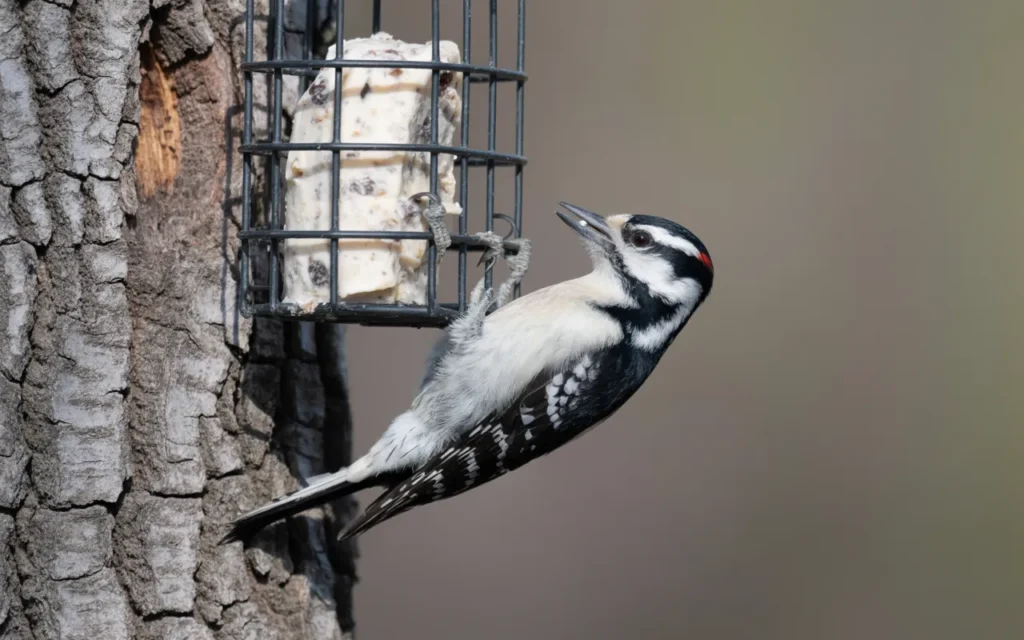
Suet is a high-energy food made from rendered animal fat, which is especially valuable for birds during the cold winter months when insects are scarce.
A suet feeder is typically a simple, coated-wire cage designed to hold a standard-sized suet cake. These feeders are essential for attracting insect-eating birds that might not otherwise visit a seed feeder.
- Best For: Holding commercial suet cakes, which often come mixed with seeds, nuts, or berries.
- Birds It Attracts: Woodpeckers (Downy, Hairy, Red-bellied), nuthatches, chickadees, and titmice. In some areas, you may even attract wrens and warblers.
5. The Nyjer (Thistle) Feeder
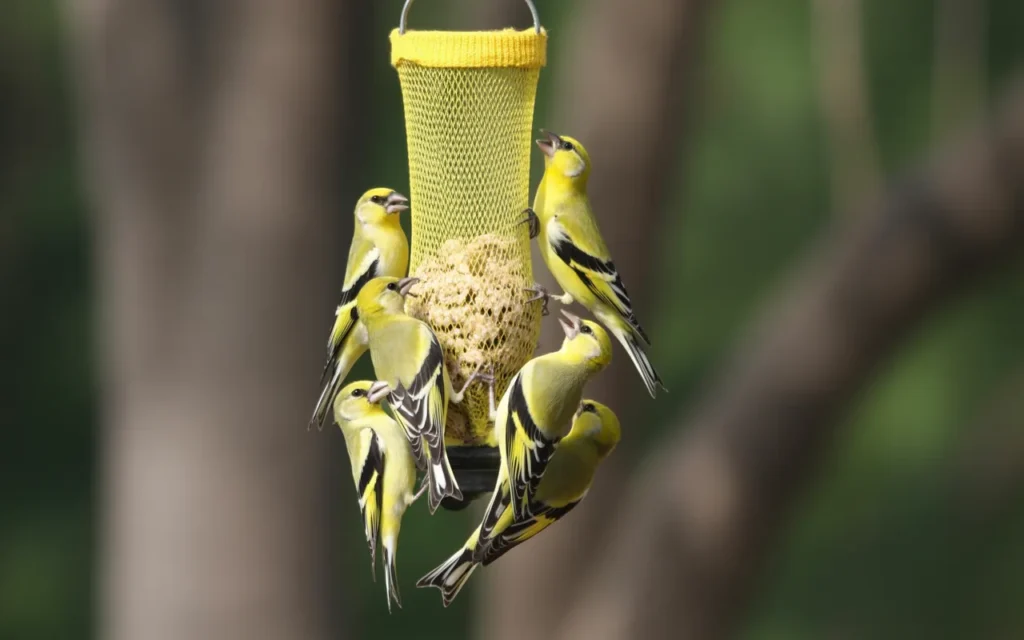
Nyjer, often mistakenly called thistle, is a tiny, black, oil-rich seed that is an absolute favorite of finches. Because the seed is so small and expensive, it requires a special type of feeder to dispense it properly.
A Nyjer feeder can be either a tube feeder with very small, slit-like ports, or a “finch sock,” which is a fine-mesh bag that birds cling to while pulling seeds through the fabric.
- Best For: Specifically offering Nyjer seed.
- Birds It Attracts: Almost exclusively finches, especially American Goldfinches, Lesser Goldfinches, Pine Siskins, and Common Redpolls.
- Why You’ll Love It: It allows you to cater specifically to the charming and colorful finch family. Using a dedicated feeder prevents the expensive Nyjer seed from being wasted or eaten by larger birds. A quality Nyjer seed like {Wagner’s Nyjer Seed Bird Food} will keep them coming back.
6. The Window Feeder
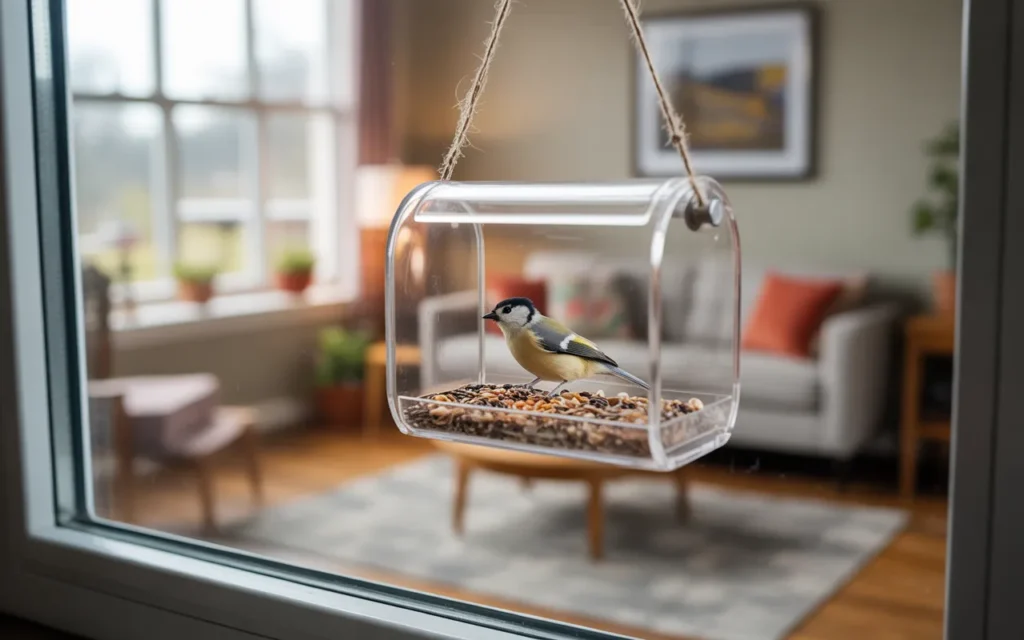
For the ultimate up-close bird-watching experience, nothing beats a window feeder. These are typically small, clear acrylic feeders that attach directly to the outside of your windowpane with suction cups. Waking up in the morning and seeing a chickadee or a titmouse just inches away from you is a truly magical experience.
- Best For: Sunflower hearts, mixed seed, or mealworms.
- Birds It Attracts: Small, bold birds like chickadees, titmice, nuthatches, and finches. Once they get used to it, even cardinals might visit.
- Why You’ll Love It: It provides an unparalleled, close-up view of birds, allowing you to appreciate the intricate details of their feathers and their charming behaviors. It’s a fantastic way to introduce children to the wonders of bird-watching. A well-designed model like the {Nature’s Hangout Window Bird Feeder} has a removable tray for easy cleaning and refilling.
7. The Oriole Feeder
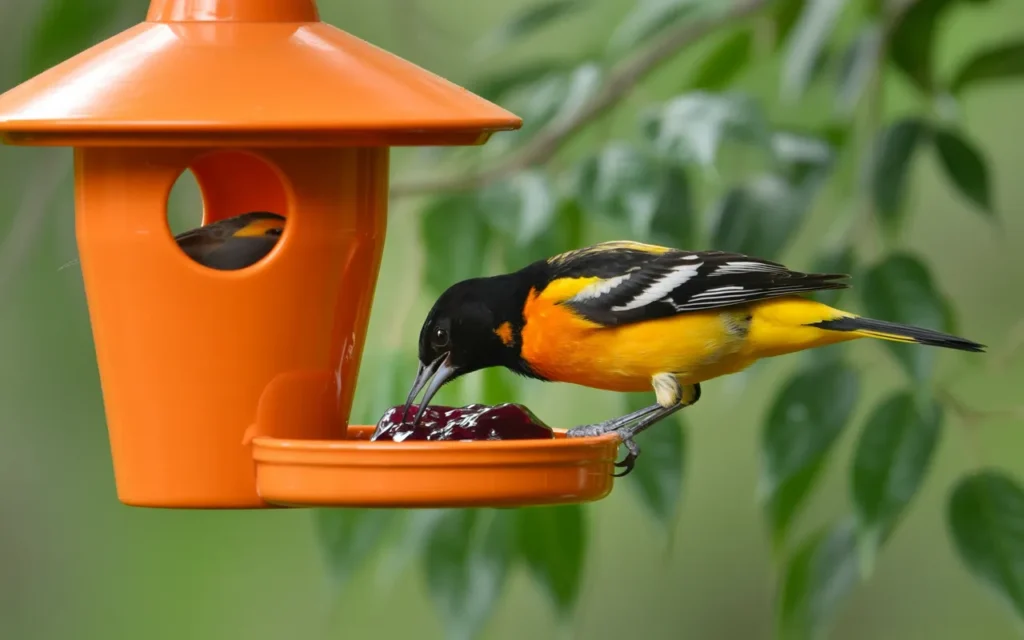
Baltimore and Bullock’s Orioles are stunning birds with fiery orange plumage, but they don’t typically eat seeds. They are attracted to fruit and nectar.
An oriole feeder is specifically designed to cater to their tastes. It typically features small dishes for holding grape jelly (their absolute favorite), spikes for holding orange halves, and often a nectar reservoir similar to a hummingbird feeder, but with larger perches.
- Best For: Offering grape jelly, orange halves, and nectar.
- Birds It Attracts: Baltimore Orioles, Bullock’s Orioles, Orchard Orioles, and sometimes other fruit-loving birds like catbirds or tanagers.
- Why You’ll Love It: Attracting orioles is a special treat for any backyard birder. Their brilliant color and beautiful song are a highlight of the late spring and summer. Putting out a dedicated oriole feeder is the single best way to bring them to your yard.
8. The Hummingbird Feeder
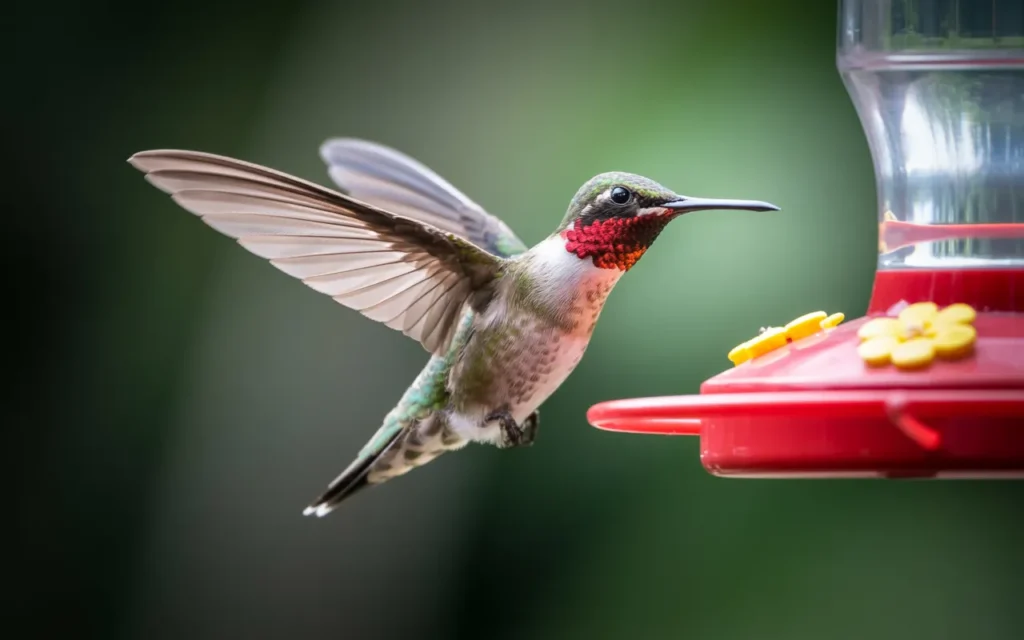
Watching hummingbirds dart and hover is one of the greatest delights of backyard birding. These tiny, energetic birds feed on nectar from flowers, and you can supplement their diet with a hummingbird feeder.
These feeders are designed to hold a sugar-water solution (always a 4:1 ratio of water to plain white sugar) and have small ports that the hummingbirds can access with their long tongues. Most are colored red, as hummingbirds are highly attracted to the color.
- Best For: Offering a 4:1 sugar-water solution (never use honey or red dye).
- Birds It Attracts: Various species of hummingbirds, depending on your region (e.g., Ruby-throated, Anna’s, Rufous).
- Why You’ll Love It: It brings these tiny, iridescent jewels right to your window or patio. The experience of having a hummingbird hover just feet away from you is truly magical.
- Cleaning is Critical: The sugar solution can spoil quickly and grow dangerous mold. It’s essential to clean the feeder and change the nectar every 2-3 days in hot weather. A good set of {Feeder Cleaning Brushes} is non-negotiable for this task.
9. The Squirrel-Proof Feeder
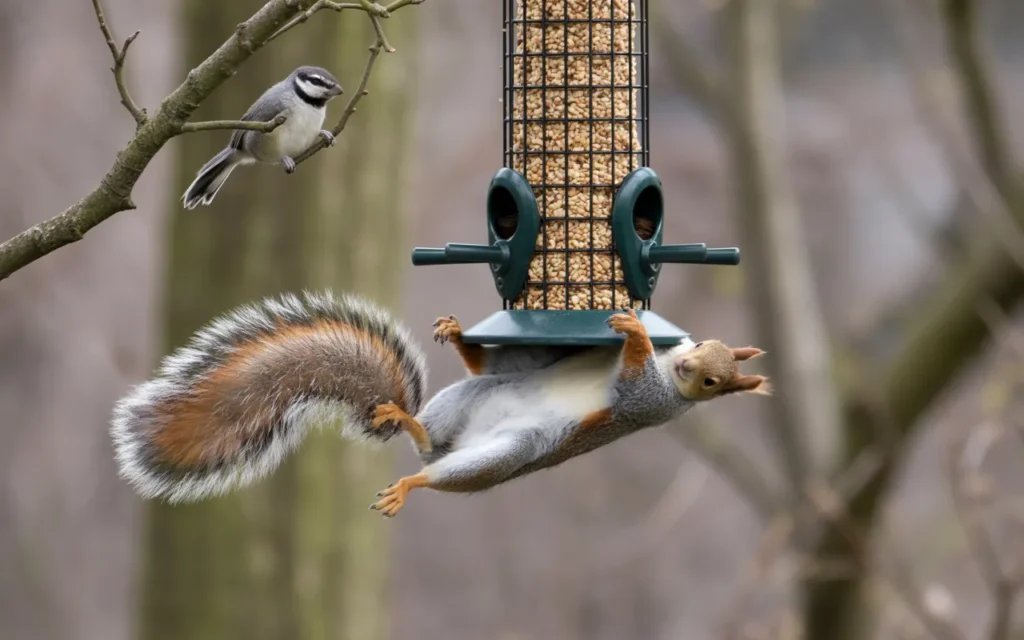
For many, the biggest frustration of backyard bird feeding is squirrels. These clever and acrobatic thieves can quickly empty a feeder, wasting expensive seed.
A squirrel-proof feeder is designed to thwart them. Common mechanisms include weight-activated perches that close the feeding ports when a heavy squirrel lands on them, or a wire cage around the feeder that allows small birds in but keeps squirrels out.
- Best For: Any type of seed, especially more expensive blends that you want to reserve for the birds.
- Birds It Attracts: Whichever birds the inner feeder is designed for (e.g., a tube feeder inside a cage will attract finches and chickadees).
- Why You’ll Love It: It saves you money and frustration by ensuring that your birdseed is actually eaten by birds. While no feeder is 100% squirrel-proof, a good one can be highly effective. The {Brome Squirrel Buster Plus} is a famously effective weight-activated model.
10. The Ground Feeder
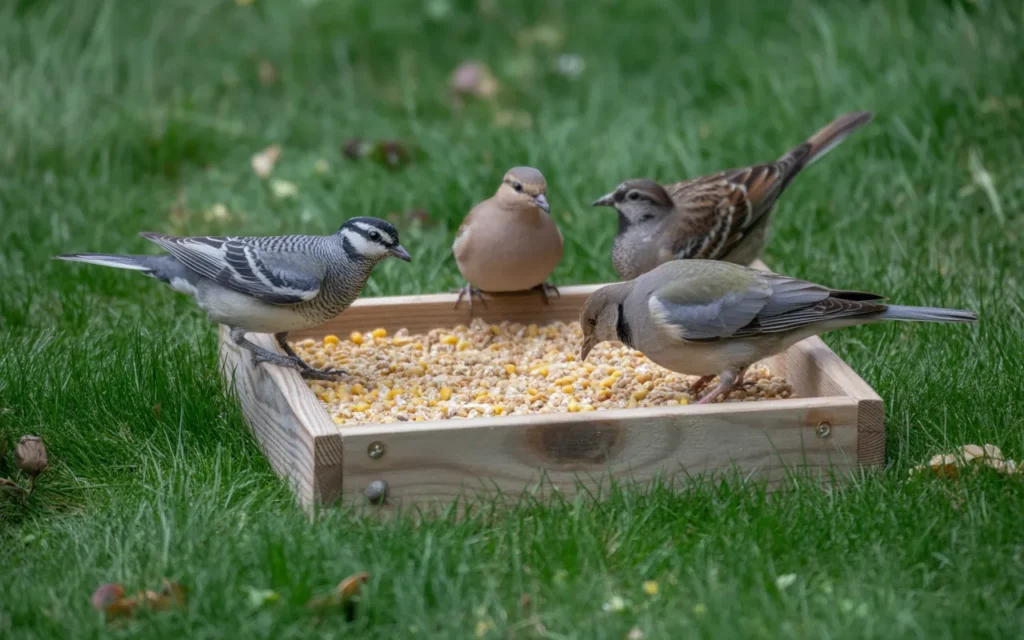
Many beautiful bird species prefer to feed on the ground rather than at a hanging feeder. These include birds like Dark-eyed Juncos (often called “snowbirds”), various sparrows, Mourning Doves, and Northern Cardinals.
A ground feeder is simply a low platform, often a wood-framed screen, that you place directly on the ground to offer food in a clean, contained way.
- Best For: Cracked corn, white proso millet, and mixed seeds.
- Birds It Attracts: Doves, sparrows, juncos, towhees, and cardinals. In some areas, you might even attract quail.
- Why You’ll Love It: It allows you to cater to a whole different group of birds that you might not see at your other feeders, increasing the diversity of your backyard visitors.
- Important Tip: Only put out enough food for one day to avoid attracting unwanted nighttime critters like raccoons or opossums. Bring the feeder in at night.
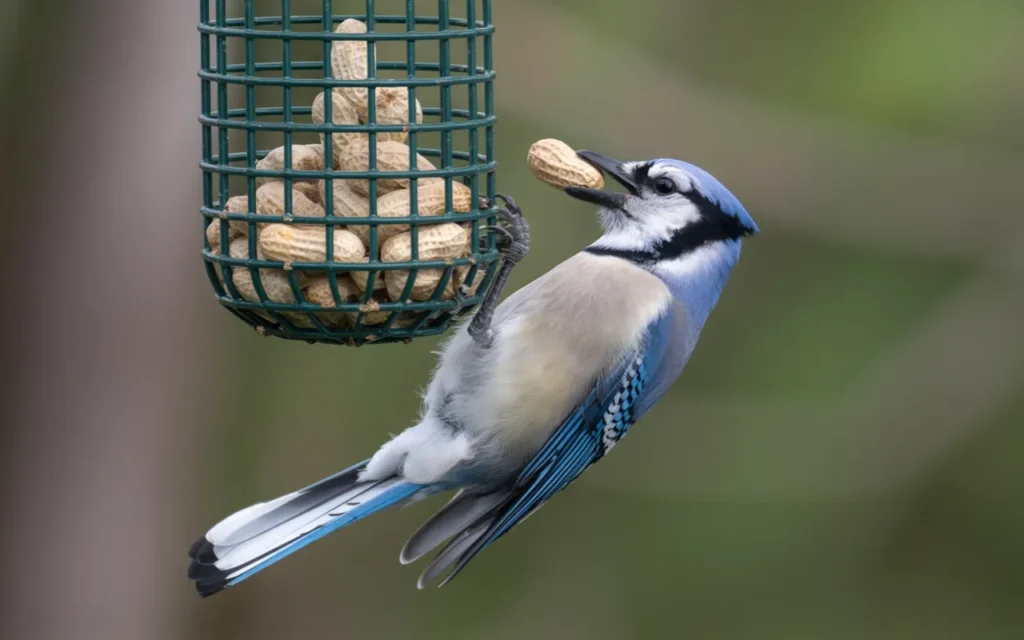
11. The Peanut Feeder
Peanuts are a high-protein, high-fat food that is a favorite of many birds, especially woodpeckers, jays, and titmice. A peanut feeder is designed to offer shelled, unsalted peanuts.
It is typically a wreath-shaped or cylindrical wire mesh container that requires birds to cling to the side and pull out pieces of the nuts. This provides a fun challenge and entertainment for both the birds and the person watching them.
- Best For: Whole or shelled, unsalted, unroasted peanuts.
- Birds It Attracts: Blue jays, woodpeckers, nuthatches, chickadees, and titmice.
- Why You’ll Love It: It’s pure entertainment! Watching a blue jay or a titmouse work to extract a peanut is fascinating. It’s a great way to offer a high-value food that attracts some of our most intelligent and acrobatic birds.
12. The Fly-Through Feeder
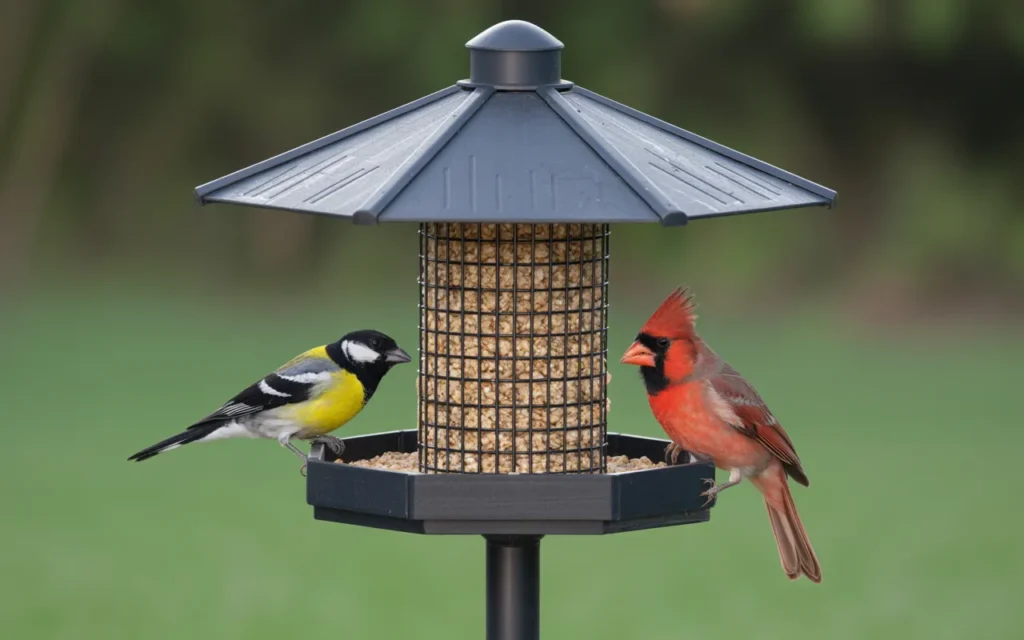
A fly-through feeder is a type of platform feeder that has a large, protective roof but is open on all four sides.
This design offers great protection for the seed and the feeding birds from rain, snow, and aerial predators like hawks, while still providing easy access and a clear view. They are often larger and can accommodate a wider variety of birds than a smaller hopper feeder.
- Best For: Offering larger seeds, seed mixes, or even suet dough in a protected environment.
- Birds It Attracts: A wide range of birds, from small chickadees to larger cardinals, jays, and even grosbeaks.
- Why You’ll Love It: It combines the large capacity and weather protection of a hopper feeder with the open accessibility and great viewing opportunities of a platform feeder. It’s a fantastic all-around, large-capacity feeder.
Recommended Products for Your Backyard Birding Sanctuary
Here’s a quick summary of the useful products and foods mentioned to help you get started on your bird-feeding adventure.
| Product Name | Brand | Key Benefit |
|---|---|---|
| {Nature’s Way Cedar Platform Tray Bird Feeder} | Nature’s Way | A beautiful, classic feeder that attracts a wide variety of birds. |
| {Droll Yankees Seed Scoop} | Droll Yankees | A perfectly designed scoop for mess-free filling of tube feeders. |
| {Stokes Select Suet Feeder} | Stokes Select | A simple, effective cage for offering high-energy suet to woodpeckers. |
| {Wagner’s Nyjer Seed Bird Food} | Wagner’s | A high-quality, clean seed that is irresistible to goldfinches. |
| {Nature’s Hangout Window Bird Feeder} | Nature’s Hangout | Provides an amazing, up-close view of feeding birds. |
| {Feeder Cleaning Brushes} | Various | An essential tool for properly cleaning and maintaining hummingbird feeders. |
| {Brome Squirrel Buster Plus} | Brome | A famously effective design for keeping squirrels out of your birdseed. |
Conclusion: Open Your Window to a World of Wonder
Inviting wild birds into your yard with a thoughtful selection of backyard birds feeders is one of the most rewarding things you can do for your home and your spirit.
It’s a simple act that fosters a deep connection with the natural world, providing endless hours of entertainment, education, and peaceful observation.
You don’t need to be an expert to get started. Begin with one or two different feeder types, like a classic hopper and a suet cage, and see who shows up.
As your interest grows, you can add more specialized feeders to attract an even greater diversity of birds. The joy of identifying a new species at your feeder for the first time is a thrill that never gets old.
So go ahead, hang that first feeder, and get ready to welcome a whole new world of color, song, and life into your backyard.
