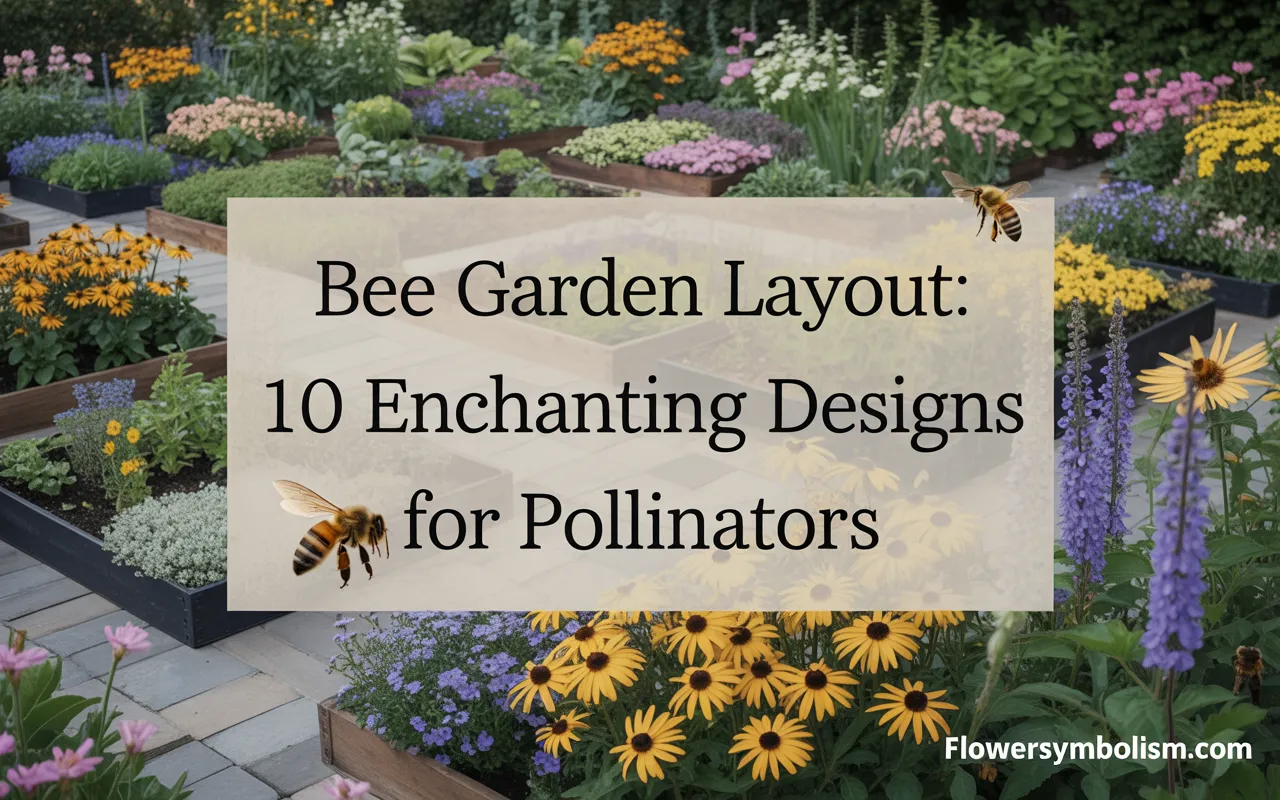
There is a special kind of magic in a garden that hums with the gentle sound of bees. Planning a space that specifically welcomes these vital pollinators is a rewarding project that fills your yard with color, life, and beauty.
A thoughtful bee garden layout can turn any patch of earth, large or small, into a breathtaking paradise. The best part is that you don’t need to be a seasoned expert to create a design that makes a real difference.
This guide is filled with 10 enchanting designs to help you plan the perfect bee garden layout.
We will explore various styles, from classic cottage gardens to clever container setups, ensuring there’s an idea for every space and skill level. Let’s get our hands dirty and start designing a garden that our buzzing friends will love.
The Essentials of a Bee Garden Layout
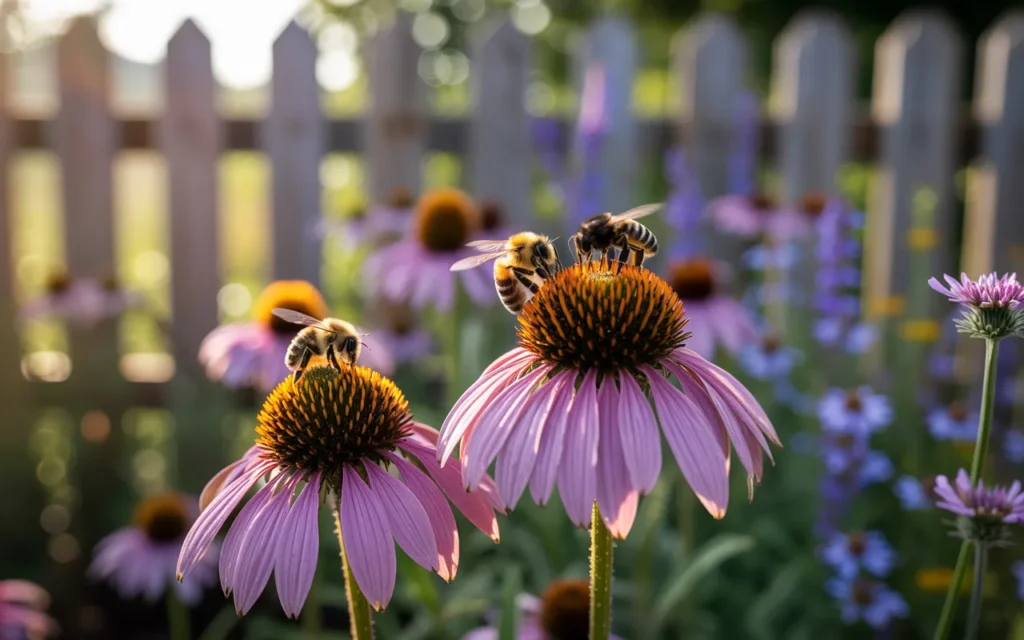
Before we dive into the specific ideas, let’s cover the fundamentals. A successful bee garden layout always incorporates three key elements: providing food, offering a water source, and ensuring a safe habitat.
- Continuous Food Source: Plant a wide variety of flowers that bloom from early spring to late fall. This ensures a constant supply of nectar and pollen for different types of bees. Bees are especially attracted to blue, purple, yellow, and white flowers.
- Safe Water Source: Bees need water to drink and cool their hives. A standard birdbath is often too deep. A shallow dish with pebbles or marbles for them to land on creates a perfect, safe bee bath.
- Shelter and Safety: Avoid using chemical pesticides, which are harmful to bees. Additionally, leaving some areas a little wild—like a small log pile or a patch of bare ground—provides nesting sites for different native bee species.
With these basics in mind, let’s explore some creative ideas for your own bee garden layout.
1. The Classic Cottage Garden
The cottage garden style, with its abundant and informal planting, is naturally a perfect bee garden layout. This design embraces a slightly untamed look, with flowers of different heights and textures mingling together in dense drifts. This creates a rich buffet that bees find irresistible.
Instead of neat rows, plant in large, overlapping clumps. Place tall flowers like hollyhocks and foxgloves at the back, with mid-height plants such as salvia and lavender in the middle.
Fill in the front with low-growing flowers like sweet alyssum. To sketch out your blooming schedule and garden layout, a durable notebook like the {Rite in the Rain Weatherproof Top-Spiral Notebook} is perfect for outdoor planning.
2. The Sunny Wildflower Meadow
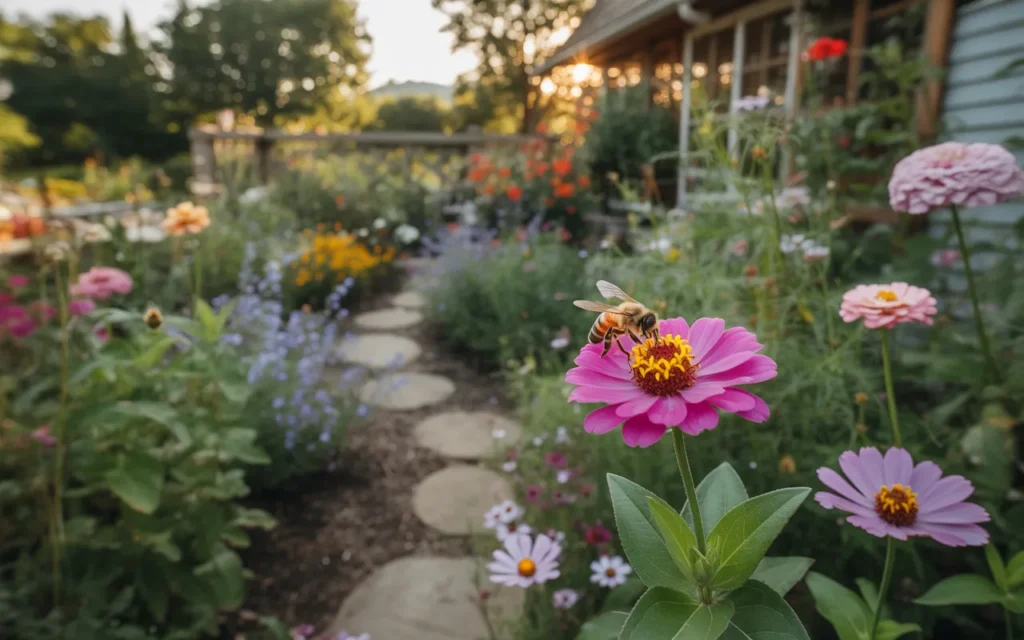
If you have a sunny area, dedicating it to a mini wildflower meadow is a fantastic, low-maintenance idea. This approach is incredibly effective at attracting a wide variety of native bees, creating a vibrant, living tapestry of color.
For the best results, start with a high-quality wildflower seed mix designed for your specific region. This ensures the plants will thrive in your climate and are familiar to local bees.
Prepare the area by clearing it of grass, lightly raking the soil, and scattering the seeds. Water gently with a fine mist. A sturdy pair of {Cooljob Gardening Gloves for Women and Men} will protect your hands from scratches and dirt while you work.

3. The Culinary Herb Garden Spiral
Many of the herbs we grow for cooking are also bee magnets. A culinary herb garden is a practical and beautiful choice, and laying it out in a spiral is a clever design.
The spiral shape maximizes growing space and creates different microclimates for a variety of herbs.
Build a spiral shape with rocks or bricks and fill it with soil. Plant sun-loving, drier-soil herbs like rosemary and thyme at the top, and more moisture-loving herbs at the bottom.
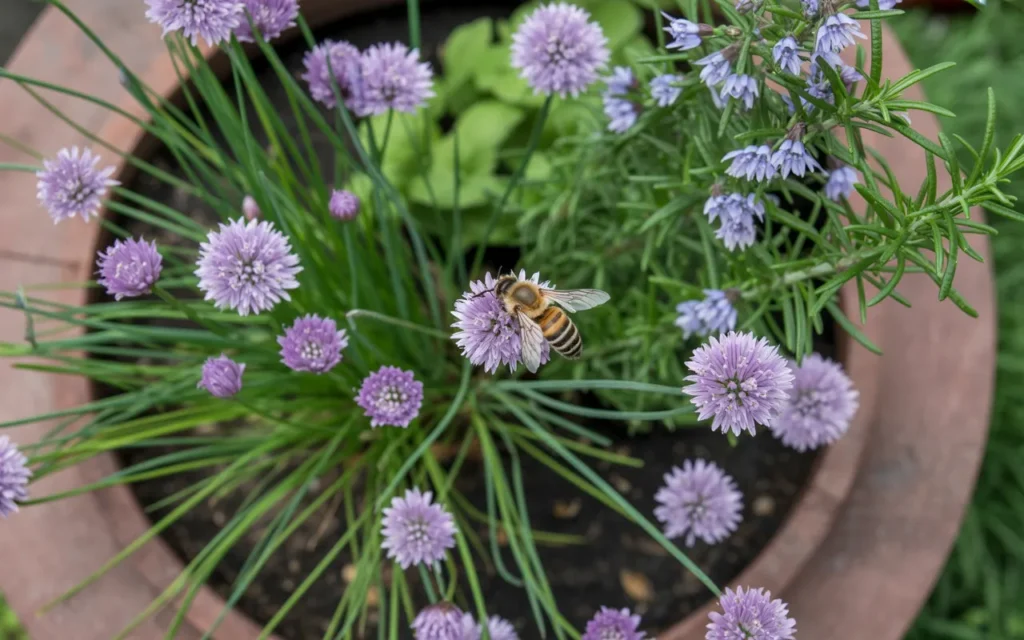
Be sure to let a portion of your oregano, chives, and basil go to flower to provide a feast for pollinators.
4. A Single-Color Themed Garden
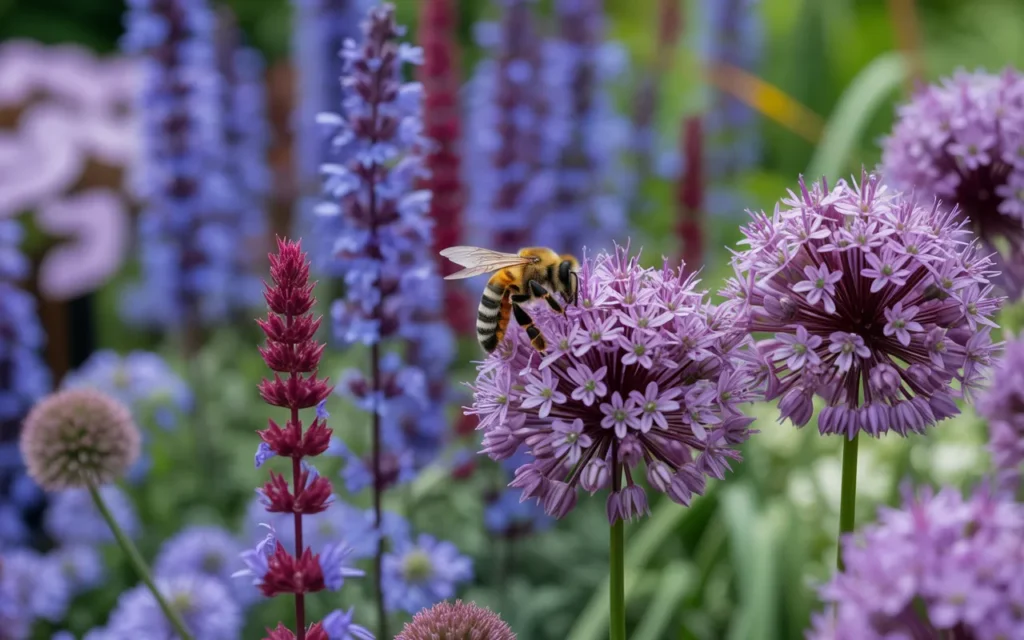
For a modern and visually dramatic bee garden layout, try a monochromatic theme. Planting flowers primarily in shades of a single color, such as purple, yellow, or white, creates a bold statement. Bees are especially drawn to purple and blue, making this a highly effective concept.
For a purple-themed garden, you could combine lavender, salvia, catmint, alliums, and asters. For a yellow theme, think sunflowers, goldenrod, and coreopsis. This focused approach allows you to play with different heights and textures within one cohesive color palette.
5. The Balcony or Patio Pollinator Paradise
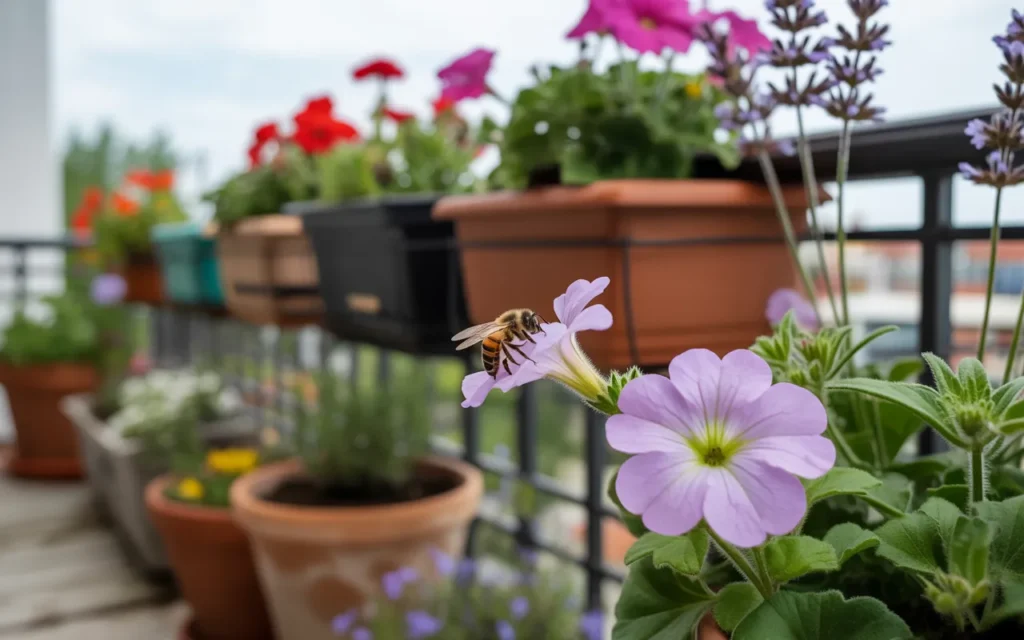
You don’t need a large yard to create a successful bee garden layout. A thoughtfully arranged container garden on a patio or balcony can be a vital oasis for urban bees. The key is to select a variety of pots and plants to create a lush, layered effect.
Use the “thriller, filler, spiller” design method. A great bee-friendly combination could be a tall zinnia as the thriller, petunias as the filler, and trailing lobelia as the spiller.
Using a premium potting mix like {FoxFarm Ocean Forest Potting Soil} will give your container plants the rich nutrients they need to produce abundant blooms.
6. The Tiered or Vertical Garden
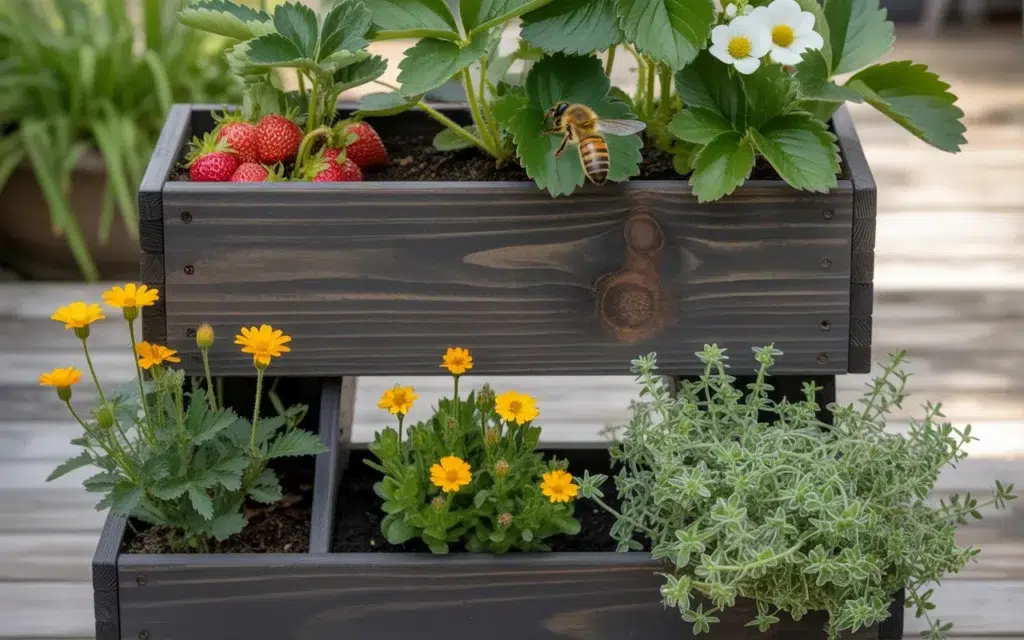
Maximize your growing space with a vertical garden. This is another excellent solution for small yards or balconies, allowing you to create a high-rise dining experience for bees.
This method allows you to grow a variety of bee-friendly plants at different eye levels. You can use a pre-made tiered planter or attach pots to a trellis.
Strawberries, trailing nasturtiums, thyme, and smaller annuals like alyssum are perfect for vertical setups. Lightweight and breathable containers like the {JERIA 12-Pack 7 Gallon Grow Bags} are excellent for this, as they promote healthy root systems and can be easily moved.
7. A Garden with a Bee Bath and Hotel
A complete bee garden layout provides more than just food. By adding a water source and nesting habitat, you can turn your garden into a full-service resort.
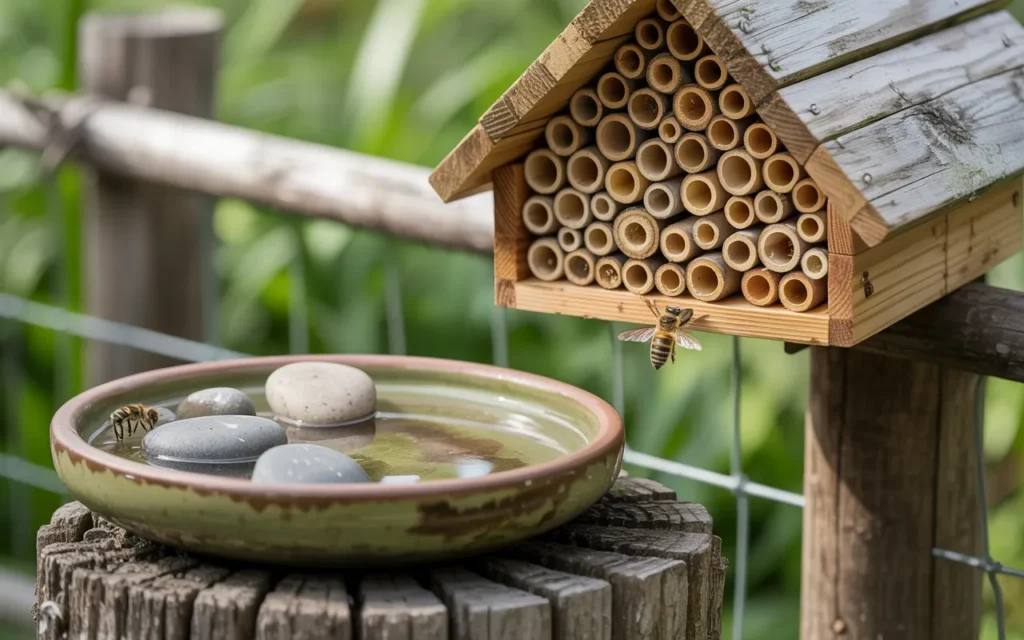
Create a simple bee bath by filling a shallow dish with water and adding pebbles or marbles for the bees to land on safely.
You can also include a “bee hotel” to provide nesting cavities for solitary native bees like mason bees and leafcutter bees.
These can be purchased or made by drilling holes of various sizes into a block of untreated wood. When pruning plants or collecting stems, a sharp and reliable tool like the {Fiskars Bypass Pruning Shears} makes clean cuts that are healthier for your plants.
8. The Early Spring Bulb Layout
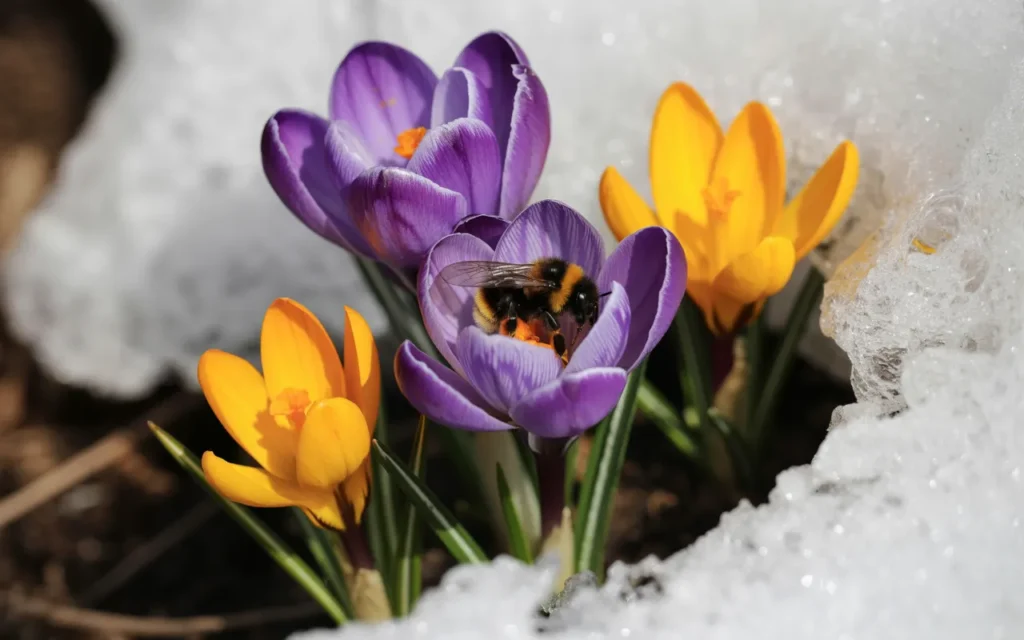
Queen bees emerge from hibernation in early spring, hungry and in desperate need of food. Planting a patch of early-blooming bulbs is a critical part of a year-round garden, providing that essential first meal.
Plan to plant a “river” of bulbs that flows through a garden bed or a large patch near a sunny wall. Crocuses are among the very first flowers to appear, often blooming through the snow. Other fantastic choices include grape hyacinths (Muscari), snowdrops, and Siberian squill.
9. The Late-Season Aster and Goldenrod Patch
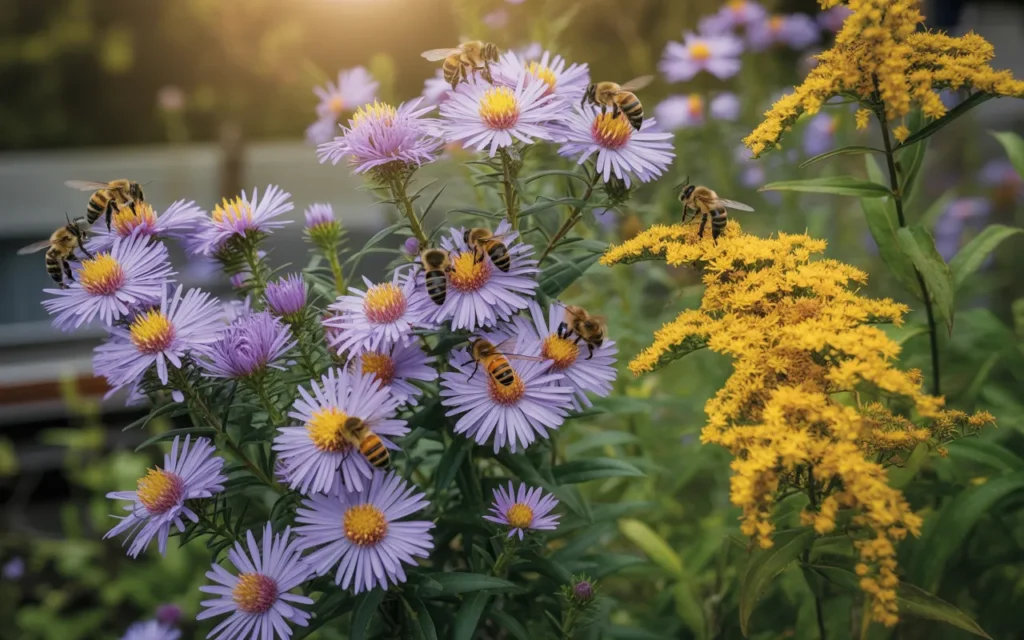
Just as important as early spring food is late-season food. As summer flowers fade, bees are still busy collecting resources to help their colonies survive the winter. A garden that includes late-blooming flowers is essential for their success.
Dedicate a sunny corner of your yard to a patch of asters and goldenrods. These native superstars explode with blooms from late summer through fall, covered in shades of purple, blue, and brilliant yellow. They are magnets for all kinds of bees, providing one last grand feast before the cold arrives.
10. The Fruit Tree and Berry Bush Guild
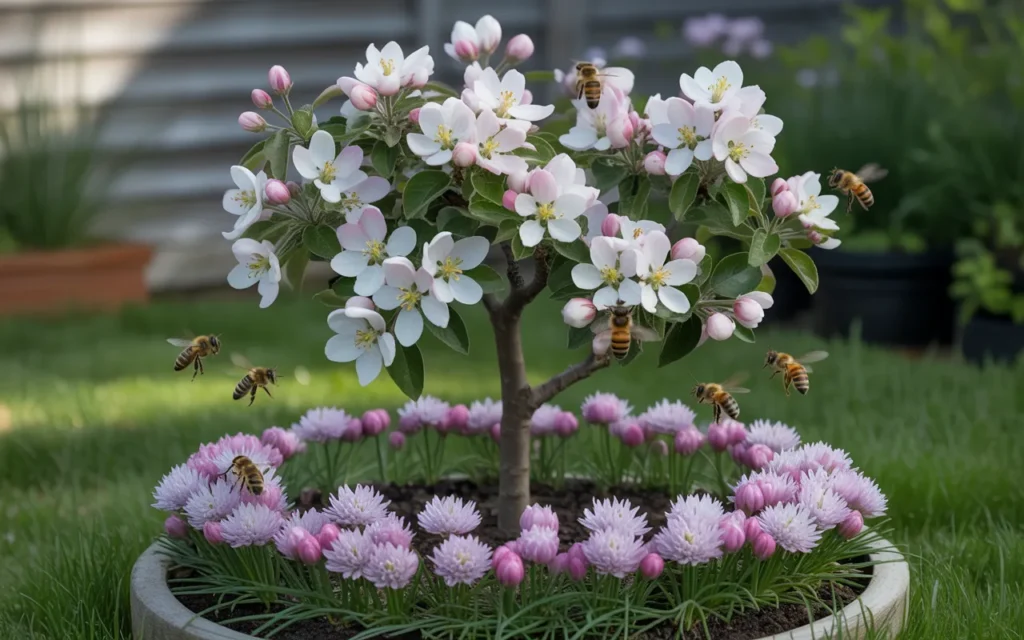
If you have enough space, incorporating fruit trees and berry bushes is a fantastic addition to your bee garden layout. Their spring blossoms are a major food source for bees, and in return for their pollination services, you’ll get a wonderful harvest of fresh fruit.
You can create a “guild” by planting beneficial companion plants around the base of your trees. Comfrey, lavender, and chives are great options that attract pollinators and can also help deter pests, creating a small, self-sustaining ecosystem.
Product Recommendations for Your Bee Garden
Here is a quick summary of the helpful tools and products mentioned throughout this guide to help you bring your bee garden layout to life.
| Product Name | Brand | Use in the Garden |
|---|---|---|
| Weatherproof Top-Spiral Notebook | Rite in the Rain | Plan your garden layout and take notes, even in damp conditions. |
| Gardening Gloves for Women and Men | Cooljob | Protect hands from dirt and thorns while preparing soil and planting. |
| Ocean Forest Potting Soil | FoxFarm | Enriches container gardens with nutrients for lush growth and more blooms. |
| 7 Gallon Grow Bags | JERIA | Provide excellent aeration and drainage for herbs and container plants. |
| Bypass Pruning Shears | Fiskars | Make clean, precise cuts for pruning and gathering materials. |
Your Enchanting Pollinator Garden Awaits
Starting a bee garden is a journey of joy and discovery. By trying even one or two of these bee garden layout ideas, you can make a real, positive difference for your local bee population.
The best garden is one that you love and that evolves over time. Start small, see what the bees in your area are drawn to, and slowly add more plants.
Don’t be afraid to let your garden be a little messy and to experiment with new flowers. Your reward will be a vibrant, buzzing space full of life and beauty.
You are not just helping the bees; you are creating a peaceful sanctuary for yourself to enjoy. So, pick an idea, grab your tools, and start digging.
